agua
Asturian
[edit]
Etymology
[edit]From Latin aqua, from Proto-Indo-European *h₂ekʷeh₂.
Pronunciation
[edit]Noun
[edit]agua f (uncountable)
Derived terms
[edit]Related terms
[edit]Catalan
[edit]Pronunciation
[edit]Verb
[edit]agua
Chamorro
[edit]Etymology
[edit]Noun
[edit]agua
References
[edit]- Greenhill, S.J., Blust. R, & Gray, R.D. (2008). The Austronesian Basic Vocabulary Database: From Bioinformatics to Lexomics. Evolutionary Bioinformatics, 4:271-283.
Chavacano
[edit]Etymology
[edit]Pronunciation
[edit]Noun
[edit]agua
References
[edit]Chibcha
[edit]Pronunciation
[edit]Noun
[edit]agua
- grain, seed or small fruit of some plants
- maize grain
- (anatomy) temple (part of the skull on the side of the forehead)
References
[edit]- Gómez Aldana D. F., Análisis morfológico del Vocabulario 158 de la Biblioteca Nacional de Colombia. Grupo de Investigación Muysccubun. 2013.
- Quesada Pacheco, Miguel Ángel. 1991. El vocabulario mosco de 1612. En estudios de Lingüística Chibcha. Programa de investigación del departamento de lingüística de la Universidad de Costa Rica. Serie Anual Tomo X San José (Costa Rica). Universidad de Costa Rica.
Fala
[edit]Etymology
[edit]From Old Galician-Portuguese agua, from Latin aqua.
Pronunciation
[edit]Noun
[edit]agua f (countable and uncountable, plural aguas)
References
[edit]- Valeš, Miroslav (2021) Diccionariu de A Fala: lagarteiru, mañegu, valverdeñu (web)[1], 2nd edition, Minde, Portugal: CIDLeS, published 2022, →ISBN
- Apuntes socio-históricos y lingüísticos sobre a Fala do Val de Xalima
Galician
[edit]Pronunciation
[edit]
- Hyphenation: a‧gua
Noun
[edit]agua f (uncountable)
- (proscribed) Alternative form of auga (“water”)
Ladino
[edit]Etymology
[edit]From Old Spanish agua, from Latin aqua, from Proto-Indo-European *h₂ekʷeh₂.
Noun
[edit]agua f (Latin spelling, Hebrew spelling אגּואה)
Old Galician-Portuguese
[edit]Alternative forms
[edit]Etymology
[edit]Pronunciation
[edit]Noun
[edit]agua f (plural aguas)
- water
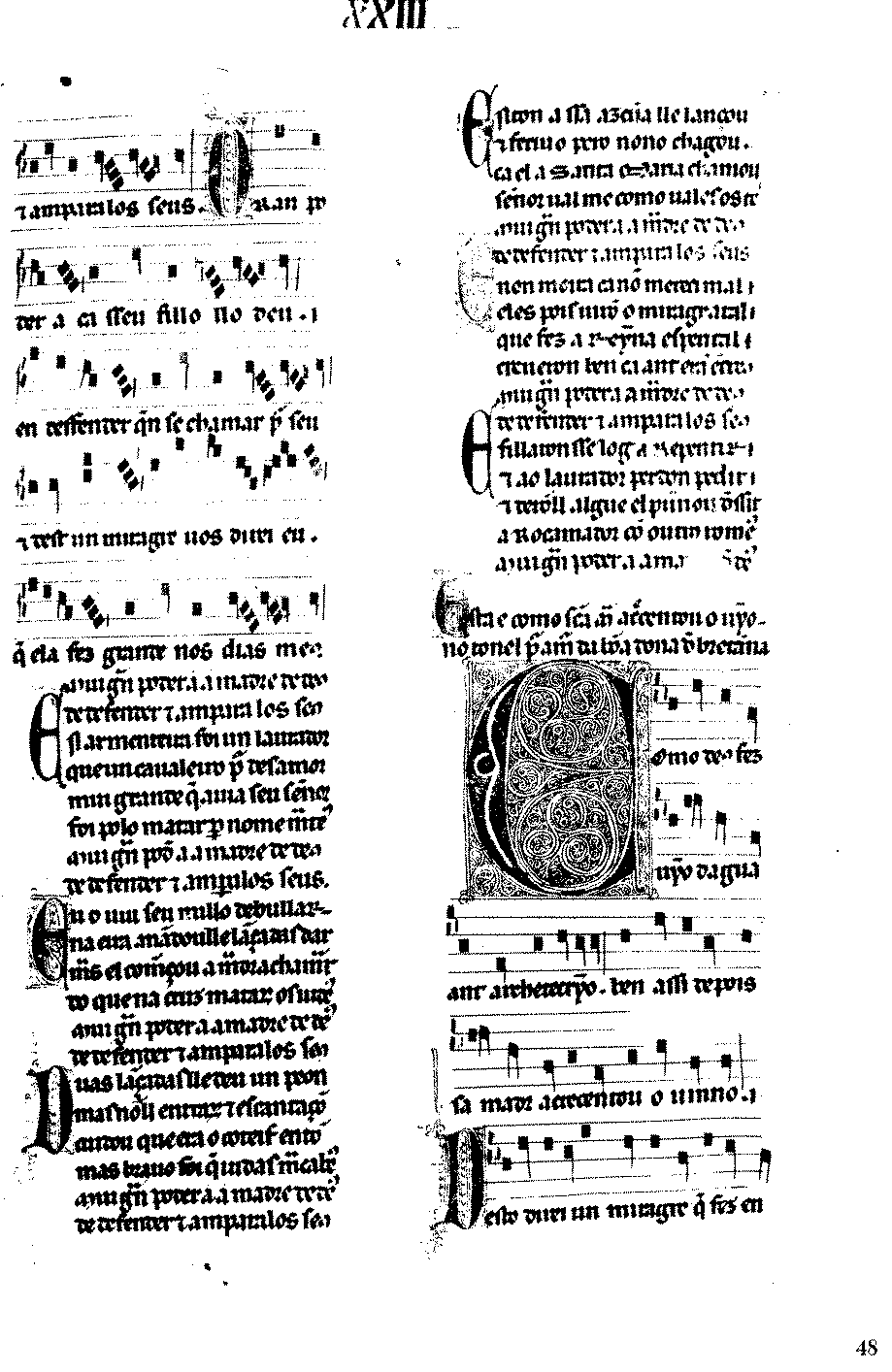
- 13th century CE, Alfonso X of Castile, Cantigas de Santa Maria, Códice de los músicos, cantiga 23 (facsimile):
- Como deꝯ fez uỹo dagua […]
- Just as God turned water into wine […]
Descendants
[edit]- Fala: agua
- Galician: auga, agua
- Portuguese: água, auga (regional) (see there for further descendants)
Old Spanish
[edit]Etymology
[edit]From Latin aqua, from Proto-Indo-European *h₂ekʷeh₂ (“water”).
Pronunciation
[edit]Noun
[edit]agua f (plural aguas)
- water
- c. 1200, Almeric, Fazienda de Ultramar, f. 5v. b.
- Vino ioſep aſos ermanos. e priſierõ le & deſpoiarõle el palio. e echarōle en el pozo. & este pozo era bazio e no yauia agua.
- Joseph came to this brothers; they imprisoned him and unclothed him and threw him into the well, and this well was empty and had no water.
- Idem, f. 13v. b.
- Tornarõ ſe todas las aguas ẽ ſãgre.
- And all of the waters turned into blood.
- c. 1200, Almeric, Fazienda de Ultramar, f. 5v. b.
Descendants
[edit]Palenquero
[edit]Noun
[edit]agua
References
[edit]- Manuel Diaz-Campos, The Handbook of Hispanic Sociolinguistics (2011, →ISBN)
Portuguese
[edit]Etymology 1
[edit]See the etymology of the corresponding lemma form.
Pronunciation
[edit]
Verb
[edit]agua
- inflection of aguar:
Etymology 2
[edit]Noun
[edit]agua f (plural aguas)
Sinacantán
[edit]Noun
[edit]agua
References
[edit]- Vocabularios de la lengua xinca de Sinacantan (1868, D. Juan Gavarrete)
Spanish
[edit]
Pronunciation
[edit]- IPA(key): /ˈaɡwa/ [ˈa.ɣ̞wa]
Audio (Latin America): (file) - Rhymes: -aɡwa
- Syllabification: a‧gua
Etymology 1
[edit]Inherited from Old Spanish agua, from Latin aqua (compare Catalan aigua, French eau, Galician auga, Italian acqua, Occitan aiga, Portuguese água, Romanian apă, Sardinian abba), from Proto-Indo-European *h₂ekʷeh₂. See English ea.
Alternative forms
[edit]Noun
[edit]agua f (plural aguas)
- water
- Quiere un vaso de agua fresca.
- He wants a glass of cold water.
- body of water
- Synonym: cuerpo de agua
- rain
- (archaic) river, stream
- (slang, in the plural) urine
- Synonym: orina
- (Guatemala) pop, soda (soft drink)
- (Latin America) infusion
- Synonym: infusión
Usage notes
[edit]- Feminine nouns beginning with stressed /ˈa/ like this one regularly take the singular articles el and un, usually reserved for masculine nouns.
- el agua, un agua
- They maintain the usual feminine singular articles la and una if an adjective intervenes between the article and the noun.
- In Guatemala, since agua prototypically refers to a soft drink, the phrase agua pura is used to refer to water.
Derived terms
[edit]- a la flor del agua
- a pan y agua
- agua bendita
- agua blanda
- agua caliente sanitaria
- agua carbonatada
- agua con gas
- agua corriente
- agua de alfalfa
- agua de ángeles
- agua de cangrejo
- agua de cerrajas
- agua de coco
- agua de Colonia
- agua de Florida
- agua de fuego
- agua de grifo
- agua de imbibición
- agua de jamaica
- agua de jeringa
- agua de la llave
- agua de litines
- agua de lluvia
- agua de mar
- agua de mesa
- agua de nieve
- agua de pie
- agua de remedio
- agua de Seltz
- agua de socorro
- agua del amnios
- agua del grifo
- agua del palo
- agua destilada
- agua dulce
- agua dura
- agua embotellada
- agua fresca
- agua llovediza
- agua manantial
- agua mineral
- agua mineralizada
- agua negra
- agua oxigenada
- agua pasada
- agua pasada no mueve molino
- agua perra
- agua pesada
- agua potable
- agua que no has de beber, déjala correr
- agua salada
- agua salobre
- agua subterránea
- agua superficial
- agua tónica
- agua va
- aguachile
- aguachirle
- aguaje
- agualluvias
- aguamala
- aguamanil
- aguamar
- aguamarina
- aguamiel
- aguanieve
- aguapanela
- aguar
- aguardiente
- aguarrás
- aguas
- aguas de creciente
- aguas de menguante
- aguas frescas
- aguas mayores
- aguas menores
- aguas negras
- aguas residuales
- aguas termales
- aguasal
- Aguascalientes
- aguatero
- agüita
- ajo y agua
- al agua, patos
- aprovechamiento de aguas
- bajada de aguas
- berro de agua
- bolsa de agua caliente
- bota de agua
- buchón de agua
- búfalo de agua
- caballo de agua
- caer como un baldado de agua fría
- cama de agua
- cambiar el agua a las aceitunas
- cambiar el agua al canario
- camelote de aguas
- cañón de agua
- ciclo del agua
- claro como el agua
- como agua para chocolate
- como dos gotas de agua
- como el aceite y el agua
- como el agua de mayo
- como pez en el agua
- con el agua al cuello
- cuerpo de agua
- culebra de agua
- descubrir el agua tibia
- duraznillo de agua
- dureza del agua
- echar agua al mar
- echar al agua
- echar el pecho al agua
- echarse al agua
- entre dos aguas
- estar entre dos aguas
- galleta de agua
- guacharaca de agua
- hacer agua
- helecho de agua
- hombre al agua
- huevo pasado por agua
- jacinto de agua
- lengua del agua
- lenteja de agua
- línea de agua
- lirio de agua
- llantén de agua
- llevarse el gato al agua
- marca de agua
- martillo de agua
- más claro que el agua
- melón de agua
- mirlo de agua
- moto de agua
- nadar entre dos aguas
- nivel del agua
- no callarse ni bajo el agua; no callarse ni debajo del agua
- ojo de agua
- oso de agua
- paja de agua
- palo de agua
- pamplina de agua
- paraguas
- parteaguas
- pedir el agua por señas
- pera de agua
- perro de agua
- pipa de agua
- piragua
- pistola de agua
- polla de agua
- poner agua de por medio
- por qué carga de agua
- quedar en agua de borrajas
- rata de agua
- real de agua
- redondita de agua
- registro de aprovechamientos de aguas
- reloj de agua
- repollito de agua
- sacar agua de las piedras
- sacar polvo debajo del agua
- salto de agua
- tomar las aguas
- trébol de agua
- tromba de agua
- vía de agua
Related terms
[edit]Descendants
[edit]- Chavacano: agua
- Media Lengua: awa
- Palenquero: agua
- Papiamentu: awa
- → Hiligaynon: agwa
- → Tagalog: agwa
Etymology 2
[edit]See the etymology of the corresponding lemma form.
Verb
[edit]agua
- inflection of aguar:
Further reading
[edit]- “agua”, in Diccionario de la lengua española, Vigésima tercera edición, Real Academia Española, 2014
Swahili
[edit]Pronunciation
[edit]Verb
[edit]-agua (infinitive kuagua)
Conjugation
[edit]| Conjugation of -agua | |||||||||||||||||||||||||||||||||||||||||||||||||||||||||||||||||||||
|---|---|---|---|---|---|---|---|---|---|---|---|---|---|---|---|---|---|---|---|---|---|---|---|---|---|---|---|---|---|---|---|---|---|---|---|---|---|---|---|---|---|---|---|---|---|---|---|---|---|---|---|---|---|---|---|---|---|---|---|---|---|---|---|---|---|---|---|---|---|
| |||||||||||||||||||||||||||||||||||||||||||||||||||||||||||||||||||||
| Infinitives | |||||||||||||||||||||||||||||||||||||||||||||||||||||||||||||||||||||
| |||||||||||||||||||||||||||||||||||||||||||||||||||||||||||||||||||||
| Imperatives | |||||||||||||||||||||||||||||||||||||||||||||||||||||||||||||||||||||
| |||||||||||||||||||||||||||||||||||||||||||||||||||||||||||||||||||||
| Tensed forms | |||||||||||||||||||||||||||||||||||||||||||||||||||||||||||||||||||||
| |||||||||||||||||||||||||||||||||||||||||||||||||||||||||||||||||||||
| |||||||||||||||||||||||||||||||||||||||||||||||||||||||||||||||||||||
| |||||||||||||||||||||||||||||||||||||||||||||||||||||||||||||||||||||
| |||||||||||||||||||||||||||||||||||||||||||||||||||||||||||||||||||||
| |||||||||||||||||||||||||||||||||||||||||||||||||||||||||||||||||||||
| |||||||||||||||||||||||||||||||||||||||||||||||||||||||||||||||||||||
| |||||||||||||||||||||||||||||||||||||||||||||||||||||||||||||||||||||
| |||||||||||||||||||||||||||||||||||||||||||||||||||||||||||||||||||||
| |||||||||||||||||||||||||||||||||||||||||||||||||||||||||||||||||||||
| |||||||||||||||||||||||||||||||||||||||||||||||||||||||||||||||||||||
| Some forms not commonly seen in modern Standard Swahili are absent from the table. See Appendix:Swahili verbs for more information. | |||||||||||||||||||||||||||||||||||||||||||||||||||||||||||||||||||||
- Asturian terms inherited from Latin
- Asturian terms derived from Latin
- Asturian terms inherited from Proto-Indo-European
- Asturian terms derived from Proto-Indo-European
- Asturian terms with IPA pronunciation
- Rhymes:Asturian/aɡwa
- Rhymes:Asturian/aɡwa/2 syllables
- Asturian uncountable nouns
- Asturian lemmas
- Asturian nouns
- Asturian feminine nouns
- ast:Water
- Catalan terms with IPA pronunciation
- Catalan non-lemma forms
- Catalan verb forms
- Catalan superseded forms
- Catalan pre-2016 spellings
- Chamorro terms borrowed from Spanish
- Chamorro terms derived from Spanish
- Chamorro lemmas
- Chamorro nouns
- Chavacano terms inherited from Spanish
- Chavacano terms derived from Spanish
- Chavacano terms with IPA pronunciation
- Rhymes:Chavacano/aɡwa
- Rhymes:Chavacano/aɡwa/2 syllables
- Chavacano lemmas
- Chavacano nouns
- cbk:Water
- Chibcha terms with IPA pronunciation
- Chibcha lemmas
- Chibcha nouns
- chb:Anatomy
- Fala terms inherited from Old Galician-Portuguese
- Fala terms derived from Old Galician-Portuguese
- Fala terms inherited from Latin
- Fala terms derived from Latin
- Fala terms with IPA pronunciation
- Rhymes:Fala/aɡwa
- Rhymes:Fala/aɡwa/2 syllables
- Fala lemmas
- Fala nouns
- Fala uncountable nouns
- Fala countable nouns
- Fala feminine nouns
- fax:Water
- Galician terms with IPA pronunciation
- Rhymes:Galician/aɡwa
- Rhymes:Galician/aɡwa/2 syllables
- Rhymes:Galician/aħwa
- Rhymes:Galician/aħwa/2 syllables
- Galician lemmas
- Galician nouns
- Galician uncountable nouns
- Galician feminine nouns
- Galician proscribed terms
- Ladino terms inherited from Old Spanish
- Ladino terms derived from Old Spanish
- Ladino terms inherited from Latin
- Ladino terms derived from Latin
- Ladino terms inherited from Proto-Indo-European
- Ladino terms derived from Proto-Indo-European
- Ladino lemmas
- Ladino nouns
- Ladino nouns in Latin script
- Ladino feminine nouns
- lad:Water
- Old Galician-Portuguese terms inherited from Latin
- Old Galician-Portuguese terms derived from Latin
- Old Galician-Portuguese terms with IPA pronunciation
- Old Galician-Portuguese lemmas
- Old Galician-Portuguese nouns
- Old Galician-Portuguese feminine nouns
- Old Galician-Portuguese terms with usage examples
- Old Spanish terms inherited from Latin
- Old Spanish terms derived from Latin
- Old Spanish terms inherited from Proto-Indo-European
- Old Spanish terms derived from Proto-Indo-European
- Old Spanish terms with IPA pronunciation
- Old Spanish lemmas
- Old Spanish nouns
- Old Spanish feminine nouns
- Old Spanish terms with usage examples
- osp:Water
- Palenquero lemmas
- Palenquero nouns
- pln:Water
- ch:Water
- gl:Water
- roa-opt:Water
- pt:Water
- Portuguese 3-syllable words
- Portuguese terms with IPA pronunciation
- Portuguese 2-syllable words
- Portuguese non-lemma forms
- Portuguese verb forms
- Portuguese lemmas
- Portuguese nouns
- Portuguese countable nouns
- Portuguese feminine nouns
- Portuguese obsolete forms
- Sinacantán lemmas
- Sinacantán nouns
- Spanish 2-syllable words
- Spanish terms with IPA pronunciation
- Spanish terms with audio pronunciation
- Rhymes:Spanish/aɡwa
- Rhymes:Spanish/aɡwa/2 syllables
- Spanish terms inherited from Old Spanish
- Spanish terms derived from Old Spanish
- Spanish terms inherited from Latin
- Spanish terms derived from Latin
- Spanish terms inherited from Proto-Indo-European
- Spanish terms derived from Proto-Indo-European
- Spanish lemmas
- Spanish nouns
- Spanish countable nouns
- Spanish feminine nouns
- Spanish terms with usage examples
- Spanish terms with archaic senses
- Spanish slang
- Guatemalan Spanish
- Latin American Spanish
- Spanish non-lemma forms
- Spanish verb forms
- es:Beverages
- es:Water
- Swahili terms with audio pronunciation
- Swahili lemmas
- Swahili verbs