more
English[edit]

Etymology 1[edit]
From Middle English more, from Old English māra (“more”), from Proto-Germanic *maizô (“more”), from Proto-Indo-European *mē- (“many”).
Cognate with Scots mair (“more”), Saterland Frisian moor (“more”), West Frisian mear (“more”), Dutch meer (“more”), Low German mehr (“more”), German mehr (“more”), Danish mere (“more”), Swedish mera (“more”), Norwegian Bokmål mer (“more”), Norwegian Nynorsk meir (“more”), Icelandic meiri, meira (“more”).
Alternative forms[edit]
Pronunciation[edit]
- (Received Pronunciation) enPR: mô; IPA(key): /mɔː/
Audio (UK) (file) - (General American) enPR: môr; IPA(key): /mɔɹ/
Audio (US) (file) - (rhotic, without the horse–hoarse merger) enPR: mōr; IPA(key): /mo(ː)ɹ/
- (non-rhotic, without the horse–hoarse merger) IPA(key): /moə/
- (non-rhotic, dough-door merger, AAVE) IPA(key): /moʊ/
- Homophones: moor, Moor, Moore (all three only in accents with the pour–poor merger)
- Homophone: maw (non-rhotic accents with the horse–hoarse merger (most of England, Australia, New Zealand, New York))
- Homophone: mow (non-rhotic accents with the dough-door merger (AAVE, non-rhotic Southern US))
- Rhymes: -ɔː(ɹ)
Determiner[edit]
more
- comparative degree of many: in greater number. (Used for a discrete quantity.)
- There are more ways to do this than I can count.
- 2014 June 14, “It's a gas”, in The Economist[2], volume 411, number 8891:
- One of the hidden glories of Victorian engineering is proper drains. Isolating a city’s effluent and shipping it away in underground sewers has probably saved more lives than any medical procedure except vaccination.
- comparative degree of much: in greater quantity, amount, or proportion. (Used for a continuous quantity.)
- There's more caffeine in my coffee than in the coffee you get in most places.
- 2013 June 29, “A punch in the gut”, in The Economist[3], volume 407, number 8842, pages 72–3:
- Mostly, the microbiome is beneficial. It helps with digestion and enables people to extract a lot more calories from their food than would otherwise be possible. Research over the past few years, however, has implicated it in diseases from atherosclerosis to asthma to autism.
- Additional; further.
- If you run out, there are more bandages in the first aid cupboard.
- More people are arriving.
- I want more soup.
- I need more time.
- Bigger, stronger, or more valuable.
- He is more than the ten years he spent behind bars at our local prison, as he is a changed man and his past does not define him.
Antonyms[edit]
Derived terms[edit]
- all the more
- any more for any more
- bite off more than one can chew
- B-more
- bollocks more like
- couldn't be more different
- cut off more than one can chew
- delay no more
- do more harm than good
- ever-more
- for ever more
- have got more chins than a Chinese phone book
- have got more chins than a Chinese phonebook
- have got more chins than Chinatown
- have more chins than a Chinese phonebook
- have more chins than a Chinese phone book
- have more chins than Chinatown
- have more money than God
- have one more time
- honey catches more flies than vinegar
- make the cheese more binding
- meo more
- more and more
- more at eleven
- more Catholic than the Pope
- more cry than wool
- more cushion for the pushin'
- more dead than alive
- more dollars than sense
- more equal
- morefold
- more haste, less speed
- more heat than light
- more honored in the breach
- more important fish to fry
- more-ish
- more is more
- more kicks than ha'pence
- more life in a tramp's vest
- more like
- more like it
- more money than brains
- moreness
- more often than not
- more-or-less
- more power to someone
- more power to your arm
- more power to your elbow
- more sacks on the mill
- more sacks to the mill
- more sauce than meat
- more suo
- more than friends
- more than likely
- more than meets the eye
- more than one can poke a stick at
- more than one can shake a stick at
- more than one cares to mention
- more than someone has had cooked dinners
- more than someone has had hot dinners
- more than you can shake a stick at
- more to the point
- need I say more
- need more time in the oven
- no more
- no more Mister Nice Guy
- no more Mr. Nice Guy
- no more Mr Nice Guy
- no more no less
- once more
- once more into the breach
- one hair of a woman can draw more than a hundred pair of oxen
- one more again
- one more time for the sweet souvenir
- piss more than one drinks
- please speak more slowly
- slip into something more comfortable
- some more
- there are more horses' asses than horses
- there are plenty more fish in the sea
- there's more than one way to cook an egg
- there's more than one way to crack an egg
- there's more than one way to feed a cat
- there's more than one way to peel an orange
- there's more than one way to skin a cat
- there's more where that came from
- the tongue wounds more than a lance
- those that have get more
- those who have get more
- what is more
- what's more
- you attract more flies with honey than vinegar
- you can catch more flies with honey than vinegar
- you can catch more flies with honey than with vinegar
- you catch more flies with honey than vinegar
- you catch more flies with honey than with vinegar
- you get more with a kind word and a gun than you do with a kind word alone
Translations[edit]
|
|
Adverb[edit]
more
- To a greater degree or extent. [from 10thc.]
- I like cake, but I like chocolate more.
- I could no more climb that than fly!
- More advanced students.
- I have more than carried out my obligation.
- I have no complaints and no more does my mom.
- 2013 July 19, Ian Sample, “Irregular bedtimes may affect children's brains”, in The Guardian Weekly, volume 189, number 6, page 34:
- Irregular bedtimes may disrupt healthy brain development in young children, according to a study of intelligence and sleeping habits. ¶ Going to bed at a different time each night affected girls more than boys, but both fared worse on mental tasks than children who had a set bedtime, researchers found.
- Used to form the comparative form of adjectives and adverbs. [from 13thc.]
- You're more beautiful than I ever imagined.
- 1897 December (indicated as 1898), Winston Churchill, chapter V, in The Celebrity: An Episode, New York, N.Y.: The Macmillan Company; London: Macmillan & Co., Ltd., →OCLC:
- Then we relapsed into a discomfited silence, and wished we were anywhere else. But Miss Thorn relieved the situation by laughing aloud, and with such a hearty enjoyment that instead of getting angry and more mortified we began to laugh ourselves, and instantly felt better.
- 2013 July-August, Henry Petroski, “Geothermal Energy”, in American Scientist, volume 101, number 4:
- Ancient nomads, wishing to ward off the evening chill and enjoy a meal around a campfire, had to collect wood and then spend time and effort coaxing the heat of friction out from between sticks to kindle a flame. With more settled people, animals were harnessed to capstans or caged in treadmills to turn grist into meal.
- (now poetic) In negative constructions: any further, any longer; any more. [from 10thc.]
- 1470–1485 (date produced), Thomas Malory, “Capitulum ii”, in [Le Morte Darthur], book XV, [London: […] by William Caxton], published 31 July 1485, →OCLC; republished as H[einrich] Oskar Sommer, editor, Le Morte Darthur […], London: David Nutt, […], 1889, →OCLC:
- Than was there pees betwyxte thys erle and thys Aguaurs, and grete surete that the erle sholde never warre agaynste hym more.
- (please add an English translation of this quotation)
- (now dialectal, humorous or proscribed) Used in addition to an inflected comparative form. [from 13thc.; standard until 18thc.]
- I was more better at English than you.
Derived terms[edit]
Translations[edit]
|
|
- The translations below need to be checked and inserted above into the appropriate translation tables. See instructions at Wiktionary:Entry layout § Translations.
|
Pronoun[edit]
more
- A greater number or quantity (of something).
- We're running out of napkins. I should have bought more.
- There isn't enough salt in this. You need to add more.
- An extra or additional quantity (of something).
- There aren't many people here yet, but more should be arriving soon.
- 2016, Arun P. Mukherjee, “English Studies in Contemporary India”, in M. Sridhar, Sunita Mishra, editors, Language Policy and Education in India: Documents, Contexts and Debates, page 254:
- Speaking about Canada, where I teach, while the canon remains the raison d’etre of the discipline, some changes have come about and more are in the offing.
Derived terms[edit]
Adjective[edit]
more
- comparative degree of many: in greater number. (Used for a discrete quantity.)
- Last year’s applications received from new and returning students were more than each of the previous four years.
- comparative degree of much: in greater quantity, amount, or proportion. (Used for a continuous quantity.)
See also[edit]
Etymology 2[edit]
From Middle English more, moore (“root”), from Old English more, moru (“carrot, parsnip”) from Proto-West Germanic *morhā, from Proto-Germanic *murhǭ (“carrot”), from Proto-Indo-European *merk- (“edible herb, tuber”).
Akin to Old Saxon moraha (“carrot”), Old High German morha, moraha (“root of a plant or tree”) (German Möhre (“carrot”), Morchel (“mushroom, morel”)). More at morel.
Alternative forms[edit]
Noun[edit]
more (plural mores)

Etymology 3[edit]
From Middle English moren, from the noun. See above.
Verb[edit]
more (third-person singular simple present mores, present participle moring, simple past and past participle mored)
- (transitive) To root up.
Etymology 4[edit]
Back-formation from mores.
Pronunciation[edit]
Noun[edit]
more (plural mores)
- (nonstandard) singular of mores
- 1996, Michael J. Bugeja, “[Influence] The Impact of Social Mores”, in Living Ethics: Developing Values in Mass Communication, Boston, Mass.: Allyn and Bacon, →ISBN, part I (Building Your Ethical Base), page 15:
- In the 1990s, smoking is considered dumb and a symbol of bad health habits, replete with the Surgeon General’s warnings. But even this belief is a social more, subject to time. Maybe some future society will consider smoking brave—a symbolic affront to Big Brother government—or cowardly—a cop-out to avoid some type of community service.
- 2004, Robert S. Pomeroy, John E. Parks, Lani M. Watson, “[The MPA management effectiveness indicators] The socio-economic indicators”, in How Is Your MPA Doing? A Guidebook of Natural and Social Indicators for Evaluating Marine Protected Area Management Effectiveness (IUCN Programme on Protected Areas), Gland, Cambridge: International Union for Conservation of Nature and Natural Resources, →ISBN, page 122:
- A value is a social more or norm manifested as a result of history and culture. It is a shared understanding among people of what is good, desirable or just.
- 2008, David R. Caruso, “Emotions and the Ability Model of Emotional Intelligence”, in Robert J. Emmerling, Vinod K. Shanwal, Manas K[umar] Mandal, editors, Emotional Intelligence: Theoretical and Cultural Perspectives, New York, N.Y.: Nova Science Publishers, Inc., →ISBN, page 7:
- Given that emotions such as shame, guilt, embarrassment and others involve a violation of a social more or rule, these are often called the social emotions, self-conscious emotions or secondary emotions.
- 2008, Barak A. Salmoni, Paula Holmes-Eber, “[Dimension Five – Belief Systems] Some Features of Belief Systems”, in Operational Culture for the Warfighter: Principles and Applications, Quantico, Va.: Marine Corps University Press, →ISBN, part II (Five Operational Culture Dimensions for Planning and Execution), page 189:
- In a seeming paradox, however, broken taboos may not always carry the heavy repercussions of violations of a social more.
Anagrams[edit]
Albanian[edit]
Etymology 1[edit]
According to Orel from the aoristic form of marr without a clear sense development. It could also be a remnant of a grammatical structure of a lost substrate language, which may be the source of the same interjection found in all Balkan languages.[1] Alternatively, from Greek μωρέ (moré, “mate”, interjection, literally “stupid!”), a frozen vocative of μωρός (mōrós). In that case, it may be a doublet of bre.
Interjection[edit]
more
Usage notes[edit]
Can be placed before or after the noun, whereas bre can only be placed after.
Alternative forms[edit]
Related terms[edit]
Descendants[edit]
Etymology 2[edit]
Probably borrowed from Southern Slavic море ("sea").
Pronunciation[edit]
Adjective[edit]
more
Alternative forms[edit]
Synonyms[edit]
References[edit]
- ^ Albanische Etymologien (Untersuchungen zum albanischen Erbwortschatz), Bardhyl Demiraj, Leiden Studies in Indo-European 7; Amsterdam - Atlanta 1997
- ^ Redhouse, James W. (1890) “موره”, in A Turkish and English Lexicon[1], Constantinople: A. H. Boyajian, page 2028
- ^ ngjyrë more (ngjyrë e kaltër e mbyllur), in: Fadil Sulejmani: Lindja, martesa dhe mortja në malësitë e Tetovës, 1988, faqja 174.
Basque[edit]
Pronunciation[edit]
Audio (file)
Noun[edit]
more inan
See also[edit]
| zuri | gris | beltz |
| gorri | laranja; marroi | hori |
| berde | ||
| oztin | urdin | |
| ubel | more | arrosa |
Czech[edit]
Pronunciation[edit]
Noun[edit]
more
Danish[edit]
Etymology[edit]
Derived from moro (“fun”), which may be a compound of mod, from Old Norse móðr (“mind”) and ro, from ró (“rest”).
Pronunciation[edit]
Verb[edit]
more (imperative mor, infinitive at more, present tense morer, past tense morede, perfect tense har moret)
Derived terms[edit]
Dutch[edit]
Etymology[edit]
Pronunciation[edit]
Audio (file)
Noun[edit]
more m or f (plural moren, diminutive moretje n)
- The unit of length (short or long) in poetic metre
Anagrams[edit]
French[edit]
Pronunciation[edit]
- IPA(key): /mɔʁ/
Audio (file) - Homophones: mord, mords, mores, mors, mort, morts (general), maure, maures (one pronunciation)
Noun[edit]
more f (plural mores)
Adjective[edit]
more (plural mores)
Related terms[edit]
- More m
Further reading[edit]
- “more”, in Trésor de la langue française informatisé [Digitized Treasury of the French Language], 2012.
Anagrams[edit]
Friulian[edit]
Pronunciation[edit]

Noun[edit]
more f (plural moris)
Noun[edit]
more f (plural moris)
Galician[edit]
Verb[edit]
more
- inflection of morar:
Italian[edit]
Pronunciation[edit]
Noun[edit]
more f
Verb[edit]
more
Synonyms[edit]
Anagrams[edit]
Latin[edit]
Pronunciation[edit]
- (Classical) IPA(key): /ˈmoː.re/, [ˈmoːrɛ]
- (modern Italianate Ecclesiastical) IPA(key): /ˈmo.re/, [ˈmɔːre]
Noun[edit]
mōre m
References[edit]
- "more", in Charlton T. Lewis and Charles Short (1879) A Latin Dictionary, Oxford: Clarendon Press
Latvian[edit]
Noun[edit]
more f (5 declension, masculine form: moris)
Declension[edit]
Maori[edit]
Noun[edit]
more
Synonyms[edit]
Middle English[edit]
Etymology 1[edit]
Inherited from Old English māra, from Proto-West Germanic *maiʀō, from Proto-Germanic *maizô.
Alternative forms[edit]
Pronunciation[edit]
Determiner[edit]
more
- more
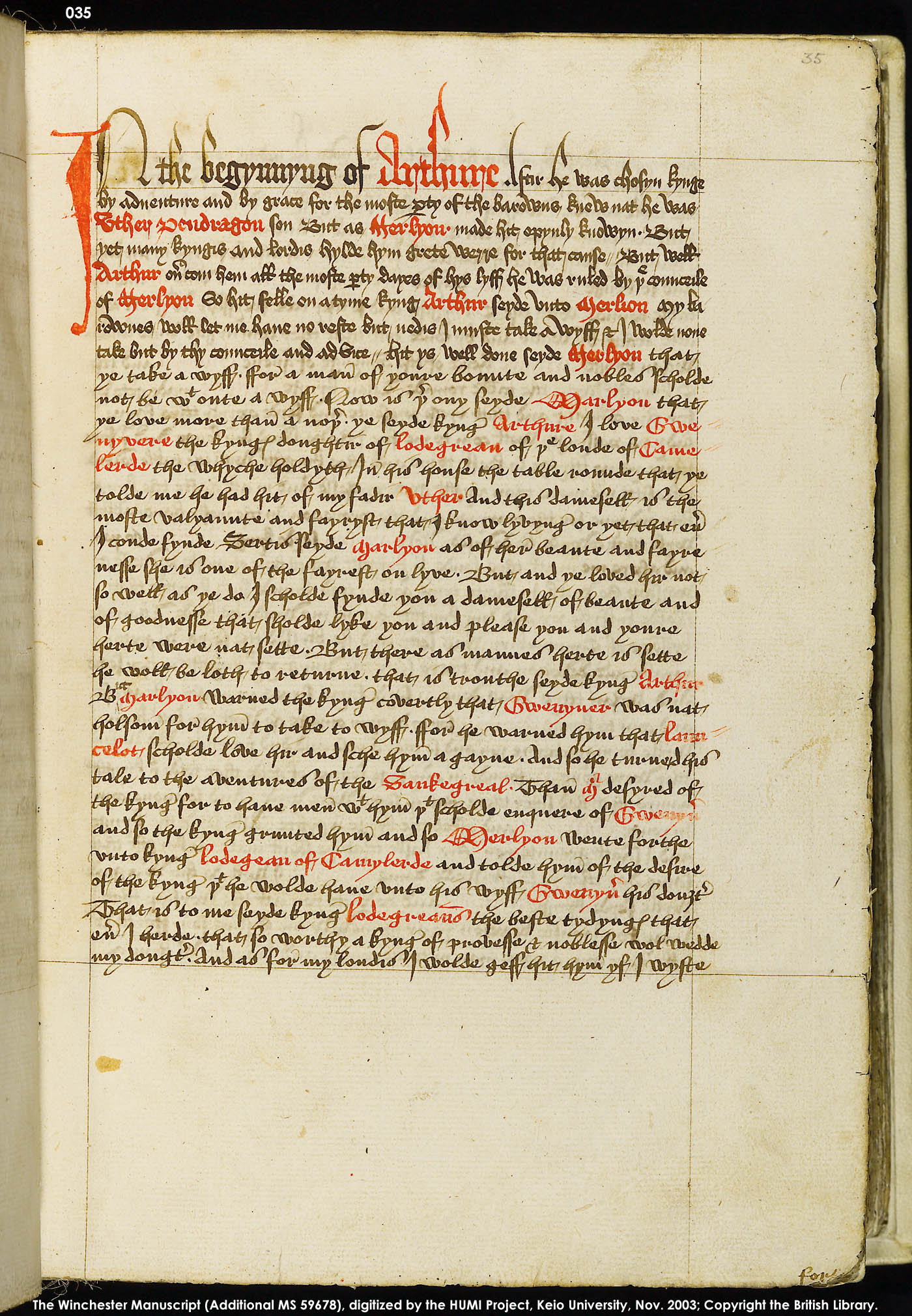
- 1470–1483 (date produced), Thom̃s Malleorre [i.e., Thomas Malory], “[The Tale of King Arthur]”, in Le Morte Darthur (British Library Additional Manuscript 59678), [England: s.n.], folio 35, recto, lines 10–11:
- Now is þ[er] ony ſeyde Marlyon that ye love more than a noþ[er] ·
- (please add an English translation of this quotation)
Descendants[edit]
References[edit]
- “mōr(e, adj. (comparative).”, in MED Online, Ann Arbor, Mich.: University of Michigan, 2007.
Etymology 2[edit]
Inherited from Old English more and moru (“carrot, parsnip”), from Proto-West Germanic *morhā, *morhu, from Proto-Germanic *murhǭ, *murhō.
Alternative forms[edit]
Pronunciation[edit]
Noun[edit]
more (plural mores or (early) moren)
- root (of a plant)
- Synonym: rote
- (rare) root, (of a hair, tooth, or tongue)
- (figuratively, rare) source, root
Descendants[edit]
- English: more (dialectal)
References[edit]
- “mōr(e, n.(1).”, in MED Online, Ann Arbor, Mich.: University of Michigan, 2007.
Norwegian Bokmål[edit]
Etymology[edit]
(This etymology is missing or incomplete. Please add to it, or discuss it at the Etymology scriptorium.)
Pronunciation[edit]
Audio (file)
Verb[edit]
more (present tense morer, past tense mora or moret, past participle mora or moret)
Old English[edit]
Etymology[edit]
From Proto-West Germanic *morhā, from Proto-Germanic *murhǭ (“carrot”). Cognate with Old Saxon moraha (“carrot”), Old High German moraha (German Möhre).
Pronunciation[edit]
Noun[edit]
more f
Declension[edit]
Related terms[edit]
Descendants[edit]
Portuguese[edit]
Pronunciation[edit]
Verb[edit]
more
- inflection of morar:
Serbo-Croatian[edit]
Pronunciation[edit]
Etymology 1[edit]
Inherited from Proto-Slavic *moře, from Proto-Balto-Slavic *mári, from Proto-Indo-European *móri.
Noun[edit]
mȏre n (Cyrillic spelling мо̑ре)
- sea
- (by extension, preceded by preposition na) seaside or shore (any area or place near the sea where the sea is seen as the defining feature)
- Čim dođe ljeto, idemo na more! ― Once the summer is here, we're gonna go to the seaside!
- Cijelo ljeto ću provesti na moru. ― I will spend the entire summer at the shore.
- (figurative) a vast expanse or quantity of something, usually detrimental or unwelcome
- Ako se ne pozabavimo time sada, biti ćemo u moru nevolja!
- If we do not deal with that now, we will be in a sea of troubles!
Declension[edit]
Synonyms[edit]
- (Croatia, archaic) morje
Derived terms[edit]
See also[edit]
Etymology 2[edit]
From Greek μωρέ (moré). Possible doublet of bre.
Interjection[edit]
mȏre (Cyrillic spelling мо̑ре)
- (Serbia) when spoken sharply, asserts that the speaker is stronger or older or more powerful than the addressee, sometimes expressing contempt or superiority
- 1824, recorded by Vuk Stefanović Karadžić, Narodne srpske pjesme:
- »More, Marko, ne ori drumova!« / »More, Turci, ne gaz’te oranja!«
- »More, Marko, don’t plow up our roads!« / »More, Turks, don’t walk on my plowing!«
- 1824, recorded by Vuk Stefanović Karadžić, Narodne srpske pjesme:
- (Serbia) when not spoken sharply, functions as a term of endearment or generic intensifier, cf. bre
Usage notes[edit]
More is most often used in addressing a single male, more rarely when addressing groups of males, and more rarely still when addressing females.
Related terms[edit]
References[edit]
- The template Template:R:sh:RJA does not use the parameter(s):
id=jA8GcNJ1Mm
Please see Module:checkparams for help with this warning.Tomislav Maretić, editor (1911-1916), “mȍre 1”, in Rječnik hrvatskoga ili srpskoga jezika[4] (in Serbo-Croatian), volume 7, Zagreb: JAZU, page 4
Etymology 3[edit]
Interjection[edit]
more (Cyrillic spelling море)
- (Croatia, Kajkavian, colloquial) Alternative form of može
Noun[edit]
more (Cyrillic spelling море)
- inflection of mora:
Verb[edit]
more (Cyrillic spelling море)
Slovak[edit]
Etymology[edit]
Inherited from Proto-Slavic *moře.
Pronunciation[edit]
Noun[edit]
more n (genitive singular mora, nominative plural moria, genitive plural morí, declension pattern of srdce)
- a body of salt water, sea
- (colloquial) a huge amount, plenty (+genitive)
- máme more času ― we have plenty of time
Declension[edit]
Derived terms[edit]
Further reading[edit]
- “more”, in Slovníkový portál Jazykovedného ústavu Ľ. Štúra SAV [Dictionary portal of the Ľ. Štúr Institute of Linguistics, Slovak Academy of Science] (in Slovak), https://slovnik.juls.savba.sk, 2024
Spanish[edit]
Pronunciation[edit]
Verb[edit]
more
- inflection of morar:
Welsh[edit]
Pronunciation[edit]
- (North Wales) (standard) (colloquial) IPA(key): /ˈmɔrɛ/
- (North Wales) (colloquial) IPA(key): /ˈmɔra/
- (South Wales) IPA(key): /ˈmoːrɛ/, /ˈmɔrɛ/
Noun[edit]
more
Mutation[edit]
| Welsh mutation | |||
|---|---|---|---|
| radical | soft | nasal | aspirate |
| bore | fore | more | unchanged |
| Note: Some of these forms may be hypothetical. Not every possible mutated form of every word actually occurs. | |||
Yola[edit]
Adjective[edit]
more
- Alternative form of mo'
- 1867, “A YOLA ZONG”, in SONGS, ETC. IN THE DIALECT OF FORTH AND BARGY, number 8, page 86:
- More trolleen, an yalpeen, an moulteen away.
- More rolling and spewing, and pining away.
References[edit]
- Jacob Poole (d. 1827) (before 1828) William Barnes, editor, A Glossary, With some Pieces of Verse, of the old Dialect of the English Colony in the Baronies of Forth and Bargy, County of Wexford, Ireland, London: J. Russell Smith, published 1867, page 86
- English terms inherited from Middle English
- English terms derived from Middle English
- English terms inherited from Old English
- English terms derived from Old English
- English terms inherited from Proto-Germanic
- English terms derived from Proto-Germanic
- English terms derived from Proto-Indo-European
- English 1-syllable words
- English terms with IPA pronunciation
- English terms with audio links
- English 2-syllable words
- English terms with homophones
- Rhymes:English/ɔː(ɹ)
- Rhymes:English/ɔː(ɹ)/1 syllable
- English lemmas
- English determiners
- English comparative adjectives
- English terms with usage examples
- English terms with quotations
- English non-lemma forms
- English comparative adverbs
- English poetic terms
- Middle English terms with quotations
- English dialectal terms
- English humorous terms
- English proscribed terms
- English pronouns
- English adjectives
- English terms inherited from Proto-West Germanic
- English terms derived from Proto-West Germanic
- English nouns
- English countable nouns
- English terms with obsolete senses
- English verbs
- English transitive verbs
- English back-formations
- English nonstandard terms
- English degree adverbs
- en:Celery family plants
- en:Scandiceae tribe plants
- en:Root vegetables
- English terms derived from the Proto-Indo-European root *merk-
- Albanian terms derived from substrate languages
- Albanian terms borrowed from Greek
- Albanian terms derived from Greek
- Albanian doublets
- Albanian lemmas
- Albanian interjections
- Albanian terms with IPA pronunciation
- Albanian adjectives
- Basque terms with audio links
- Basque lemmas
- Basque nouns
- Basque inanimate nouns
- Czech terms with IPA pronunciation
- Czech non-lemma forms
- Czech noun forms
- Danish terms derived from Old Norse
- Danish terms with IPA pronunciation
- Danish lemmas
- Danish verbs
- Dutch terms derived from Latin
- Dutch terms with audio links
- Dutch lemmas
- Dutch nouns
- Dutch nouns with plural in -en
- Dutch masculine nouns
- Dutch feminine nouns
- Dutch nouns with multiple genders
- French 1-syllable words
- French terms with IPA pronunciation
- French terms with audio links
- French terms with homophones
- French lemmas
- French nouns
- French countable nouns
- French feminine nouns
- fr:Phonology
- French adjectives
- French dated terms
- Friulian lemmas
- Friulian nouns
- Friulian feminine nouns
- fur:Phonology
- Galician non-lemma forms
- Galician verb forms
- Italian 2-syllable words
- Italian terms with IPA pronunciation
- Rhymes:Italian/ɔre
- Rhymes:Italian/ɔre/2 syllables
- Italian non-lemma forms
- Italian noun forms
- Italian verb forms
- Italian slang
- Latin 2-syllable words
- Latin terms with IPA pronunciation
- Latin non-lemma forms
- Latin noun forms
- Latvian lemmas
- Latvian nouns
- Latvian feminine nouns
- Latvian terms with archaic senses
- Latvian fifth declension nouns
- Latvian noun forms
- Latvian non-alternating fifth declension nouns
- Maori lemmas
- Maori nouns
- Middle English terms inherited from Old English
- Middle English terms derived from Old English
- Middle English terms inherited from Proto-West Germanic
- Middle English terms derived from Proto-West Germanic
- Middle English terms inherited from Proto-Germanic
- Middle English terms derived from Proto-Germanic
- Middle English terms with IPA pronunciation
- Middle English lemmas
- Middle English determiners
- Middle English nouns
- Middle English terms with rare senses
- enm:Anatomy
- enm:Botany
- Norwegian Bokmål terms with audio links
- Norwegian Bokmål lemmas
- Norwegian Bokmål verbs
- Old English terms inherited from Proto-West Germanic
- Old English terms derived from Proto-West Germanic
- Old English terms inherited from Proto-Germanic
- Old English terms derived from Proto-Germanic
- Old English terms with IPA pronunciation
- Old English lemmas
- Old English nouns
- Old English feminine nouns
- Old English feminine n-stem nouns
- Portuguese 2-syllable words
- Portuguese terms with IPA pronunciation
- Portuguese non-lemma forms
- Portuguese verb forms
- Serbo-Croatian terms with IPA pronunciation
- Serbo-Croatian terms inherited from Proto-Slavic
- Serbo-Croatian terms derived from Proto-Slavic
- Serbo-Croatian terms inherited from Proto-Balto-Slavic
- Serbo-Croatian terms derived from Proto-Balto-Slavic
- Serbo-Croatian terms inherited from Proto-Indo-European
- Serbo-Croatian terms derived from Proto-Indo-European
- Serbo-Croatian lemmas
- Serbo-Croatian nouns
- Serbo-Croatian neuter nouns
- Serbo-Croatian terms with usage examples
- Serbo-Croatian terms derived from Greek
- Serbo-Croatian doublets
- Serbo-Croatian interjections
- Serbian Serbo-Croatian
- Serbo-Croatian terms with quotations
- Croatian Serbo-Croatian
- Kajkavian Serbo-Croatian
- Serbo-Croatian colloquialisms
- Serbo-Croatian non-lemma forms
- Serbo-Croatian noun forms
- Serbo-Croatian verb forms
- sh:Bodies of water
- sh:Landforms
- Slovak terms derived from Proto-Balto-Slavic
- Slovak terms inherited from Proto-Balto-Slavic
- Slovak terms derived from Proto-Indo-European
- Slovak terms inherited from Proto-Indo-European
- Slovak terms inherited from Proto-Slavic
- Slovak terms derived from Proto-Slavic
- Slovak terms with IPA pronunciation
- Slovak lemmas
- Slovak nouns
- Slovak neuter nouns
- Slovak colloquialisms
- Slovak terms with usage examples
- sk:Bodies of water
- sk:Landforms
- Spanish 2-syllable words
- Spanish terms with IPA pronunciation
- Rhymes:Spanish/oɾe
- Rhymes:Spanish/oɾe/2 syllables
- Spanish non-lemma forms
- Spanish verb forms
- Welsh terms with IPA pronunciation
- Welsh non-lemma forms
- Welsh mutated nouns
- Welsh nasal-mutation forms
- Yola lemmas
- Yola adjectives
- Yola terms with quotations