指
Jump to navigation
Jump to search
See also: 🈯 [U+1F22F SQUARED CJK UNIFIED IDEOGRAPH-6307]
| ||||||||
Translingual[edit]
| Stroke order | |||
|---|---|---|---|

| |||
Han character[edit]
指 (Kangxi radical 64, 手+6, 9 strokes, cangjie input 手心日 (QPA), four-corner 51061, composition ⿰扌旨)
References[edit]
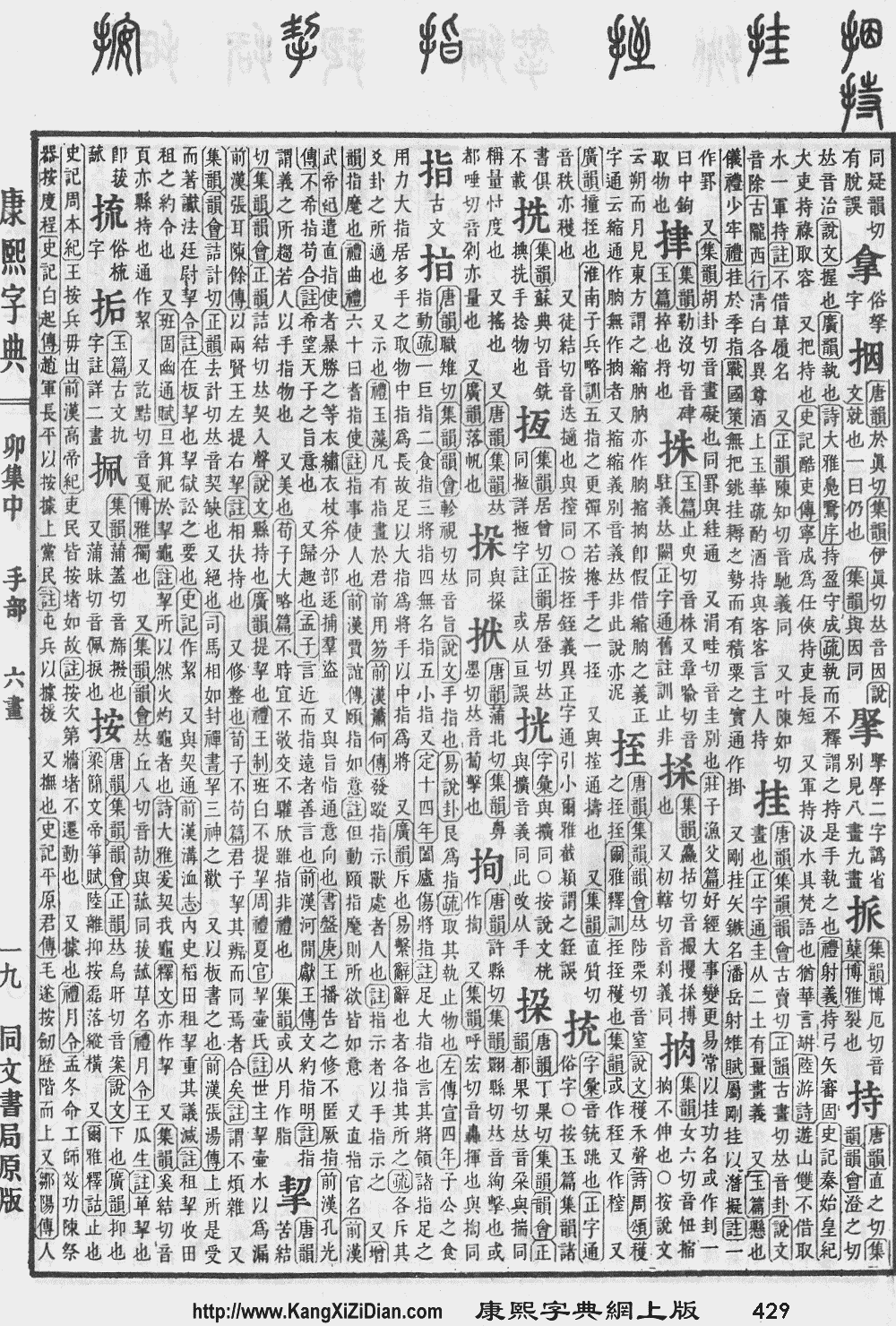
- Kangxi Dictionary: page 429, character 20
- Dai Kanwa Jiten: character 12034
- Dae Jaweon: page 778, character 15
- Hanyu Da Zidian (first edition): volume 3, page 1873, character 5
- Unihan data for U+6307
Chinese[edit]
| trad. | 指 | |
|---|---|---|
| simp. # | 指 | |
| alternative forms | 𢫾 | |
Glyph origin[edit]
| Historical forms of the character 指 | ||
|---|---|---|
| Western Zhou | Shuowen Jiezi (compiled in Han) | Liushutong (compiled in Ming) |
| Bronze inscriptions | Small seal script | Transcribed ancient scripts |

|

|

|
Phono-semantic compound (形聲/形声, OC *kjiʔ) : semantic 手 + phonetic 旨 (OC *kjiʔ).
Pronunciation[edit]
Definitions[edit]
指
- finger
- 手指 ― shǒuzhǐ ― finger
- to point; to point out; to aim
- to indicate; to show; to demonstrate
- to refer to; to mean
- to rely on; to depend on
- to criticize; to rebuke
- to make one’s hair stand on end
- Classifier for fingerwidths.
Synonyms[edit]
- 仗恃 (zhàngshì) (literary, chiefly derogatory)
- 仰仗 (yǎngzhàng)
- 仰賴/仰赖 (yǎnglài)
- 依 (yī)
- 依仗 (yīzhàng)
- 依倚 (Hokkien)
- 依恃 (yīshì) (literary)
- 依歸/依归 (yīguī) (literary)
- 依託/依托 (yītuō)
- 依賴/依赖 (yīlài)
- 依附 (yīfù)
- 依靠 (yīkào)
- 倚仗 (yǐzhàng)
- 倚倚 (Xiamen Hokkien, Zhangzhou Hokkien)
- 借助 (jièzhù)
- 倚賴/倚赖 (yǐlài)
- 倚靠 (yǐkào)
- 寄 (jì)
- 展品棒 (Zhangzhou Hokkien)
- 怙恃 (hùshì) (literary)
- 憑/凭 (píng)
- 憑仗/凭仗 (píngzhàng)
- 憑依/凭依 (píngyī)
- 憑借/凭借 (píngjiè)
- 憑恃/凭恃 (píngshì)
- 憑靠/凭靠 (píngkào)
- 據/据
- 歸依/归依 (guīyī) (literary)
- 聊 (liáo) (formal)
- 賴/赖 (lài) (literary, or in compounds only)
Compounds[edit]
- 一彈指/一弹指
- 一腳指/一脚指
- 不吝指教 (bùlìnzhǐjiào)
- 不指望
- 中指 (zhōngzhǐ)
- 了如指掌 (liǎorúzhǐzhǎng)
- 二拇指 (èrmǔzhǐ)
- 五指 (wǔzhǐ)
- 五指山 (Wǔzhǐshān)
- 交通指揮/交通指挥
- 人氣指標/人气指标
- 令人髮指/令人发指 (lìngrénfàzhǐ)
- 以指撓沸/以指挠沸
- 佛指甲
- 使臂使指
- 倒指
- 修指甲
- 僂指/偻指
- 僮手指千
- 價值指標/价值指标
- 光陰彈指/光阴弹指
- 八指頭陀/八指头陀
- 六指 (liùzhǐ)
- 切韻指南/切韵指南
- 創意指導/创意指导
- 劍指/剑指 (jiànzhǐ)
- 加權指數/加权指数
- 十二指腸/十二指肠 (shí'èrzhǐcháng)
- 十指連心/十指连心
- 千人所指
- 千夫所指 (qiānfūsuǒzhǐ)
- 半指
- 口講指畫/口讲指画
- 合指症
- 同文算指
- 吹指
- 啖指咬舌
- 噬指棄薪/噬指弃薪
- 多指症
- 大拇指 (dàmǔzhǐ)
- 大拇指頭/大拇指头 (dàmǔzhǐtou)
- 大指 (dàzhǐ)
- 如指諸掌/如指诸掌
- 如臂使指 (rúbìshǐzhǐ)
- 密度指數/密度指数
- 寸指測淵/寸指测渊
- 射魚指天/射鱼指天
- 將指/将指 (jiàngzhǐ)
- 小拇指 (xiǎomǔzhǐ)
- 小指 (xiǎozhǐ)
- 屈指 (qūzhǐ)
- 屈指一算 (qūzhǐyīsuàn)
- 屈指可數/屈指可数 (qūzhǐkěshǔ)
- 彈指/弹指 (tánzhǐ)
- 彈指之間/弹指之间
- 彈指神功/弹指神功
- 惜指失掌
- 意指
- 戒指
- 戟指
- 戟指怒目
- 手指 (shǒuzhǐ)
- 手指字母
- 扳指 (bānzhi)
- 拇指 (mǔzhǐ)
- 拈針指/拈针指
- 指一說十/指一说十
- 指不勝屈/指不胜屈
- 指事 (zhǐshì)
- 指令 (zhǐlìng)
- 指使 (zhǐshǐ)
- 指出 (zhǐchū)
- 指北針/指北针 (zhǐběizhēn)
- 指南 (zhǐnán)
- 指南之助
- 指南宮/指南宫
- 指南打北
- 指南車/指南车
- 指南針/指南针 (zhǐnánzhēn)
- 指印 (zhǐyìn)
- 指古摘今
- 指名 (zhǐmíng)
- 指向 (zhǐxiàng)
- 指名道姓 (zhǐmíngdàoxìng)
- 指囷
- 指地為盟/指地为盟
- 指壓/指压 (zhǐyā)
- 指天為誓/指天为誓 (zhǐ tiān wéi shì)
- 指天畫地/指天画地
- 指天說地/指天说地
- 指天誓心
- 指天誓日
- 指婚
- 指定 (zhǐdìng)
- 指定打擊/指定打击
- 指定轉接/指定转接
- 指實掌虛/指实掌虚
- 指導/指导 (zhǐdǎo)
- 指導員/指导员 (zhǐdǎoyuán)
- 指尖 (zhǐjiān)
- 指山說磨/指山说磨
- 指山賣磨/指山卖磨
- 指引 (zhǐyǐn)
- 指手畫腳/指手画脚 (zhǐshǒuhuàjiǎo)
- 指手頓腳/指手顿脚
- 拶指
- 指指戳戳
- 指指搠搠
- 指指點點/指指点点 (zhǐzhǐdiǎndiǎn)
- 指授 (zhǐshòu)
- 指掌
- 指控 (zhǐkòng)
- 指揮/指挥 (zhǐhuī)
- 指揮刀/指挥刀 (zhǐhuīdāo)
- 指揮官/指挥官 (zhǐhuīguān)
- 指揮導航/指挥导航
- 指揮棒/指挥棒 (zhǐhuībàng)
- 指揮艙/指挥舱
- 指揮若定/指挥若定 (zhǐhuīruòdìng)
- 指揮部/指挥部 (zhǐhuībù)
- 指摹
- 指摘 (zhǐzhāi)
- 指攀
- 指教 (zhǐjiào)
- 指數/指数 (zhǐshù)
- 指數函數/指数函数 (zhǐshù hánshù)
- 指數法則/指数法则
- 指斥 (zhǐchì)
- 指日 (zhǐrì)
- 指日可待 (zhǐrìkědài)
- 指日高陞/指日高升 (zhǐrìgāoshēng)
- 指明 (zhǐmíng)
- 指書/指书
- 指望 (zhǐwàng)
- 指東打西/指东打西
- 指東畫西/指东画西
- 指東話西/指东话西
- 指東說西/指东说西
- 指桑罵槐/指桑骂槐 (zhǐsāngmàhuái)
- 指桑說槐/指桑说槐
- 指極星/指极星
- 指標/指标 (zhǐbiāo)
- 指正 (zhǐzhèng)
- 指歸/指归 (zhǐguī)
- 指水盟松
- 指沓
- 指決/指决
- 指法 (zhǐfǎ)
- 指派 (zhǐpài)
- 指猴 (zhǐhóu)
- 指瑕
- 指瑕造隙
- 指環/指环 (zhǐhuán)
- 指甲
- 指甲剪
- 指甲套兒/指甲套儿
- 指甲油
- 指甲花
- 指甲草
- 指畫/指画 (zhǐhuà)
- 指痕
- 指皂為白/指皂为白
- 指目 (zhǐmù)
- 指破迷團/指破迷团
- 指示 (zhǐshì)
- 指稱/指称 (zhǐchēng)
- 指稱詞/指称词
- 指空話空/指空话空
- 指紋/指纹 (zhǐwén)
- 指紋分析/指纹分析
- 指紋紀錄/指纹纪录
- 指紋辨識/指纹辨识
- 指紋鑑定/指纹鉴定
- 指腹割衿
- 指腳夫妻/指脚夫妻
- 指腹為婚/指腹为婚
- 指腹裁襟
- 指螺
- 指要 (zhǐyào)
- 指親托故/指亲托故
- 指觸/指触
- 指認/指认
- 指謫/指谪 (zhǐzhé)
- 指證/指证 (zhǐzhèng)
- 指豬罵狗/指猪骂狗
- 指責/指责 (zhǐzé)
- 指路人
- 指迷
- 指配
- 指針/指针 (zhǐzhēn)
- 指長話短/指长话短
- 指關節/指关节 (zhǐguānjié)
- 指陳/指陈 (zhǐchén)
- 指雁為羹/指雁为羹
- 指雞罵狗/指鸡骂狗
- 指靠 (zhǐkào)
- 指頭/指头
- 指頭畫/指头画
- 指頭肚兒/指头肚儿
- 指顧/指顾
- 指顧之際/指顾之际
- 指骨 (zhǐgǔ)
- 指鹿為馬/指鹿为马 (zhǐlùwéimǎ)
- 指麾
- 指黑為白/指黑为白
- 指點/指点 (zhǐdiǎn)
- 指點迷津/指点迷津 (zhǐdiǎnmíjīn)
- 掐指一算
- 搖指/摇指 (yáozhǐ)
- 撚指
- 據床指麾/据床指麾
- 擘指
- 斗杓東指
- 旌旗所指
- 望風希指/望风希指
- 東指/东指
- 枝指
- 染指 (rǎnzhǐ)
- 染指垂涎
- 染指於鼎/染指于鼎
- 根指數/根指数
- 梏十指
- 樂府指迷/乐府指迷
- 武術指導/武术指导
- 沒了指望/没了指望
- 沒指望/没指望
- 泛指 (fànzhǐ)
- 灰指甲
- 無名指/无名指 (wúmíngzhǐ)
- 無指/无指 (wúzhǐ)
- 無指望/无指望
- 物價指數/物价指数
- 生產指數/生产指数
- 發蹤指示/发踪指示
- 白指病
- 目指氣使/目指气使
- 直指
- 相關指數/相关指数
- 瞭如指掌/了如指掌 (liǎorúzhǐzhǎng)
- 瞭若指掌/了若指掌
- 示指 (shìzhǐ)
- 福利指標/福利指标
- 管闚錐指/管窥锥指
- 約指/约指 (yuēzhǐ)
- 結婚戒指/结婚戒指
- 經濟指數/经济指数
- 經濟指標/经济指标
- 繞指柔/绕指柔
- 纖指/纤指
- 美工指導/美工指导
- 股價指數/股价指数 (gǔjià zhǐshù)
- 藝術指導/艺术指导
- 蘭花指/兰花指 (lánhuāzhǐ)
- 言近指遠/言近指远
- 詘指/诎指
- 趨舍指湊/趋舍指凑
- 輪指/轮指
- 迅指
- 巡指間/巡指间
- 針指/针指 (zhēnzhǐ)
- 錐指/锥指
- 鑿空指鹿/凿空指鹿
- 電腦指令/电脑指令
- 領先指標/领先指标
- 頤指/颐指
- 頤指氣使/颐指气使 (yízhǐqìshǐ)
- 頤指進退/颐指进退
- 頭髮上指/头发上指
- 顧指/顾指
- 食指 (shízhǐ)
- 食指大動/食指大动
- 食指浩繁
- 首屈一指 (shǒuqūyīzhǐ)
- 駢拇枝指/骈拇枝指
- 髮上指冠/发上指冠
- 髮指/发指 (fàzhǐ)
- 髮指眥裂/发指眦裂
- 魯肅指囷/鲁肃指囷
- 點指畫字/点指画字
Descendants[edit]
- → Thai: ชี้ (chíi, “to point”)
Japanese[edit]
Kanji[edit]
指
Readings[edit]
- Go-on: し (shi, Jōyō)
- Kan-on: し (shi, Jōyō)
- Kun: ゆび (yubi, 指, Jōyō); さす (sasu, 指す, Jōyō)
- Nanori: むね (mune)
Etymology[edit]
| Kanji in this term |
|---|
| 指 |
| ゆび Grade: 3 |
| kun’yomi |
From Old Japanese, from Proto-Japonic *oyonpE.
Pronunciation[edit]
Noun[edit]
- a finger (including thumb)
- 938, Minamoto no Shitagō, Wamyō Ruijushō, volume 2, page 38:
- 指 唐韵云、指. 音旨、由比、俗云於與比
- Finger The Tangyun calls it a finger, sound shi, [Japanese] yubi, commonly called oyobi
(alternative reading hiragana および, rōmaji oyobi)
- a finger
- 938, Minamoto no Shitagō, Wamyō Ruijushō, volume 2, page 38:
- 指 唐韵云、指. 音旨、由比、俗云於與比
- Finger The Tangyun calls it a finger, sound shi, [Japanese] yubi, commonly called oyobi
Derived terms[edit]
- 親指 (oyayubi): thumb
- 人差し指 (hitosashiyubi): forefinger, index finger
- 中指 (nakayubi): long finger, middle finger
- 薬指 (kusuriyubi): ring finger, medical finger, the third finger (UK), the fourth finger (US)
- 小指 (koyubi): little finger, ear-finger, pinkie
- 指関節 (yubikansetsu): knuckle, finger joint
- 足指 (ashiyubi), 足の指 (ashi no yubi): toe
References[edit]
- Minamoto, Shitagō with Kyōto Daigaku Bungakubu Kokugogaku Kokubungaku Kenkyūshitu (931–938) Shohon Shūsei Wamyō Ruijushō: Honbunhen (in Japanese), Kyōto: Rinsen, published 1968, →ISBN.
Korean[edit]
Etymology[edit]
From Middle Chinese 指 (MC tsyijX). Recorded as Middle Korean 지〮 (cí) (Yale: ci) in Hunmong Jahoe (訓蒙字會 / 훈몽자회), 1527.
Hanja[edit]

指 (eumhun 손가락 지 (son'garak ji))
Compounds[edit]
Compounds
References[edit]
- 국제퇴계학회 대구경북지부 (國際退溪學會 大邱慶北支部) (2007). Digital Hanja Dictionary, 전자사전/電子字典. [1]
Okinawan[edit]
Kanji[edit]
指
Readings[edit]
Pronunciation[edit]
Noun[edit]
指 (ībi)
Derived terms[edit]
- 指ぬ先 (ībinusachi, “fingertip”)
- 大指 (ufuībi, “thumb, big toe”)
- 中指 (nakaībi, “middle finger”)
- 薬指 (kusuīibi, “ring finger”)
- 差し指 (sashīibi), 差し指 (sachīibi, “index finger”)
- 人差し指 (tchusashīibi, “index finger”)
- 均し指, 平し指 (narashīibi, “ring finger”)
- 指小, 指子, 指んぐゎー (ībingwā, “little finger, pinkie”)
Southern Amami-Oshima[edit]
Kanji[edit]
指
Noun[edit]
指 ('yiibi)
Vietnamese[edit]
Han character[edit]
指: Hán Nôm readings: chỉ, xỉ, chỏ
- This term needs a translation to English. Please help out and add a translation, then remove the text
{{rfdef}}.
Categories:
- CJK Unified Ideographs block
- Han script characters
- Translingual lemmas
- Translingual symbols
- Han phono-semantic compounds
- Mandarin terms with audio links
- Cantonese terms with audio links
- Middle Chinese lemmas
- Old Chinese lemmas
- Chinese lemmas
- Mandarin lemmas
- Sichuanese lemmas
- Dungan lemmas
- Cantonese lemmas
- Taishanese lemmas
- Gan lemmas
- Hakka lemmas
- Jin lemmas
- Northern Min lemmas
- Eastern Min lemmas
- Hokkien lemmas
- Teochew lemmas
- Wu lemmas
- Xiang lemmas
- Chinese nouns
- Mandarin nouns
- Sichuanese nouns
- Dungan nouns
- Cantonese nouns
- Taishanese nouns
- Gan nouns
- Hakka nouns
- Jin nouns
- Northern Min nouns
- Eastern Min nouns
- Hokkien nouns
- Teochew nouns
- Wu nouns
- Xiang nouns
- Chinese verbs
- Mandarin verbs
- Sichuanese verbs
- Dungan verbs
- Cantonese verbs
- Taishanese verbs
- Gan verbs
- Hakka verbs
- Jin verbs
- Northern Min verbs
- Eastern Min verbs
- Hokkien verbs
- Teochew verbs
- Wu verbs
- Xiang verbs
- Chinese classifiers
- Mandarin classifiers
- Sichuanese classifiers
- Dungan classifiers
- Cantonese classifiers
- Taishanese classifiers
- Gan classifiers
- Hakka classifiers
- Jin classifiers
- Northern Min classifiers
- Eastern Min classifiers
- Hokkien classifiers
- Teochew classifiers
- Wu classifiers
- Xiang classifiers
- Chinese terms with IPA pronunciation
- Chinese Han characters
- Mandarin terms with usage examples
- Beginning Mandarin
- zh:Anatomy
- zh:Fingers
- Japanese Han characters
- Grade 3 kanji
- Japanese kanji with goon reading し
- Japanese kanji with kan'on reading し
- Japanese kanji with kun reading ゆび
- Japanese kanji with kun reading さ-す
- Japanese kanji with nanori reading むね
- Japanese terms spelled with 指 read as ゆび
- Japanese terms read with kun'yomi
- Japanese terms inherited from Old Japanese
- Japanese terms derived from Old Japanese
- Japanese terms inherited from Proto-Japonic
- Japanese terms derived from Proto-Japonic
- Japanese terms with IPA pronunciation
- Japanese lemmas
- Japanese nouns
- Japanese terms spelled with third grade kanji
- Japanese terms written with one Han script character
- Japanese terms spelled with 指
- Japanese single-kanji terms
- Japanese terms with quotations
- Japanese words with multiple readings
- ja:Anatomy
- ja:Fingers
- Korean terms derived from Middle Chinese
- Middle Korean Han characters
- Korean lemmas
- Korean Han characters
- Okinawan Han characters
- Okinawan kanji with kun reading いーび
- Okinawan terms with IPA pronunciation
- Okinawan lemmas
- Okinawan nouns
- Okinawan terms spelled with third grade kanji
- Okinawan terms written with one Han script character
- Okinawan terms spelled with 指
- Okinawan single-kanji terms
- ryu:Anatomy
- ryu:Fingers
- Southern Amami-Oshima Han characters
- Southern Amami-Oshima lemmas
- Southern Amami-Oshima nouns
- Southern Amami-Oshima terms spelled with third grade kanji
- Southern Amami-Oshima terms written with one Han script character
- Southern Amami-Oshima terms spelled with 指
- Southern Amami-Oshima single-kanji terms
- ams:Anatomy
- ams:Fingers
- Vietnamese lemmas
- Vietnamese Han characters