出
| ||||||||
Translingual[edit]
| Stroke order | |||
|---|---|---|---|

| |||
| Stroke order | |||
|---|---|---|---|

| |||
Han character[edit]
出 (Kangxi radical 17, 凵+3, 5 strokes, cangjie input 山山 (UU), four-corner 22772, composition ⿱屮凵 or ⿻凵山)
Derived characters[edit]
- 㑁, 咄, 𡛛, 㤕, 拙, 泏, 昢, 朏, 胐, 柮, 炪, 䂐, 础, 𮄬, 𮇑, 絀(绌), 聉, 䖦, 袦, 𭍨, 詘(诎), 貀, 趉, 𧿺, 䠳, 鈯(𨱄), 韷, 飿(饳), 䭯, 黜, 𠚢
- 㔘, 䢺, 𠀴, 𡭧, 𭣩, 欪, 𠚐, 𡭱, 䪼, 䖓, 𮧋, 屈, 㽾, 㒴, 茁, 𡭲, 𣅽, 窋, 笜, 祟, 粜, 𤉐
- 𣭑, 𡲬, 𪨕
Related characters[edit]
- 岀 (
U+5C80, Unorthodox variant)
References[edit]
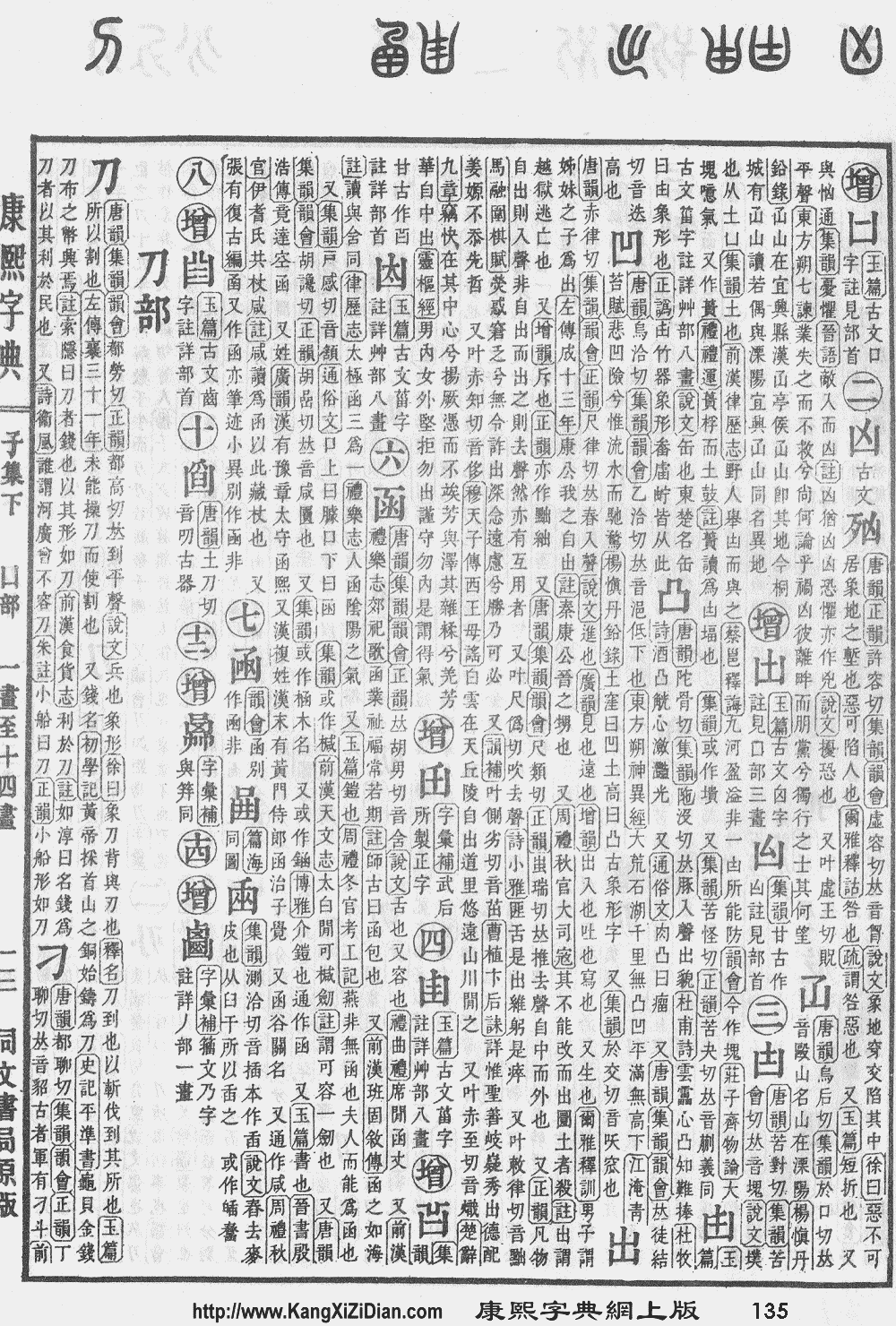
- Kangxi Dictionary: page 135, character 11
- Dai Kanwa Jiten: character 1811
- Dae Jaweon: page 301, character 7
- Hanyu Da Zidian (first edition): volume 1, page 307, character 8
- Unihan data for U+51FA
Chinese[edit]
| simp. and trad. |
出 | |
|---|---|---|
Glyph origin[edit]
| Historical forms of the character 出 | ||||
|---|---|---|---|---|
| Shang | Western Zhou | Warring States | Shuowen Jiezi (compiled in Han) | Liushutong (compiled in Ming) |
| Oracle bone script | Bronze inscriptions | Chu slip and silk script | Small seal script | Transcribed ancient scripts |

|

|

|

|

|
| Old Chinese | |
|---|---|
| 聉 | *r̥ʰuːlʔ, *ŋrɯd, *ʔr'uːd, *ŋruːd |
| 贅 | *kljods |
| 祟 | *sqʰluds |
| 出 | *kʰljuds, *kʰljud |
| 茁 | *ʔl'ɯd, *skruːd, *skrod, *skrud |
| 欪 | *qʰlɯd, *l̥ʰud |
| 貀 | *ŋr'uːd |
| 袦 | *ŋr'oːd |
| 咄 | *ʔl'oːd, *ʔl'uːd |
| 柮 | *sɡloːd, *ʔl'uːd |
| 拙 | *kljod |
| 炪 | *kljod, *l̥ʰud |
| 掘 | *ɡlod, *ɡlud |
| 鈯 | *l'uːd |
| 啒 | *kluːd, *qʰluːd |
| 淈 | *kluːd, *ɡluːd |
| 窟 | *kʰluːd |
| 泏 | *kʰluːd, *ʔl'ud |
| 堀 | *kʰluːd, *ɡlud |
| 胐 | *kʰluːd |
| 窋 | *ʔl'ud |
| 絀 | *ʔl'ud |
| 黜 | *l̥ʰud |
| 屈 | *klud, *kʰlud |
| 趉 | *klud |
| 鶌 | *klud |
| 詘 | *kʰlud |
| 倔 | *ɡlud |
| 崛 | *ɡlud, *ŋɡlud |
Ideogrammic compound (會意/会意) : 止 (“foot”) + 凵 (“cave”) – to step out of a cave; to exit. Compare 各.
By the Qin dynasty, the character has lost its original shape. Based on the distorted form, Shuowen mistakenly interprets the character as a pictogram (象形) of a plant growing outwards.
Etymology 1[edit]
STEDT derives this word from Proto-Sino-Tibetan *s-twak (“to come or go out; to emerge”); compare Burmese ထွက် (htwak, “to go or come out; to produce or yield; to leave”), Proto-Lolo-Burmese *ʔ-twakᴴ (“to come or got out; to emerge”), Proto-Kuki-Chin *tshuak-I, *tshuaʔ-II (“to come out; to emerge; to appear”). The -t final may be particular to Chinese.
Alternatively, Sagart (1999) and Baxter and Sagart (2014) suggest that this word is related to other words that express extraction, such as 掘 (OC *[ɡ]ut, “to dig out”), and reconstruct the Old Chinese with an intransitivizing prefix *t-.
Pronunciation[edit]
Definitions[edit]
出
- to go out; to leave; to exit
- to appear
- to come; to arrive
- (Cantonese) to go (to a certain place)
- (Cantonese) out; outside
- to send out; to put forth
- to exceed
- to produce; to turn out
- to happen; to arise
- to vent
- (ergative) to publish; to be released (e.g. a product, film, or announcement)
- to expend
- (Hong Kong Cantonese) to buy (an electronic device, such as a mobile phone or computer) (clarification of this definition is needed)
- Particle placed after verbs to indicate an outward movement.
- Particle placed after verbs to indicate a completed action. to determine
Compounds[edit]
- 一佛出世
- 一出
- 一孔出氣/一孔出气
- 一言既出
- 一麾出守
- 七出
- 三振出局 (sānzhèn chūjú)
- 三突出
- 不世出 (bùshìchū)
- 不假外出
- 不出 (bùchū)
- 不出所料 (bùchūsuǒliào)
- 不出材
- 不想出
- 不敢出氣/不敢出气
- 不敢出聲/不敢出声
- 不知所出
- 不能出口
- 世出
- 並出/并出
- 中出 (zhōngchū)
- 事出不意
- 事出不測/事出不测
- 事出有因 (shìchūyǒuyīn)
- 二門不出/二门不出
- 互出
- 五出
- 交出 (jiāochū)
- 人才出眾/人才出众
- 人才輩出/人才辈出 (réncáibèichū)
- 付出 (fùchū)
- 他出
- 令出如山
- 令出必行
- 令出惟行
- 任出
- 伸出 (shēnchū)
- 佛出世
- 伸出援手
- 倦出
- 倒屣奔出
- 偏出
- 側出/侧出
- 做出事來/做出事来
- 做出來/做出来
- 做出場/做出场
- 傑出/杰出 (jiéchū)
- 傳出/传出 (chuánchū)
- 傾巢出動/倾巢出动
- 傾巢而出/倾巢而出
- 億出/亿出
- 光出律
- 光出溜
- 入不支出
- 入不敷出 (rùbùfūchū)
- 入主出奴
- 入出
- 入孝出弟
- 入孝出悌
- 入文出武
- 入死出生
- 內出血/内出血 (nèichūxuè)
- 全盤托出/全盘托出
- 公共支出
- 六出
- 公出
- 六出公
- 六出奇計/六出奇计
- 六出祁山
- 六出花
- 六出計/六出计
- 兵出無名/兵出无名
- 出一回神
- 出一頭/出一头
- 出一頭地/出一头地
- 出丁
- 出上
- 出下
- 出世 (chūshì)
- 出世人
- 出世作
- 出世法
- 出世色
- 出世超凡
- 出世間/出世间
- 出世離群/出世离群
- 出丞
- 出主
- 出主意
- 出乎 (chūhū)
- 出乎反乎
- 出乎尋常/出乎寻常
- 出乎意外
- 出乎意料 (chūhūyìliào)
- 出乎意表
- 出乎預料/出乎预料
- 出乖弄醜/出乖弄丑 (chūguāinòngchǒu)
- 出乖露醜/出乖露丑
- 出乘
- 出九
- 出亂子/出乱子
- 出了月
- 出事 (chūshì)
- 出事情
- 出亡 (chūwáng)
- 出人
- 出人下
- 出人命 (chūrénmìng)
- 出人意
- 出人意外
- 出人意料 (chūrényìliào)
- 出人意表
- 出人望外
- 出人頭地/出人头地 (chūréntóudì)
- 出仕 (chūshì)
- 出令
- 出付
- 出任 (chūrèn)
- 出伕
- 出伏
- 出佐
- 出位 (chūwèi)
- 出何典記/出何典记
- 出何經典/出何经典
- 出來/出来 (chūlái)
- 出使 (chūshǐ)
- 出俗 (chūsú)
- 出倒
- 出借 (chūjiè)
- 出倫/出伦
- 出倫之才/出伦之才
- 出僱/出雇
- 出價/出价 (chūjià)
- 出充
- 出兌/出兑
- 出入 (chūrù)
- 出入人罪
- 出入將相/出入将相
- 出入格
- 出入法
- 出入無間/出入无间
- 出入生死
- 出入相隨/出入相随
- 出入神鬼
- 出入起居
- 出內/出内
- 出內之吝/出内之吝
- 出公差
- 出公忘私
- 出兵 (chūbīng)
- 出具 (chūjù)
- 出典 (chūdiǎn)
- 出其不備/出其不备
- 出其不意 (chūqíbùyì)
- 出其不虞
- 出其東門/出其东门
- 出冷門/出冷门
- 出出
- 凸出 (tūchū)
- 出出律律
- 出出溜溜
- 出分 (chūfēn)
- 出分子
- 出列
- 出判
- 出刺
- 出剩
- 出力 (chūlì)
- 出動/出动 (chūdòng)
- 出勤 (chūqín)
- 出勤率
- 出化
- 出卒
- 出去 (chūqù)
- 出參/出参
- 出口 (chūkǒu)
- 出口傷人/出口伤人
- 出口入耳
- 出口導向/出口导向
- 出口成章 (chūkǒuchéngzhāng)
- 出口稅/出口税
- 出口貨/出口货
- 出口貿易/出口贸易
- 出句
- 出名 (chūmíng)
- 出君
- 出告反面
- 出命
- 出品 (chūpǐn)
- 出哨
- 出售 (chūshòu)
- 出問題/出问题
- 出喪/出丧
- 出嗣
- 出器
- 出圈
- 出國/出国 (chūguó)
- 出圈兒/出圈儿
- 出圍/出围
- 出土 (chūtǔ)
- 出土文物
- 出土物
- 出地
- 出堂
- 出堂差
- 出場/出场 (chūchǎng)
- 出塢/出坞
- 出塞 (chūsài)
- 出塵/出尘
- 出境 (chūjìng)
- 出壙/出圹
- 出外 (chūwài)
- 出外景
- 出大差
- 出大恭 (chū dàgōng)
- 出夫
- 出太陽/出太阳
- 出夷入險/出夷入险
- 出奔 (chūbēn)
- 出奇 (chūqí)
- 出奇不窮/出奇不穷
- 出奇制勝/出奇制胜 (chūqízhìshèng)
- 出奇劃策/出奇划策
- 出奇取勝/出奇取胜
- 出奇無窮/出奇无穷
- 出奇致勝/出奇致胜
- 出奏
- 出女
- 出奴入主
- 出姓
- 出妻
- 出娘胎
- 出婦/出妇
- 出嫁 (chūjià)
- 出子 (chūzi)
- 出孝
- 出學/出学
- 出守
- 出宋
- 出定
- 出官 (chūguān)
- 出室
- 出客
- 出宰
- 出家 (chūjiā)
- 出家人 (chūjiārén)
- 出家修行
- 出家修道
- 出家兒/出家儿
- 出家入道
- 出家歸道/出家归道
- 出家求道
- 出宿
- 出寶/出宝
- 出將/出将
- 出將入相/出将入相
- 出尊
- 出小恭
- 出尖
- 出就外傅
- 出局 (chūjú)
- 出居
- 出屜/出屉
- 出山 (chūshān)
- 出岔
- 出岔兒/出岔儿
- 出岔子 (chū chàzi)
- 出岫
- 出工 (chūgōng)
- 出差 (chūchāi)
- 出差子
- 出差費/出差费
- 出差錯/出差错
- 出布
- 出帖
- 出師/出师 (chūshī)
- 出席 (chūxí)
- 出師不利/出师不利
- 出師有名/出师有名
- 出師無名/出师无名
- 出師表/出师表
- 出帳/出帐
- 出常調/出常调
- 出幸
- 出幼
- 出幽
- 出幽升高
- 出幽遷喬/出幽迁乔
- 出店
- 出庭 (chūtíng)
- 出庭費/出庭费
- 出廠/出厂 (chūchǎng)
- 出張/出张 (chūzhāng)
- 出彩 (chūcǎi)
- 出征 (chūzhēng)
- 出往
- 出後/出后
- 出徇
- 出律
- 出徒
- 出御
- 出心
- 出性
- 出息
- 出恭 (chūgōng)
- 出恭牌
- 出意
- 出意外
- 出戍
- 出戰/出战 (chūzhàn)
- 出戶/出户 (chūhù)
- 出手 (chūshǒu)
- 出手得盧/出手得卢
- 出把戲/出把戏
- 出拔
- 出押
- 出招 (chūzhāo)
- 出拐
- 出按
- 出挑 (chūtiāo)
- 出捐
- 出推
- 出探
- 出操
- 出擋/出挡
- 出擊/出击 (chūjī)
- 出放
- 出故典
- 出敖
- 出教
- 出敕
- 出敵不意/出敌不意
- 出數兒/出数儿
- 出敵意外/出敌意外
- 出文入武
- 出斬/出斩
- 出於意外/出于意外
- 出於意表/出于意表
- 出旅
- 出日
- 出易
- 出晝/出昼
- 出景
- 出書/出书 (chūshū)
- 出會/出会
- 出月 (chūyuè)
- 出月子
- 出有入無/出有入无
- 出服
- 出朝
- 出材
- 出案
- 出格 (chūgé)
- 出條/出条
- 出梅
- 出條子/出条子
- 出榜 (chūbǎng)
- 出樽
- 出樹/出树
- 出橐
- 出次
- 出款
- 出此下策
- 出歸/出归
- 出死 (chūsǐ)
- 出死入生
- 出死斷亡/出死断亡
- 出殃
- 出殯/出殡 (chūbìn)
- 出殼/出壳
- 出母
- 出毛病
- 出氣/出气 (chūqì)
- 出氣洞/出气洞
- 出氣筒/出气筒 (chūqìtǒng)
- 出水 (chūshuǐ)
- 出水口
- 出水夥計/出水伙计
- 出水芙蓉 (chūshuǐfúróng)
- 出汗 (chūhàn)
- 出沐
- 出決/出决
- 出没 (chūmò)
- 出沒/出没 (chūmò)
- 出没不常
- 出沒不常/出没不常
- 出沒無常/出没无常
- 出治
- 出注
- 出法駁案/出法驳案
- 出洋 (chūyáng)
- 出洗
- 出活
- 出洋相 (chū yángxiàng)
- 出浴
- 出海 (chūhǎi)
- 出涕
- 出淋
- 出液
- 出清
- 出淺入深/出浅入深
- 出游 (chūyóu)
- 出港 (chūgǎng)
- 出溺
- 出溜 (chūliu)
- 出溜兒/出溜儿
- 出滯/出滞
- 出演 (chūyǎn)
- 出漏子
- 出滯淹/出滞淹
- 出潔/出洁
- 出火 (chūhuǒ)
- 出火炕
- 出火珠
- 出熱/出热
- 出爐/出炉 (chūlú)
- 出爵
- 出爻
- 出爾反爾/出尔反尔 (chū'ěrfǎn'ěr)
- 出版 (chūbǎn)
- 出版品 (chūbǎnpǐn)
- 出版所
- 出版法
- 出版物 (chūbǎnwù)
- 出版界
- 出版社 (chūbǎnshè)
- 出版節/出版节
- 出版自由
- 出牌 (chūpái)
- 出牒
- 出牓/出榜
- 出牧
- 出狀況/出状况
- 出狩
- 出獄/出狱 (chūyù)
- 出獵/出猎
- 出王
- 出玖
- 出班
- 出現/出现 (chūxiàn)
- 出生 (chūshēng)
- 出生入死 (chūshēngrùsǐ)
- 出生別/出生别 (chūshēngbié)
- 出生牙
- 出生率 (chūshēnglǜ)
- 出生證明/出生证明 (chūshēng zhèngmíng)
- 出產/出产 (chūchǎn)
- 出甲
- 出田
- 出界 (chūjiè)
- 出畋
- 出留出律
- 出疆
- 出疹子 (chū zhěnzi)
- 出發/出发 (chūfā)
- 出發點/出发点 (chūfādiǎn)
- 出的
- 出監/出监
- 出盤/出盘
- 出盪/出荡
- 出相
- 出眾/出众 (chūzhòng)
- 出眼
- 出知
- 出破
- 出磣/出碜
- 出示 (chūshì)
- 出社會/出社会
- 出祖
- 出神 (chūshén)
- 出神入化 (chūshénrùhuà)
- 出神入定
- 出祿/出禄
- 出禪/出禅
- 出秀
- 出科
- 出租 (chūzū)
- 出租汽車/出租汽车 (chūzū qìchē)
- 出空
- 出窩老/出窝老
- 出竅/出窍
- 出笏
- 出筆/出笔
- 出等
- 出籍
- 出籠/出笼 (chūlóng)
- 出籠鳥/出笼鸟
- 出粗
- 出糗 (chūqiǔ)
- 出糞/出粪
- 出糧/出粮
- 出糴/出籴
- 出糶/出粜
- 出紅差/出红差
- 出納/出纳 (chūnà)
- 出納之吝/出纳之吝
- 出納員/出纳员 (chūnàyuán)
- 出細/出细
- 出給/出给
- 出結/出结
- 出綍/出𰬘
- 出綸/出纶
- 出線/出线 (chūxiàn)
- 出線權/出线权
- 出縮/出缩
- 出繼/出继
- 出缺
- 出罪
- 出羞
- 出群
- 出群器
- 出群才
- 出群拔萃
- 出群材
- 出群蹄
- 出聘 (chūpìn)
- 出聖入神/出圣入神
- 出聲/出声 (chūshēng)
- 出職/出职
- 出胎
- 出胸
- 出脫/出脱 (chūtuō)
- 出脱 (chūtuō)
- 出腳/出脚
- 出腹
- 出腹子
- 出臆
- 出膺
- 出臨/出临
- 出自 (chūzì)
- 出自娘胎
- 出自意外
- 出臺/出台 (chūtái)
- 出舉/出举
- 出舉興生/出举兴生
- 出舍
- 出航 (chūháng)
- 出色 (chūsè)
- 出芽 (chūyá)
- 出花兒/出花儿
- 出花樣/出花样
- 出芽生殖
- 出苗 (chūmiáo)
- 出草 (chūcǎo)
- 出荷
- 出荷糧/出荷粮
- 出萃
- 出葆
- 出落
- 出蒐
- 出薪
- 出藍/出蓝
- 出藩
- 出處/出处 (chūchù)
- 出處殊塗/出处殊涂
- 出處殊途/出处殊途
- 出處語默/出处语默
- 出處進退/出处进退
- 出虛恭/出虚恭
- 出號/出号
- 出蟄/出蛰
- 出血 (chūxuè)
- 出血筒子
- 出行 (chūxíng)
- 出街 (chūjiē)
- 出補/出补
- 出見/出见
- 出規/出规
- 出角
- 出言 (chūyán)
- 出言不遜/出言不逊 (chūyánbùxùn)
- 出言吐氣/出言吐气
- 出言吐詞/出言吐词
- 出言吐語/出言吐语
- 出言成章
- 出言有序
- 出言無狀/出言无状
- 出記/出记
- 出討/出讨
- 出訟/出讼
- 出訪/出访 (chūfǎng)
- 出訴/出诉
- 出診/出诊 (chūzhěn)
- 出詞吐氣/出词吐气
- 出誅/出诛
- 出語/出语 (chūyǔ)
- 出語成章/出语成章
- 出調/出调
- 出謁/出谒
- 出謀劃策/出谋划策 (chūmóuhuàcè)
- 出謀獻策/出谋献策
- 出警入蹕/出警入跸
- 出讓/出让 (chūràng)
- 出谷
- 出谷遷喬/出谷迁乔
- 出谷鶯/出谷莺
- 出豁
- 出豕敗御/出豕败御
- 出豫
- 出貢/出贡
- 出責/出责
- 出貨/出货 (chūhuò)
- 出貲/出赀
- 出費/出费
- 出貸/出贷
- 出賃/出赁
- 出資/出资 (chūzī)
- 出賜/出赐
- 出賣/出卖 (chūmài)
- 出質/出质
- 出賣風雷/出卖风雷
- 出賽/出赛
- 出賸/出剩
- 出贅/出赘
- 出走 (chūzǒu)
- 出超 (chūchāo)
- 出跋
- 出跳
- 出路 (chūlù)
- 出跨
- 出身 (chūshēn)
- 出身加民
- 出車/出车 (chūchē)
- 出車殄寇/出车殄寇
- 出軍/出军
- 出軌/出轨 (chūguǐ)
- 出輔/出辅
- 出輿入輦/出舆入辇
- 出轍/出辙
- 出辭/出辞
- 出巡 (chūxún)
- 出迓
- 出迎 (chūyíng)
- 出逃 (chūtáo)
- 出途
- 出道 (chūdào)
- 出遊/出游 (chūyóu)
- 出遠門/出远门 (chū yuǎnmén)
- 出適/出适
- 出邊/出边
- 出醜/出丑 (chūchǒu)
- 出醜揚疾/出丑扬疾
- 出醜放乖/出丑放乖
- 出醜狼藉/出丑狼借
- 出金 (chūjīn)
- 出鈔/出钞
- 出鈸/出钹
- 出鋒/出锋
- 出鋒頭/出锋头
- 出錯/出错 (chūcuò)
- 出錢/出钱 (chūqián)
- 出鎮/出镇
- 出鏡頭/出镜头
- 出鐩/出𬭼
- 出鑪銀/出𬬻银
- 出長/出长
- 出門/出门 (chūmén)
- 出門人/出门人
- 出門合轍/出门合辙
- 出門在外/出门在外
- 出門如賓/出门如宾
- 出門子/出门子 (chūménzi)
- 出門應轍/出门应辙
- 出閒力/出闲力
- 出閣/出阁 (chūgé)
- 出閤/出合
- 出閣之喜/出阁之喜
- 出閫/出阃
- 出闈/出闱
- 出關/出关 (chūguān)
- 出防
- 出降
- 出院 (chūyuàn)
- 出除
- 出陣/出阵 (chūzhèn)
- 出陳/出陈
- 出陳布新/出陈布新
- 出陳易新/出陈易新
- 出險/出险 (chūxiǎn)
- 出雙入對/出双入对 (chūshuāngrùduì)
- 出離/出离
- 出難題/出难题 (chū nántí)
- 出雲入泥/出云入泥
- 出震
- 出震之君
- 出震御極/出震御极
- 出震繼離/出震继离
- 出面 (chūmiàn)
- 出面腔
- 出韻/出韵
- 出頂/出顶
- 出項/出项
- 出頭/出头 (chūtóu)
- 出頭之日/出头之日
- 出頭人/出头人
- 出頭天/出头天 (chūtóutiān)
- 出頭日子/出头日子
- 出頭棍/出头棍
- 出頭棒子/出头棒子
- 出頭露角/出头露角
- 出頭露面/出头露面
- 出頭面/出头面
- 出頭鳥/出头鸟
- 出題/出题 (chūtí)
- 出類/出类
- 出類拔群/出类拔群
- 出類拔萃/出类拔萃 (chūlèibácuì)
- 出類超群/出类超群
- 出風/出风
- 出風頭/出风头 (chū fēngtou)
- 出飯/出饭 (chūfàn)
- 出餞/出饯
- 出首 (chūshǒu)
- 出馬/出马 (chūmǎ)
- 出驚/出惊
- 出鬼 (chūguǐ)
- 出鬼入神
- 出點子/出点子
- 出齊/出齐 (chūqí)
- 刊出
- 別出心裁/别出心裁 (biéchūxīncái)
- 別出手眼/别出手眼
- 別出新意/别出新意
- 別出新裁/别出新裁
- 別出機杼/别出机杼 (biéchūjīzhù)
- 初出茅廬/初出茅庐 (chūchūmáolú)
- 利多出盡/利多出尽
- 利息支出
- 利空出盡/利空出尽
- 前出後空/前出后空
- 創出/创出
- 勞務出口/劳务出口
- 勻出/匀出 (yúnchū)
- 化出化入
- 十日並出/十日并出
- 半路出家 (bànlùchūjiā)
- 卓出
- 卓爾出群/卓尔出群
- 口出不遜/口出不逊
- 口出穢言/口出秽言
- 同出
- 同出一源
- 同出一脈/同出一脉
- 同出身
- 合盤托出/合盘托出
- 呼之欲出 (hūzhīyùchū)
- 和盤托出/和盘托出 (hépántuōchū)
- 售出 (shòuchū)
- 喜出望外 (xǐchūwàngwài)
- 噴出岩/喷出岩
- 噴薄欲出/喷薄欲出
- 四出
- 四出文錢/四出文钱
- 四面出擊/四面出击
- 在家出家
- 外出 (wàichū)
- 外出服
- 外出血 (wàichūxuè)
- 大出喪/大出丧
- 大出手
- 大出血 (dàchūxuè)
- 大出進/大出进
- 大出鋒頭/大出锋头
- 大出風頭/大出风头
- 大打出手 (dàdǎchūshǒu)
- 失出 (shīchū)
- 奇出
- 奪眶而出/夺眶而出
- 奪門而出/夺门而出
- 如出一口
- 如出一轍/如出一辙 (rúchūyīzhé)
- 姷出
- 姘出去
- 娩出 (miǎnchū)
- 嫡出 (díchū)
- 孽出
- 宣出
- 家庭出身
- 宮車出/宫车出
- 宮車晚出/宫车晚出
- 寒林筍出/寒林笋出
- 射出 (shèchū)
- 將出/将出
- 小出
- 尿出子
- 展出 (zhǎnchū)
- 屢出新招/屡出新招
- 層出/层出
- 層出不窮/层出不穷 (céngchūbùqióng)
- 層出疊見/层出叠见 (céngchūdiéxiàn)
- 層見疊出/层见叠出 (céngxiàndiéchū)
- 層見迭出/层见迭出
- 層見錯出/层见错出
- 岐出
- 岔出
- 岐出岐入
- 崛出 (juéchū)
- 師出有名/师出有名 (shīchūyǒumíng)
- 師出無名/师出无名
- 平入平出
- 平出
- 庶出 (shùchū)
- 引出 (yǐnchū)
- 強出頭/强出头
- 彙出/汇出
- 復出/复出 (fùchū)
- 思不出位
- 悖入悖出 (bèirù-bèichū)
- 悟出 (wùchū)
- 愈出愈奇
- 意出望外
- 應運而出/应运而出
- 戲出兒/戏出儿
- 所出
- 才為世出/才为世出
- 打出吊入
- 打出弔入/打出吊入
- 打出手
- 打出調入/打出调入
- 打出頭棍/打出头棍
- 打棍出箱
- 找出路
- 拔不出腿
- 拋出/抛出
- 拔出
- 招出
- 抱出籠/抱出笼
- 拔叢出類/拔丛出类
- 拔圍出夫/拔围出夫
- 拔群出萃
- 拔群出類/拔群出类
- 拔萃出群
- 拔萃出類/拔萃出类
- 拿不出手 (nábùchūshǒu)
- 指出 (zhǐchū)
- 拿出 (náchū)
- 挺出
- 挺身而出 (tǐngshēn'érchū)
- 推出 (tuīchū)
- 掏出
- 掛出/挂出
- 排出作用
- 掐出水來/掐出水来
- 探口而出
- 掃地出門/扫地出门
- 推陳出新/推陈出新 (tuīchénchūxīn)
- 揪出
- 提出 (tíchū)
- 提甕出汲/提瓮出汲
- 握粟出卜
- 搬出 (bānchū)
- 播出 (bōchū)
- 撥出/拨出 (bōchū)
- 播出頻道/播出频道
- 擊出/击出 (jīchū)
- 擺出/摆出
- 支出 (zhīchū)
- 放出 (fàngchū)
- 政出多門/政出多门
- 放出手眼
- 政由己出
- 故出
- 故出人罪
- 整廠輸出/整厂输出
- 新出土兒/新出土儿
- 新出手兒/新出手儿
- 新出猛兒/新出猛儿
- 新鶯出谷/新莺出谷
- 旁出 (pángchū)
- 旁見側出/旁见侧出
- 旁逸橫出/旁逸横出
- 日出 (rìchū)
- 日出三竿
- 日出不窮/日出不穷
- 早出晚歸/早出晚归 (zǎochūwǎnguī)
- 早出暮歸/早出暮归
- 昭君出塞
- 時出/时出
- 晝伏夜出/昼伏夜出 (zhòufúyèchū)
- 晚出
- 曹衣出水
- 月出 (yuèchū)
- 有出入
- 有出息 (yǒu chūxi)
- 朝出夕改
- 本出
- 杜門不出/杜门不出
- 析出
- 桀出
- 橫出/横出
- 橫翔捷出/横翔捷出
- 橫見側出/横见侧出
- 權變鋒出/权变锋出
- 正出
- 歧出 (qíchū)
- 歲出/岁出 (suìchū)
- 歹做出
- 歹竹出好筍/歹竹出好笋 (dǎi zhú chū hǎo sǔn)
- 殺出重圍/杀出重围
- 殺身出生/杀身出生
- 水落石出 (shuǐluòshíchū)
- 求忠出孝
- 汗出如漿/汗出如浆
- 汗出如雨
- 汗出沾背
- 汗出洽背
- 汗出浹背/汗出浃背
- 沒個出豁/没个出豁
- 沓出
- 沒出/没出
- 沒出息/没出息 (méi chūxi)
- 沒出產/没出产
- 沒出豁/没出豁
- 沒出豁處/没出豁处
- 沒出長/没出长
- 沒處出豁/没处出豁
- 河不出圖/河不出图
- 法出一門/法出一门
- 河出伏流
- 河出圖/河出图
- 法出多門/法出多门
- 洞出
- 洗出作用
- 派出所 (pàichūsuǒ)
- 派出機關/派出机关
- 流魚出聽/流鱼出听
- 涌出 (yǒngchū)
- 涅槃出世
- 深入淺出/深入浅出 (shēnrùqiǎnchū)
- 深入顯出/深入显出
- 淡出 (dànchū)
- 清出
- 淚出痛腸/泪出痛肠
- 深居簡出/深居简出 (shēnjūjiǎnchū)
- 湧出/涌出 (yǒngchū)
- 測出/测出
- 滑出
- 滑出律
- 滑出溜
- 滲出/渗出 (shènchū)
- 演出 (yǎnchū)
- 滾出去/滚出去 (gǔn chūqu)
- 演出本
- 漏洞百出 (lòudòngbǎichū)
- 潛出/潜出
- 潑出膽子/泼出胆子
- 無出/无出
- 無出其右/无出其右 (wúchūqíyòu)
- 無出頭/无出头
- 蒸藜出妻
- 熬出頭/熬出头
- 燕出
- 爆出 (bàochū)
- 爬出
- 特出 (tèchū)
- 犯不出
- 獨出/独出
- 獨出心裁/独出心裁
- 獨出新裁/独出新裁
- 獨出機杼/独出机杼
- 現出/现出 (xiànchū)
- 現出原身/现出原身
- 理出頭緒/理出头绪
- 生出 (shēngchū)
- 略不世出
- 異出/异出
- 當場出彩/当场出彩
- 當場出醜/当场出丑
- 當行出色/当行出色
- 疊見層出/叠见层出
- 登出 (dēngchū)
- 發出/发出 (fāchū)
- 發號出令/发号出令
- 百出 (bǎichū)
- 皮下出血
- 直出直入
- 直進直出/直进直出
- 看不出 (kànbùchū)
- 看出 (kànchū)
- 相出
- 看出了神
- 相門出相/相门出相
- 瞧不出
- 破綻百出/破绽百出
- 破繭而出/破茧而出
- 破門而出/破门而出
- 磬出
- 神出鬼入
- 神出鬼沒/神出鬼没 (shénchūguǐmò)
- 神驥出櫪/神骥出枥
- 視如己出/视如己出
- 禍出不測/祸出不测
- 禍從口出/祸从口出
- 秀出
- 秀出班行
- 科出
- 科甲出身
- 科第出身
- 穎出/颖出
- 穎脫而出/颖脱而出 (yǐngtuō'érchū)
- 突出 (tūchū)
- 窘態百出/窘态百出
- 竄進竄出/窜进窜出
- 簡出/简出
- 糶出/粜出
- 紅杏出牆/红杏出墙 (hóngxìngchūqiáng)
- 絕世出塵/绝世出尘
- 絕出/绝出
- 線上出版/线上出版
- 縱出/纵出
- 縱虎出匣/纵虎出匣
- 縱虎出柙/纵虎出柙
- 罷出/罢出
- 翻出
- 翻空出奇
- 翻陳出新/翻陈出新
- 聖人出/圣人出
- 聳出/耸出
- 脫出/脱出 (tuōchū)
- 脫口而出/脱口而出
- 脫穎而出/脱颖而出 (tuōyǐng'érchū)
- 脱穎而出
- 腦出血/脑出血 (nǎochūxuè)
- 臆出
- 自出
- 自出一家
- 自出心裁
- 自出新裁
- 自出機杼/自出机杼 (zìchūjīzhù)
- 自出機軸/自出机轴
- 花六出
- 花招百出
- 花樣百出/花样百出
- 芙蓉出水
- 若出一軌/若出一轨
- 若出一轍/若出一辙
- 荷花出水
- 藍田出玉/蓝田出玉
- 虎兕出柙
- 虣出
- 蚤入晏出
- 蚤出夜入
- 蚤出莫入
- 蛇入鼠出
- 蜂出
- 蜂出泉流
- 蜂湧而出/蜂涌而出
- 蟲出/虫出
- 蟻出蚋飛/蚁出蚋飞
- 行伍出身
- 衝口而出/冲口而出 (chōngkǒu'érchū)
- 被出
- 裡出外進/里出外进
- 角出
- 言出如山
- 言出必行 (yánchūbìxíng)
- 言出患入
- 言出法隨/言出法随 (yánchūfǎsuí)
- 言出禍從/言出祸从
- 言出禍隨/言出祸随
- 計出無奈/计出无奈
- 計出無聊/计出无聊
- 計出萬全/计出万全
- 計出萬死/计出万死
- 計將安出/计将安出 (jì jiāng ān chū)
- 計無所出/计无所出
- 計無由出/计无由出
- 詭計百出/诡计百出
- 說不出/说不出 (shuōbùchū)
- 說不出口/说不出口
- 語出月脅/语出月胁
- 誥劄出身/诰劄出身
- 謬誤百出/谬误百出
- 譆譆出出/嘻嘻出出
- 譴出/谴出
- 變態百出/变态百出
- 讓出/让出
- 豁出去
- 貧寒出身/贫寒出身
- 貼出/贴出
- 買出/买出
- 貴出/贵出
- 費出/费出
- 貴出賤收/贵出贱收
- 賤入貴出/贱入贵出
- 賤出/贱出
- 賤斂貴出/贱敛贵出
- 赤溜出律
- 赤留出律
- 走出 (zǒuchū)
- 超凡出世
- 超出 (chāochū)
- 超塵出俗/超尘出俗 (chāochénchūsú)
- 超群出眾/超群出众
- 超羣出衆/超羣出众
- 趨出/趋出
- 足不出戶/足不出户 (zúbùchūhù)
- 足不出門/足不出门
- 跳出 (tiàochū)
- 路出
- 路出嘴邊/路出嘴边
- 跳出火坑
- 躄出
- 軼出/轶出
- 輕出/轻出
- 輩出/辈出 (bèichū)
- 輸出/输出 (shūchū)
- 辭出/辞出
- 迥出
- 迭出迭入
- 迭見雜出/迭见杂出
- 逆入平出
- 退出 (tuìchū)
- 迸出
- 逃出生天
- 逐出 (zhúchū)
- 逐出門牆/逐出门墙
- 逸出
- 進出/进出 (jìnchū)
- 進出口/进出口 (jìnchūkǒu)
- 進士出身/进士出身 (jìnshì chūshēn)
- 進退出處/进退出处
- 道不出
- 逾出
- 運籌出奇/运筹出奇
- 遝出
- 遞解出境/递解出境
- 遷喬出谷/迁乔出谷
- 遷鶯出谷/迁莺出谷
- 邁出/迈出 (màichū)
- 酒入舌出
- 醜態百出/丑态百出
- 釋出/释出 (shìchū)
- 重出
- 重見複出/重见复出
- 量入為出/量入为出 (liàngrùwéichū)
- 量入計出/量入计出
- 量出制入
- 鋒出/锋出
- 錯出/错出
- 鑽皮出羽/钻皮出羽
- 鑽門出戶/钻门出户
- 長出氣/长出气
- 門裏出身/门里出身
- 門裡出身/门里出身
- 閒出/闲出
- 開出/开出 (kāichū)
- 間出/间出
- 開柙出虎/开柙出虎
- 閒見層出/闲见层出
- 闌出/阑出
- 附出
- 降出
- 雜出身/杂出身
- 難出手心/难出手心
- 離家出走/离家出走 (líjiāchūzǒu)
- 雲出無心/云出无心
- 雷出
- 需沙出穴
- 露出 (lùchū)
- 露出破綻/露出破绽
- 露出馬腳/露出马脚 (lòuchū mǎjiǎo)
- 青出于藍
- 青出於藍/青出于蓝 (qīngchūyúlán)
- 頭出頭沒/头出头没
- 頭破血出/头破血出
- 類出/类出
- 顯出/显出 (xiǎnchū)
- 首出
- 駢興錯出/骈兴错出
- 騰出/腾出 (téngchū)
- 驅逐出境/驱逐出境
- 驚險百出/惊险百出
- 骨出
- 高出 (gāochū)
- 鬼出神入
- 鬼出電入/鬼出电入
- 魂出
- 魚貫而出/鱼贯而出
- 鯰出溜/鲶出溜
- 鳳鳴麟出/凤鸣麟出
- 黑出律
- 點出/点出 (diǎnchū)
- 鼎出
- 鼻中出火
- 鼻端出火
- 鼻頭出火/鼻头出火
Etymology 2[edit]
| For pronunciation and definitions of 出 – see 齣 (“act; stanza; time, occasion; etc.”). (This character is the simplified and variant traditional form of 齣). |
Notes:
|
Japanese[edit]
Kanji[edit]
Readings[edit]
- Go-on: しゅち (shuchi)←しゆち (syuti, historical); すい (sui, Jōyō †)
- Kan-on: しゅつ (shutsu, Jōyō)←しゆつ (syutu, historical); すい (sui, Jōyō †)
- Kun: でる (deru, 出る, Jōyō); だす (dasu, 出す, Jōyō); いず (izu, 出ず)←いづ (idu, 出づ, historical); いだす (idasu, 出だす)
Compounds[edit]
Etymology 1[edit]
| Kanji in this term |
|---|
| 出 |
| しゅつ Grade: 1 |
| kan’on |
From Middle Chinese 出 (MC tsyhwit).
Pronunciation[edit]
Noun[edit]
- being from a certain place
- a coming out, exiting
Affix[edit]
Derived terms[edit]
- 出演 (shutsuen)
- 出捐 (shutsuen)
- 出家 (shukke)
- 出火 (shukka)
- 出荷 (shukka)
- 出芽 (shutsuga)
- 出駕 (shutsuga)
- 出会 (shukkai)
- 出棺 (shukkan)
- 出監 (shukkan)
- 出願 (shutsugan)
- 出渠 (shukkyo)
- 出御 (shutsugyo)
- 出漁 (shutsugyo)
- 出京 (shukkyō)
- 出郷 (shutsugō)
- 出動 (shukkin)
- 出勤 (shukkin)
- 出金 (shukkin)
- 出群 (shutsugun)
- 出軍 (shutsugun)
- 出撃 (shutsugeki)
- 出欠 (shukketsu)
- 出血 (shukketsu)
- 出現 (shutsugen)
- 出庫 (shukko)
- 出向 (shukkō)
- 出校 (shukkō)
- 出港 (shukkō)
- 出航 (shukkō)
- 出講 (shukkō)
- 出殻 (shukkoku)
- 出国 (shutsugoku)
- 出獄 (shutsugoku)
- 出札 (shussatsu)
- 出産 (shussan)
- 出師 (shusshi)
- 出資 (shusshi)
- 出仕 (shutsuji)
- 出時 (shutsuji)
- 出自 (shutsuji)
- 出社 (shussha)
- 出所 (shussho)
- 出生 (shusshō)
- 出場 (shutsujō)
- 出色 (shusshoku)
- 出身 (shusshin)
- 出陣 (shutsujin)
- 出穂 (shussui)
- 出世 (shusse)
- 出征 (shussei)
- 出生 (shussei)
- 出精 (shussei)
- 出席 (shusseki)
- 出船 (shussen)
- 出前 (shutsuzen)
- 出訴 (shusso)
- 出走 (shussō)
- 出来 (shuttai)
- 出題 (shutsudai)
- 出立 (shuttatsu)
- 出炭 (shuttan)
- 出端 (shuttan)
- 出超 (shutchō)
- 出陳 (shutchin)
- 出廷 (shuttei)
- 出典 (shutten)
- 出展 (shutten)
- 出店 (shutten)
- 出度 (shutsudo)
- 出土 (shutsudo)
- 出頭 (shuttō)
- 出入 (shutsunyū)
- 出納 (shutsunō)
- 出馬 (shutsuba)
- 出発 (shuppatsu)
- 出帆 (shuppan)
- 出版 (shuppan)
- 出費 (shuppi)
- 出品 (shuppin)
- 出府 (shuppu)
- 出兵 (shuppei)
- 出没 (shutsubotsu)
- 出奔 (shuppon)
- 出門 (shutsumon)
- 出来 (shutsurai)
- 出藍 (shutsuran)
- 出漁 (shutsuryō)
- 出猟 (shutsuryō)
- 出力 (shutsuryoku)
- 出塁 (shutsurui)
- 出廬 (shutsuro)
- 案出 (anshutsu)
- 外出 (gaishutsu)
- 救出 (kyūshutsu)
- 傑出 (kesshutsu)
- 現出 (genshutsu)
- 支出 (shishutsu)
- 進出 (shinshutsu)
- 退出 (taishutsu)
- 脱出 (dasshutsu)
- 嫡出 (chakushutsu)
- 提出 (teishutsu)
- 摘出 (tekishutsu)
- 転出 (tenshutsu)
- 搬出 (hanshutsu)
- 百出 (hyakushutsu)
- 頻出 (hinshutsu)
- 輸出 (yushutsu)
- 流出 (ryūshutsu)
- 露出 (roshutsu)
Etymology 2[edit]
| Kanji in this term |
|---|
| 出 |
| すい Grade: 1 |
| on’yomi |
From Middle Chinese 出 (MC tsyhwijH).
Affix[edit]
Derived terms[edit]
Etymology 3[edit]
| Kanji in this term |
|---|
| 出 |
| で Grade: 1 |
| kun’yomi |
The 連用形 (ren’yōkei, “stem or continuative form”) of verb 出る (deru, “to come out”).
Pronunciation[edit]
Noun[edit]
Derived terms[edit]
- 出出し (dedashi)
- 出会う (deau)
- 出足 (deashi)
- 出入り (deiri)
- 出掛け (dekake)
- 出来す (dekasu)
- 出方 (dekata)
- 出来る (dekiru)
- 出際 (degiwa)
- 出口 (deguchi)
- 出会す (dekuwasu)
- 出稽古 (degeiko)
- 出格子 (degōshi)
- 出先 (desaki)
- 出様 (desama)
- 出汁 (dejiru)
- 出城 (dejiro)
- 出潮 (deshio)
- 出刃 (deba)
- 出歯 (deba), 出っ歯 (deppa)
- 出花 (debana)
- 出鼻 (debana)
- 出番 (deban)
- 出額 (debitai)
- 出臍 (debeso)
- 出放題 (dehōdai)
- 出窓 (demado)
- 出水 (demizu)
- 出目 (deme)
- 出物 (demono)
- 出家 (iede)
- 打ち出 (uchide)
- 思い出 (omoide)
- 食い出 (kuide)
- 差し出 (sashide)
- 死出 (shide)
- 外出 (sotode)
- 食べ出 (tabede)
- 使い出 (tsukaide)
- 外出 (tode)
- 遠出 (tōde)
- 届け出 (todokede)
- 抜き出 (nukide)
- 願い出 (negaide)
- 飲み出 (nomide)
- 乗り出 (noride)
- 早出 (hayade)
- 人出 (hitode)
- 日の出 (hinode)
- 船出 (funade)
- ぽっと出 (pottode)
- 読み出 (yomide)
Etymology 4[edit]
| Kanji in this term |
|---|
| 出 |
| ず Grade: 1 |
| kun’yomi |
Contraction of classical verb 出づ (izu), omitting the initial i-.
Verb[edit]
Usage notes[edit]
The 出る (deru) form is now the standard term for this in modern Japanese.
Conjugation[edit]
| Stem forms | |||
|---|---|---|---|
| Irrealis (未然形) | 出 | で | de |
| Continuative (連用形) | 出 | で | de |
| Terminal (終止形) | 出 | づ | du |
| Attributive (連体形) | 出る | づる | duru |
| Realis (已然形) | 出れ | づれ | dure |
| Imperative (命令形) | 出よ | でよ | deyo |
| Key constructions | |||
| Negative | 出ず | でず | dezu |
| Contrasting conjunction | 出れど | づれど | duredo |
| Causal conjunction | 出れば | づれば | dureba |
| Conditional conjunction | 出ば | でば | deba |
| Past tense (firsthand knowledge) | 出き | でき | deki |
| Past tense (secondhand knowledge) | 出けり | でけり | dekeri |
| Perfect tense (conscious action) | 出つ | でつ | detu |
| Perfect tense (natural event) | 出ぬ | でぬ | denu |
| Perfect-continuative tense | 出たり | でたり | detari |
| Volitional | 出む | でむ | demu |
References[edit]
- ↑ 1.0 1.1 1.2 Matsumura, Akira, editor (2006), 大辞林 (in Japanese), Third edition, Tōkyō: Sanseidō, →ISBN
- ↑ 2.0 2.1 NHK Broadcasting Culture Research Institute, editor (1998), NHK日本語発音アクセント辞典 [NHK Japanese Pronunciation Accent Dictionary] (in Japanese), Tōkyō: NHK Publishing, →ISBN
Korean[edit]
Etymology 1[edit]
From Middle Chinese 出 (MC tsyhwit).
| Historical Readings | ||
|---|---|---|
| Dongguk Jeongun Reading | ||
| Dongguk Jeongun, 1448 | 츄ᇙ〮 (Yale: chyúlq) | |
| Middle Korean | ||
| Text | Eumhun | |
| Gloss (hun) | Reading | |
| Gwangju Cheonjamun, 1575 | 날 (Yale: nal) | 츌 (Yale: chyul) |
| Sinjeung Yuhap, 1576 | 날 (Yale: nal) | 츌 (Yale: chyul) |
| Seokbong Cheonjamun, 1583 | 날 (Yale: nal) | 츌 (Yale: chyul) |
Pronunciation[edit]
- (SK Standard/Seoul) IPA(key): [t͡ɕʰuɭ]
- Phonetic hangul: [출]
Hanja[edit]

Compounds[edit]
- 출가 (出家, chulga)
- 출간 (出刊, chulgan)
- 출격 (出擊, chulgyeok)
- 출경 (出京, chulgyeong)
- 출고 (出庫, chulgo)
- 출국 (出國, chulguk)
- 출구 (出口, chulgu)
- 출근 (出勤, chulgeun)
- 출납 (出納, chullap)
- 출동 (出動, chuldong)
- 출두 (出頭, chuldu)
- 출마 (出馬, chulma)
- 출몰 (出沒, chulmol)
- 출발 (出發, chulbal)
- 출범 (出帆, chulbeom)
- 출산 (出産, chulsan)
- 출생 (出生, chulsaeng)
- 출석 (出席, chulseok)
- 출세 (出世, chulse)
- 출소 (出所, chulso)
- 출시 (出市, chulsi)
- 출신 (出身, chulsin)
- 출입 (出入, churip)
- 출자 (出資, chulja)
- 출제 (出題, chulje)
- 출중 (出衆, chuljung)
- 출판 (出版 / 出板, chulpan)
- 출항 (出港, chulhang)
- 출항 (出航, chulhang)
- 출혈 (出血, chulhyeol)
- 가출 (家出, gachul)
- 각출 (各出, gakchul)
- 갹출 (醵出, gyakchul)
- 검출 (檢出, geomchul)
- 공출 (供出, gongchul)
- 구출 (救出, guchul)
- 노출 (露出, nochul)
- 누출 (漏出, nuchul)
- 대출 (貸出, daechul)
- 도출 (導出, dochul)
- 돌출 (突出, dolchul)
- 매출 (賣出, maechul)
- 반출 (搬出, banchul)
- 방출 (放出, bangchul)
- 배출 (排出, baechul)
- 배출 (輩出, baechul)
- 분출 (噴出, bunchul)
- 산출 (算出, sanchul)
- 색출 (索出, saekchul)
- 선출 (選出, seonchul)
- 성출 (誠出, seongchul)
- 속출 (續出, sokchul)
- 송출 (送出, songchul)
- 수출 (輸出, suchul)
- 신출 (新出, sinchul)
- 연출 (演出, yeonchul)
- 외출 (外出, oechul)
- 유출 (流出, yuchul)
- 인출 (引出, inchul)
- 일출 (日出, ilchul)
- 제출 (提出, jechul)
- 지출 (支出, jichul)
- 진출 (進出, jinchul)
- 차출 (差出, chachul)
- 창출 (創出, changchul)
- 추출 (抽出, chuchul)
- 축출 (逐出, chukchul)
- 탈출 (脫出, talchul)
- 퇴출 (退出, toechul)
- 표출 (表出, pyochul)
- 호출 (呼出, hochul)
- 출판사 (出版社, chulpansa)
- 청출어람 (靑出於藍, cheongchureoram)
- 입신출세 (出立身世, ipsinchulse)
- 영탈이출 (潁脫而出, yeongtarichul)
- 출호이반호이 (出乎爾反乎爾, chulhoibanhoi)
Etymology 2[edit]
From Middle Chinese 出/齣. (Can this(+) etymology be sourced?)
Pronunciation[edit]
- (SK Standard/Seoul) IPA(key): [t͡ɕʰʌ̹k̚]
- Phonetic hangul: [척]
Hanja[edit]
出 (eumhun 단락 척 (dallak cheok))
References[edit]
- 국제퇴계학회 대구경북지부 (國際退溪學會 大邱慶北支部) (2007). Digital Hanja Dictionary, 전자사전/電子字典. [1]
Old Japanese[edit]
Etymology[edit]
Contraction of verb 出づ (idu), omitting the initial i-.
Verb[edit]
出 (du) (kana づ)
- to appear
Quotations[edit]
- For quotations using this term, see Citations:出.
Derived terms[edit]
Vietnamese[edit]
Han character[edit]
出: Hán Nôm readings: xuất, xúy/xuý
- This term needs a translation to English. Please help out and add a translation, then remove the text
{{rfdef}}.
- CJK Unified Ideographs block
- Han script characters
- Translingual lemmas
- Translingual symbols
- Han ideogrammic compounds
- Han pictograms
- Chinese terms inherited from Proto-Sino-Tibetan
- Chinese terms derived from Proto-Sino-Tibetan
- Mandarin terms with audio links
- Middle Chinese lemmas
- Old Chinese lemmas
- Chinese lemmas
- Mandarin lemmas
- Sichuanese lemmas
- Dungan lemmas
- Cantonese lemmas
- Taishanese lemmas
- Gan lemmas
- Hakka lemmas
- Jin lemmas
- Northern Min lemmas
- Eastern Min lemmas
- Hokkien lemmas
- Teochew lemmas
- Wu lemmas
- Xiang lemmas
- Chinese verbs
- Mandarin verbs
- Sichuanese verbs
- Dungan verbs
- Cantonese verbs
- Taishanese verbs
- Gan verbs
- Hakka verbs
- Jin verbs
- Northern Min verbs
- Eastern Min verbs
- Hokkien verbs
- Teochew verbs
- Wu verbs
- Xiang verbs
- Chinese adjectives
- Mandarin adjectives
- Sichuanese adjectives
- Dungan adjectives
- Cantonese adjectives
- Taishanese adjectives
- Gan adjectives
- Hakka adjectives
- Jin adjectives
- Northern Min adjectives
- Eastern Min adjectives
- Hokkien adjectives
- Teochew adjectives
- Wu adjectives
- Xiang adjectives
- Chinese particles
- Mandarin particles
- Sichuanese particles
- Dungan particles
- Cantonese particles
- Taishanese particles
- Gan particles
- Hakka particles
- Jin particles
- Northern Min particles
- Eastern Min particles
- Hokkien particles
- Teochew particles
- Wu particles
- Xiang particles
- Chinese terms with IPA pronunciation
- Chinese Han characters
- Mandarin terms with collocations
- Cantonese terms with usage examples
- Mandarin terms with usage examples
- Cantonese Chinese
- Cantonese terms with collocations
- Chinese ergative verbs
- Hong Kong Cantonese
- Chinese classifiers
- Mandarin classifiers
- Cantonese classifiers
- Hakka classifiers
- Hokkien classifiers
- Wu classifiers
- Chinese nouns
- Hokkien nouns
- Chinese simplified forms
- Chinese variant forms
- Beginning Mandarin
- Japanese Han characters
- Grade 1 kanji
- Japanese kanji with goon reading しゅち
- Japanese kanji with historical goon reading しゆち
- Japanese kanji with goon reading すい
- Japanese kanji with kan'on reading しゅつ
- Japanese kanji with historical kan'on reading しゆつ
- Japanese kanji with kan'on reading すい
- Japanese kanji with kun reading で-る
- Japanese kanji with kun reading だ-す
- Japanese kanji with kun reading い-ず
- Japanese kanji with historical kun reading い-づ
- Japanese kanji with kun reading い-だす
- Japanese terms spelled with 出 read as しゅつ
- Japanese terms read with on'yomi
- Japanese terms derived from Middle Chinese
- Japanese terms with IPA pronunciation
- Japanese lemmas
- Japanese nouns
- Japanese terms with multiple readings
- Japanese terms spelled with first grade kanji
- Japanese terms written with one Han script character
- Japanese terms spelled with 出
- Japanese single-kanji terms
- Japanese affixes
- Japanese terms spelled with 出 read as すい
- Japanese terms spelled with 出 read as で
- Japanese terms read with kun'yomi
- Japanese terms spelled with 出 read as ず
- Japanese verbs
- Japanese terms historically spelled with づ
- Japanese shimo nidan verbs
- Japanese terms with obsolete senses
- Korean terms derived from Middle Chinese
- Korean lemmas
- Korean Han characters
- Old Japanese lemmas
- Old Japanese verbs
- Vietnamese lemmas
- Vietnamese Han characters