歿
Jump to navigation
Jump to search
See also: 殁
| ||||||||
Translingual[edit]
Han character[edit]
歿 (Kangxi radical 78, 歹+4, 8 strokes, cangjie input 一弓弓水 (MNNE), four-corner 17247, composition ⿰歹⿱勹又)
References[edit]
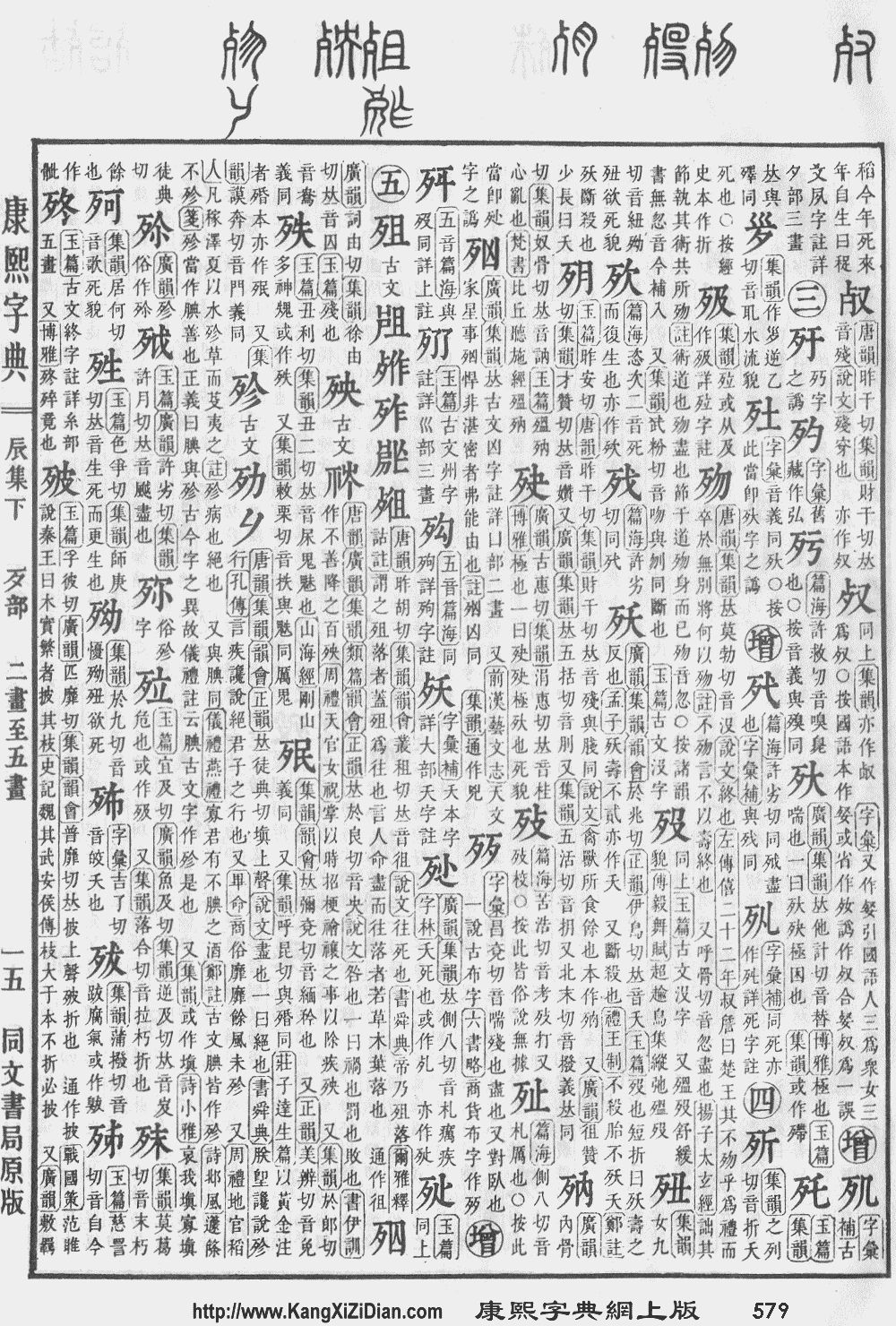
- Kangxi Dictionary: page 579, character 16
- Dai Kanwa Jiten: character 16385
- Dae Jaweon: page 971, character 18
- Hanyu Da Zidian (first edition): volume 2, page 1382, character 17
- Unihan data for U+6B7F
Chinese[edit]
| trad. | 歿/殁 | |
|---|---|---|
| simp. | 殁 | |
| alternative forms | 沒/没 | |
Glyph origin[edit]
| Historical forms of the character 歿 |
|---|
| Shuowen Jiezi (compiled in Han) |
| Small seal script |

|
Phono-semantic compound (形聲/形声, OC *mɯːd) : semantic 歹 (“death”) + abbreviated phonetic 沒 (OC *mɯːd)
Pronunciation[edit]
Definitions[edit]
歿
Synonyms[edit]
Compounds[edit]
Japanese[edit]
Kanji[edit]
歿
- to die
Usage notes[edit]
In modern Japanese, 歿 is mostly replaced by 没, due to the deprecation of non-tōyō kanji caused by the Japanese script reform.
Readings[edit]
Compounds[edit]
- 歿年 (botsunen): year at death
- 死歿 (shibotsu): death
- 生歿 (seibotsu): birth and death
- 戦歿 (senbotsu): death in battle
- 病歿 (byōbotsu): death due to illness
Suffix[edit]
Korean[edit]
Hanja[edit]
歿 • (mol) (hangeul 몰, revised mol, McCune–Reischauer mol, Yale mol)
- This term needs a translation to English. Please help out and add a translation, then remove the text
{{rfdef}}.
Categories:
- CJK Unified Ideographs block
- Han script characters
- Translingual lemmas
- Translingual symbols
- Han phono-semantic compounds
- Middle Chinese lemmas
- Old Chinese lemmas
- Chinese lemmas
- Mandarin lemmas
- Cantonese lemmas
- Hakka lemmas
- Chinese verbs
- Mandarin verbs
- Cantonese verbs
- Hakka verbs
- Chinese terms with IPA pronunciation
- Chinese Han characters
- Chinese literary terms
- Literary Chinese terms with quotations
- Japanese Han characters
- Uncommon kanji
- Japanese kanji with goon reading もち
- Japanese kanji with kan'on reading ぼつ
- Japanese kanji with kun reading し-ぬ
- Japanese lemmas
- Japanese suffixes
- Japanese terms spelled with hyōgaiji kanji
- Japanese terms written with one Han script character
- Japanese terms spelled with 歿
- Japanese single-kanji terms
- Japanese terms with usage examples
- Korean lemmas
- Korean Han characters