糊
Jump to navigation
Jump to search
| ||||||||
Translingual[edit]
Han character[edit]
糊 (Kangxi radical 119, 米+9, 15 strokes, cangjie input 火木十口月 (FDJRB), four-corner 97920, composition ⿰米胡)
Derived characters[edit]
References[edit]
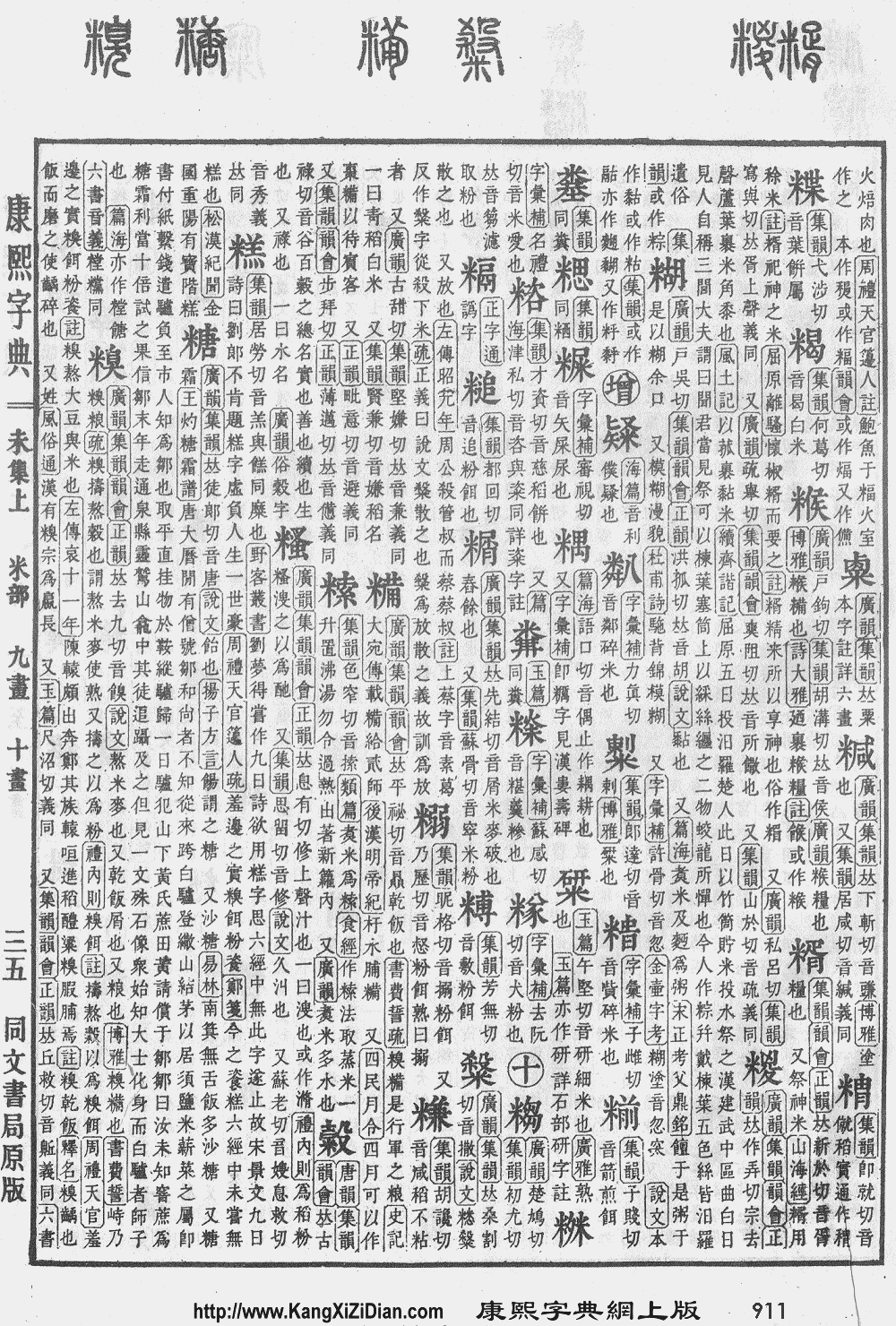
- Kangxi Dictionary: page 911, character 9
- Dai Kanwa Jiten: character 27037
- Dae Jaweon: page 1338, character 8
- Hanyu Da Zidian (first edition): volume 5, page 3154, character 3
- Unihan data for U+7CCA
Chinese[edit]
| trad. | 糊 | |
|---|---|---|
| simp. # | 糊 | |
| 2nd round simp. | 胡 | |
| alternative forms | 䊀 餬/糊 䭌 䭅/𬲾 | |
Glyph origin[edit]
| Old Chinese | |
|---|---|
| 箇 | *kaːls |
| 個 | *kaːls |
| 居 | *kɯ, *kas |
| 橭 | *kaː, *kʰaː |
| 嫴 | *kaː |
| 姑 | *kaː |
| 辜 | *kaː |
| 酤 | *kaː, *kaːs, *ɡaːʔ |
| 蛄 | *kaː |
| 鴣 | *kaː |
| 沽 | *kaː, *kaːʔ, *kaːs |
| 盬 | *kaː, *kaːʔ |
| 古 | *kaːʔ |
| 罟 | *kaːʔ |
| 估 | *kaːʔ |
| 鈷 | *kaːʔ |
| 詁 | *kaːʔ |
| 牯 | *kaːʔ |
| 故 | *kaːs |
| 固 | *kaːs |
| 稒 | *kaːɡs |
| 痼 | *kaːɡs |
| 錮 | *kaːɡs |
| 鯝 | *kaːɡs |
| 棝 | *kaːɡs |
| 凅 | *kaːɡs |
| 枯 | *kʰaː |
| 軲 | *kʰaː |
| 跍 | *kʰaː |
| 骷 | *kʰaː |
| 苦 | *kʰaːʔ, *kʰaːs |
| 葫 | *qʰaː, *ɡaː |
| 餬 | *ɡaː |
| 瑚 | *ɡaː |
| 湖 | *ɡaː |
| 鶘 | *ɡaː |
| 猢 | *ɡaː |
| 醐 | *ɡaː |
| 糊 | *ɡaː |
| 箶 | *ɡaː |
| 蝴 | *ɡaː |
| 胡 | *ɡaː |
| 瓳 | *ɡaː |
| 怙 | *ɡaːʔ |
| 祜 | *ɡaːʔ |
| 岵 | *ɡaːʔ |
| 婟 | *ɡaːʔ, *ɡaːɡs |
| 楛 | *ɡaːʔ |
| 据 | *ka |
| 裾 | *ka |
| 琚 | *ka |
| 椐 | *ka, *kas, *kʰa |
| 鶋 | *ka |
| 蜛 | *ka |
| 崌 | *ka |
| 涺 | *ka |
| 腒 | *ka, *ɡa |
| 鋸 | *kas |
| 倨 | *kas |
| 踞 | *kas |
| 涸 | *ɡaːɡ |
Pronunciation[edit]
Definitions[edit]
糊
- (literary) congee; rice gruel; porridge
- to eat gruel to allay one's hunger
- paste
- to apply a mixture
- muddled; unclear; blurry
- (Mainland China, fandom slang) to flop
- victory in mahjong game
Synonyms[edit]
- (congee):
Compounds[edit]
- 一塌糊塗/一塌糊涂
- 一時糊塗/一时糊涂
- 一盆漿糊/一盆浆糊
- 不含糊
- 含含糊糊
- 含糊
- 含糊不清
- 含糊其辭/含糊其辞 (hánhúqící)
- 地糊 (dìhú)
- 天糊 (tiānhú)
- 截糊
- 模模糊糊
- 模糊
- 模糊理論/模糊理论
- 油煠糊猻/油煠糊狲
- 漿糊/浆糊
- 爛糊/烂糊
- 眵目糊
- 稠糊 (chóuhū)
- 糊仔栽培
- 糊假棺
- 糊刷
- 糊劑/糊剂
- 糊口 (húkǒu)
- 糊名
- 糊塗/糊涂
- 糊塗帳/糊涂帐 (hútuzhàng)
- 糊塗蛋/糊涂蛋
- 糊塗蟲/糊涂虫
- 糊弄 (hùnong)
- 糊弄局
- 糊突
- 糊突神
- 糊突突
- 糊精 (hújīng)
- 糊紙/糊纸
- 糊裡糊塗/糊里糊涂
- 糊裱
- 糊里糊塗
- 糊門神/糊门神
- 糢糊
- 糨糊 (jiànghú)
- 糢糢糊糊
- 紙糊頭/纸糊头
- 老糊塗/老糊涂 (lǎohútú)
- 膩糊/腻糊
- 芝麻糊 (zhīmahù)
- 血肉模糊 (xuèròumóhú)
- 裝糊塗/装糊涂
- 裱糊 (biǎohú)
- 裱糊匠
- 詐糊/诈糊 (zhàhú)
- 迷糊
- 迷糊門/迷糊门
- 迷迷糊糊
- 醬糊缸/酱糊缸
- 難得糊塗/难得糊涂
- 面糊盆
- 食糊
- 麵糊/面糊
- 麻糊 (máhú)
- 麻麻糊糊
- 黏糊 (niánhu)
- 黑糊糊 (hēihūhū)
- 鼎邊糊/鼎边糊 (dǐngbiānhú)
Japanese[edit]
Kanji[edit]
糊
(“Jinmeiyō” kanji used for names)
Readings[edit]
Compounds[edit]
| Kanji in this term |
|---|
| 糊 |
| のり Jinmeiyō |
| kun’yomi |
Pronunciation[edit]
Noun[edit]
References[edit]
- ^ Matsumura, Akira, editor (2006), 大辞林 (in Japanese), Third edition, Tōkyō: Sanseidō, →ISBN
- ^ NHK Broadcasting Culture Research Institute, editor (1998), NHK日本語発音アクセント辞典 [NHK Japanese Pronunciation Accent Dictionary] (in Japanese), Tōkyō: NHK Publishing, →ISBN
Korean[edit]
Hanja[edit]
糊 • (ho) (hangeul 호, revised ho, McCune–Reischauer ho, Yale ho)
- This term needs a translation to English. Please help out and add a translation, then remove the text
{{rfdef}}.
Vietnamese[edit]
Han character[edit]
- This term needs a translation to English. Please help out and add a translation, then remove the text
{{rfdef}}.
Categories:
- CJK Unified Ideographs block
- Han script characters
- Translingual lemmas
- Translingual symbols
- Mandarin terms with multiple pronunciations
- Middle Chinese lemmas
- Old Chinese lemmas
- Chinese lemmas
- Mandarin lemmas
- Cantonese lemmas
- Hokkien lemmas
- Teochew lemmas
- Chinese nouns
- Mandarin nouns
- Cantonese nouns
- Hokkien nouns
- Teochew nouns
- Chinese verbs
- Mandarin verbs
- Cantonese verbs
- Hokkien verbs
- Teochew verbs
- Chinese terms with IPA pronunciation
- Chinese Han characters
- Chinese literary terms
- Mainland China Chinese
- Chinese fandom slang
- Japanese Han characters
- Kanji used for names
- Japanese kanji with goon reading ご
- Japanese kanji with kan'on reading こ
- Japanese kanji with kun reading のり
- Japanese terms spelled with 糊 read as のり
- Japanese terms read with kun'yomi
- Japanese terms with IPA pronunciation
- Japanese lemmas
- Japanese nouns
- Japanese terms spelled with jinmeiyō kanji
- Japanese terms written with one Han script character
- Japanese terms spelled with 糊
- Japanese single-kanji terms
- Japanese terms with usage examples
- Korean lemmas
- Korean Han characters
- Vietnamese lemmas
- Vietnamese Han characters