嘗
Jump to navigation
Jump to search
| ||||||||
Translingual[edit]
Han character[edit]
嘗 (Kangxi radical 30, 口+11, 14 strokes, cangjie input 火月口心日 (FBRPA), four-corner 90601, composition ⿱𫩠旨)
Derived characters[edit]
Related characters[edit]
- 尝 (Simplified Chinese)
- 嚐, 甞 (Variant forms)
References[edit]
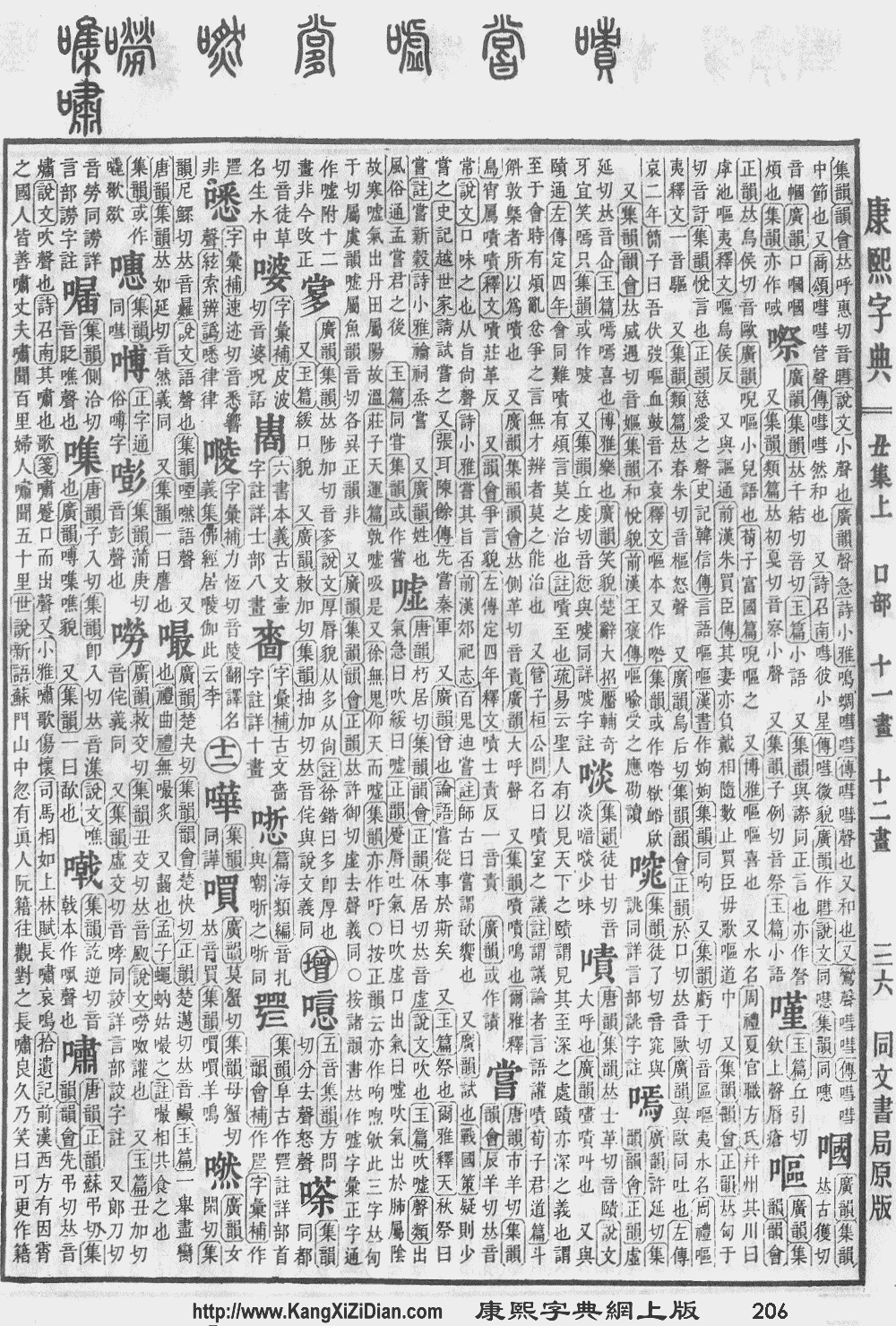
- Kangxi Dictionary: page 206, character 9
- Dai Kanwa Jiten: character 4205
- Dae Jaweon: page 429, character 7
- Hanyu Da Zidian (first edition): volume 2, page 1529, character 9
- Unihan data for U+5617
Chinese[edit]
| trad. | 嘗/嚐 | |
|---|---|---|
| simp. | 尝 | |
| alternative forms | 甞 | |
| 嚐: “to taste; to experience” | ||
Glyph origin[edit]
| Historical forms of the character 嘗 | |||
|---|---|---|---|
| Western Zhou | Warring States | Shuowen Jiezi (compiled in Han) | Liushutong (compiled in Ming) |
| Bronze inscriptions | Chu slip and silk script | Small seal script | Transcribed ancient scripts |

|

|

|

|
| Old Chinese | |
|---|---|
| 當 | *taːŋ, *taːŋs |
| 襠 | *taːŋ |
| 鐺 | *taːŋ, *sʰraːŋ |
| 簹 | *taːŋ |
| 璫 | *taːŋ |
| 檔 | *taːŋ, *taːŋs |
| 儅 | *taːŋ, *taːŋs |
| 蟷 | *taːŋ |
| 擋 | *taːŋʔ, *taːŋs |
| 黨 | *taːŋʔ, *tʰaːŋʔ |
| 讜 | *taːŋʔ |
| 欓 | *taːŋʔ |
| 譡 | *taːŋs |
| 闣 | *taːŋs |
| 瓽 | *taːŋs |
| 鏜 | *tʰaːŋ |
| 闛 | *tʰaːŋ, *daːŋ |
| 鼞 | *tʰaːŋ |
| 曭 | *tʰaːŋʔ |
| 儻 | *tʰaːŋʔ, *tʰaːŋs |
| 戃 | *tʰaːŋʔ |
| 矘 | *tʰaːŋʔ |
| 爣 | *tʰaːŋʔ |
| 攩 | *hl'aːŋʔ, *ɦʷlaːŋʔ, *ɦʷlaːŋs |
| 淌 | *tʰaːŋʔ |
| 倘 | *tʰaːŋʔ |
| 躺 | *tʰaːŋʔ |
| 趟 | *tʰaːŋs, *rtaːŋ, *rtaːŋs |
| 堂 | *daːŋ |
| 坣 | *daːŋ |
| 棠 | *daːŋ |
| 糛 | *daːŋ |
| 螳 | *daːŋ |
| 隚 | *daːŋ |
| 橖 | *daːŋ |
| 掌 | *tjaŋʔ |
| 廠 | *tʰjaŋʔ, *tʰjaŋs |
| 敞 | *tʰjaŋʔ |
| 僘 | *tʰjaŋʔ |
| 氅 | *tʰjaŋʔ |
| 常 | *djaŋ |
| 嘗 | *djaŋ |
| 裳 | *djaŋ |
| 徜 | *djaŋ |
| 尚 | *djaŋ, *djaŋs |
| 甞 | *djaŋ |
| 鋿 | *djaŋ |
| 嫦 | *djaŋ |
| 償 | *djaŋ, *djaŋs |
| 賞 | *hjaŋʔ |
| 瞠 | *rtʰaːŋ |
| 撐 | *rtʰaːŋ |
| 樘 | *rtʰaːŋ |
| 橕 | *rtʰaːŋ |
| 牚 | *rtʰaːŋs |
| 埫 | *tʰoŋʔ |
Phono-semantic compound (形聲/形声, OC *djaŋ) : phonetic 尚 (OC *djaŋ, *djaŋs) + semantic 旨 (“will; intention”).
Pronunciation[edit]
Definitions[edit]
嘗
- to taste; to try the flavour
- to attempt; to try
- to experience
- (literary) ever; once
- 王驩朝暮見,反齊滕之路,未嘗與之言行事也。 [Classical Chinese, trad.]
- From: Mencius, c. 4th century BCE
- Wáng Huān zhāomù xiàn, fǎn Qí Téng zhī lù, wèicháng yǔ zhī yán xíngshì yě. [Pinyin]
- Wang Huan, morning and evening, waited upon Mencius, who, during all the way to Teng and back, never spoke to him about the business of their mission.
王欢朝暮见,反齐滕之路,未尝与之言行事也。 [Classical Chinese, simp.]
- a surname
Synonyms[edit]
- (to taste):
Dialectal synonyms of 嘗 (“to taste”) [map]
| Variety | Location | Words |
|---|---|---|
| Formal (Written Standard Chinese) | 嘗 | |
| Mandarin | Beijing | 嘗 |
| Taiwan | 嘗 | |
| Jinan | 嘗 | |
| Xi'an | 嘗 | |
| Wuhan | 嘗 | |
| Chengdu | 嘗 | |
| Yangzhou | 嘗 | |
| Hefei | 嘗 | |
| Cantonese | Guangzhou | 試 |
| Hong Kong | 試 | |
| Yangjiang | 試, 嘗 | |
| Gan | Nanchang | 嘗 |
| Hakka | Meixian | 嘗 |
| Jin | Taiyuan | 嘗 |
| Northern Min | Jian'ou | 嘗 |
| Eastern Min | Fuzhou | 嘗, 咂, 試 |
| Southern Min | Xiamen | 試, 啖 |
| Chaozhou | 試, 嘗 | |
| Wu | Suzhou | 嘗 |
| Wenzhou | 嘗 | |
| Xiang | Changsha | 試 |
| Shuangfeng | 試, 嘗 | |
- (to attempt):
- (to experience): 感受 (gǎnshòu)
- (ever):
- 上早 (Hakka)
- 以前 (yǐqián)
- 先前 (xiānqián)
- 先行 (xiānxíng) (literary)
- 其先 (qíxiān) (literary)
- 前往 (qiánwǎng) (literary)
- 原在 (Hakka)
- 古者 (gǔzhě) (archaic)
- 向來/向来 (xiànglái) (archaic)
- 在前 (zàiqián)
- 家先 (Hakka)
- 往擺/往摆 (Hakka, Hokkien)
- 往擺仔/往摆仔 (Hokkien)
- 往者 (wǎngzhě) (literary)
- 往過/往过 (Hokkien)
- 往過仔/往过仔 (Hokkien)
- 從前/从前 (cóngqián)
- 早先 (zǎoxiān)
- 早年所 (Hokkien)
- 早時/早时 (Hokkien)
- 昔日 (xīrì) (literary)
- 昔時/昔时 (xīshí) (literary)
- 曾
- 曾經/曾经 (céngjīng)
- 當初/当初 (dāngchū)
- 舊擺/旧摆 (Singapore Hokkien)
- 舊早/旧早 (Singapore Hokkien)
- 過前/过前 (Hainanese)
Compounds[edit]
- 何嘗/何尝 (hécháng)
- 佐饔得嘗/佐饔得尝
- 備嘗憂患/备尝忧患
- 備嘗艱苦/备尝艰苦
- 備嘗辛苦/备尝辛苦
- 品嘗/品尝 (pǐncháng)
- 嘗嘗/尝尝
- 嘗巧/尝巧
- 嘗敵/尝敌
- 嘗新/尝新 (chángxīn)
- 嘗湯戲/尝汤戏
- 嘗甜頭/尝甜头
- 嘗膳/尝膳
- 嘗膽/尝胆
- 嘗膽臥薪/尝胆卧薪
- 嘗草/尝草
- 嘗藥/尝药
- 嘗試/尝试 (chángshì)
- 嘗酸/尝酸
- 嘗鼎一臠/尝鼎一脔 (chángdǐngyīluán)
- 坐薪嘗膽/坐薪尝胆
- 奉蒸嘗/奉蒸尝
- 孟嘗君/孟尝君
- 得未嘗有/得未尝有
- 未嘗/未尝 (wèicháng)
- 未嘗不可/未尝不可 (wèichángbùkě)
- 枕戈嘗膽/枕戈尝胆
- 淺嘗/浅尝
- 淺嘗則止/浅尝则止
- 淺嘗輒止/浅尝辄止 (qiǎnchángzhézhǐ)
- 烝嘗/烝尝
- 臥薪嘗膽/卧薪尝胆 (wòxīnchángdǎn)
- 越王嘗蓼/越王尝蓼
Japanese[edit]
Kanji[edit]
嘗
(“Jinmeiyō” kanji used for names)
- once
- before
- formerly
- ever
- never
- ex-
- lick
- lap up
- burn up
- taste
- undergo
- underrate
- despise
Readings[edit]
- Go-on: じょう (jō)
- Kan-on: しょう (shō)
- Kun: なめる (nameru, 嘗める); こころみる (kokoromiru, 嘗みる); かつて (katsute, 嘗て)
Korean[edit]
Hanja[edit]
嘗 • (sang) (hangeul 상, revised sang, McCune–Reischauer sang)
- This term needs a translation to English. Please help out and add a translation, then remove the text
{{rfdef}}.
Vietnamese[edit]
Han character[edit]
- This term needs a translation to English. Please help out and add a translation, then remove the text
{{rfdef}}.
Categories:
- CJK Unified Ideographs block
- Han script characters
- Translingual lemmas
- Translingual symbols
- Han phono-semantic compounds
- Mandarin terms with audio links
- Middle Chinese lemmas
- Old Chinese lemmas
- Chinese lemmas
- Mandarin lemmas
- Cantonese lemmas
- Hakka lemmas
- Eastern Min lemmas
- Hokkien lemmas
- Teochew lemmas
- Wu lemmas
- Chinese verbs
- Mandarin verbs
- Cantonese verbs
- Hakka verbs
- Eastern Min verbs
- Hokkien verbs
- Teochew verbs
- Wu verbs
- Chinese adverbs
- Mandarin adverbs
- Cantonese adverbs
- Hakka adverbs
- Eastern Min adverbs
- Hokkien adverbs
- Teochew adverbs
- Wu adverbs
- Chinese proper nouns
- Mandarin proper nouns
- Cantonese proper nouns
- Hakka proper nouns
- Eastern Min proper nouns
- Hokkien proper nouns
- Teochew proper nouns
- Wu proper nouns
- Chinese terms with IPA pronunciation
- Chinese Han characters
- Mandarin terms with usage examples
- Mandarin terms with quotations
- Chinese literary terms
- Literary Chinese terms with quotations
- Chinese surnames
- Elementary Mandarin
- Japanese Han characters
- Kanji used for names
- Japanese kanji with goon reading じょう
- Japanese kanji with kan'on reading しょう
- Japanese kanji with kun reading な-める
- Japanese kanji with kun reading こころ-みる
- Japanese kanji with kun reading かつ-て
- Korean lemmas
- Korean Han characters
- Vietnamese lemmas
- Vietnamese Han characters