白
| ||||||||
| ||||||||
Translingual[edit]
| Stroke order | |||
|---|---|---|---|

| |||
Han character[edit]

白 (Kangxi radical 106, 白+0, 5 strokes, cangjie input 竹日 (HA), four-corner 26000, composition ⿱丿日)
- Kangxi radical #106, ⽩.
Derived characters[edit]
- Appendix:Chinese radical/白
- 伯, 𪞜, 㕷, 𡊚, 𡛳, 𪦺, 岶, 帕, 廹, 怕, 拍, 泊, 狛, 迫, 𢫗, 𣆆, 柏, 𭯖, 𤇢, 𭷛, 珀, 胉, 𥙃, 𭼈, 𥍡, 𥎷, 砶, 䄸, 袙, 粕, 絈, 𦐚, 舶, 𦫖, 𬠀, 貃, 䞟, 𫏴, 𨠘, 鉑(铂), 𧆽, 𩊀, 𩗀(𩙦), 𩛇, 𬈻, 鮊(鲌), 𧇤
- 𰁮, 劰, 𫨷, 𨚮, 敀, 𤝡, 㼟, 䎅, 𦫙, 𩑻, 魄, 䳆, 㒵, 𠡈, 𭎊, 㚖, 帛, 𣌣, 𢘣, 𣐩, 泉, 𭽾, 𨋧, 𣹻, 𩲸, 𣰗, 㒶, 苩, 𥬝, 𰎒, 𩶑, 𬲉
- 習 (in current form)
References[edit]
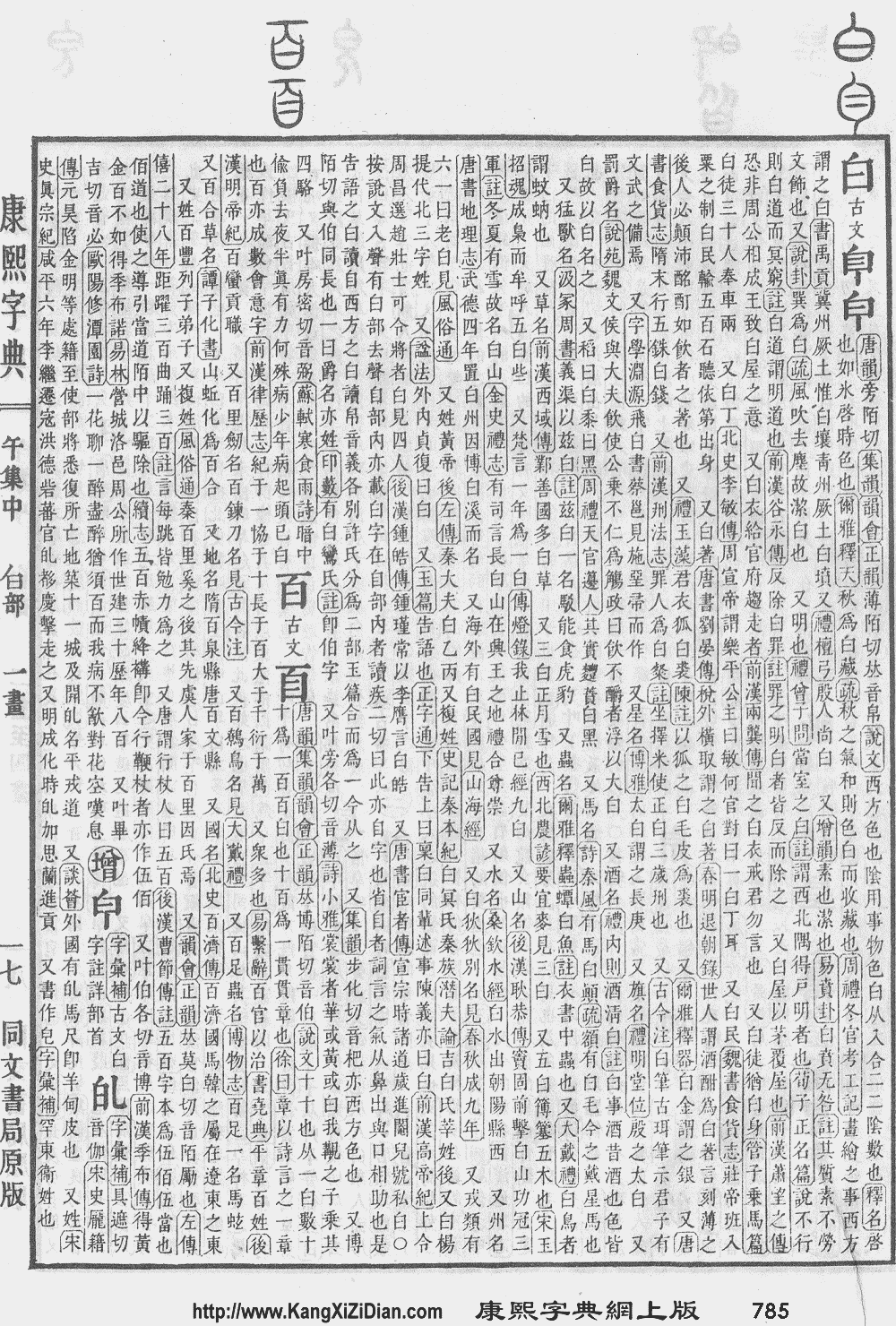
- Kangxi Dictionary: page 785, character 1
- Dai Kanwa Jiten: character 22678
- Dae Jaweon: page 1196, character 1
- Hanyu Da Zidian (first edition): volume 4, page 2642, character 1
- Unihan data for U+767D
Chinese[edit]
| simp. and trad. |
白 | |
|---|---|---|

Glyph origin[edit]
| Historical forms of the character 白 | |||
|---|---|---|---|
| Shang | Western Zhou | Shuowen Jiezi (compiled in Han) | Liushutong (compiled in Ming) |
| Oracle bone script | Bronze inscriptions | Small seal script | Transcribed ancient scripts |

|

|

|

|
| Old Chinese | |
|---|---|
| 怕 | *pʰraːɡs, *pʰraːɡ |
| 帕 | *pʰraːɡs, *mbraːd |
| 粕 | *pʰaːɡ, *pʰraːɡ |
| 胉 | *pʰaːɡ |
| 泊 | *baːɡ |
| 箔 | *baːɡ |
| 魄 | *tʰaːɡ, *pʰraːɡ |
| 皕 | *prɯɡ |
| 伯 | *praːɡ |
| 百 | *praːɡ |
| 迫 | *praːɡ |
| 敀 | *praːɡ, *pʰraːɡ |
| 柏 | *praːɡ |
| 湐 | *praːɡ |
| 拍 | *pʰraːɡ |
| 珀 | *pʰraːɡ |
| 皛 | *pʰraːɡ, *ɡeːwʔ |
| 洦 | *mpʰraːɡ, *mbraːɡ |
| 白 | *braːɡ |
| 帛 | *braːɡ |
| 舶 | *braːɡ |
| 鮊 | *braːɡ |
| 陌 | *mbraːɡ |
| 帞 | *mbraːɡ |
| 袹 | *mbraːɡ |
| 蛨 | *mbraːɡ |
| 貊 | *mbraːɡ |
| 佰 | *mbraːɡ |
| 銆 | *mbraːɡ |
| 碧 | *praɡ, *preɡ |
| 咟 | *ɦmreːɡ |
Unclear; probably a pictogram (象形) .
Guo (1954) suggests that it represents a thumb and is original form of 拇 (*mɯʔ) or, more probably, 擘 (*preːɡ).
Alternatively, Unger (apud Schuessler, 2007) suggests that it represents an acorn, noting its use in 樂/乐 (“oak”) (= 櫟/栎) and 皂 (zào, “acorn”). In this interpretation, the meaning of “white” is derived from the color of an acorn's inside.
Etymology[edit]
STEDT derives it from Proto-Sino-Tibetan *bawk (“white”), whence also Proto-Bodo-Garo *bok (“white”), Limbu ᤑ (phô, “white”); also compare Proto-Mon-Khmer *kɓɔɔk (“white, grey”).
However, Schuessler (2007) finds it difficult to reconcile these forms with Middle Chinese due to the lack of medial r. Instead, he proposes a derivation from Proto-Sino-Tibetan *bar (“white”) with -k extension, thus cognate with 皤 (OC *baːl, “white”) (Wang, 1982), Mizo vâr (“(to be) white”), Proto-Karen *ʔ(b)wa (“white”).
Pronunciation[edit]
Definitions[edit]
白
- white
- clear; easy to understand
- clear; pure; plain; blank
- bright; well-lit
- 凡殤與無後者,祭於宗子之家,當室之白,尊於東房,是謂陽厭。 [Classical Chinese, trad.]
- From: The Book of Rites, c. 4th – 2nd century BCE
- Fánshāng yǔ wúhòu zhě, jì yú zōngzǐ zhī jiā, dāng shì zhī bái, zūn yú dōng fáng, shì wèi yángyàn. [Pinyin]
- In regard to all others who have died prematurely and have left no offspring, the sacrifice is offered to them in the house of the oldest son, where the apartment is the most light, with the vases in the chamber on the east. This is what is called the bright satisfying offering.
凡殇与无后者,祭于宗子之家,当室之白,尊于东房,是谓阳厌。 [Classical Chinese, simp.]- 相與枕藉乎舟中,不知東方之既白。 [Classical Chinese, trad.]
- From: 1082, 蘇軾 (Su Shi), 《前赤壁賦》
- Xiàngyǔ zhěnjiè hū zhōu zhōng, bù zhī dōngfāng zhī jì bái. [Pinyin]
- The cups and plates leaned against one another in the boat, and we did not know the East has already turned bright white.
相与枕借乎舟中,不知东方之既白。 [Classical Chinese, simp.]
- eminent; prominent
- 是故窮則不隱,通則大明,身死而名彌白。 [Classical Chinese, trad.]
- From: Xunzi, c. 3rd century BCE
- Shìgù qióng zé bù yǐn, tōng zé dà míng, shēn sǐ ér míng mí bái. [Pinyin]
- Therefore, the superior man, when in poverty or distress, is not obscured, and when his life is smooth, he becomes more famous. After his death, his reputation becomes even more prominent.
是故穷则不隐,通则大明,身死而名弥白。 [Classical Chinese, simp.]
- vernacular
- dialect
- Short for 白讀/白读 (báidú, “colloquial reading”).
- reactionary; anticommunist
- in vain; for nothing
- free of charge; gratuitous; gratis
- to stare coldly; to stare at someone with the white of the eyes
- to explain; to present; to state
- to mispronounce or wrongly write a character
- spoken lines
- funeral
- 紅白喜事/红白喜事 ― hóngbáixǐshì ― weddings and funerals
- 白帖 [Hokkien] ― pe̍h-thiap [Pe̍h-ōe-jī] ― obituary
- (Hokkien) bland and tasteless
- 白䭕/白𬲕 [Hokkien] ― pe̍h-chiáⁿ [Pe̍h-ōe-jī] ― bland and flavorless
- (Hokkien) cooked with just water without adding any seasoning
- 白煠 [Hokkien] ― pe̍h-sa̍h [Pe̍h-ōe-jī] ― to cook with boiling water
- (Hokkien) greasy; with a lot of fat or oil
- 白肉 [Hokkien] ― pe̍h-bah [Pe̍h-ōe-jī] ― fatty meat
- (Hokkien) jargon; cant
- 販仔白/贩仔白 [Hokkien] ― hoàn-á-pe̍h [Pe̍h-ōe-jī] ― merchant jargon
- (Mainland China Hokkien) frank speech
- 跋白 [Hokkien] ― poa̍h-pe̍h [Pe̍h-ōe-jī] ― to publicly disclose and get all the words and things clear in person
- a surname, commonly romanized as Bai
- 白崇禧 ― Bái Chóngxǐ ― Bai Chongxi
- (~族) Bai, an ethnic group living primarily in Yunnan, China
Synonyms[edit]
- (in vain): (Min Nan) 干
Descendants[edit]
Others:
- → Proto-Southwestern Tai: *pʰɯəkᴰ¹ᴸ
- → Proto-Vietic: *baːk
- Vietnamese: bạc
- → Vietnamese: bệch (“chalky; sickly white”)
Compounds[edit]
- 一清二白
- 一窮二白/一穷二白 (yīqióng'èrbái)
- 一紅二白/一红二白
- 一青二白
- 下場白/下场白
- 上場白/上场白
- 三復白圭/三复白圭
- 三白草
- 不分皁白
- 不問皁白/不问皁白
- 不明不白 (bùmíngbùbái)
- 不清不白
- 不白之冤 (bùbáizhīyuān)
- 不知皁白
- 不管皁白
- 乳白 (rǔbái)
- 乳白色 (rǔbáisè)
- 乾白兒/干白儿
- 交白卷 (jiāo báijuàn)
- 京白 (jīngbái)
- 以白為黑/以白为黑
- 作白日夢/作白日梦
- 侯白
- 元白
- 全身美白
- 兩白日/两白日
- 兩眼翻白/两眼翻白
- 兩頭白面/两头白面
- 兩頭白麵/两头白面
- 公子小白
- 六說白道/六说白道
- 分行布白
- 別白/别白 (biébái)
- 刷白
- 剖白 (pōubái)
- 卵白 (luǎnbái)
- 反白
- 取青媲白
- 口白 (kǒubái)
- 各白世人
- 吃白食
- 吃白飯/吃白饭 (chī báifàn)
- 告白 (gàobái)
- 唸白/念白 (niànbái)
- 唱紅白臉/唱红白脸
- 垂白
- 坦白 (tǎnbái)
- 垂白上僂/垂白上偻
- 垂白之親/垂白之亲
- 堅白/坚白
- 堅白同異/坚白同异
- 堅白石論/坚白石论
- 堅臥白門/坚卧白门
- 壓倒元白/压倒元白
- 夢吐白鳳/梦吐白凤
- 大團白臉/大团白脸
- 大天白亮
- 大天白日 (dàtiānbáirì)
- 大明大白
- 大白 (dàbái)
- 大白天 (dàbáitiān)
- 大白山脈/大白山脉
- 大白臉/大白脸
- 太白 (Tàibái)
- 太白星 (Tàibáixīng)
- 太白粉 (tàibáifěn)
- 太白酒星
- 太白金星
- 夷白
- 套白狼
- 孔子白
- 孝白
- 定場白/定场白
- 富埒陶白
- 寫白/写白
- 對白/对白 (duìbái)
- 小白 (xiǎobái)
- 小白臉/小白脸 (xiǎobáiliǎn)
- 小白菜 (xiǎobáicài)
- 少白頭/少白头 (shàobáitóu)
- 山中白雲/山中白云
- 崔白
- 布白
- 平白 (píngbái)
- 平白無事/平白无事
- 平白無故/平白无故 (píngbáiwúgù)
- 平白無端/平白无端
- 平白無辜/平白无辜
- 康白度
- 廉白
- 龐眉白髮/庞眉白发
- 建白
- 弄白相
- 心貫白日/心贯白日
- 念白 (niànbái)
- 忠貫白日/忠贯白日
- 急赤白臉/急赤白脸
- 惡叉白賴/恶叉白赖
- 慘白/惨白 (cǎnbái)
- 戴白
- 手白
- 打白賴/打白赖
- 抄白
- 扯白
- 扮白臉/扮白脸
- 批紅判白/批红判白
- 扯謊撩白/扯谎撩白
- 扯閒白/扯闲白
- 拆白 (chāibái)
- 拔白
- 拆白道字
- 拆白黨/拆白党 (chāibáidǎng)
- 抽青配白
- 抽黃對白/抽黄对白
- 指皂為白/指皂为白
- 指黑為白/指黑为白
- 掃白/扫白
- 揭白
- 揭白旗
- 搶白/抢白
- 搗鬼弔白/捣鬼吊白
- 啟白/启白
- 數白論黃/数白论黄
- 數黃道白/数黄道白
- 斑白 (bānbái)
- 旁白 (pángbái)
- 明明白白 (míngmíngbáibái)
- 明白
- 明白人 (míngbairén)
- 是非黑白 (shìfēihēibái)
- 暴白 (bàobái)
- 曳白
- 月白 (yuèbái)
- 月白風清/月白风清 (yuèbái fēngqīng)
- 李白
- 林白
- 桑白皮 (sāngbáipí)
- 核蛋白 (hédànbái)
- 楓丹白露/枫丹白露 (Fēngdānbáilù)
- 榆白皮
- 楊白花/杨白花
- 楊白頭/杨白头
- 楮知白
- 死乞白賴/死乞白赖 (sǐqibáilài)
- 死氣白賴/死气白赖
- 死求白賴/死求白赖
- 死鰾白纏/死鳔白缠
- 沉冤莫白
- 泛白
- 洞悉明白
- 洋白菜 (yángbáicài)
- 浮一大白
- 涅白
- 浮白
- 海白菜
- 清清白白
- 混淆黑白
- 淳白
- 清白 (qīngbái)
- 混造黑白
- 漂白 (piǎobái)
- 滾白/滚白
- 漂白劑/漂白剂 (piǎobáijì)
- 滾白水/滚白水
- 漢白玉/汉白玉 (hànbáiyù)
- 漂白粉 (piǎobáifěn)
- 潘安白髮/潘安白发
- 潘岳白髮/潘岳白发
- 潘岳鬢白/潘岳鬓白
- 潔白/洁白 (jiébái)
- 潮白
- 潔白無瑕/洁白无瑕
- 灰白 (huībái)
- 烏白馬角/乌白马角
- 照如白晝/照如白昼
- 煞白
- 熊白
- 牙白口清
- 狐白
- 獨白/独白 (dúbái)
- 球蛋白 (qiúdànbái)
- 留白 (liúbái)
- 發白/发白 (fābái)
- 白丁 (báidīng)
- 白丁俗客
- 白丁香
- 白不呲咧
- 白乾/白干 (báigān)
- 白了了
- 白事 (báishì)
- 白人 (báirén)
- 白人情
- 白令
- 白令海 (Báilìng Hǎi)
- 白令海峽/白令海峡 (Báilìng Hǎixiá)
- 白住
- 白來/白来
- 白俄 (bái'é)
- 白俄羅斯/白俄罗斯 (Bái'éluósī)
- 白做
- 白光 (báiguāng)
- 白兔 (báitù)
- 白兔擣藥/白兔捣药
- 白兔記/白兔记
- 白兔赤烏/白兔赤乌 (báitùchìwū)
- 白內障/白内障 (báinèizhàng)
- 白公堤
- 白刃 (báirèn)
- 白刃戰/白刃战 (báirènzhàn)
- 白切肉
- 白刺
- 白前
- 白化症
- 白千層/白千层
- 白卷 (báijuàn)
- 白受
- 白叟
- 白叟黃童/白叟黄童
- 白口 (báikǒu)
- 白口咀咒
- 白口鐵/白口铁 (báikǒutiě)
- 白叨光
- 白古蘇花/白古苏花
- 白吃 (báichī)
- 白吃白住
- 白吃白喝 (báichībáihē)
- 白合金
- 白吃飯/白吃饭
- 白問/白问
- 白喉 (báihóu)
- 白喉疫苗
- 白喜草
- 白嘴兒/白嘴儿 (báizuǐr)
- 白嘩嘩/白哗哗
- 白嚼人
- 白嚼蛆
- 白囊
- 白四喜兒/白四喜儿
- 白團/白团
- 白團扇/白团扇
- 白土子 (báitǔzi)
- 白圭
- 白地 (báidì)
- 白圭之玷
- 白堊/白垩 (bái'è)
- 白堊系/白垩系
- 白堊紀/白垩纪 (Bái'è Jì)
- 白堤
- 白報紙/白报纸 (báibàozhǐ)
- 白塞木
- 白墠/白𫮃 (báishàn)
- 白墮/白堕
- 白墡 (báishàn)
- 白士 (báishì)
- 白夜 (báiyè)
- 白天 (báitiān)
- 白契 (báiqì)
- 白如枯骨
- 白如玉
- 白娘子
- 白嫩 (báinèn)
- 白子 (báizǐ)
- 白子國/白子国
- 白子魚/白子鱼
- 白孔六帖
- 白字 (báizì)
- 白字戲/白字戏
- 白定碗
- 白客 (báikè)
- 白宮/白宫 (Báigōng)
- 白家堰 (Báijiāyàn)
- 白宮學者/白宫学者
- 白寶/白宝
- 白將軍/白将军
- 白小豆
- 白尼羅河/白尼罗河 (Báiníluóhé)
- 白尾鷲/白尾鹫
- 白屈菜 (báiqūcài)
- 白屋
- 白屋人家
- 白屋寒門/白屋寒门
- 白山 (Báishān)
- 白山黑水 (báishānhēishuǐ)
- 白嶺/白岭 (Báilǐng)
- 白嶽山/白岳山
- 白差使
- 白布 (báibù)
- 白帖
- 白帝 (Báidì)
- 白帝城 (Báidìchéng)
- 白席人
- 白帶/白带 (báidài)
- 白帶魚/白带鱼
- 白幡
- 白干
- 白廟/白庙 (Báimiào)
- 白得發亮/白得发亮
- 白忙
- 白快
- 白想想
- 白憑無故/白凭无故
- 白戰/白战
- 白手 (báishǒu)
- 白手套 (báishǒutào)
- 白手成家 (báishǒuchéngjiā)
- 白手興家/白手兴家
- 白手起家 (báishǒuqǐjiā)
- 白打
- 白扯
- 白拉
- 白拈賊/白拈贼
- 白指病
- 白捕
- 白描 (báimiáo)
- 白搭 (báidā)
- 白搽白折
- 白搶白相/白抢白相
- 白撞
- 白放
- 白教
- 白文 (báiwén)
- 白斑 (báibān)
- 白旄 (báimáo)
- 白旄黃鉞/白旄黄钺 (báimáo huángyuè)
- 白族 (Báizú)
- 白旗 (báiqí)
- 白日 (báirì)
- 白日夢/白日梦 (báirìmèng)
- 白日撞
- 白日昇天/白日升天
- 白日衣繡/白日衣绣
- 白日見鬼/白日见鬼 (báirì-jiànguǐ)
- 白日賊/白日贼
- 白日間/白日间
- 白日飛昇/白日飞升
- 白日鬼
- 白晃晃 (báihuǎnghuǎng)
- 白晝/白昼 (báizhòu)
- 白服
- 白朗 (Báilǎng)
- 白望
- 白朗寧/白朗宁
- 白朗峰
- 白木耳 (báimù'ěr)
- 白朮/白术 (báizhú)
- 白松
- 白果 (báiguǒ)
- 白板 (báibǎn)
- 白果兒/白果儿 (báiguǒr)
- 白板單吊/白板单吊
- 白板天子
- 白果松
- 白柳 (Báiliǔ)
- 白桐
- 白案 (bái'àn)
- 白桑關/白桑关 (Báisāngguān)
- 白桵
- 白梨
- 白條/白条 (báitiáo)
- 白桿兵/白杆兵
- 白條豬/白条猪
- 白森森 (báisēnsēn)
- 白楊/白杨 (báiyáng)
- 白業/白业 (báiyè)
- 白楝
- 白榆
- 白楊坪/白杨坪 (Báiyángpíng)
- 白樸/白朴
- 白橋/白桥 (Báiqiáo)
- 白樺/白桦 (báihuà)
- 白檀 (báitán)
- 白武士 (báiwǔshì)
- 白殭蠶/白僵蚕 (báijiāngcán)
- 白毛
- 白毛風/白毛风 (báimáofēng)
- 白毫 (báiháo)
- 白毫之賜/白毫之赐
- 白氅
- 白氣/白气 (báiqì)
- 白水 (báishuǐ)
- 白水灘/白水滩
- 白水素女
- 白汗
- 白沙 (báishā)
- 白沙學派/白沙学派
- 白沙洲 (Báishāzhōu)
- 白沙灣/白沙湾
- 白沙鄉/白沙乡
- 白泉 (báiquán)
- 白河 (Báihé)
- 白法
- 白沫 (báimò)
- 白河水庫/白河水库
- 白泠泠
- 白洋 (Báiyáng)
- 白洞 (báidòng)
- 白浪 (Báilàng)
- 白海 (Báihǎi)
- 白浪掀天
- 白浪滔滔
- 白混
- 白淨/白净 (báijing)
- 白淨面皮/白净面皮
- 白湯/白汤 (báitāng)
- 白渠
- 白漭漭
- 白澒/白𭱊
- 白澤/白泽
- 白濁/白浊
- 白澤圖/白泽图
- 白澳政策
- 白灰 (báihuī)
- 白炭
- 白煮
- 白煮蛋
- 白煤 (báiméi)
- 白煙/白烟
- 白熊 (báixióng)
- 白熱/白热 (báirè)
- 白熱化/白热化 (báirèhuà)
- 白熱電燈/白热电灯
- 白燒/白烧
- 白熾/白炽 (báichì)
- 白熾燈/白炽灯 (báichìdēng)
- 白熾電燈/白炽电灯
- 白牡丹 (báimǔdān)
- 白物
- 白犀牛
- 白狄
- 白狐 (báihú)
- 白狼
- 白狼河
- 白猿
- 白猿傳/白猿传
- 白玉 (báiyù)
- 白玉微瑕
- 白玉微疵
- 白玉有瑕
- 白玉樓/白玉楼 (báiyùlóu)
- 白玉無瑕/白玉无瑕
- 白玉蘭/白玉兰 (báiyùlán)
- 白玩兒/白玩儿 (báiwánr)
- 白珪
- 白珩
- 白班 (báibān)
- 白瑩瑩/白莹莹
- 白環/白环
- 白璧
- 白璧之瑕
- 白璧微瑕 (báibì-wēixiá)
- 白璧無瑕/白璧无瑕 (báibì-wúxiá)
- 白璧青蠅/白璧青蝇
- 白瓷
- 白生生 (báishēngshēng)
- 白當/白当
- 白痢 (báilì)
- 白痴 (báichī)
- 白癜風/白癜风 (báidiànfēng)
- 白癬/白癣 (báixuǎn)
- 白發/白发
- 白登
- 白白 (báibái)
- 白白淨淨/白白净净 (báibaijingjing)
- 白白胖胖 (báibáipàngpàng)
- 白皁
- 白皙 (báixī)
- 白皚皚/白皑皑 (bái'ái'ái)
- 白皮書/白皮书 (báipíshū)
- 白皮松 (báipísōng)
- 白直
- 白眉 (báiméi)
- 白相
- 白相人
- 白眉神
- 白眉赤眼
- 白眉鴃/白眉𫛞
- 白眼 (báiyǎn)
- 白眼兒狼/白眼儿狼 (báiyǎnrláng)
- 白眼珠 (báiyǎnzhū)
- 白眼頻加/白眼频加
- 白瞪
- 白瞪眼
- 白矮星 (bái'ǎixīng)
- 白石坳 (Báishí'ào)
- 白石神
- 白石道人
- 白砂
- 白砒 (báipī)
- 白砂糖 (báishātáng)
- 白破
- 白磁
- 白磷 (báilín)
- 白礬/白矾 (báifán)
- 白票 (báipiào)
- 白禿風/白秃风
- 白種/白种 (báizhǒng)
- 白種人/白种人 (báizhǒngrén)
- 白筆/白笔
- 白簡/白简
- 白米 (báimǐ)
- 白米甕/白米瓮
- 白米飯/白米饭
- 白粉 (báifěn)
- 白粉病 (báifěnbìng)
- 白粉蝶
- 白粉麵/白粉面
- 白粥 (báizhōu)
- 白粲
- 白糖 (báitáng)
- 白糠疹
- 白糧/白粮
- 白紗/白纱
- 白紙/白纸 (báizhǐ)
- 白紙黑字/白纸黑字 (báizhǐhēizì)
- 白紵/白纻
- 白紹拉河/白绍拉河
- 白紵歌/白纻歌
- 白給/白给 (báigěi)
- 白絞油/白绞油
- 白練/白练 (báiliàn)
- 白羊子
- 白羊宮/白羊宫 (báiyánggōng)
- 白羊座 (Báiyángzuò)
- 白羊鮮/白羊鲜
- 白羽
- 白翅
- 白翎雀
- 白翳 (báiyì)
- 白肉 (báiròu)
- 白背飛蝨/白背飞虱
- 白脫油/白脱油
- 白脣鹿/白唇鹿 (báichúnlù)
- 白腰雨燕
- 白膠/白胶
- 白膩/白腻
- 白臉/白脸 (báiliǎn)
- 白臉兒/白脸儿
- 白色 (báisè)
- 白色人種/白色人种 (báisè rénzhǒng)
- 白色恐怖 (báisè kǒngbù)
- 白色體/白色体 (báisètǐ)
- 白艾
- 白芍 (báisháo)
- 白芋
- 白芷 (báizhǐ)
- 白花 (báihuā)
- 白芨
- 白花八角
- 白花油
- 白花花 (báihuāhuā)
- 白花菜
- 白芭蕾
- 白花蛇 (báihuāshé)
- 白茅 (báimáo)
- 白英 (báiyīng)
- 白茶 (báichá)
- 白草
- 白茫茫 (báimángmáng)
- 白華/白华 (báihuá)
- 白菖
- 白著
- 白菜 (báicài)
- 白華之怨/白华之怨
- 白落
- 白蒿
- 白蓮教/白莲教 (Báiliánjiào)
- 白蓮社/白莲社
- 白蓬蓬
- 白薇 (báiwēi)
- 白薯 (báishǔ)
- 白藤 (báiténg)
- 白藥/白药 (báiyào)
- 白蘇/白苏 (báisū)
- 白蘋/白𬞟 (báipín)
- 白蘋洲/白𬞟洲
- 白蘚/白藓
- 白蘞/白蔹
- 白蘭地/白兰地 (báilándì)
- 白蘭花/白兰花
- 白蘿蔔/白萝卜 (báiluóbo)
- 白虎 (báihǔ)
- 白虎幡
- 白虎星 (báihǔxīng)
- 白虎觀/白虎观
- 白虎通義/白虎通义
- 白虎風/白虎风
- 白虹
- 白虹貫日/白虹贯日
- 白蛇
- 白蛇傳/白蛇传 (Báishézhuàn)
- 白蛉子
- 白蛋白 (báidànbái)
- 白蛸
- 白螞蟻/白蚂蚁 (báimǎyǐ)
- 白螺 (Báiluó)
- 白蟻/白蚁 (báiyǐ)
- 白蠟/白蜡 (báilà)
- 白蠟明經/白蜡明经
- 白蠟杆子
- 白蠟樹/白蜡树 (báilàshù)
- 白蠟蟲/白蜡虫 (báilàchóng)
- 白蠟蠟/白蜡蜡
- 白血球 (báixuèqiú)
- 白血病 (báixuèbìng)
- 白衣 (báiyī)
- 白衣人 (báiyīrén)
- 白衣公卿
- 白衣卿相
- 白衣大士
- 白衣大食
- 白衣天使 (báiyī tiānshǐ)
- 白衣教練/白衣教练
- 白衣秀士
- 白衣蒼狗/白衣苍狗 (báiyī-cānggǒu)
- 白衣觀音/白衣观音
- 白衣送酒
- 白衫
- 白袷
- 白袷衣
- 白詞念賦/白词念赋
- 白話/白话
- 白話小說/白话小说
- 白話文/白话文 (báihuàwén)
- 白話文學/白话文学
- 白話舌兒/白话舌儿
- 白話詩/白话诗 (báihuàshī)
- 白說/白说 (báishuō)
- 白說六道/白说六道
- 白說綠道/白说绿道
- 白謊/白谎
- 白變種/白变种
- 白豆兒佛/白豆儿佛
- 白豆蔻 (báidòukòu)
- 白象之國/白象之国
- 白財/白财
- 白費/白费 (báifèi)
- 白費功夫/白费功夫
- 白費心思/白费心思 (báifèixīnsī)
- 白費心血/白费心血
- 白賊/白贼 (báizéi)
- 白賊七/白贼七
- 白質/白质 (báizhì)
- 白賴/白赖
- 白起
- 白足
- 白跑
- 白蹧蹋
- 白身 (báishēn)
- 白身人 (báishēnrén)
- 白軍/白军 (Báijūn)
- 白辛樹/白辛树
- 白道 (báidào)
- 白鄧鄧/白邓邓
- 白酒 (báijiǔ)
- 白醋 (báicù)
- 白醭 (báibú)
- 白金 (báijīn)
- 白金婚 (báijīnhūn)
- 白金漢宮/白金汉宫 (Báijīnhàn Gōng)
- 白鉛皮/白铅皮
- 白鉛礦/白铅矿 (báiqiānkuàng)
- 白銀/白银 (báiyín)
- 白銅/白铜 (báitóng)
- 白錢/白钱
- 白鍵/白键 (báijiàn)
- 白鎢礦/白钨矿 (báiwūkuàng)
- 白鏹/白镪 (báiqiǎng)
- 白鐵/白铁 (báitiě)
- 白鐵皮/白铁皮
- 白鑄鐵/白铸铁
- 白鑞/白镴 (báilà)
- 白門/白门
- 白門樓/白门楼
- 白閒/白闲
- 白開水/白开水 (báikāishuǐ)
- 白閒著/白闲著
- 白附子 (báifùzǐ)
- 白陶 (báitáo)
- 白陶罍
- 白雨 (báiyǔ)
- 白雪 (báixuě)
- 白雪公主 (Báixuě Gōngzhǔ)
- 白雪曲
- 白雪歌
- 白雪遺音/白雪遗音
- 白雪陽春/白雪阳春
- 白雪黃芽/白雪黄芽
- 白雲/白云 (báiyún)
- 白雲孤飛/白云孤飞
- 白雲山/白云山 (Báiyúnshān)
- 白雲岩/白云岩 (báiyúnyán)
- 白雲母/白云母 (báiyúnmǔ)
- 白雲石/白云石 (báiyúnshí)
- 白雲蒼狗/白云苍狗 (báiyún-cānggǒu)
- 白雲親舍/白云亲舍
- 白雲觀/白云观
- 白雲鄉/白云乡
- 白露 (báilù)
- 白青 (Báiqīng)
- 白面 (báimiàn)
- 白面書生/白面书生 (báimiànshūshēng)
- 白面書郎/白面书郎
- 白面皮
- 白面鼯鼠
- 白頂鶴/白顶鹤
- 白領/白领 (báilǐng)
- 白領勞工/白领劳工
- 白領犯罪/白领犯罪
- 白領階級/白领阶级
- 白頭/白头 (báitóu)
- 白頭之歎/白头之叹
- 白頭偕老/白头偕老 (báitóuxiélǎo)
- 白頭到老/白头到老
- 白頭吟/白头吟
- 白頭如新/白头如新
- 白頭山/白头山 (Báitóushān)
- 白頭浪/白头浪
- 白頭相守/白头相守
- 白頭翁/白头翁 (báitóuwēng)
- 白題/白题
- 白額虎/白额虎
- 白額雁/白额雁
- 白顛/白颠
- 白食 (báishí)
- 白飯/白饭 (báifàn)
- 白飯王/白饭王
- 白飯青芻/白饭青刍
- 白飾金/白饰金
- 白饒/白饶 (báiráo)
- 白首 (báishǒu)
- 白首一節/白首一节
- 白首之心
- 白首北面
- 白首同歸/白首同归
- 白首如新
- 白首無成/白首无成
- 白首相知
- 白首空歸/白首空归
- 白首窮經/白首穷经
- 白馬/白马 (báimǎ)
- 白馬坡/白马坡
- 白馬寺/白马寺 (Báimǎsì)
- 白馬將軍/白马将军
- 白馬歸周/白马归周
- 白馬津/白马津
- 白馬王/白马王
- 白馬王子/白马王子 (báimǎ wángzǐ)
- 白駒/白驹 (báijū)
- 白駒空谷/白驹空谷
- 白駒過隙/白驹过隙 (báijūguòxì)
- 白骨 (báigǔ)
- 白骨松
- 白髮/白发 (báifà)
- 白髮如新/白发如新
- 白髮朱顏/白发朱颜
- 白髮相守/白发相守
- 白髮紅顏/白发红颜 (báifǎ hóngyán)
- 白髮蒼蒼/白发苍苍 (báifà cāngcāng)
- 白髮蒼顏/白发苍颜
- 白髮郎潛/白发郎潜
- 白髮銀鬚/白发银须
- 白髮青衫/白发青衫
- 白髮齊眉/白发齐眉
- 白鬼 (báiguǐ)
- 白魚/白鱼 (báiyú)
- 白魚入舟/白鱼入舟
- 白魚粉/白鱼粉
- 白鯗/白鲞 (báixiǎng)
- 白鯨記/白鲸记
- 白鯧魚/白鲳鱼
- 白鰭豚/白鳍豚 (báiqítún)
- 白鰱/白鲢 (báilián)
- 白鰷/白鲦 (báitiáo)
- 白鱔/白鳝 (báishàn)
- 白鳥/白鸟 (báiniǎo)
- 白鵠/白鹄
- 白鵝/白鹅 (Bái'é)
- 白鶴/白鹤 (báihè)
- 白鶴秀才/白鹤秀才
- 白鷗/白鸥
- 白鷺/白鹭 (báilù)
- 白鷳/白鹇 (báixián)
- 白鷺洲/白鹭洲
- 白鷺鷥/白鹭鸶 (báilùsī)
- 白鸛/白鹳 (báiguàn)
- 白鹿 (Báilù)
- 白鹿洞
- 白鹿紙/白鹿纸
- 白麵/白面 (báimiàn)
- 白麻
- 白黑
- 白黑不分
- 白黑分明
- 白墨 (báimò)
- 白點病/白点病
- 白黴/白霉
- 白黴素/白霉素
- 白鼠 (báishǔ)
- 白鼬 (báiyòu)
- 白鼻心 (báibíxīn)
- 白齋/白斋
- 白龍堆/白龙堆
- 白龍微服/白龙微服
- 白龍魚服/白龙鱼服
- 白龜年/白龟年
- 皁白
- 皁白不分
- 皂白不分
- 皓白 (hàobái)
- 目白
- 看白戲/看白戏
- 真相大白 (zhēnxiàng dàbái)
- 眼白 (yǎnbái)
- 瞎白貨/瞎白货
- 知白守黑
- 私白
- 科白
- 稟白/禀白
- 空白 (kòngbái)
- 空白點/空白点 (kòngbáidiǎn)
- 立可白 (lìkěbái)
- 粉白
- 粉白墨黑
- 粉白黛綠/粉白黛绿
- 粉白黛黑
- 精白
- 粹白
- 精貫白日/精贯白日
- 紅口白舌/红口白舌
- 紅白事/红白事 (hóngbáishì)
- 紅白大事/红白大事 (hóngbáidàshì)
- 紅白大禮/红白大礼
- 純白/纯白 (chúnbái)
- 素車白馬/素车白马
- 綴白裘/缀白裘
- 縈青繚白/萦青缭白
- 繳白卷/缴白卷
- 纖維蛋白/纤维蛋白
- 羊脂白
- 翠玉白菜
- 翻白眼 (fānbáiyǎn)
- 老白賞/老白赏
- 肚裡明白/肚里明白
- 胃蛋白酶 (wèidànbáiméi)
- 胡說白道/胡说白道
- 胰蛋白酶 (yídànbáiméi)
- 脫白換綠/脱白换绿
- 脣紅齒白/唇红齿白
- 膠元蛋白/胶元蛋白
- 臉白氣噎/脸白气噎
- 自白 (zìbái)
- 自白書/自白书 (zìbáishū)
- 舉白旗/举白旗 (jǔ báiqí)
- 花白 (huābái)
- 茭白 (jiāobái)
- 茭白筍/茭白笋
- 落白事
- 蒼白/苍白 (cāngbái)
- 蔥白/葱白 (cōngbái)
- 蔥白兒/葱白儿
- 薤白 (xièbái)
- 蘇白/苏白 (sūbái)
- 蘭根白芷/兰根白芷
- 虛室生白/虚室生白
- 虛白/虚白
- 蛋白 (dànbái)
- 蛋白尿 (dànbáiniào)
- 蛋白質/蛋白质 (dànbáizhì)
- 蟲白蠟/虫白蜡
- 血漿蛋白/血浆蛋白 (xuèjiāngdànbái)
- 血紅蛋白/血红蛋白 (xuèhóng dànbái)
- 表白 (biǎobái)
- 裡白/里白
- 補白/补白 (bǔbái)
- 襟懷坦白/襟怀坦白 (jīnhuáitǎnbái)
- 襯白/衬白
- 計白當黑/计白当黑
- 說清道白/说清道白
- 說白/说白 (shuōbái)
- 說白了/说白了 (shuōbáile)
- 說白道綠/说白道绿
- 說白道黑/说白道黑
- 說黑道白/说黑道白
- 調白/调白
- 論黃數白/论黄数白
- 豎白旗/竖白旗
- 貌白神清
- 貞白/贞白 (zhēnbái)
- 賓白/宾白 (bīnbái)
- 赤口白舌
- 辨白 (biànbái)
- 辯白/辩白 (biànbái)
- 道白 (dàobái)
- 過隙白駒/过隙白驹
- 遼東白豕/辽东白豕
- 郎潛白髮/郎潜白发
- 酪蛋白 (làodànbái)
- 鉛白/铅白
- 銀白/银白 (yínbái)
- 銀白楊/银白杨
- 銀白色/银白色
- 鋅白/锌白 (xīnbái)
- 錢不露白/钱不露白
- 長白山/长白山 (Chángbáishān)
- 開場白/开场白 (kāichǎngbái)
- 關白/关白
- 關馬鄭白/关马郑白
- 陽春白雪/阳春白雪 (yángchūnbáixuě)
- 雪白 (xuěbái)
- 雲中白鶴/云中白鹤
- 雲南白藥/云南白药 (yúnnán báiyào)
- 露白
- 青天白日 (qīngtiānbáirì)
- 青江白菜
- 青白晦氣/青白晦气
- 青白眼
- 青紅皂白/青红皂白 (qīnghóngzàobái)
- 青蠅染白/青蝇染白
- 青黃皂白/青黄皂白
- 面如白紙/面如白纸
- 面如白蠟/面如白蜡
- 面色發白/面色发白
- 面色蒼白/面色苍白 (miànsècāngbái)
- 面青脣白/面青唇白
- 面黃脣白/面黄唇白
- 韻白/韵白 (yùnbái)
- 頒白/颁白 (bānbái)
- 顛倒黑白/颠倒黑白 (diāndǎohēibái)
- 風清月白/风清月白
- 飛白/飞白 (fēibái)
- 飛白書/飞白书 (fēibáishū)
- 飛白體/飞白体
- 馬良白眉/马良白眉
- 馬角烏白/马角乌白
- 高白岩 (Gāobáiyán)
- 魚白/鱼白 (yúbái)
- 魚肚白/鱼肚白 (yúdùbái)
- 鵝絨白/鹅绒白
- 黃白/黄白
- 黃白之物/黄白之物
- 黃白之術/黄白之术
- 黃童白叟/黄童白叟
- 黑家白日
- 黑汗白流
- 黑白 (hēibái)
- 黑白不分
- 黑白來/黑白来
- 黑白兩道/黑白两道
- 黑白分明
- 黑白影片
- 黑白混淆
- 黑白畫/黑白画
- 黑白講/黑白讲
- 黑白電視/黑白电视 (hēibái diànshì)
- 黑白顛倒/黑白颠倒
- 齒白脣紅/齿白唇红
- 齒落髮白/齿落发白
See also[edit]
| 白色 | 灰色 | 黑色 |
| 紅色/红色, 赤色; 緋紅色/绯红色, 豔紅色/艳红色, 大紅/大红 | 橙色; 棕色, 褐色 | 黃色/黄色; 奶油色 |
| 青檸色/青柠色 | 綠色/绿色 | |
| 青色; 深青色 | 湛藍色/湛蓝色, 蔚藍色/蔚蓝色, 天藍色/天蓝色 | 藍色/蓝色 |
| 紫羅蘭色/紫罗兰色; 靛色 | 洋紅色/洋红色; 紫色 | 粉紅色/粉红色 |
References[edit]
- “Entry #1860”, in 臺灣閩南語常用詞辭典 (overall work in Mandarin and Hokkien), Ministry of Education, R.O.C., 2023.
- “白”, in 漢語多功能字庫 (Multi-function Chinese Character Database)[1], 香港中文大學 (the Chinese University of Hong Kong), 2014–
Japanese[edit]
Kanji[edit]
Readings[edit]
- Go-on: びゃく (byaku, Jōyō)
- Kan-on: はく (haku, Jōyō)
- Sō-on: ぱい (pai)
- Kun: しろ (shiro, 白, Jōyō); しら (shira, 白, Jōyō †); しろい (shiroi, 白い, Jōyō); もうす (mōsu, 白す)←まうす (mausu, 白す, historical)←まをす (mawosu, 白す, ancient); しらむ (shiramu, 白む)
- Nanori: あき (aki); あきら (akira); か (ka); きよ (kiyo); きよし (kiyoshi); し (shi); しろし (shiroshi); はっ (ha')
Compounds[edit]
Etymology 1[edit]
| Kanji in this term |
|---|
| 白 |
| しろ Grade: 1 |
| kun’yomi |
⟨siro1⟩ → */sirʷo/ → /ɕiro/
From Old Japanese, from Proto-Japonic *siro.
The standalone apophonic form of shira below.
Pronunciation[edit]
Noun[edit]
- the color white
- (by extension) innocence
- (go) a white go stone
- something unwritten
- (colloquial) the white team in a 紅白 (kōhaku) group
- (colloquial) an unlicensed prostitute
- (colloquial) Short for 銀 (shirogane): silver
- (colloquial) Synonym of 塩 (shio): salt
- (colloquial) Short for 白書院 (shiroshoin): a specific kind of drawing room or study, using unpainted cedar wood with straight grain
- a type of もつ焼き (motsuyaki) made from pig intestines
- in the game of 人狼 (Jinrō, “Werewolf; Mafia”), one who is on the villagers' side
Derived terms[edit]
Etymology 2[edit]
| Kanji in this term |
|---|
| 白 |
| しら Grade: 1 |
| kun’yomi |
⟨sira⟩ → /ɕira/
From Old Japanese.
The combining apophonic form of shiro above, mostly used in compounds.
Pronunciation[edit]
Prefix[edit]
- Combining form of しろ (shiro) above:
Derived terms[edit]
- 白白 (shirajira)
- 白ける (shirakeru)
- 白む (shiramu)
- 白糸 (shiraito)
- 白魚 (shirauo)
- 白梅 (shiraume)
- 白髪 (shiraga)
- 白樺 (shirakaba)
- 白壁 (shirakabe, “white plaster wall”)
- 白川 (Shirakawa)
- 白木 (shiraki)
- 白菊 (shiragiku)
- 白絹 (shiraginu)
- 白雲 (shirakumo)
- 白子 (shirako)
- 白鷺 (shirasagi)
- 白地 (shiraji, “white background”)
- 白州 (shirasu), 白洲 (shirasu), 白沙 (shirasu)
- 白砂 (shirasuna, “white sand”)
- 白子干し (shirasuboshi, “dried young sardines”)
- 白太 (shirata, “sapwood”)
- 白滝 (shirataki)
- 白玉 (shiratama)
- 白茶ける (shirachakeru, “to fade, to discolor”)
- 白露 (shiratsuyu)
- 白鳥 (shiratori)
- 白波 (shiranami)
- 白刃 (shiraha)
- 白羽 (shiraha, “white feather”)
- 白浜 (shirahama, “white sandy beach”)
- 白旗 (shirahata)
- 白癩 (shirahatake, “vitiligo”)
- 白帆 (shiraho)
- 虱 (shirami)
- 白雪 (shirayuki)
- 白湯 (shirayu)
- 白百合 (shirayuri)
Adjective[edit]
白 • (shira) -na (adnominal 白な (shira na), adverbial 白に (shira ni))
- unapplied, undecorated; also the object that is unapplied or undecorated
- honest, serious; also the person who is honest or serious
- normal, unspecial; also the person who is normal or unspecial in position, occupation, or condition
Inflection[edit]
| Stem forms | |||
|---|---|---|---|
| Imperfective (未然形) | 白だろ | しらだろ | shira daro |
| Continuative (連用形) | 白で | しらで | shira de |
| Terminal (終止形) | 白だ | しらだ | shira da |
| Attributive (連体形) | 白な | しらな | shira na |
| Hypothetical (仮定形) | 白なら | しらなら | shira nara |
| Imperative (命令形) | 白であれ | しらであれ | shira de are |
| Key constructions | |||
| Informal negative | 白ではない 白じゃない |
しらではない しらじゃない |
shira de wa nai shira ja nai |
| Informal past | 白だった | しらだった | shira datta |
| Informal negative past | 白ではなかった 白じゃなかった |
しらではなかった しらじゃなかった |
shira de wa nakatta shira ja nakatta |
| Formal | 白です | しらです | shira desu |
| Formal negative | 白ではありません 白じゃありません |
しらではありません しらじゃありません |
shira de wa arimasen shira ja arimasen |
| Formal past | 白でした | しらでした | shira deshita |
| Formal negative past | 白ではありませんでした 白じゃありませんでした |
しらではありませんでした しらじゃありませんでした |
shira de wa arimasen deshita shira ja arimasen deshita |
| Conjunctive | 白で | しらで | shira de |
| Conditional | 白なら(ば) | しらなら(ば) | shira nara (ba) |
| Provisional | 白だったら | しらだったら | shira dattara |
| Volitional | 白だろう | しらだろう | shira darō |
| Adverbial | 白に | しらに | shira ni |
| Degree | 白さ | しらさ | shirasa |
| Stem forms | ||||
|---|---|---|---|---|
| Irrealis (未然形) | 白なら | しらなら | siranara | |
| Continuative (連用形) | 白に[1] 白なり[2] |
しらに しらなり |
sirani siranari | |
| Terminal (終止形) | 白なり | しらなり | siranari | |
| Attributive (連体形) | 白なる | しらなる | siranaru | |
| Realis (已然形) | 白なれ | しらなれ | siranare | |
| Imperative (命令形) | 白なれ | しらなれ | siranare | |
| Key constructions | ||||
| Negative | 白ならず | しらならず | siranarazu | |
| Contrasting conjunction | 白なれど | しらなれど | siranaredo | |
| Causal conjunction | 白なれば | しらなれば | siranareba | |
| Conditional conjunction | 白ならば | しらならば | siranaraba | |
| Past tense (firsthand knowledge) | 白なりき | しらなりき | siranariki | |
| Past tense (secondhand knowledge) | 白なりけり | しらなりけり | siranarikeri | |
| Adverbial | 白に | しらに | sirani | |
| [1]Without auxiliary verb. [2]With auxiliary verb. | ||||
Idioms[edit]
Etymology 3[edit]
| Kanji in this term |
|---|
| 白 |
| はく Grade: 1 |
| kan’on |
From Middle Chinese 白 (MC baek).
The 漢音 (kan'on, literally “Han sound”) reading, so likely a later borrowing from Middle Chinese.
Pronunciation[edit]
Noun[edit]
- the color white
- Short for 白人 (hakujin): an amateur
- a performer's lines
- Synonym: 台詞 (serifu)
- (mahjong) a white dragon tile
- (mahjong) a 役 (yaku, “winning hand”) with a triplet or quad of white dragon tiles, worth 1 翻 (han, “double”)
- Hypernym: 役牌 (yakuhai, yaku-pai)
Coordinate terms[edit]
- 三元牌 (sangenpai, “dragon tiles”): 白 (haku, “white dragon”), 發 (hatsu)/𤼵 (hatsu, “green dragon”), 中 (chun, “red dragon”)
Affix[edit]
- white
- colorless, dirtless, markless
- bright and clear
- humbly say
- sake cup
- Short for 白居易 (Haku Kyoi): Bai Juyi
Derived terms[edit]
Etymology 4[edit]
| Kanji in this term |
|---|
| 白 |
| びゃく Grade: 1 |
| goon |
From Middle Chinese 白 (MC baek).
The 呉音 (goon, literally “Wu sound”) reading, so likely the original borrowing from Middle Chinese.
Affix[edit]
Derived terms[edit]
See also[edit]
| 白 (shiro) | 灰色 (haiiro), 鼠色 (nezumiiro) (dated) |
黒 (kuro) |
| 赤 (aka); 深紅 (shinku), クリムゾン (kurimuzon), 紅色 (beniiro), 紅色 (kurenaiiro), 茜色 (akaneiro) |
オレンジ (orenji), 橙色 (daidaiiro); 茶色 (chairo), 褐色 (kasshoku) |
黄色 (kiiro); クリーム色 (kurīmuiro) |
| 黄緑 (kimidori) | 緑 (midori), 青 (ao) (dated) |
若緑 (wakamidori) |
| シアン (shian); 鴨の羽色 (kamo no hane iro) | 水色 (mizuiro) | 青 (ao) |
| 菫色 (sumireiro); 藍色 (aiiro), インジゴ (injigo) |
マゼンタ (mazenta), 赤紫 (akamurasaki); 紫 (murasaki) |
ピンク (pinku), 桃色 (momoiro) |
References[edit]
- ↑ 1.0 1.1 1.2 Matsumura, Akira, editor (2006), 大辞林 (in Japanese), Third edition, Tōkyō: Sanseidō, →ISBN
- ↑ 2.0 2.1 NHK Broadcasting Culture Research Institute, editor (1998), NHK日本語発音アクセント辞典 [NHK Japanese Pronunciation Accent Dictionary] (in Japanese), Tōkyō: NHK Publishing, →ISBN
Korean[edit]
Etymology[edit]
From Middle Chinese 白 (MC baek).
Hanja[edit]
See also[edit]
Okinawan[edit]
Etymology[edit]
Cognate with Japanese 白 (shiro, “white”).
Noun[edit]
白 (shirū)
- white (color)
- くれー、白やいびーん。
- Kurē, shirū yaibīn.
- This is white.
- くれー、白やいびーん。
References[edit]
- Okinawan-English Wordbook (Mitsugu Sakihara)
Old Korean[edit]
Etymology[edit]
The first attested meaning is "to report to a superior", from which the generally honorific meaning developed, presumably via an intermediary circumlocutional construction which is not attested. The orthography is logogramic; see the Chinese entry's definitions, specifically “to explain; to present; to state”.
Verb[edit]
白 (*SOLPO-)
- to inform a superior; to report
- an auxiliary verb or suffix honoring the direct or indirect object of the main verb [from c. 865.]
- 1120, King Yejong of Goryeo, “悼二將歌 (Doijang-ga)”, in 平山申氏系譜 (Pyeongsan Sin-ssi Gyebo):
- an auxiliary verb or suffix honoring the subject of the main verb
- Synonym: 賜 (*-si)
Descendants[edit]
- Middle Korean: ᄉᆞᆲ다 (solpta, “to report to a superior”)
- Middle Korean: ᅀᆞᇦ (-zoW-, verbal honorific suffix for the direct or indirect object) (see there for further descendants)
References[edit]
- 황선엽 (Hwang Seon-yeop), 이전경 (Yi Jeon-gyeong), 하귀녀 (Ha Gwi-nyeo), 이용 (Yi Yong), 박진호 (Park Jin-ho), 김성주 (Kim Seong-ju), 장경준 (Jang Gyeong-jun), 서민욱 (Seo Min-uk), 이지영 (Yi Ji-yeong), 서형국 (Seo Hyeong-guk). (2009) 석독구결사전/釋讀口訣辭典 [Dictionary of interpretive gugyeol], Bakmunsa, →ISBN, pages 168—169
- 남풍현 (Nam Pung-hyeon) (2011) “古代韓國語의 謙讓法 助動詞 '白/ᄉᆞᆲ'과 '內/아'의 發達 [The development of the Old Korean humble auxiliary verbs '白 SOLP-' and '內 *A-']”, in Gugyeol Yeon'gu, volume 26, pages 131–166
Vietnamese[edit]
Han character[edit]
白: Hán Việt readings: bạch (
白: Nôm readings: bạch[1][2][3], bạc[1][3], trắng[1]
Compounds[edit]
- 白球 (bạch cầu)
- 白楊 (bạch dương)
- 白羊 (Bạch Dương)
- 白血 (bạch huyết)
- 白馬 (Bạch Mã)
- 暴白 (bộc bạch)
References[edit]
Zhuang[edit]
Verb[edit]
白
- CJK Unified Ideographs block
- Han script characters
- Kangxi Radicals block
- Han character radicals
- Translingual lemmas
- Translingual symbols
- Han pictograms
- Chinese terms inherited from Proto-Sino-Tibetan
- Chinese terms derived from Proto-Sino-Tibetan
- Mandarin terms with audio links
- Cantonese terms with audio links
- Mandarin terms with multiple pronunciations
- Middle Chinese lemmas
- Old Chinese lemmas
- Chinese lemmas
- Mandarin lemmas
- Sichuanese lemmas
- Dungan lemmas
- Cantonese lemmas
- Taishanese lemmas
- Gan lemmas
- Hakka lemmas
- Jin lemmas
- Northern Min lemmas
- Eastern Min lemmas
- Hokkien lemmas
- Teochew lemmas
- Leizhou Min lemmas
- Wu lemmas
- Xiang lemmas
- Chinese adjectives
- Mandarin adjectives
- Sichuanese adjectives
- Dungan adjectives
- Cantonese adjectives
- Taishanese adjectives
- Gan adjectives
- Hakka adjectives
- Jin adjectives
- Northern Min adjectives
- Eastern Min adjectives
- Hokkien adjectives
- Teochew adjectives
- Leizhou Min adjectives
- Wu adjectives
- Xiang adjectives
- Chinese adverbs
- Mandarin adverbs
- Sichuanese adverbs
- Dungan adverbs
- Cantonese adverbs
- Taishanese adverbs
- Gan adverbs
- Hakka adverbs
- Jin adverbs
- Northern Min adverbs
- Eastern Min adverbs
- Hokkien adverbs
- Teochew adverbs
- Leizhou Min adverbs
- Wu adverbs
- Xiang adverbs
- Chinese verbs
- Mandarin verbs
- Sichuanese verbs
- Dungan verbs
- Cantonese verbs
- Taishanese verbs
- Gan verbs
- Hakka verbs
- Jin verbs
- Northern Min verbs
- Eastern Min verbs
- Hokkien verbs
- Teochew verbs
- Leizhou Min verbs
- Wu verbs
- Xiang verbs
- Chinese nouns
- Mandarin nouns
- Sichuanese nouns
- Dungan nouns
- Cantonese nouns
- Taishanese nouns
- Gan nouns
- Hakka nouns
- Jin nouns
- Northern Min nouns
- Eastern Min nouns
- Hokkien nouns
- Teochew nouns
- Leizhou Min nouns
- Wu nouns
- Xiang nouns
- Chinese proper nouns
- Mandarin proper nouns
- Sichuanese proper nouns
- Dungan proper nouns
- Cantonese proper nouns
- Taishanese proper nouns
- Gan proper nouns
- Hakka proper nouns
- Jin proper nouns
- Northern Min proper nouns
- Eastern Min proper nouns
- Hokkien proper nouns
- Teochew proper nouns
- Leizhou Min proper nouns
- Wu proper nouns
- Xiang proper nouns
- Chinese terms with IPA pronunciation
- Chinese Han characters
- Mandarin terms with usage examples
- Literary Chinese terms with quotations
- Chinese short forms
- Hokkien terms with usage examples
- Hokkien Chinese
- Mainland China Chinese
- Chinese surnames
- Beginning Mandarin
- Elementary Mandarin
- zh:Colors
- Japanese Han characters
- Grade 1 kanji
- Japanese kanji with goon reading びゃく
- Japanese kanji with kan'on reading はく
- Japanese kanji with sōon reading ぱい
- Japanese kanji with kun reading しろ
- Japanese kanji with kun reading しら
- Japanese kanji with kun reading しろ-い
- Japanese kanji with kun reading もう-す
- Japanese kanji with historical kun reading まう-す
- Japanese kanji with ancient kun reading まを-す
- Japanese kanji with kun reading しら-む
- Japanese kanji with nanori reading あき
- Japanese kanji with nanori reading あきら
- Japanese kanji with nanori reading か
- Japanese kanji with nanori reading きよ
- Japanese kanji with nanori reading きよし
- Japanese kanji with nanori reading し
- Japanese kanji with nanori reading しろし
- Japanese kanji with nanori reading はっ
- Japanese terms spelled with 白 read as しろ
- Japanese terms read with kun'yomi
- Japanese terms inherited from Old Japanese
- Japanese terms derived from Old Japanese
- Japanese terms inherited from Proto-Japonic
- Japanese terms derived from Proto-Japonic
- Japanese terms with IPA pronunciation
- Japanese lemmas
- Japanese nouns
- Japanese terms with multiple readings
- Japanese terms spelled with first grade kanji
- Japanese terms written with one Han script character
- Japanese terms spelled with 白
- Japanese single-kanji terms
- ja:Go
- Japanese colloquialisms
- Japanese short forms
- Japanese terms with usage examples
- Japanese terms spelled with 白 read as しら
- Japanese prefixes
- Japanese adjectives
- Japanese な-na adjectives
- Japanese terms spelled with 白 read as はく
- Japanese terms read with on'yomi
- Japanese terms derived from Middle Chinese
- ja:Mahjong
- Japanese affixes
- Japanese terms spelled with 白 read as びゃく
- ja:Whites
- Korean terms derived from Middle Chinese
- Korean lemmas
- Korean Han characters
- Okinawan lemmas
- Okinawan nouns
- Okinawan terms spelled with first grade kanji
- Okinawan terms written with one Han script character
- Okinawan terms spelled with 白
- Okinawan single-kanji terms
- Okinawan terms with usage examples
- ryu:Colors
- Old Korean lemmas
- Old Korean verbs
- Old Korean terms with quotations
- Vietnamese Chữ Hán
- Vietnamese lemmas
- Vietnamese Han characters
- Vietnamese Nom
- Zhuang lemmas
- Zhuang verbs
- Zhuang Sawndip forms
- CJKV radicals