惜
Jump to navigation
Jump to search
| ||||||||
Translingual[edit]
Han character[edit]
惜 (Kangxi radical 61, 心+8, 11 strokes, cangjie input 心廿日 (PTA), four-corner 94061, composition ⿰忄昔)
Derived characters[edit]
References[edit]
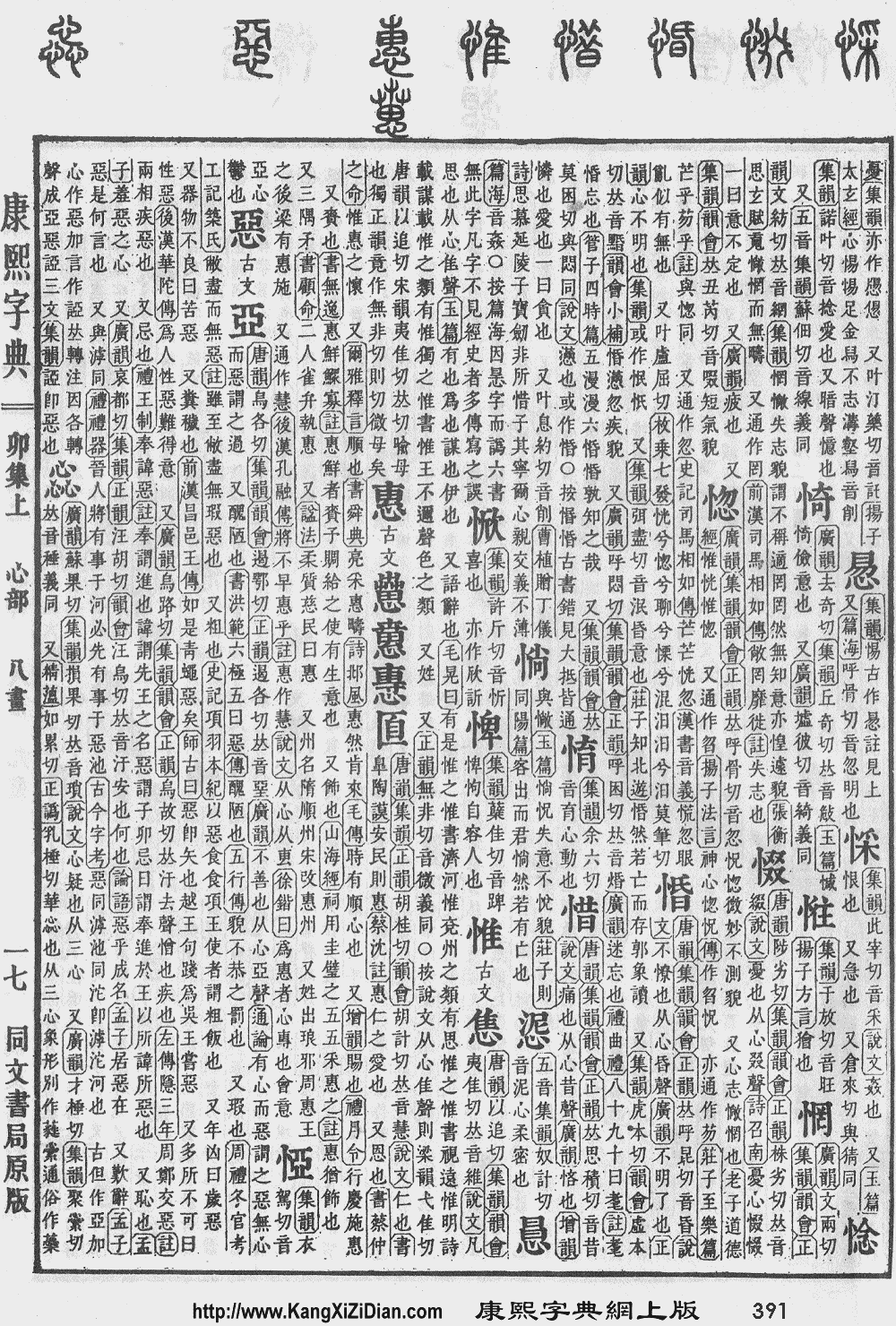
- Kangxi Dictionary: page 391, character 11
- Dai Kanwa Jiten: character 10814
- Dae Jaweon: page 725, character 23
- Hanyu Da Zidian (first edition): volume 4, page 2313, character 9
- Unihan data for U+60DC
Chinese[edit]
| simp. and trad. |
惜 | |
|---|---|---|
| alternative forms | 錫/锡 (sek3) Cantonese 𡃶 (sek3) Cantonese | |
Glyph origin[edit]
| Old Chinese | |
|---|---|
| 借 | *ʔsjaːɡs, *ʔsjaːɡ |
| 唶 | *ʔsjaːɡs |
| 藉 | *zjaːɡs, *zjaːɡ |
| 躤 | *zjaːɡs |
| 蜡 | *zraːɡs, *sʰaːɡs |
| 齰 | *zraːɡs, *zraːɡ |
| 醋 | *sʰaːɡs |
| 錯 | *sʰaːɡs, *sʰaːɡ |
| 措 | *sʰaːɡs |
| 厝 | *sʰaːɡs, *sʰaːɡ |
| 逪 | *sʰaːɡ |
| 剒 | *sʰaːɡ |
| 鵲 | *sʰaɡ |
| 碏 | *sʰaɡ |
| 踖 | *sʰaɡ, *ʔsjaːɡ, *zjaːɡ |
| 趞 | *sʰaɡ |
| 皵 | *sʰaɡ, *sʰjaːɡ |
| 舄 | *sʰjaːɡ, *sʰaɡ, *sjaːɡ, *sjaːɡ |
| 斮 | *ʔsraɡ, *ʔsraːɡ |
| 簎 | *zraːwɢ, *sʰraːɡ, *zjaːɡ |
| 諎 | *ʔsraːɡ |
| 矠 | *sʰreːɡ, *zreːɡ |
| 庴 | *ʔsjaːɡ, *zjaːɡ |
| 籍 | *zjaːɡ |
| 耤 | *zjaːɡ |
| 猎 | *zjaːɡ |
| 昔 | *sjaːɡ |
| 惜 | *sjaːɡ |
| 腊 | *sjaːɡ |
| 焟 | *sjaːɡ |
| 棤 | *sjaːɡ |
Phono-semantic compound (形聲/形声, OC *sjaːɡ) : semantic 忄 (“heart”) + phonetic 昔 (OC *sjaːɡ) – a feeling (of the heart).
Note that 昔 has meaning of “past, ending”, hence connotations of “feelings for the past, feeling about an ending – regret, rue”.
Etymology[edit]
(This etymology is missing or incomplete. Please add to it, or discuss it at the Etymology scriptorium.)
Pronunciation[edit]
Definitions[edit]
惜
- to have pity on; to regret; to feel sorry for
- 痛惜 ― tòngxī ― to deeply regret
- 子謂顏淵曰:「惜乎!吾見其進也,吾未見其止也!」 [Classical Chinese, trad.]
- From: The Analects of Confucius, c. 475 – 221 BCE
- Zǐ wèi Yán Yuān yuē: “Xī hū! Wú jiàn qí jìn yě, wú wèi jiàn qí zhǐ yě!” [Pinyin]
- Speaking of Yan Yuan['s death], the Master said, "The pity of it! I saw him go on, but I never saw him stop!"
子谓颜渊曰:「惜乎!吾见其进也,吾未见其止也!」 [Classical Chinese, simp.]- 子與我衣,我活也。我與子衣,子活也。我,國士也,為天下惜死。子,不肖人也,不足愛也。子與我子之衣。 [Classical Chinese, trad.]
- From: Lü Buwei, Master Lü's Spring and Autumn Annals, 239 BCE
- Zǐ yǔ wǒ yī, wǒ huó yě. Wǒ yǔ zǐ yī, zǐ huó yě. Wǒ, guóshì yě, wèi tiānxià xī sǐ. Zǐ, bùxiào rén yě, bùzú ài yě. Zǐ yǔ wǒ zǐ zhī yī. [Pinyin]
- If you give me your clothes, I will live. If I give you my clothes, you will live. I am a distinguished man of state, and it would be a pity if I died for the sake of the empire. As for you, you are an unworthy person and are not worth begrudging. You should give me your clothes.
子与我衣,我活也。我与子衣,子活也。我,国士也,为天下惜死。子,不肖人也,不足爱也。子与我子之衣。 [Classical Chinese, simp.]
- to cherish; to adore; to value greatly; to love dearly
- to begrudge; to grudge; to spare; to stint
- (Cantonese) to kiss
- 門牙和紅唇做美夢 每次你輕輕的親我(錫啖先囉 唔) [Cantonese, trad.]
- From: 1986, 林姍姍, 連鎖反應
- mun4 ngaa4 wo4 hung4 seon4 zou6 mei5 mung6, mui5 ci3 nei5 hing1 hing1 dik1 can1 ngo5 (sek3 daam6 sin1 lo1, m4) [Jyutping]
- Incisors and ruddy lips are dreaming good dreams every time you kiss me lightly (give me a kiss, mmm...)
门牙和红唇做美梦 每次你轻轻的亲我(锡啖先啰 唔) [Cantonese, simp.]
- (Mainland China Hokkien) to take into consideration; to take into account; to give consideration to
Synonyms[edit]
| Variety | Location | Words |
|---|---|---|
| Formal (Written Standard Chinese) | 吻, 親, 親吻 | |
| Mandarin | Beijing | 吻, 親 |
| Taiwan | 吻, 親 | |
| Yantai (Muping) | 親 | |
| Wanrong | 親 | |
| Xi'an | 親 | |
| Yangzhou | 親 | |
| Singapore | 吻, 親 | |
| Cantonese | Guangzhou | 惜, 啜, 痛 |
| Hong Kong | 惜, 啜, 嘴 | |
| Taishan | 啜 | |
| Dongguan | 啜 | |
| Singapore (Guangfu) | 惜 | |
| Hakka | Meixian | 唚 |
| Miaoli (N. Sixian) | 唚 | |
| Pingtung (Neipu; S. Sixian) | 唚 | |
| Hsinchu County (Zhudong; Hailu) | 唚 | |
| Taichung (Dongshi; Dabu) | 唚 | |
| Hsinchu County (Qionglin; Raoping) | 唚 | |
| Yunlin (Lunbei; Zhao'an) | 唚 | |
| Jin | Taiyuan | 親 |
| Xinzhou | 親 | |
| Northern Min | Jian'ou | 蜜 |
| Songxi | 鼻 | |
| Zhenghe | 蜜 | |
| Jianyang | 蜜 | |
| Wuyishan | 敕 | |
| Pucheng (Shibei) | 鼻 | |
| Eastern Min | Fuzhou | 唚 |
| Southern Min | Xiamen | 唚 |
| Xiamen (Tong'an) | 唚 | |
| Quanzhou | 唚 | |
| Shishi | 唚 | |
| Zhangzhou | 唚 | |
| Tainan | 唚 | |
| Penang (Hokkien) | 唚 | |
| Singapore (Hokkien) | 唚 | |
| Manila (Hokkien) | 唚 | |
| Chaozhou | 唚 | |
| Shantou | 唚 | |
| Singapore (Teochew) | 唚 | |
| Haikou | 惜 | |
| Wu | Shanghai | 香, 親 |
| Shanghai (Chongming) | 香 | |
| Shanghai (Zhoupu, Pudong) | 香 | |
| Suzhou | 香 | |
| Hangzhou | 香 | |
| Ningbo | 親 | |
- 冥思 (míngsī)
- 冥想 (míngxiǎng)
- 品味 (pǐnwèi)
- 尋味/寻味 (xúnwèi)
- 尋思/寻思
- 念 (niàn)
- 思 (literary, or in compounds)
- 思想 (sīxiǎng)
- 思慮/思虑 (sīlǜ)
- 思索 (sīsuǒ)
- 思維/思维 (sīwéi)
- 思考 (sīkǎo)
- 思裁 (si1 cai2) (Sichuanese)
- 思量 (sīliáng)
- 慎思 (shènsī)
- 掂掇 (diānduo) (colloquial)
- 推敲 (tuīqiāo)
- 掂量 (diānliáng)
- 揣摩 (chuǎimó)
- 斟酌 (zhēnzhuó) (figuratively)
- 沉思 (chénsī)
- 深思 (shēnsī)
- 照顧/照顾 (zhàogù)
- 玩味 (wánwèi)
- 玩弄 (Classical Chinese)
- 琢磨 (zuómo)
- 算計/算计 (suànjì)
- 考慮/考虑 (kǎolǜ)
- 苦思 (kǔsī)
- 著想/着想 (zhuóxiǎng)
- 計算/计算 (jìsuàn)
- 計較/计较
- 設想/设想 (shèxiǎng)
- 顧全/顾全 (gùquán)
- 顧及/顾及 (gùjí)
Compounds[edit]
- 不惜 (bùxī)
- 不足惜
- 作惜
- 保惜
- 傷惜/伤惜
- 可惜 (kěxī)
- 吝惜 (lìnxī)
- 哀惜
- 嗟惜
- 嘆惜/叹惜 (tànxī)
- 在所不惜 (zàisuǒbùxī)
- 大牛惜力 (Min Nan)
- 完惜
- 寵惜/宠惜
- 寶惜/宝惜
- 將惜/将惜
- 弔惜/吊惜
- 得人惜 (Min Nan)
- 怯惜
- 怨惜
- 惜傷/惜伤
- 惜分 (Min Nan)
- 惜分陰/惜分阴
- 惜別/惜别 (xībié)
- 惜別會/惜别会
- 惜力 (xīlì)
- 惜千千
- 惜名
- 惜吝
- 惜命命 (Min Nan)
- 惜售
- 惜囝 (Min Nan)
- 惜字
- 惜字如金
- 惜孤念寡
- 惜客好義/惜客好义
- 惜寸陰/惜寸阴
- 惜性命 (Min Nan)
- 惜恨
- 惜恐
- 惜惋
- 悵惜/怅惜
- 悲惜
- 惋惜 (wǎnxī)
- 悼惜
- 惜惜
- 惜愛/惜爱
- 惜指失掌
- 惜春
- 惜春御史
- 惜春鳥/惜春鸟
- 惜景
- 惜本分 (Min Nan)
- 惜死
- 惜氣/惜气
- 惜玉
- 惜玉憐香/惜玉怜香
- 惜生
- 惜略 (Min Nan)
- 惜疼
- 惜皮 (Min Nan)
- 惜眠 (Min Nan)
- 惜福 (Min Nan)
- 惜老憐貧/惜老怜贫
- 惜花連盆/惜花连盆 (Min Nan)
- 惜花連盆,疼囝連孫/惜花连盆,疼囝连孙 (Min Nan)
- 惜誓
- 惜護/惜护
- 惜身
- 惜閔/惜闵
- 惜陰/惜阴 (xīyīn)
- 惜面皮 (Min Nan)
- 惜香憐玉/惜香怜玉
- 惜墨如金
- 惜墨法
- 愍惜
- 慨惜
- 愛惜/爱惜 (àixī)
- 愛惜羽毛/爱惜羽毛 (àixīyǔmáo)
- 惺惺相惜 (xīngxīngxiāngxī)
- 愛日惜力/爱日惜力
- 愾惜/忾惜
- 慎惜
- 愧惜
- 憐孤惜寡/怜孤惜寡
- 憫惜/悯惜
- 憐惜/怜惜 (liánxī)
- 憐貧惜老/怜贫惜老
- 憐香惜玉/怜香惜玉 (liánxiāngxīyù)
- 憾惜
- 懊惜
- 戀惜/恋惜
- 拍惜
- 撫惜/抚惜
- 擏惜 (geng6 sek3) (Cantonese)
- 敏惜
- 暗惜
- 棄之可惜/弃之可惜
- 歉惜
- 歎惜/叹惜 (tànxī)
- 死不足惜 (sǐbùzúxī)
- 珍惜 (zhēnxī)
- 疼惜 (Min Nan)
- 痛惜 (tòngxī)
- 省惜
- 矜惜
- 祕惜/秘惜
- 禹惜寸陰/禹惜寸阴
- 自惜羽毛
- 苟惜
- 苦惜
- 計惜/计惜
- 謹惜/谨惜
- 護惜/护惜
- 貪惜/贪惜
- 貴惜/贵惜
- 軫惜/轸惜
- 輕憐疼惜/轻怜疼惜
- 輕憐痛惜/轻怜痛惜
- 輕憐重惜/轻怜重惜
- 追惜
- 遺惜/遗惜
- 重惜
- 閔惜/闵惜
- 閟惜/𮤲惜
- 靳惜
- 顧惜/顾惜 (gùxī)
- 體惜/体惜
Descendants[edit]
- → Vietnamese: tiếc (“to regret”)
References[edit]
- “惜”, in 漢語多功能字庫 (Multi-function Chinese Character Database)[1], 香港中文大學 (the Chinese University of Hong Kong), 2014–
- “Entry #7255”, in 臺灣閩南語常用詞辭典 (overall work in Mandarin and Hokkien), Ministry of Education, R.O.C., 2023.
Japanese[edit]
Kanji[edit]
惜
Readings[edit]
- Go-on: しゃく (shaku)←しやく (syaku, historical)
- Kan-on: せき (seki, Jōyō)←せき (seki, historical)
- Kun: おしい (oshii, 惜しい, Jōyō)←をしい (wosii, 惜しい, historical); おしむ (oshimu, 惜しむ, Jōyō)←をしむ (wosimu, 惜しむ, historical)
Compounds[edit]
Compounds
Definitions[edit]
| Kanji in this term |
|---|
| 惜 |
| あたら Grade: S |
| irregular |
| For pronunciation and definitions of 惜 – see the following entry. | ||
| ||
| (This term, 惜, is an alternative spelling of the above term.) |
Korean[edit]
Etymology[edit]
(This etymology is missing or incomplete. Please add to it, or discuss it at the Etymology scriptorium. Particularly: “Middle Korean readings, if any”)
Pronunciation[edit]
- (SK Standard/Seoul) IPA(key): [sʰʌ̹k̚]
- Phonetic hangul: [석]
Hanja[edit]

惜 • (seok) (hangeul 석, revised seok, McCune–Reischauer sŏk, Yale sek)
- This term needs a translation to English. Please help out and add a translation, then remove the text
{{rfdef}}.
Vietnamese[edit]
Han character[edit]
惜: Hán Nôm readings: tiếc, tích
- This term needs a translation to English. Please help out and add a translation, then remove the text
{{rfdef}}.
Categories:
- CJK Unified Ideographs block
- Han script characters
- Translingual lemmas
- Translingual symbols
- Han phono-semantic compounds
- Mandarin terms with multiple pronunciations
- Middle Chinese lemmas
- Old Chinese lemmas
- Chinese lemmas
- Mandarin lemmas
- Cantonese lemmas
- Hakka lemmas
- Eastern Min lemmas
- Hokkien lemmas
- Teochew lemmas
- Chinese nouns
- Mandarin nouns
- Cantonese nouns
- Hakka nouns
- Eastern Min nouns
- Hokkien nouns
- Teochew nouns
- Chinese verbs
- Mandarin verbs
- Cantonese verbs
- Hakka verbs
- Eastern Min verbs
- Hokkien verbs
- Teochew verbs
- Chinese terms with IPA pronunciation
- Chinese Han characters
- Mandarin terms with usage examples
- Literary Chinese terms with quotations
- Cantonese terms with usage examples
- Cantonese terms with quotations
- Cantonese Chinese
- Mainland China Chinese
- Hokkien Chinese
- Japanese Han characters
- Common kanji
- Japanese kanji with goon reading しゃく
- Japanese kanji with historical goon reading しやく
- Japanese kanji with kan'on reading せき
- Japanese kanji with historical kan'on reading せき
- Japanese kanji with kun reading お-しい
- Japanese kanji with historical kun reading を-しい
- Japanese kanji with kun reading お-しむ
- Japanese kanji with historical kun reading を-しむ
- Japanese terms spelled with 惜
- Japanese terms with irregular kanji readings
- Japanese adverbs
- Japanese lemmas
- Japanese terms spelled with secondary school kanji
- Japanese terms written with one Han script character
- Japanese single-kanji terms
- Japanese interjections
- Korean lemmas
- Korean Han characters
- Vietnamese lemmas
- Vietnamese Han characters