挺
| ||||||||
Translingual[edit]
Han character[edit]
挺 (Kangxi radical 64, 手+6, 9 strokes, cangjie input 手弓大土 (QNKG), four-corner 52041, composition ⿰扌廷)
Derived characters[edit]
References[edit]
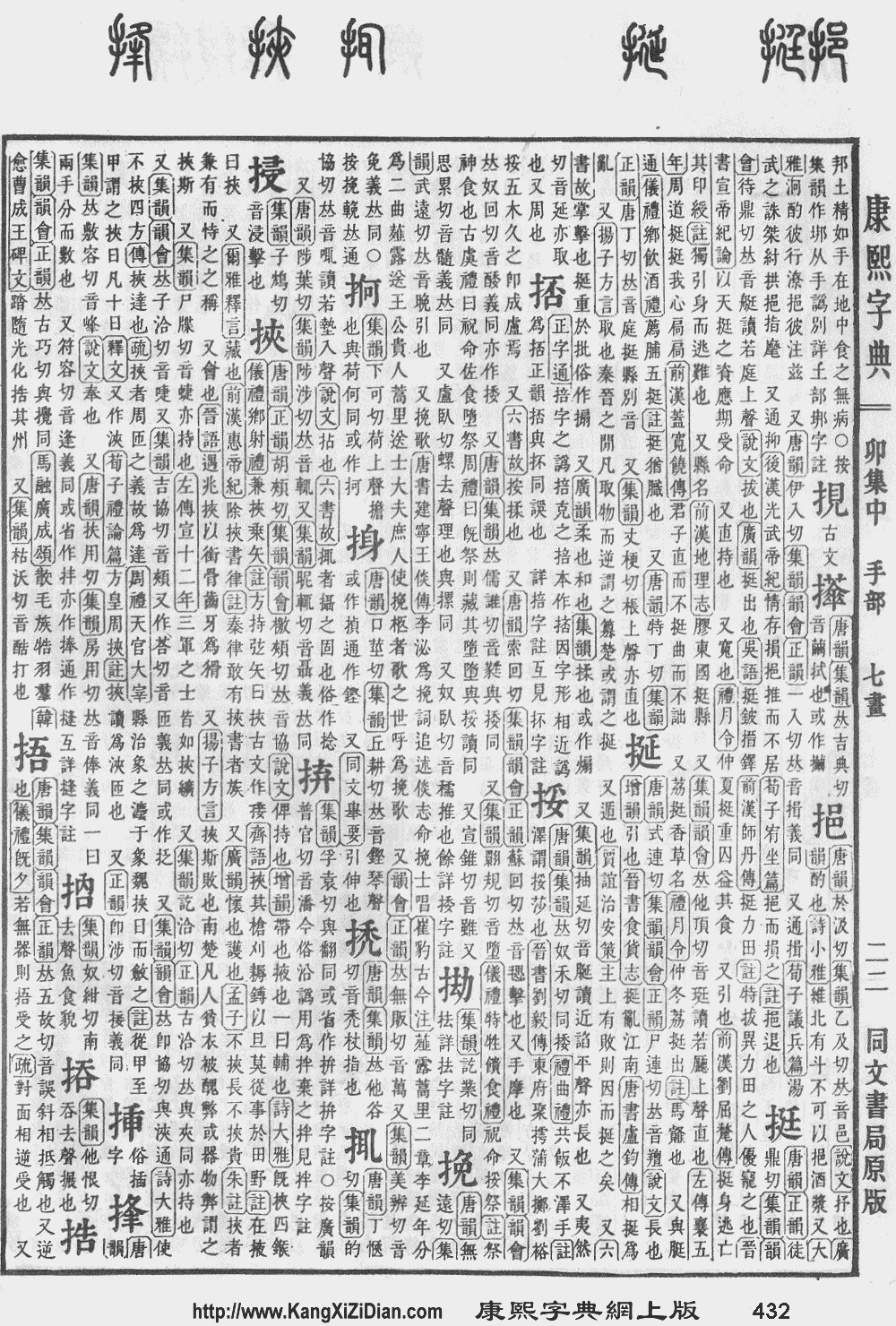
- Kangxi Dictionary: page 432, character 4
- Dai Kanwa Jiten: character 12106
- Dae Jaweon: page 781, character 12
- Hanyu Da Zidian (first edition): volume 3, page 1869, character 11
- Unihan data for U+633A
Chinese[edit]
Glyph origin[edit]
Phono-semantic compound (形聲/形声, OC *l'eːŋ, *l'eːŋʔ) : semantic 手 (“hand”) + phonetic 廷 (OC *l'eːŋ, *l'eːŋʔ).
Etymology 1[edit]
| simp. and trad. |
挺 | |
|---|---|---|
| alternative forms | 𡈼 ancient | |
From Proto-Sino-Tibetan *(p/b)ljaŋ (“straight; straighten”) (STEDT; Schuessler, 2003, 2007).
The intensifier usage “quite; very” is most likely a grammaticalized usage from “outstanding; prominent” (Liu, 2008; Yang, 2021). Alternatively, it may be from Manchu ᡨᡝᠨ (ten, “extreme”) (Aixinjueluo, 1993).
Pronunciation[edit]
Definitions[edit]
挺
- straight; erect
- to stick out; to straighten up
- to endure; to stand
- to support
- outstanding; prominent
- (chiefly Mandarin, Jin, colloquial) quite; rather; pretty; very
- Classifier for machine guns.
Usage notes[edit]
In Standard Mandarin, the degree of 挺 is usually less than 很 (hěn) and 非常 (fēicháng).
Synonyms[edit]
- (to support):
- 佐理 (zuǒlǐ) (literary, with a task)
- 使勁/使劲 (shǐjìn)
- 加勢/加势 (jiāshì)
- 助 (zhù)
- 助力 (zhùlì)
- 助理 (zhùlǐ)
- 助益 (zhùyì) (literary)
- 匡助 (kuāngzhù) (literary)
- 協助/协助 (xiézhù)
- 參佐/参佐 (cānzuǒ) (literary)
- 增援 (zēngyuán, “to provide reinforcements”)
- 幫/帮 (bāng)
- 幫助/帮助 (bāngzhù)
- 幫同/帮同 (bāngtóng) (literary)
- 幫寸/帮寸 (bāngcùn)
- 幫帶/帮带 (bāngdài)
- 幫忙/帮忙 (bāngmáng)
- 幫手/帮手 (bong1 sau2) (Cantonese)
- 幫扶/帮扶 (bāngfú)
- 幫襯/帮衬 (bāngchèn)
- 幫贈/帮赠 (Hokkien)
- 扶
- 扶助 (fúzhù)
- 扶持 (fúchí)
- 扶掖 (fúyè) (formal)
- 拉巴 (dialectal)
- 援助 (yuánzhù)
- 𢯭手 (Hakka)
- 支助 (zhīzhù) (literary)
- 支持 (zhīchí)
- 支援 (zhīyuán)
- 救 (jiù)
- 相幫/相帮 (xiāngbāng) (dialectal)
- 翼 (yì) (literary, or in compounds)
- 聲援/声援 (shēngyuán, “to express support for”)
- 臂助 (bìzhù) (literary)
- 補益/补益 (bǔyì)
- 補臺/补台 (bǔtái) (mainland China)
- 贈力/赠力 (Hokkien)
- 贈助/赠助 (Hokkien)
- 贊喙/赞喙 (“to express support for”) (Hokkien)
- 贈手/赠手 (Hokkien)
- 贊聲/赞声 (“to express support for”) (Hokkien)
- 輔助/辅助 (fǔzhù)
- 陪 (péi) (literary, or in compounds)
- 鬥幫贈/斗帮赠 (Hokkien)
- 鬥相共/斗相共 (Hokkien)
- 鬥跤手/斗跤手 (Hokkien)
- 鬥跤搭/斗跤搭 (Hokkien)
- (outstanding):
- 不得了 (bùdéliǎo) (colloquial)
- 了不得 (colloquial)
- 了不起 (liǎobùqǐ) (colloquial)
- 了勿起 (Wu)
- 佼佼 (jiǎojiǎo) (literary)
- 俊偉/俊伟 (jùnwěi) (literary)
- 偉大/伟大 (wěidà)
- 傑出/杰出 (jiéchū)
- 傲人 (àorén) (nowadays especially of breasts, body curve)
- 優異/优异 (yōuyì)
- 優秀/优秀 (yōuxiù)
- 優越/优越 (yōuyuè)
- 出挑 (chhut-thio) (Quanzhou Hokkien)
- 出擢 (Hokkien)
- 出眾/出众 (chūzhòng)
- 出腳/出脚 (Hokkien)
- 出色 (chūsè)
- 勢面/势面 (Hokkien)
- 勿得了 (Wu)
- 卓然 (zhuórán) (literary)
- 卓犖/卓荦 (zhuóluò) (literary)
- 卓異/卓异 (zhuóyì) (literary)
- 卓著 (zhuózhù)
- 卓越 (zhuóyuè)
- 厲害/厉害 (lìhài) (informal)
- 咧斗 (Zhangzhou Hokkien)
- 咧斗 (Zhangzhou Hokkien)
- 好極了/好极了 (hǎo jíle)
- 尤異/尤异 (yóuyì) (literary)
- 崢嶸/峥嵘 (zhēngróng)
- 彰顯/彰显 (zhāngxiǎn)
- 惡實/恶实 (o5 shr6) (Xiang, used as a complement)
- 打得 (Hakka)
- 斐然 (fěirán)
- 棒 (bàng) (colloquial)
- 標青/标青 (biu1 ceng1) (Cantonese, Teochew)
- 漂亮
- 炳 (bǐng) (literary)
- 牛 (niú) (Mandarin, slang)
- 牛鬼 (Guilin Mandarin)
- 特出 (tèchū)
- 特異/特异 (tèyì)
- 犀利 (xīlì) (originally Cantonese, sometimes Mandarin)
- 皦皦 (jiǎojiǎo) (literary)
- 看家 (kānjiā) (attributive, of skill, ability, etc.)
- 穩/稳 (wěn) (slang, neologism)
- 突出 (tūchū)
- 英英 (yīngyīng) (literary)
- 蓋帽/盖帽 (gàimào) (slang)
- 表表 (biǎobiǎo) (literary)
- 超凡 (chāofán)
- 超卓 (chāozhuó) (literary)
- 超常 (chāocháng)
- 超拔 (chāobá) (literary)
- 超絕/超绝 (chāojué)
- 非凡 (fēifán)
- 響噹噹/响当当 (xiǎngdāngdāng)
- 顯著/显著 (xiǎnzhù)
- 高強/高强 (gāoqiáng)
Compounds[edit]
- 伏地挺身 (fúdì tǐngshēn)
- 傲然挺立
- 前挺
- 堅挺/坚挺 (jiāntǐng)
- 孤挺花 (gūtǐnghuā)
- 峻挺
- 廝挺/厮挺
- 打挺兒/打挺儿
- 抬頭挺胸/抬头挺胸
- 拍馬挺鎗/拍马挺枪
- 挺住 (tǐngzhù)
- 挺刑
- 挺妥
- 挺尸
- 挺屍/挺尸
- 挺拔 (tǐngbá)
- 挺拔不群
- 挺挺
- 挺撞
- 挺撅挺橫/挺撅挺横
- 挺然
- 挺然卓立
- 挺生
- 挺直 (tǐngzhí)
- 挺矛 (tǐngmáo)
- 挺秀
- 挺立 (tǐnglì)
- 挺節/挺节
- 挺胸
- 挺胸凸肚
- 挺胸疊肚/挺胸叠肚
- 挺脫/挺脱
- 挺腳/挺脚
- 挺腰
- 挺腰子
- 挺舉/挺举 (tǐngjǔ)
- 挺解
- 挺起胸膛
- 挺身 (tǐngshēn)
- 挺身而出 (tǐngshēn'érchū)
- 挺進/挺进 (tǐngjìn)
- 挺過去/挺过去
- 揚眉挺身/扬眉挺身
- 昂頭挺立/昂头挺立
- 昂首挺立
- 昂首挺胸
- 死挺挺
- 牽挺/牵挺
- 直挺挺
- 直而不挺
- 硬挺 (yìngtǐng)
- 筆挺/笔挺 (bǐtǐng)
- 英挺 (yīngtǐng)
- 陰挺/阴挺
Etymology 2[edit]
| simp. and trad. |
挺 | |
|---|---|---|
| alternative forms | 停 亭 | |
(This etymology is missing or incomplete. Please add to it, or discuss it at the Etymology scriptorium. Particularly: “From 停?”)
Pronunciation[edit]
Definitions[edit]
挺
Compounds[edit]
References[edit]
- “挺”, in 漢語多功能字庫 (Multi-function Chinese Character Database)[1], 香港中文大學 (the Chinese University of Hong Kong), 2014–
Japanese[edit]
Kanji[edit]
(“Jinmeiyō” kanji used for names)
Readings[edit]
- Go-on: じょう (jō)←でう (deu, historical)
- Kan-on: てい (tei)
- On: ちょう (chō)←てう (teu, historical)
- Kun: ぬく (nuku, 挺く)
Etymology[edit]
| Kanji in this term |
|---|
| 挺 |
| ちょう Jinmeiyō |
| on’yomi |
Counter[edit]
- long and narrow things such as guns, scissors, candles, inksticks
Compounds[edit]
Korean[edit]
Etymology[edit]
(This etymology is missing or incomplete. Please add to it, or discuss it at the Etymology scriptorium. Particularly: “Middle Korean readings, if any”)
Pronunciation[edit]
- (SK Standard/Seoul) IPA(key): [t͡ɕʌ̹ŋ]
- Phonetic hangul: [정]
Hanja[edit]

挺 • (jeong) (hangeul 정, revised jeong, McCune–Reischauer chŏng, Yale ceng)
- This term needs a translation to English. Please help out and add a translation, then remove the text
{{rfdef}}.
Vietnamese[edit]
Han character[edit]
- This term needs a translation to English. Please help out and add a translation, then remove the text
{{rfdef}}.
References[edit]
- CJK Unified Ideographs block
- Han script characters
- Translingual lemmas
- Translingual symbols
- Han phono-semantic compounds
- Chinese terms inherited from Proto-Sino-Tibetan
- Chinese terms derived from Proto-Sino-Tibetan
- Chinese terms borrowed from Manchu
- Chinese terms derived from Manchu
- Mandarin terms with audio links
- Middle Chinese lemmas
- Old Chinese lemmas
- Chinese lemmas
- Mandarin lemmas
- Cantonese lemmas
- Taishanese lemmas
- Jin lemmas
- Hokkien lemmas
- Teochew lemmas
- Wu lemmas
- Chinese adjectives
- Mandarin adjectives
- Cantonese adjectives
- Taishanese adjectives
- Jin adjectives
- Hokkien adjectives
- Teochew adjectives
- Wu adjectives
- Chinese verbs
- Mandarin verbs
- Cantonese verbs
- Taishanese verbs
- Jin verbs
- Hokkien verbs
- Teochew verbs
- Wu verbs
- Chinese adverbs
- Mandarin adverbs
- Cantonese adverbs
- Taishanese adverbs
- Jin adverbs
- Hokkien adverbs
- Teochew adverbs
- Wu adverbs
- Chinese classifiers
- Mandarin classifiers
- Cantonese classifiers
- Taishanese classifiers
- Jin classifiers
- Hokkien classifiers
- Teochew classifiers
- Wu classifiers
- Chinese terms with IPA pronunciation
- Chinese Han characters
- Mandarin terms with collocations
- Cantonese terms with collocations
- Mandarin terms with usage examples
- Mandarin Chinese
- Jin Chinese
- Chinese colloquialisms
- Chinese nouns
- Cantonese nouns
- Cantonese Chinese
- Beginning Mandarin
- Intermediate Mandarin
- Japanese Han characters
- Kanji used for names
- Japanese kanji with goon reading じょう
- Japanese kanji with historical goon reading でう
- Japanese kanji with kan'on reading てい
- Japanese kanji with on reading ちょう
- Japanese kanji with historical on reading てう
- Japanese kanji with kun reading ぬ-く
- Japanese terms spelled with 挺
- Japanese terms read with on'yomi
- Japanese lemmas
- Japanese counters
- Japanese terms spelled with jinmeiyō kanji
- Japanese terms written with one Han script character
- Japanese single-kanji terms
- Korean lemmas
- Korean Han characters
- Vietnamese lemmas
- Vietnamese Han characters