This is a manually created and maintained list of pages that require cleanup.
Adding a request: To add a request, place the template {{rfc}} to the messy entry, and then make a new nomination here. Include an explanation of your reasons for nominating the page for cleanup, but please put any extensive discussion in the discussion page of the article itself.
Closing a request: A conversation should remain here at least for one week after the {{rfc}} tag is removed, then moved to that page’s talk page from here. When the entry has been cleaned, please strike the word here, and put any discussion on the talk page of the cleaned entry.
Pages tagged with the template {{rfc}} are automatically placed in Category:Requests for cleanup. They are automatically removed from the category when the template is removed, or, if the template has not been used, when Category:Requests for cleanup has been removed from the page.
If an entry needs attention from experienced editors in a specific language, consider using {{attention}} instead of {{rfc}}.
Latest comment: 1 year ago6 comments3 people in discussion
After last night's controversy over Rhymes:Romanian/abilitate, which Equinox thankfully deleted, I have been going through this category and discovered that the user who contributed, has made a lot of errors. E.g.:
Categorisation is wrong. For instance, Rhymes:Romanian/e is placed in an inexistent category named Romanian rhymes/e and this tends to happen to every page in the category Rhymes:Romanian. I compared it to Rhymes:French and it doesn't happen there.
The category Rhymes:Romanian is a mess – among the many problems, we have for instance Rhymes:Romanian/easkɘ: Romanian doesn't have IPA ɘ. Also, the user who added these categories misinterpreted "rhyming with..." as meaning "words ending with..." which was proven last night after the Rhymes:Romanian/abilitate debacle.
Wow, don't even remember writing this! I'm afraid I'm not that familiar with the discussion about rhyme pages or the decision taken by the community. As for ro.Wiktionary IPA, it is for the most part correct. I'm no expert on rhymes so it's best to ask someone who deals with them regularly. Robbie SWE (talk) 17:46, 2 November 2021 (UTC)Reply
@Robbie SWE: Okay, I will try to figure the things out with rhymes (this can take some time; I've already asked in two places and have gotten no answer in either) and then see what I can do with this category. Fytcha (talk) 19:34, 2 November 2021 (UTC)Reply
WF left a message on my talk page asking about these a while back. The phrases used in the examples are real collocations/idioms (see here and here for dictionary definitions). Þungt haldinn seems pretty common ([1]) but I can only find a couple of hits for vera haldinn skemmdarfýsn [[2] (top right p.22) and [3] (bottom left p.5)]. They're definitely not the best usage examples for haldinn either way. BigDom11:55, 18 February 2021 (UTC)Reply
Latest comment: 7 years ago5 comments2 people in discussion
This list was created a few months ago by someone with apparently little knowledge of Zulu. In Zulu, all nouns, including names, must have a noun prefix in front of them, but it's lacking for these, which makes the list of relatively little lexicographical use. @Metaknowledge Any idea what to do with it? —CodeCat23:33, 8 April 2017 (UTC)Reply
I wouldn't say it's of little lexicographical use. It seems like the content is correct, so I'd add a note at the top about how it's very inexhaustive and the form of the prefix that names have when used in Zulu, and leave it at that. —Μετάknowledgediscuss/deeds23:37, 8 April 2017 (UTC)Reply
Except that I don't know the prefix. Normally, it would be class 1a (prefix u-), as you probably know, but there's some names beginning with vowels and Zulu doesn't allow two vowels to be adjacent in native vocabulary. In theory, the prefix would become a consonant before a vowel-initial word, so is wAmahle an attested name? Modern loans use hyphens instead, so I guess u-Amahle is another possibility. I have no idea. —CodeCat23:41, 8 April 2017 (UTC)Reply
One should also consider that the noun prefixes would only apply to languages that use them. (A super-obvious forest that seems to be missed for the trees of Zulu-ness.) These are the names as they would be used in many other languages that either don't have noun prefixes on names or use different ones. By stripping these down to the bare name, they are far more useful and less confusing. The noun prefix could be covered in a simple sentence: "When speaking Zulu, all the names would have the noun prefix 'u-' but this might not be a part of the name in other languages." Rather like the "o-" for female Japanese names at one point. So someone stopping by here from NaNoWriMo won't come to the conclusion that all their Zulu characters must have names beginning with U in their novel written in English, Spanish, or Mandarin.
Latest comment: 7 years ago1 comment1 person in discussion
Navajo. I can't even find the senses among those huge tables. Moreover, the senses are not marked with # in the wikitext. —CodeCat19:10, 14 April 2017 (UTC)Reply
Latest comment: 7 years ago9 comments3 people in discussion
Navajo. Not as bad as the one above, but there's still a giant table in the place reserved for senses. Also, "stem set" is not an allowed section. —CodeCat19:12, 14 April 2017 (UTC)Reply
"Stem set" is the way Navajo roots change depending on mode and aspect. It is not a "conjugation" table in the standard meaning of it, but if you feel it better fits the practices here, I can make that change.
Then, regarding the "huge" table, it is how the Navajo vocabulary is built up, around roots to which various preffixes are added. In many Navajo verb pages, a lot of information is duplicated from verb to verb belonging to the same root. It is a lot more efficient and genuine to the language to gather this info inside a "root" page. This saves the burden to add to each verb their related verbs. See for instance yoołmas, haiłmáás, neiłmaas in their "related terms" section.
Then, a group of such verbs comes usually in a number of predefined "categories", as motion, successive, operative.. depending on the set of prefixes that the roots can take (for instance, yoołbąs, haiłbąąs, neiłbąąs follows the same pattern as the examples cited above).
In the same way a Indo-European root page just lists the descendant terms in the daughter languages, in the Navajo root pages I just list the verbs, arranged by sense, theme, transitivity and "category". (The only difference being that the Navajo root is not a reconstructed root, it's a lexical root).
I believe that for learners of the Navajo language these are of great help since it helps structuring the lexicon.
The one issue I had I admit is that the # sign doesn't work when I have multiple submeanings with verb tables inbetween them.
We have pages for roots of attested languages (Category:Roots by language), that's not really an issue. They are treated like any other morpheme. For Proto-Indo-European, though, we list terms derived from a root under "Derived terms". There's nothing in principle against there being a table under "Derived terms" instead of a list, and I think it is a better location than right underneath each sense.
As for stem sets, if it's not a conjugation table, then I assume that these would be considered separate verbs, am I correct? If so, then the situation resembles that of Proto-Indo-European as well, which also had various ways to derive stems for aspects. We list those under "Derived terms" also. See *leykʷ- for example. Would such a format work for Navajo? —CodeCat20:42, 14 April 2017 (UTC)Reply
Stem sets are not separate verbs, and if anything, are closer to a conjugation. For instance, yoołmas, yiłmáás, neiłmaas, all mean "he is rolling it", but the first one is progressive aspect (he rolls it along), the second is momentaneous (he is rolling it ), the third one is continuative (he is rolling it about). The difference is in the stem : -mas,-máás,-maas. Then each of these verbs can be conjugated for mode (imperfective, perfective, future...). Then many of these verbs can then take on lexical (non-aspectual) prefixes (just like English "to roll", "to roll up", "to roll out"...), like haiłmáás (he is rolling it out horizontally). That's why the notion of theme is so central to Athabaskan languages, because behind a given lexical verb actually hide multiple segments of somewhat predictable meaning, combining meaning, mode, aspect and lexical derivation. (sorry if that I'm not being clear enough).
Based on these premises, that's why I wanted to have the derived verbs right below each senseid, because the verbs are the incarnations of the themes. A meaning listed without actual verbs doesn't really make sense to me. I could move this to the derived section, but then it would be weird for the synonym section to come before the "derived" terms, because the derived terms are the root itself and a way to define it. And doing this would also make it very repetitive and not synoptic enough. Unless I'm allowed to have "derived terms" before "synonyms", and that I skip senses altogether? Julien Daux (talk) 22:18, 14 April 2017 (UTC)Reply
I haven't really ever dealt with these languages but I'm trying to understand. If you consider what you might call a "whole" verb, with all of its forms, what is included in this? Would you consider yoołmas, yiłmáás and neiłmaas to be different forms of a single verb? Why or why not? —CodeCat22:29, 14 April 2017 (UTC)Reply
This is a very good question, and actually this is the central question of all Athabaskan linguistics. Verb mechanism in these languages is so foreign that trying to define it in terms of European linguistics necessarily leads to some categorizations and views that don't belong to it.
The lexicographic "tradition" in Navajo is to consider yoołmas, yiłmáás and neiłmaas as separate "verbs", just like "gain" / "regain" or "perceive" / "receive" are in English, even though the first pair is a predictable derivation and the second much less so. This also fits the definition by which these are the bare shape before any inflection for person, tense or mode is added. Anything that remains after removing person, tense or mode is considered a verb (in Wiktionary and in all Navajo dictionaries). This definition is workable because first this how native speakers feel it (they actually explicitly told Young and Morgan after a survey to arrange their 1980 dictionary by lexical verbs rather than per root), and also because as in any language, some unpredictable or specialized meanings sometimes emerge from these lexical verbs, so it means they can clearly stand on their own (for instance haaʼeeł means "it floats up out", but can also mean "it (a baby) is miscarried, aborted". No other verb derived from this root has this specialized meaning).
Now, other views have emerged in the 1970 that the "real" verbal unit is not the verb (like neiłmaas), not the root (like -MÁÁZ, which can occur in various actual meanings, like "to roll" but also "to be spherical", not that far semantically, but some other roots do have much more disparateness), but the theme, which is the combination of : a root, a thematic prefix compound (possibly null), a thematic classifier (possibly null) and a category (motion, stative, successive, operative....). It is a virtual unit, whose awareness to Navajo native speakers still need to be tested, but whose explanatory power is enormous, and articulates the entire lexicon. James Kari was one of the first to investigate that route with the Alaskan Ahtna language. No such work has ever been carried out for Navajo, even though the reality of themes is a striking overarching phenomenon.
A theme is for instance "Ø + Ø + -MÁÁZ (motion)" (to roll) or "ʼa + ni + Ø + -TʼIʼ (motion)" (to stagger) (you'll agree that that would be weird to have pages named so on Wiktionary, but that's how the paper dictionary of Tlingit is construed). Like many motion themes, these themes can combine with the lexical derivation "ná + di + yi + Momentaneous aspect" (to start to...), to give the following lexical verbs: "ńdiimáás" (to start to roll), "ná + ʼa + di + ni + yi + Ø + mom(TʼIʼ)" = "ńdíʼníitʼééh" (to start to wobble). The question being, can all motion themes accept this derivational prefix? Skimming through Young's dictionary, one can notice that many such combinations are missing from his dictionary, raising the question whether this combination can be freely formed or if it is lexical constrained. Until one finds this out, it better to consider each of these lexical verbs as separate lexical units as opposed to the result of a productive derivational process.
Wow, ok. It seems, then, that Navajo verbs are quite similar to Proto-Indo-European ones, in that you have a root that can serve as the basis for one or more aspect stems, whose existance is unpredictable (not every root has every aspect) and whose meaning can also be idiosyncratic. However, I'm not quite clear on why it's necessary to list verbs by sense. The meaning of each verb is determined by the aspect/mood isn't it? —CodeCat00:19, 15 April 2017 (UTC)Reply
Well, two things: 1. I needed one place where to list the verbs belonging to the same theme instead of the copied-pasted list found at the end of each verb entry. 2. Showing the actual possible verbs demonstrates the theme's well-foundedness and also shows places where expected forms would be missing. Also because just listing a root and a theme (like a+ni+Ø+T'I') is way too abstract to be useful to anyone. This was actually the first draft I came up with when I started creating pages for root, and after a couple of these, I saw how useless and disconnected from reality it was. See for instance -CHĮ́ that I didn't have time to reformat.
(Keep in mind that when I'm showing 12 derived verbs in a given theme, there can actually be close to 100 in reality...).
One thing that is in my plate is also to create Wiktionary categories for each theme, like "Navajo verbs derived from the theme X". Currently, the verb entries do not show their appartenance to a theme, the Etymology section just lists the prefixes, but doesn't distinguish between those that are thematic from those that are derivational. Julien Daux (talk) 00:45, 15 April 2017 (UTC)Reply
I suppose that "huge table" refers to the theme/classifier tables. The tables look good to me. The Stem sets are important, and that's what they're called. I can't think of a better way to do them. Maybe the Stem sets could be reduced to mere bolded lines, placed under a headline such as ====Usage notes====. Not a very good solution, but if we're going to shoehorn Navajo stem sets into a format intended for English, it might work:
Latest comment: 7 years ago3 comments2 people in discussion
English. Verb entries 2 and 3 doesn't seem clearly differentiated. Entry 1 talks about technology, but seems to refer to hardware. Only entry 3 is labeled as computing, though all seem tech-related. It seems to me that the example phrase at entry 2 fits better under entry 3. --SentientBall (talk) 04:16, 2 May 2017 (UTC)Reply
I don't see that there is any transitive use of upgrade that is computing-specific. Differentiating transitive and intransitive use is a good first step in improving the entry, perhaps along the lines of MWOnline's:
transitive verb
to raise or improve the grade of: such as
a: to improve (livestock) by use of purebred sires
b: to advance to a job requiring a higher level of skill especially as part of a training program
c: to raise the quality of
d: to raise the classification and usually the price of without improving the quality
e: to extend the usefulness of (something, such as a device)
f: to assign a less serious status to upgraded the patient's condition to good
intransitive verb
to improve or replace especially software or a device for increased usefulness
I've added a missing noun sense, an adverb PoS section, transitive/intransitive labels, some new verb senses, some citations and usage examples. Senses a and f from MWOnline are clearly needed. I'm not as sure about b-e. DCDuring (talk) 19:16, 2 May 2017 (UTC)Reply
Latest comment: 7 years ago1 comment1 person in discussion
Ancient Greek. I was asked to put a notice here. The etymology is poorly written; it needs to be formatted and more easier to read. I am not an expert on Greek, but I have an interest on that language. TatCoolBoy (talk) 02:57, 7 May 2017 (UTC)Reply
Latest comment: 7 years ago7 comments5 people in discussion
English. Someone has been replacing translations that are direct borrowings from English (i.e. the word malware in other languages) with other terms. I have checked the three Portuguese translations they added and found that malware is much more common (about 5 times) than the most common of them, and the other two are quite rare.
I appreciate your efforts and your participation in this discussion anon, but I feel that there are still some issues with your edits:
you have reintroduced the rare term software mal-intencionado, writing that it is “used by Microsoft in Brazil”; however, even in Microsoft’s website this term is significantly less common than malware;
the regional qualifiers you added to software malicioso and software mal-intencionado are absolutely incorrect; both (including software mal-intencionado, despite its rarity) are used in Brazil and Portugal;
you added the qualifier Anglicism to several translations and as a label in the definitions; surely that’s information that belongs in the etymology sections of their respective entries, not in the translation table.
Yes, it seems to be the same person. They seem to be working off of some source with the translations of PC/Computer terms into a wide variety of languages- I'm guessing something put out by Microsoft. Since they don't know most of the languages, they can't tell if the terms are idiomatic. The entry at malware seems to have been their initial and main focus, but they've been working on the whole range of terminology relevant to PC operating systems and software.
I brought up the subject of their edits here in March with a concern that they were editing in so many languages that they couldn't possibly know all of them. You confirmed that their edits seemed to be accurate, and the discussion was archived to User talk:Anth2943. That account has since been renamed, so it's now User talk:Deletedarticle. There have been a series of edits blanking the page and others reverting the blanking, but for the moment you can see the archived discussion there. Chuck Entz (talk) 16:03, 4 June 2017 (UTC)Reply
Hmm, I see it also in dictionaries, and that puzzles me -- this doesn't strike me as particularly lexicalized, it's just と(to, quotative particle) + 言う(iu, “to say”).
How about making it a redirect? Daijisen has an entry for という, but the content is repeated in the entry of いう. という is special in that it can have a pause before it, but it is rather a characteristic of the particle と. — TAKASUGI Shinji (talk) 02:16, 15 January 2018 (UTC)Reply
Years ago, I co-authored a paper about the use of って versus と, and found that という patterns somewhat differently from other verbs (と思、と考える, etc.) in terms of colocations. Still, it certainly seems SoP in all the ways that normally matter for a dictionary entry. Cnilep (talk) 04:32, 27 December 2021 (UTC)Reply
という, when used as a phrase, it is used to apply names onto nouns (something like N という N) which basically means N called N. But if used as と+いう, it is used to quote. TNMPChannel (talk) 08:03, 26 September 2023 (UTC)Reply
Latest comment: 7 years ago1 comment1 person in discussion
English. Language family names are generally both adjectives and nouns. But some of the entries here contain only an adjective definition, while others contain only a noun. Would anyone be willing to sort these out? —CodeCat16:11, 4 June 2017 (UTC)Reply
I cleaned those modules include sty-translit, uum-translit, dlg-translit, kim-translit, kaa-translit. and all the modules transliteration based on the omniglot transliteration. and I deleted letter that aren't existing omniglot or dictionary.
and That's languages module and letter are correct.
@This, that and the other: I was referring to translations for movie cameras, not cameras in general. There also seems to be confusion between movie cameras and video cameras. I don't think the situation in 2017 has changed much. DonnanZ (talk) 09:19, 21 April 2022 (UTC)Reply
Latest comment: 7 years ago1 comment1 person in discussion
English. First definition:
A Sanskrit philosophical term that may be literally rendered in English as nonduality: denoting that though differences and variegation appear in the human condition they are unreal or illusory and are not ultimately true.
This is supposed to be an English-language entry, not a Sanskrit one, and the wording smells of teaching Enlightenment to the ignorant. Chuck Entz (talk) 13:32, 15 August 2017 (UTC)Reply
No, "SOP" is a much better description- unless you think we should have entries like "四十三本"... Either delete it, or use {{&lit}} like the Chinese section already does. Chuck Entz (talk) 07:19, 22 August 2017 (UTC)Reply
Latest comment: 1 year ago3 comments3 people in discussion
English. Leaving aside the question of whether the proper-noun sense meets the requirements of WT:FICTION, this entry has a translation table full of terms in languages the sole editor of the entry doesn't speak, including Gothic. That's right- Gothic. Even scarier, some of the translations are bluelinks- because that same editor has been creating entries in languages they don't speak for a term that probably doesn't meet CFI. Chuck Entz (talk) 08:03, 12 October 2017 (UTC)Reply
And what exactly should be cleaned up? Should t (in {{t|CODE|TERM}}) be changed into t-check? The German translation for example is correct, so it could be changed back to t. Whether or not the German term or any other translations meets WT:FICTION should be a matter of WT:RFVN to decide. -84.161.12.3509:58, 15 October 2017 (UTC)Reply
Looking at User talk:Equinox, it doesn't seem like someone asked you on your user page: user page's first post is from 20zh November 2017 (this revision), post above from 12th October.
The etymology seems to be copied from it's source (Adrian Room, Dictionary of Pseudonyms, 5th ed., p. 518, s.v. C.J. Yellowplush). Is it a copyright violation?
"used this name" - which name? The source makes it clear by the dictionary entry: The pseudonym C.J. Yellowplush. "The same character appeared" - which character? Charles James Yellowplush is the purported author and the servant was a living guy. "character" seems to refer to Charles James Yellowplush as if he is the purported author and the character in his story, but IMHO it's not so clear.
The main criterion is the difference between set categories and topical categories: set categories contain things that are examples of the kind of things named in the category titles. Thus, terms for body parts go in Category:en:Body parts. Topical categories contain terms about the topics named in the category titles. Terms that belong in Category:en:Anatomy are used when discussing the subject of anatomy. The blurring of the distinction has long been one of Rua's pet peeves.
Latest comment: 1 year ago8 comments6 people in discussion
They're formatted incorrectly and aren't actually etymologies, all they do is mention a Finnish cognate. They do this even if said Finnish cognate has an entry on the same page with a proper etymology. It seems to me like they just don't want to put any effort in but would rather leave it for someone else to clean up. —Rua (mew) 16:03, 22 October 2017 (UTC)Reply
I've noticed, yes. My workflow on cleaning up the minor Finnic languages goes usually through checking up from Proto-Finnic entries once they've been sourced, though, so that may take a while before it hits all of these "naturally". I've barely even started the initial source literature scan (going on at User:Tropylium/Finnish inherited vocabulary).
This also makes me wonder if a database dump search for Etymology sections that do not use any of our etymology templates ({{der}}, {{inh}}, {{bor}}, {{suffix}}, {{compound}} etc.) might be worthwhile at some point. Maybe after our eternity project to depreciate {{etyl}} finishes… --Tropylium (talk) 12:47, 8 November 2017 (UTC)Reply
This user is still highly active, although they seem to have moved on from adding Finnish cognates. I'm not sure whether the bigger challenge here is cleaning up the entries or finding those which need to be cleaned up. Rajkiandris, would you perhaps consider reviewing your own edits from 2017 and addressing the issues mentioned here? This, that and the other (talk) 10:10, 20 April 2022 (UTC)Reply
I can take these as a project - I think it should be a reasonable task to scan through all Finnic and Uralic languages, find all pages linking to a Finnish or (Proto-)Finnic cognate that do not have anything else of value and add some details. I'll gather a list on User:Surjection/rajkiandris-uralic-etystub-cleanup tomorrow and start working on the list once I have it. — SURJECTION/ T / C / L /19:44, 19 September 2022 (UTC)Reply
@Surjection If it isn't too much work (and no worries if it is), would it please be possible to create a list of these by language? I know there are a large number that need cleaning up in small languages with no/few editors. They've left a big mess in Mongolian, Buryat and Kalmyk, not to mention some Tungusic languages as well. Theknightwho (talk) 00:25, 8 November 2022 (UTC)Reply
My earlier process didn't involve checking whether the etymologies were added by Rajkiandris, just for a specific pattern he liked adding. i don't know whether that applies to Mongolic languages as well. — SURJECTION/ T / C / L /06:30, 8 November 2022 (UTC)Reply
Latest comment: 6 years ago2 comments2 people in discussion
English. This entry is a confusing mess. The formatting issues are just the beginning; the real issue is that the definitions are actually just a collection of examples from various languages. As noted in the talk page, the concept of absolute superlative should be language independent; its definition should be something like:
An adjective form indicating a quality expressed to the greatest possible extent, in contrast to the comparative superlative, which instead indicates a quality expressed to the greatest extent within some specific context.
A significant feature of absolute superlatives is that some languages use different inflections for the absolute and comparative cases. Accordingly, it is reasonable to still include some language examples in that context.
As an additional observation, I think the Romanian examples are actually just intensifying adverbs, not absolute superlative forms. Wikipedia provides a different explanation using the adverb phrase celmai and related forms. ―Rriegs (talk) 05:10, 28 October 2017 (UTC)Reply
Formatting should be slightly improved now (diff), but that doesn't address the real problems. The current senses maybe are better as usage notes in foreign entries; e.g. the Romanian sense could be put into an Romanian entry superlativ absolut (if the statement is accurate). -80.133.98.18603:57, 14 December 2017 (UTC)Reply
Latest comment: 2 years ago3 comments3 people in discussion
Middle English. This template is basically a copy of an old version of {{en-verb}}, and is woefully inadequate for Middle English. Middle English verbs have many more forms than just the ones given in this template. There should be a proper inflection table. —Rua (mew) 16:22, 14 November 2017 (UTC)Reply
The Middle English templates in general could really use some love. Some templates just don't exist where useful ModEnglish varieties do (e.g. {{enm-adv}}, as well as a number of grammatical boxes such as personal pronouns)); in others a number of factors make ME more complicated than English (some adjectives having plural forms in addition to the typical comparative and superlative forms.) I'm fairly new so I don't know how templates are born or altered here (or even whether this discussion belongs in RFC as opposed to the Grease Pit), but it would make a huge difference if someone could update and expand the Middle English templates. --SanctMinimalicen (talk) 14:30, 7 April 2018 (UTC)Reply
Overall our Middle English entries vary wildly in quality once you read past the etymology. A lot of entries wrongly list Modern English inflections or use raw {{head}}, probably because they were added by English editors (like me) who have no idea what the correct inflections should be. Of course, the whole language is a bit of a mess from a modern standpoint thanks to its many dialects and utterly chaotic spelling. But fixing up the headword-line templates would help to restore some confidence in our ME coverage. This, that and the other (talk) 10:48, 20 April 2022 (UTC)Reply
Latest comment: 6 years ago1 comment1 person in discussion
In other technical details besides IP range, this IP is a perfect match to יבריב (talk • contribs • global account info • deleted contribs • nuke • abuse filter log • page moves • block • block log • active blocks), and indeed shows the same indiscriminate, high-volume and diverse editing- They seem to be adding translations in just about any language they can think of. Given that יבריב was blocked for making crappy edits in languages they don't know, this makes me very nervous. Depending on the source(s) they've been vacuuming up, their edits could very well range from ok to horribly, horribly wrong.
Latest comment: 1 year ago2 comments2 people in discussion
German entry, but abbreviating a Latin term. At the momemt it's mis-categorised because of Category:Latin abbreviations. Properly, {{abbreviation of|TERM|lang=CODE}} would need two language parameters to produce "Abbreviation of [Latin] {{m|la|TERM}}" with category Category:German abbreviations. Should the abbreviation template be replaced by text and the category be added manually? -84.161.53.5916:48, 24 January 2018 (UTC)Reply
Hmm, does the German cps. really have all of the meanings listed for Latin compositus? I would guess not, in which case we should list the meaning(s) it has as a German term at cps.. The term's Latin origin is etymological info, so it should be in the etymology. We need someone who knows how the German term is actually used. — excarnateSojourner (talk · contrib)17:26, 14 February 2023 (UTC)Reply
Latest comment: 1 year ago6 comments4 people in discussion
English. No OneLook reference has even a redirect let alone an entry for this, but we have had the entry since before 2007 and we have translations etc, so we might want to try to make sense of this. I have a few questions:
What does the label "imperative determiner" mean? If it is a determiner, why is it in a Noun L2?
Isn't the noun definition SoP?
The three words presented as definitions on the same line in the Adverb L2 don't seem synonymous to me and there are no usage examples, let alone citations. Does anyone have a view on this.
I added an example that might be of non-SoP usage:
It's good that he's gone. This way we don't have to argue with him all the time.
I don't know how to define it. It might just be an elliptical deixis, which doesn't seem to me to be much of a basis for inclusion. Is it? DCDuring (talk) 00:13, 28 January 2018 (UTC)Reply
Also with other definite determiners like "his way", "John's way", etc. I was just looking for something I was familiar with that might be idiomatic, it doesn't seem very idiomatic to me. MW Online has a two=definition entry for that way that resembles ours for this way. Oxford has a euphemistic sex-romance usage.
Some cleanup seems to have occurred since 2018, but we still have a "Noun" sense glossed as "In the indicated direction or manner". Seems like a prepositional phrase, no? Most of the translations are adverbs. This, that and the other (talk) 10:48, 20 April 2022 (UTC)Reply
In particular:
The "imperative determiner" label has been removed.
The noun sense has been converted to a translation hub, so its idiomaticity is irrelevant now. But the fact that it may actually be a prepositional phrase that we have listed as a noun is still an issue.
The sense line used to, and still does, read, "In the way indicated; as follows; thus". These phrases do seem synonymous to me, but the sense is still without any usage examples or associated citations.
Latest comment: 6 years ago3 comments3 people in discussion
Arabic. User:Kaixinguo~enwiktionary and myself spotted mass-editing of Arabic verb forms. The anon refuses to interact and the edits don't seem right. He may be a native speaker or, more likely an advanced learner, but they are not familiar with some forms and they bulk-remove them. @Erutuon, Kolmiel, Wikitiki89, ZxxZxxZ, Backinstadiums, please review the edits, if you can. I have briefly checked some and I don't like what I see but would be better if they actually explained their actions. Please advise if a block or a warning is warranted. I wonder if they are one of formerly blocked users? --Anatoli T.(обсудить/вклад)11:24, 12 February 2018 (UTC)Reply
In some cases, like this or this, this user seems to be deleting definition lines that have the same inflectional categories as another definition line, but link to an alternative form of the lemma. In the first case the alternative forms are اِسْتَحْيَا(istaḥyā) and اِسْتَحَى(istaḥā), in the second مَاسَّ(māssa) and مَاسَسَ(māsasa). WingerBot created the entry, and I guess Benwing had decided to include both alternative forms. — Eru·tuon20:52, 12 February 2018 (UTC)Reply
As far as I know tuna- indicates deficiency, for example tunaaksara (tuna+aksara) means illiterate, tunarungu means deaf (lit. lack of hearing), etc. Tunafoto defined as 'photobomb' is incorrect, as the correct definition would be 'deficiency of photos'. I have never heard of this word before so I think it is best to just remove it.
Tular is just an uninflected form of menular, this is a common Indonesian word.
Gegantung is also alright. Some Indonesian nouns indicate plurals by reduplicating the initial syllable like rerumputan(grass, sing. rumput), dedaunan (leaf, sing. daun). I'm not sure why rerumputan and dedaunan received the suffix -an while tetamu (guest, sing. tamu) does not. Gegantung simply means hangings, multiple things that are hung.
Latest comment: 6 years ago1 comment1 person in discussion
English. Metaknowledge expressed concern to me about the military senses. "Way too many badly written military senses... probably should all be clarified, and some might need to be sent to RFD". I agree, and I'm not familiar enough with the military to make a perfect judgement, but I can tell you now some of the red links look questionable, and one of the defs looks unnecessarily long. Any takers? PseudoSkull (talk) 04:43, 18 March 2018 (UTC)Reply
Latest comment: 6 years ago2 comments2 people in discussion
The "identical spelling" section is a mess. Some entries are red linked. Some have only an English entry and some have only a French one. Would it be simpler to just delete it? SemperBlotto (talk) 16:23, 1 April 2018 (UTC)Reply
Not having an entry isn't a good reason. Not existing in English or French would be a reason for removing single terms. A note could be missing: "The gender only applys to the French, not to the English". A reason for deletion could be, that the list would get to long as ~1/3 of the English vocabulary is of French (Old, Middle, New French) and Anglo-Norman origin, cp. File:Origins of English PieChart.svg, after all, l'anglais est un créole. -84.161.7.11109:31, 7 April 2018 (UTC)Reply
Latest comment: 6 years ago1 comment1 person in discussion
English. Pronunciations don't entirely align with etymologies. Also, several unrelated etymologies have been stuck together within Etymology 4. Dylanvt (talk) 02:21, 8 May 2018 (UTC)Reply
Latest comment: 1 year ago2 comments2 people in discussion
Japanese. Bad etymology; doesn't have an Interjection section; mildly strange definitions (wording?), and the common reading of banzai isn't presented first. —Suzukaze-c◇◇08:05, 8 May 2018 (UTC)Reply
@Suzukaze-c I reordered the etymologies, so your banzai is indeed first now—do you think we can remove the cleanup template now? I believe things are in a better state now.
I'm still concerned about one thing, though, which is that Etymology 3 says that the reading is goon, but in fact the goon for 万 is もん, not まん, so I believe this is in error. The まん reading is a kan'youon, and so isn't an "early borrowing" but must be some kind of vulgar alteration, probably from ばんざい. Kiril kovachev (talk) 13:13, 26 June 2023 (UTC)Reply
Latest comment: 6 years ago1 comment1 person in discussion
English. Two out of the three definitions and their usexes were based on confusion between this, which is intransitive, and kick someone's ass, which is transitive. I think I fixed the definitions, but I have no clue what to do with the translations. Perhaps they might be moved to the other term if someone would be so kind as to create it. Thanks! Chuck Entz (talk) 00:09, 29 May 2018 (UTC)Reply
Latest comment: 6 years ago1 comment1 person in discussion
English. I apologize for creating and authoring the descriptive text for this category. Merism suggests that the term is polysemous in a way makes it a poor category name. I don't see what characteristics the members of the category have in common apart from being coordinate expressions. At least the category membership needs to be cleaned out. DCDuring (talk) 18:35, 24 July 2018 (UTC)Reply
Latest comment: 6 years ago1 comment1 person in discussion
I started to fix this, then realized I'm not up to the job at the moment. There doesn't seem to be a lot of consistency in the following areas:
In many cases, there is an entry for Portuguese but not for Spanish;
Sometimes plurals are included in the superscript, sometimes not (e.g. plural forms at 2.º vs. 3º vs. actual entries, like 2.ªs);
The headers usually display plural/feminine inflections (3º), but sometimes not (3o);
Sometimes "Ordinal Number" or "Abbreviation" is used as the header instead of "Adjective";
1ª is apparently nonstandard (according to the entry), with 1.ª being the main form, but elsewhere, no indication is given on whether one is more correct than the other;
The "abbreviation of" information is sometimes in the definition line, sometimes in the etymology.
Langenscheidt has: "Tante f Frau des Onkels mütterlicherseits", i.e. "[one's father's or mother's sister] [gender] [wife of the uncle on one's mother's side]", so for a person there are: person's mother -- person's mother's brother = person's uncle -- person's mother's brother's wife = person's unja -20:22, 8 September 2018 (UTC)
Latest comment: 5 years ago1 comment1 person in discussion
English. Non-standard "Sources" header; they're not all exactly references either. The most recent edits seem to have introduced an additional source which is presumably the origin of the quote given, so it should be converted as such. SURJECTION·talk·contr·log·17:19, 21 November 2018 (UTC)Reply
Latest comment: 5 years ago1 comment1 person in discussion
French. Def: "cry of celebration in the Middle Ages" Middle Ages end 1500, Middle French ends ~1600, i.e. after the Middle Ages. That doesn't make sense, needs a clarification.
If the interjection was used in the Middle Ages, it's not New French (fr) but Middle French (frm) [though there could also be a New French interjection Noël, for example used in novels for historic effect but not used in the Middle Ages]; and if the interjection is New French, it wasn't used in the Middle Ages [though there could also be a Middle French interjection Noël which was used back than].
-84.161.36.17411:55, 16 December 2018 (UTC)Reply
Latest comment: 5 years ago4 comments4 people in discussion
searching "give someone an inch" or "give them an inch" returns results for three pages, including this one;
however, this page does not link to any of the similar alternatives, and this particular wording seems to be a deviation from the much more common use of 'they'.
In this context I think that this page should be deleted.
"Someone" is not meant to be actually part of a saying, but rather a standard template per Wiktionary:Criteria for inclusion#Idiomatic phrases intended to be replaced with the appropriate pronoun in context. But I agree that repeating "someone" sounds a little weird; we should tidy up that policy to spell out what should happen in that case. There are three options I can think of: 1) keeping "someone"; 2) using singular "they"; or 3) using "he or she". -- King of♥♦♣ ♠ 07:17, 13 April 2019 (UTC)Reply
Interesting. In theory there might be a distinction between "X someone and they Y" (same person) and "X someone and someone Y" (two different people). Probably not in practice. Equinox◑07:59, 13 April 2019 (UTC)Reply
I think the distinction is between "X someone and they Y" and "X someone and someone else Y", with "X someone and someone Y" lying unsatisfactorily in between and thus sounding a bit strange.— Pingkudimmi10:53, 13 April 2019 (UTC)Reply
I don't know which form is preferred, but either this needs to be redirected to give them an inch and they'll take a mile, or the other way around (or choose a different form). "He or she" is too clunky, and in modern usage they (and its other forms) have come to represent an indefinite gendered single person. -Mike (talk) 06:09, 14 April 2019 (UTC)Reply
Latest comment: 1 year ago4 comments4 people in discussion
Dutch. The current definitions for this adverb are "does or does not – in some cases does, in other cases does not" and "did or did not – in some cases did, in other cases did not". ←₰-→Lingo BingoDingo (talk) 13:19, 12 February 2019 (UTC)Reply
In many cases, whether or not cannot be used in a translation to English, or only by rephrasing (changing the part of speech of some words while translating). Often the adverb is used in combination with of, and then whether or not can be used as a translation – but in these cases the English conjunction whether translates the Dutch conjunction of. Example:
Ik wist niet of ik het al dan niet moest lezen.[4]
This is from a translated thriller; in the original English, the sentence reads,
The word al as used here is an obsolete synonym of the usually untranslatable adverb wel, the opposite of niet, and the word dan is an equally obsolete synonym of the conjunction of, surviving in dan wel and the idiom te ja dan te nee[6] (“yes or no”). Together, the whole term is synonymous with wel of niet, and is perhaps best defined as or ... not. Usexes may suggest ways of translating this idiomatically in various contexts. For example:[7]
Latest comment: 5 years ago1 comment1 person in discussion
Vilamovian. Needs a conjugation template for its inflected forms. Request posted in the entry:
Please create a template for Vilamovian weak verbs ending in -a like maha, I don't know how to design them. These verbs are regular and follow a common pattern, here the pattern is design around the root -mah-
Latest comment: 3 years ago5 comments4 people in discussion
If Hunsrik isn't Hunsrückisch but only Brazilian Hunsrückisch as Hunsrik and en.wikipedia claim, then the whole category needs a clean-up. For example, eich is Hunsrückisch but not (necessarily) Brazilian Hunsrückisch.
Otherwise, if Hunsrik and Hunsrückisch is the same, namely a German dialect spoken in Hunsrück and Brazil, then the entry Hunsrik and en.wp need a clean-up. Daloda (talk) 16:24, 27 May 2019 (UTC)Reply
@Daloda Our language header Hunsrik (hrx) is South American Hunsrückisch. The reference given at eich does attest its use in Brazil, though being a self-published online PDF, it is questionable whether it should count for our attestation criteria.
As for the English entry Hunsrik, its definition(s) does not need to correspond to the name we use for hrx. If the term also refers to the lect of Hunsrück, you can add a definition (or to the definition). — Ungoliant(falai)14:20, 1 June 2020 (UTC)Reply
Ah, I see what you mean now. You are right about that.
The reference is not durably archived. It is an enthusiast’s labour of love that he published on a blog from what I can tell, although this word is attested else (the 2nd person, not the 1st). — Ungoliant(falai)15:23, 21 January 2021 (UTC)Reply
Latest comment: 5 years ago1 comment1 person in discussion
English. The current definition and the one that an IP just tried to add are solid blocks of technical-sounding jargon describing what seem to be a type of computer application and a rather specific organizational method. The Google Books hits I see, on the other hand, talk about an element in the analysis of processes- basically, a concept. This smells like someone trying to promote stuff that just happens to be available on their website(s).
At any rate, there seems to be real usage, so it would be great if someone who knows more than I do could make a real entry out of it, phrased so that ordinary human beings can understand it. Chuck Entz (talk) 01:18, 28 May 2019 (UTC)Reply
Latest comment: 5 years ago1 comment1 person in discussion
I have not studied law where English is spoken to know what this word means, but I doubt that this word is interchangeable with “owner”, at least in the main sense as currently used – in any case the definition “owner” is hardly enough not to leave doubts about its application; and the second and third definitions are redundant to each other; probably also the third and second to the first if the first is correctly defined, and possibly even the fourth is just subcase.
The translation tables contain “Inhaber” for German. Indeed, how I see the word used in corpora, it translates well so. So there are trademark proprietors, and those are Markenrechtsinhaber in German. But “owner” is not Inhaber, it is Eigentümer, which means the complete might about a corporeal object and it cannot be applied to trademarks or other intellectual property rights. A Besitzer means the de facto control about a thing (borne by the will to possess; it is possessor), a word hardly pertinent to proprietor.
Latest comment: 5 years ago2 comments1 person in discussion
Applying {{lb|en|collectively}} and {{lb|en|collective}} causes entries to be placed in this category. These labels have been applied to miscellany of terms, including to Entente Cordiale and Welsh. I would think we would not want to include demonyms or, indeed, any proper nouns in this category. Further, nouns like academia seem to not fit ordinary use of the term.
I am not sure how many problems are here, but some possibilities are:
As should applied to determining category membership
I think this needs discussion before action, but I don't think it rises to BP. If there is a lot of disagreement, we should take it to BP once the problem(s) is/are sorted. DCDuring (talk) 15:50, 16 July 2019 (UTC)Reply
Century 1911 has: "In gram., a noun in the singular number signifying an aggregate or assemblage, as multitude, crowd, troop, herd, people, society, clergy, meeting, etc."
I would exclude multitude, crowd, people, society, clergy and include troop, herd, meeting, though I can't now specify the basis for the differences I find between the two groups. DCDuring (talk) 15:57, 16 July 2019 (UTC)Reply
Lots of subcategorisation here. Didn't we previously delete similar stuff about Bangladesh before? If we decide these should exist, then at least they should be added to the category data so that they can be used in multiple languages. —Rua (mew) 16:59, 22 August 2019 (UTC)Reply
Latest comment: 5 years ago4 comments3 people in discussion
This French IP just added a whole bunch of Greek phonetic transcriptions of English given names with the definition "A male given name, equivalent to English[…]" provided by the {{given name}} template. This is rather misleading, especially for names where the English forms are descended from Ancient Greek and the native Greek descendants of the Ancient Greek forms are far more common. These names seem to be attested, but I'm not sure whether they're really Greek or transcriptions of English. Can someone who knows some Greek, like @Sarri.greek, Rossyxan, Saltmarsh, Erutuon, Canonicalization advise on how to deal with these? Chuck Entz (talk) 02:54, 25 August 2019 (UTC)Reply
@Sarri.greek, Rossyxan, Chuck Entz, Erutuon, Canonicalization For ease of access I assume that Μαρκ, Μάικ, Μάικλ, Μπράιαν, Ουίλλιαμ, Ρόμπερτ, Ρίτσαρντ, Τζέιμς, Τζον, Ντέιβιντ are the names we are talking about. I looked at Pierre, Odysseus to see how we handled names which I know of personally in the UK of English people; Odysseus has a Greek mother. (I would rather term us all European, but we won't go into that!) The treatment of these two seems fair to me, English people having an extra Category:English male given names from French. The English are generous about given names - anything goes - I don't know how a Greek would define a Greek name, my initial trawl of Βικιπαίδεια didn't find any native examples of these names but that doesn't mean much Μαρκ may be rare but Μαρκός isn't. We need Greek input :) — Saltmarsh. 05:37, 25 August 2019 (UTC)Reply
@Saltmarsh, Chuck Entz, yes I can see Odysseus from the ancient name, but is anyone called Othysseas (Οδυσσέας -audio transcription of informal name-)? These are correct audio-transcriptions of the English names, unadapted, without declension: I am not sure of how these infinite code-switchings are handled. I do not know if you wish them to appear in Translations. I see the English Alexandros (transliteration of greek Αλέξανδρος/Ἀλέξανδρος) instead of Alexander. Or Alixandr, Aleksandr (of Александр). Perhaps, for Μάικλ something like...
Transcription of the English male given nameMichaelin Greek script. Equivalent of the Greek Μιχαήλ(Mikhaḗl)(older, formal form) or Μιχάλης(Michális).
Example: I know a person called Γιάννης, passport with formal Ιωάννης or Ἰωάννης but his family call him Τζον (John). Is this a greek name? No. It is English. In Eng. we have Iannis, Yiannis, Ioannis (various transliterations of old and modern greek forms).
The reverse procedure IS indeed a normal greek lemma: A foreign name may be hellenized: Robert (transcription & transliteration: Ρόμπερτ) became Ροβέρτος, with full declension, which IS used (rarely) as a greek given name. sarri.greek (talk) 06:02, 25 August 2019 (UTC)Reply
@Sarri.greek Do we have 3 options (the first is non-commital)?
1. A male given name from the EnglishRobert, equivalent to the Greek Ροβέρτος(Rovértos).
The trouble with using {{given name}} is assignment as a Greek name, which might not be what we want. One option would be to use the first and leave the rest to the Etymology section. — Saltmarsh. 06:29, 25 August 2019 (UTC)Reply
They aren’t, and Low German (nds) and High German (de) aren’t different languages. The word has been used just north and south the Benrath line. Comparing High Prussian and Low Prussian, they aren’t different languages but dialects. “German” is the Dachsprache. Fay Freak (talk) 14:05, 3 October 2019 (UTC)Reply
Latest comment: 4 years ago1 comment1 person in discussion
(Some of) those entries need a cleanup:
Some entries lack the page number, e.g. Eichhore, Nuss which are not even in the Wörterverzeichnis (p. 110ff.).
Nuss: The source has "nʊss Nuß" (p. 59). Properly it's not ʊ, but u neither. The source explains the characters on p. 7f.: "ı ı̄ [ı with macron] und ʊ ʊ̄ sind sehr offene Laute; [...] i und ī [i with macron] sind deutlich geschlossen; [...] Der mit u, ū bezeichnete Laut ist ein sehr geschlossenes u mit ganz leichter Palatalisierung". Thus apparently it's not "Nuss" and if the occurence on p. 59 is the source for the entry, the entry not only needs the page number but also a note or another cleanup.
Some entries need a note and possible other cleanups, e.g. Tuure, Määri.
Tuure: The source has "tʊ̄rə m. Turm, mhd. turn" (p. 19), "tʊ̄rə m. Turm, speziell der ‚Langobardenturm‘ in Hospental" (p. 34f.) and doesn't have "Tuure" on p. 34.
Määri: The source has "mǣrı n. Märchen, zu ahd. mâra" (p. 23, in § 26), "mǣrı n. Märchen" (p. 45, in § 51), and "Mä̂ri n. 26" (p. 112, inside the Wörterverzeichnis), and does not have "Määri" on p. 23. As for the Wörterverzeichnis, it begins with this note: "[...] Durch Aufhebung von Entrundung, Verdumpfung und Diphthongierung sowie der sekundären Dehnung und Kürzung ist der Lautstand soweit als möglich dem gemeinalemannischen Status angenähert worden. [...]". That is, the form in the Wörterverzeichnis is artificial, not really Urseren.
Latest comment: 4 years ago1 comment1 person in discussion
I've skimmed through some of Theo's most recent contributions and found many dubious edits and some obvious errors. I'm not a Latin, Thai or Chinese expert, but I think those edits should be checked too considering that he has a tendency of reverting edits by knowledgeable users. I also issued a 1 week block so we can go through his edits and maybe let him cool down. --Robbie SWE (talk) 08:56, 14 October 2019 (UTC)Reply
We don't really have any cohesive approach to the enormous variability of Japanese name (especially given-name) spellings and readings. I suppose, ideally, we'd treat each reading fully, but given the wide wide wide WIIIIIIDE range of spellings, I suspect we'd have to lemmatize at the kana renderings.
I would like to see given names lemmatized at kana only and surnames lemmatized at kanji or kana. I think listing these readings at {{ja-readings|nanori=}} would suffice. By the way, can we capitalize the rōmaji for the nanori readings? KevinUp (talk) 05:21, 30 October 2019 (UTC)Reply
@KevinUp: Listing only as nanori doesn't tell us whether it's a name in itself (not used in conjunction with other characters) and it doesn't tell us whether it's a male given name, female given name or surname. Thus, the romaji for the nanori readings should not be capitalized. — justin(r)leung{ (t...) | c=› }06:36, 30 October 2019 (UTC)Reply
The idea is to have this information (male/female given name) at kana entries because there are multiple ways of writing the same name using different kanji (See ただし#Proper noun for example). I think nanori readings can be capitalized because they are proper nouns. KevinUp (talk) 06:54, 30 October 2019 (UTC)Reply
@KevinUp: Then they shouldn't just be listed as readings under the Kanji header, but also have a soft redirect. Nanori readings may not necessarily be proper nouns in themselves if they're only used in conjunction with other characters to form a proper noun. — justin(r)leung{ (t...) | c=› }07:00, 30 October 2019 (UTC)Reply
Ping also @Poketalker for comment. Are there any nanori readings that are only used in conjunction with other characters, and shall these entries be designated as affix instead? KevinUp (talk) 07:26, 30 October 2019 (UTC)Reply
The page has dubious given names such as まさつぐ, しんじ, and ますみ, and dubious surnames such as さねさき, まがさき, しんさき, しんざき, and まやなぎ. They should be deleted, or at least RFVed. I prefer having only nanori readings in a kanji page and attested surnames. Given names are really free when it comes to kanji. — TAKASUGI Shinji (talk) 10:23, 30 October 2019 (UTC)Reply
@Eirikr: Thanks for the explanation. I managed to clean up the compounds section and reduced the Lua memory from 50 MB to 35 MB. What are your thoughts on creating soft redirects for given names? KevinUp (talk) 17:54, 30 October 2019 (UTC)Reply
@DCDuring It is a type of anthology that apparently includes various versions of the Wolfdietrich. The manuscript used for the quote is Hagens Handschrift, but I do not know what version that is though it is likely not version A. Also, the amount of variants of the work is a bit of a mess, so I have no idea what date to use. The surviving manuscripts themselves seem to be mostly 15th/16th century according to Wikipedia. ←₰-→Lingo BingoDingo (talk) 15:11, 13 November 2019 (UTC)Reply
@DCDuring It is apparently version B and the manuscript has the siglum MS H, which the Wikipedia article dates to the 2nd half of the 15th century. Version B is generally dated to the 13th century. ←₰-→Lingo BingoDingo (talk) 08:49, 15 November 2019 (UTC)Reply
Thanks. I suppose that, strictly speaking, one would want to date the citation at the date of the earliest manuscript that included the headword, but what would one do if the surrounding text differed in a way that influenced one's ascription of meaning? I suppose that it would be a rare user here that would be concerned. It makes me appreciate that most printed works are not subject to as much variation, except by well-defined editions, errata sheets, etc. DCDuring (talk) 12:28, 15 November 2019 (UTC)Reply
Latest comment: 4 years ago1 comment1 person in discussion
make of car.
Apparently, all the citation dates are based on whatever edition the contributor found in their own library or on Google Books. I found 3 errors in the 3 that I checked, including Willa Cather's My Antonia dated 2006, rather than 1918, Elmore Leonard's Killshot dated 2003, rather than 1989. There are 10 others to be checked. DCDuring (talk) 03:57, 12 November 2019 (UTC)Reply
Seems to be primarily an adjective (パッシブ・アグレッシブな), but there are some noun uses. I've cleaned it up and moved it to パッシブ・アグレッシブ, since the quotations I found all had the dot. Cnilep (talk) 04:21, 18 March 2022 (UTC)Reply
Estonian has first-syllable stress on most native words, like Finnish. Rhymes:Estonian doesn't say anything about rhyming rules, but if they are anything like English, a lot of these words do not actually rhyme because they are not stressed on the first syllable of the rhyme. —Rua (mew) 15:55, 30 November 2019 (UTC)Reply
The article Riim on the Estonian Wikipedia does not give a precise definition, but defines the rule loosely as “the same sound” (helide kordust) “in the last stressed syllables of the word” (sõna viimastes rõhutatud silpides). The examples given (all polysyllabic) are all consistent with the hypothesis that the rules are like those for English rhyming poetry. --Lambiam15:08, 11 January 2020 (UTC)Reply
Latest comment: 3 years ago3 comments3 people in discussion
I'm tempted to rfv the entire translation table, since almost all of the translations look like simple calques of the English, and the phrase was only coined a few decades ago (Old Church Slavic... really?). Someone has obviously made it their mission to translate this into every language that ever existed and is posting the results on a web page somewhere.
I don't know if these books and/or movies have been translated into Church Slavonic (maybe they have after all); but wherever I met that phrase in any language it was as a literal translation of the English, and what's surprising about that? Star Wars is rating near the top of the box office all over the world, not only in English-speaking countries (and even non-native English-speakers watching it in the English original would then use a literal translation to their friends in their own language). Tonymec (talk) 00:52, 25 December 2019 (UTC)Reply
Latest comment: 4 years ago2 comments2 people in discussion
I removed a lengthy, footnoted, POV defense of marijuana that was hanging like a goiter from the definition after the offending part had been excised, but the definition itself has been changed from the admittedly dated and awful Webster 1913 one to a sort of half-mutated form that doesn't make sense by old or modern standards. It talks about hemp, the taxonomic equivalent of Cannabis indica, hashish and "narcotic" properties all together, which strikes me as possibly wrong, and it's not completely clear to me how one would refer nowadays to whatever was meant by this obsolete chemical term. Someone better versed in the history of marijuana needs to make some sense out of this. Chuck Entz (talk) 04:17, 11 January 2020 (UTC)Reply
Cannabin seems to be archaic in the sense given. According to a document titled "How Tobacco and Cannabis Smoking Effects Human Physiology": "Cannabis, produced from the hemp plant, is employed in 3 forms: herbal cannabis, the dried leaves and flowering first-rate, additionally referred to as ‘cannabis,’ ganja,’ or ‘weed,’ among others; cannabin, the ironed secretions of the plant, referred to as ‘hashish’ or ‘charash;’ and cannabis oil, a mix ensuing from distillation or extraction of active ingredients of the plant." (There are a lot of hits for cannabin oids, attempting to exclude them causes google to scold me: "Showing results for cannabis -oil -kids".) There are more potentially useful papers behind paywalls. Vox Sciurorum (talk) 13:57, 5 August 2020 (UTC)Reply
Latest comment: 2 years ago3 comments3 people in discussion
Some of the things listed as homophones (e.g. dâng) do not appear to be pronounced the same, based on our pronunciation sections. Pinging two recently-active Vietnamese speakers @Corsicanwarrah, PhanAnh123, can one of you please take a look and either remove anything in the list of homophones which is not a homophone, or expand the pronunciation sections? - -sche(discuss)22:26, 11 January 2020 (UTC)Reply
Input needed
This discussion needs further input in order to be successfully closed. Please take a look!
The pronunciation of the phoneme written <â> is quite messy: bits and pieces of Central and South Vietnam merge it with <ă>. I don’t know if there’s any place where this merger coincides with the merger of <v> and <d> (which is limited to bits and pieces of the South). However it be, Vietnamese homophones are in dire need of quantifiers saying where these words are homophones, as this is never the whole of the country. MuDavid 栘𩿠 (talk) 09:11, 22 March 2022 (UTC)Reply
This is partly a module problem (@Benwing2) and partly a question of whether the plural should really be treated as a separate plural-only word (or at least have a separate headword). Chuck Entz (talk) 20:13, 17 January 2020 (UTC)Reply
Regardless of that question, it's not a first declension neuter noun. If both forms make up one word, it's a heteroclitic and heterogenerous noun, second declension neuter (in sg., alternative pl.) and first declension feminine (in pl.).
Logically, {{construed with}} should maybe function as a label, I agree with that, but you can't just change the template the way you've done it. It functions syntactically in a particular fashion, and changing it to use {{lb}} breaks that. In order to change this, you need to (1) investigate the best way to make the relevant syntactic changes to all the pages that use it, (2) get consensus in WT:BP. Benwing2 (talk) 15:21, 19 January 2020 (UTC)Reply
I reverted you because such changes should be discussed before implementing. I have no opinion on whether it's a good idea- it just needs to be discussed with someone who knows the differences in behavior between the modules that support the two versions. Chuck Entz (talk) 15:25, 19 January 2020 (UTC)Reply
In some languages, the spaced/non-spaced version is prescribed/proscribed. For example in German in case of abbreviations with dots, the unspaced version is proscribed while the spaced version is prescribed, so it's z. B.(prescribed) and z.B.(proscribed) (Duden: z. B.).
And even if WT would state, that it ignores spacing (which it can't state, if it is descriptive and not prescriptive), then it could only do so for the lemmas/entries and not the quotes, as altering quotes makes them wrong. We also don't changes the spelling in quotes of Shakespeare to the spellings used today.
--Trothmuse (talk) 20:25, 23 January 2020 (UTC)Reply
The 1809 quotation has been fixed (there was a typo in the template).
The alternative form, rumal, is marked as a "preposition". I put this PoS in the entry, plus {{rfdef}}. I was tempted to just delete it, honestly. These K'iche' entries were compiled by someone who was working through an online glossary; it's not clear if they actually speak the language. This, that and the other (talk) 04:40, 14 August 2023 (UTC)Reply
Latest comment: 1 year ago2 comments2 people in discussion
For some reason an IP has worked on this entry a lot, adding references in definitions and a bunch of entries in other languages (all under translations) that they probably don't know enough to actually add entries correctly in. — surjection ⟨?⟩ 06:23, 29 January 2020 (UTC)Reply
I merged the senses. Honestly the IP seems to have their head screwed on the right way. I couldn't find any glaring errors. It seems they were just passionate about myroblytes.
Latest comment: 4 years ago1 comment1 person in discussion
I reverted the deletion of one of the senses with the edit comment "Removed wrong meaning". The fact that someone did so shows that either this is indeed wrong, or at the very least it needs tweaking of the definition and/or a label/usage note to deal with the sensitivity of the issues involved. I haven't rfved it because it seems to hinge on matters of fact and interpretation as much as usage. This needs the attention of someone who knows more about this than I do. Chuck Entz (talk) 14:08, 29 January 2020 (UTC)Reply
Latest comment: 4 years ago1 comment1 person in discussion
The etymology, second def, and a quick Google Images search lead me to think the first def is meant to say a trans woman, to a trans man. The second def is not entirely fluent, but seems like it seems redundant to the first def (assuming the first def means what I just said), since it seems to be saying "a woman who is not trans but is mistaken for a trans woman is also called this". (Then again, at what point does calling someone something insultingly become a separate sense? Calling every "lame" thing "gay" is a separate sense of gay. But are bullies who shout "lesbian!!" at a straight girl who has a mannish/butch haircut/clothes using a different sense?) - -sche(discuss)10:53, 24 February 2020 (UTC)Reply
Latest comment: 4 years ago2 comments1 person in discussion
A recent (apparently plausible) edit to the etymology, which I copyedited, made me notice that this entry has a big manual declensin table complete with "albanian" being mis-capitalized until a moment ago, and each cell having its own font specified. - -sche(discuss)17:36, 3 March 2020 (UTC)Reply
Latest comment: 3 years ago2 comments2 people in discussion
The first three senses seem very similar. Though they are technically distinct definitions, the minute differences between them seem to have little practical importance or effect on meaning. Maybe they could be merged into one definition? Imetsia (talk) 17:42, 3 March 2020 (UTC)Reply
Latest comment: 4 years ago1 comment1 person in discussion
Citation format is nonstandard and has been since 2012. Dates or estimated dates are missing. English translations are missing for some. DCDuring (talk) 19:13, 8 March 2020 (UTC)Reply
Latest comment: 4 years ago2 comments2 people in discussion
When it comes to 6-legged teeny wingless crawling things, we live in interesting times. This entry is a poster child for the problems that come from our reliance on public-domain sources for rapidly-changing technical topics. I apologize for throwing around a lot of taxonomic names, but you can't really understand what's wrong with this entry- let alone fix it- without at least a very basic knowledge of the taxonomy.
The original definition:
Any of various small active insects of the order Thysanura, that have two or three bristles at the end of their abdomen and that do not have wings.
This definition is correct as of a century ago, but is now seriously wrong. Here are the groups that I'll be referring to:
All of these have 6 legs, and are currently grouped together as Hexapoda. The "bristles" are appendages called cerci sticking out of the last segment on the tail end, along with a terminal filament sticking out in the middle. The proturans have none of these, while the diplurans have only the two cerci. The springtails have the terminal filament folded against and fused with the body, and the cerci modified into a structure called the furcula. The furcula acts like a spring: it's kept against the body, but when released catapults the springtail into the air. The most primitive insects have all three structures, others just cerci (they're the pinchers in the earwigs), and the more advanced have nothing.
Linnaeus classed all the arthropods as insects, and grouped them at the broadest level according to their wings. His Aptera included crabs and lobsters, spiders, scorpions, mites, ticks, lice and fleas, as well as the groups above.
By the end of the 19th century, the crustaceans and arachnids were split into their own groups and fleas and lice were recognized as winged insects without wings. All the 6-legged arthropods were classified as insects. These were divided into the winged insects, Pterygota, and Thysanura (all the rest). The proturans were only discovered in the first decade of the 20th century, so weren't included. Springtails were recognized as quite distinctive, so the Thysanura were referred to in those days as springtails and bristletails.
Our original definition is based on Thysanura as it was known then: all the hexapods that weren't winged insects, springtails, or proturans. The fact that it mentions "two or three bristles" proves that diplurans were included (nothing else has 2 tails).
By the latter part of the mid-20th century, the entognath orders were split off from the insects and no longer included in Thysanura, leaving just the archaeognaths and zygentomans. Toward the end of the 20th century, the archaeognaphs were recognized as different from all the rest of the insects, so Thysanura was broken up:
Even this is probably going to change. The trend seems to be toward treating insects as closest to, if not part of, the crustaceans, and not as close to the other hexapods- which would make the Hexapoda obsolete. The exact relationships of the different hexapod groups to the crustaceans or other arthropod groups and to each other is still not settled, however.
Recently @DCDuring changed Thysanura to Zygentoma in the definition. It's true that the only species that are widely familiar to non-entomologists are in this order, but that leaves out the the diplurans and the archaeognaths. He also changed the translation table to say Zygentoma instead of Thysanura, which means that all of the translations could potentially be for the wrong definition. The translations that I can figure out seem to be mostly for specific species in Zygentoma (silverfish, mostly), but it's hard to say whether they can also refer to Zygentoma (or anything else) as a group. I don't know know the languages well enough to fix these.
I've now split the definition into a primary one referring to "small, active six-legged arthropods" rather than using a taxonomic name, with subsenses for each of the orders. Given the magnitude of the taxonomic changes, I figured it was better to avoid details that would be invalid for at least some historical stages of the taxonomy.
The easiest sense to find in Google Books (since everything from that period is in the public domain) is the older one covering all the hexapods except for proturans, springtails and winged insects. The sources for this usually refer to "bristletails and springtails". I suspect that one exists for archaeognaths as opposed to zygentomans, since the zygentomans are better known as silverfish. The diplurans are usually referred to as "two-pronged bristletails" and the archaeognathans as "jumping bristletails", but there are a uses of just "bristletails" for each. I'm not sure if our definitions should try to reflect those differences.
Another issue is that older works tend to hyphenate the name, while modern references tend to be written solid. It's hard to say whether the lemma should be at the hyphenated or the solid form.
The original definition was probably from MW 1913 or Century 1911. I have made no substantive edits to this entry other than the one you mention.
I suppose that, since we sometimes claim to be a historical dictionary, it might be desirable to show the definitions that applied at different times, but I don't know that we can find citations that would well support any refined set of historical definitions. A gallery of photos might suggest why the vernacular term has been applied to so many relatively distinct taxonomic groupings. Since taxonomists often don't use vernacular names in their writings, it may be a hopeless task to follow the twists and turns of possible referents of such a vernacular term. I think the most important thing is to have the most common definition applicable for non-specialist literature.
If some of the groups are usually vernacularly referred to by a name like X bristletail, then coverage in derived terms might be enough, especially if we actually have entries for those terms. OneLook references have three such derived terms: jumping bristletail, true bristletail, and two-pronged bristletail.
I would use Google NGrams to provide some guidance about which term should be the lemma. Otherwise, a lot of work for the value gained.
In short, I don't think that we can achieve taxonomic precision in a vernacular name entry and shouldn't expend too much of our effort in that direction, as frustrating as it may be to leave such vagueness behind. DCDuring (talk) 03:49, 15 March 2020 (UTC)Reply
Latest comment: 4 years ago2 comments2 people in discussion
Vuldar: Volume? Year? (Vol. 1 from 1856?) What's "1338"? (col., and not e.g. p. or num.?) It's not "Dr. Förstemann Ernst" but "Dr. Ernst Förstemann" (Ernst is the forename, Förstemann the surename).
Wothen: Wrong title (as the title page shows it's "praecipui, ex" and not "praecipui : ex"). Year? (It's 1596.) Page? (476.)
Aldger: Year? (1867?) What's "2."? (The page and not for e.g. vol., col. or ed.?) Also: Why is "Aldgēr" given as sense/translation, isn't it rather the head: ({{head|osx|proper noun|head=Aldgēr}})?
Adalmar: "Dr. Heyne, Mortiz". The person's name is Moritz. This occurs in many other entries as well; in some (e.g. Alburg) it was fixed already.
Irmina: It's not "Forstemann" but "Förstemann". This occurs in other entries as well.
Irmindrud: This should be checked, probably it's not "Diocesis" but "Dioecesis" as in this google snippet.
Haostarpald: Title is wrong; it's "Grammatik der deutschen Mundarten. Zweiter Theil. Das bairische Gebiet. – Bairische Grammatik." And as usual for Leornendeealdenglisc: Year, and what's "74"?
Angandio: Edition/Translator? What's "1716"? (Page and not year as Grimm lived after that?) Possibly the Volume is lacking as well.
Latest comment: 4 years ago2 comments2 people in discussion
The "masculine plural transmiss" seems wrong. The "verb form: participle" and "participle" sections seem redundant. Beyond just fixing the entry, someone might want to look into whether other entries with the same kind of error exist. - -sche(discuss)22:53, 3 April 2020 (UTC)Reply
It looks like this is generated by the code in Template:fr-past participle. Currently, that template requires the manual addition of the past participle form for masculine plural forms that aren't formed by the addition of s to the singular form. So this example can be fixed by adding the parameter "mplural=transmis". I think it would be better maybe to add more logic to the code, since it is regular for masculine singular forms ending in -s to not take an additional s. (If this isn't done, though, I don't think it's infeasible though to add all of these manually, since past participles ending in "s" in the masculine singular constitute a small and fairly closed category in French.)--Urszag (talk) 02:47, 4 April 2020 (UTC)Reply
Latest comment: 4 years ago2 comments2 people in discussion
Do we...normally list UK rhotic pronunciations? Do we want to? This entry does, on their own line, not even using the parenthetical r format. - -sche(discuss)01:55, 9 May 2020 (UTC)Reply
We don't normally, but there's no particular reason we shouldn't. That said, I do wish people would stop using "UK" and "US" as accent labels and use something more specific. Is the "UK rhotic" accent being shown that of the West Country? Scotland? Northern Ireland? All three? —Mahāgaja · talk07:41, 9 May 2020 (UTC)Reply
Latest comment: 4 years ago1 comment1 person in discussion
Another three-way tangle, where each entry gives the others as alternative forms. Should be centralised on one form as far as possible (at least for the noun; I don't think sit-out or sitout can be verbs, only sit out). Equinox◑20:28, 11 June 2020 (UTC)Reply
Latest comment: 4 years ago1 comment1 person in discussion
For many years this self-important person located somewhere in Greece has been trying to force their amateurish attempts at philosophy and theoretical physics into our English entries. They think up definitions that make sense to them- but no one would ever use in real life- and try to sneak them into the entries. When stopped, they rail about the ignorance, stupidity and bias of anyone who disagrees with them- using their own made-up and incomprehensible "English". They're very persistent and take advantage of the fact that we can't permanently block most of an entire country's IP addresses to keep coming back with more of the same.
That was on purpose: the OP was trying to be fancy. My guess is that the transparent parts are supposed to represent lacunae in the original inscriptions. I'm not so sure inline css formatting is a good idea in a wiki, where someone could move things around and ruin the effect. Chuck Entz (talk) 04:21, 23 June 2020 (UTC)Reply
I was the one who did the formatting. I had tried several ways of representing lacunae (including the LC, brackets, smaller type and just dots) and this was by far the clearest way. As for the concern of things breaking when things move around, I have tried to address that by positioning everything relative to the local text position. I'm not sure if ‘hard to read’ refers to the opacity or the ligatures. I suppose we could up the opacity a little; the use of ligatures in the time period was the way it was and we should just accept that. — This unsigned comment was added by 77.61.180.106 (talk) at 19:07, 31 August 2020 (UTC).Reply
Latest comment: 4 years ago1 comment1 person in discussion
The verb section would require some clean-up: the senses repeat and overlap each other and some examples seem to be under a wrong sense. Also, some "obsolete" senses are defined with almost same wording as the "current" ones. --Hekaheka (talk) 16:03, 13 July 2020 (UTC)Reply
Latest comment: 4 years ago1 comment1 person in discussion
Somebody in Washington state in the US has been working lately with Latin and various Ibero-Romance languages. They're not wildly wrong, but their edits are unformatted, not matching our standards, and a bit amateurish. Since they seem to have a different IP address every day, I'm not sure how to communicate with them. Pinging @Ultimateria to make sure they're aware of this. Chuck Entz (talk) 17:06, 18 July 2020 (UTC)Reply
Latest comment: 4 years ago2 comments1 person in discussion
I haven't even bothered signing them with the tag, as there are far too many of them to adequately sign. These entries (for example hon or ek are very messy, including the template that they use. The modern Icelandic personal pronouns include only those seen in this template(apart from inflected forms of course). The rest are obsolete spellings, only referenced in ancient sagas (is it even Icelandic or Old Icelandic? Or Old Norse?), yet they have enormous entries with little additional information. Furthermore, the pronouns that aren't obsolete are in such shape that I frankly cannot expect any user to actually read them. See diff to see to what lengths I had to go to make the entry on það somewhat acceptable to the eye. Please help. Thadh (talk) 21:45, 29 July 2020 (UTC)Reply
Latest comment: 4 years ago1 comment1 person in discussion
Two issues:
w:Strč prst skrz krk claims this term is an artificial occasionalism. Is this the case? If so, the entry should have usage notes explaining how it is used.
The external links lead to non-existant dictionary entries.
Latest comment: 3 years ago2 comments2 people in discussion
I added the Latin definition "Habsburgus." Anonymous "93.221.41.43" added a request for sense cleanup tag. Anonymous failed to create a request for sense cleanup post here. There doesn't appear be anything that needs "cleaned up" sense wise. Aearthrise (talk) 06:46, 26 September 2020 (UTC)Reply
1. There is also a comment in the entry: "Which sense of Habsburg is meant?" The definition in Habsburgus is only "Habsburg", and English Habsburg has four senses:
proper noun: castle
proper noun: family
noun: family member
adjective: relating to the family
Even when only considering the proper nouns, there are still two different senses.
2. There is another comment: "For the quote of Johann Amos Comenius - he died in the 17th century. So: Editor?" Comenius couldn't release his works in 1974 as he was already dead then. Additionally, the author of the quoted parts could be the editor and not Comenius himself.
Latest comment: 3 years ago2 comments2 people in discussion
Various RQ templates don't play nice with manually-provided chapter etc data, as seen on of, where the data is broken off onto its own line. Probably the templates should not force a new line(?). @Sgconlaw. - -sche(discuss)21:44, 1 October 2020 (UTC)Reply
There needs to be a carriage return, otherwise I think the passage quoted won’t appear on the next line. I’d say just fixed these manually if spotted. — SGconlaw (talk) 05:37, 6 October 2020 (UTC)Reply
I've done my best. I have my doubts about the placement of Kipchak and the removal of the additional information from Yakut though. Thadh (talk) 15:55, 5 October 2020 (UTC)Reply
Latest comment: 3 years ago7 comments4 people in discussion
A year ago, a long list of translations for this phrase was deleted from the Wikipedia article on the grounds that it was unreferenced. Now @Crash48 has added them all to our translation table with the edit summary "rescue from https://en.wikipedia.org/w/index.php?title=Workers_of_the_world,_unite!&oldid=915760372". I have no clue which, if any of them, has problems, but that's the point: at the moment, no one has a clue.
Rather than spend my time changing all the {{t}}s to {{t-check}}s, I thought I would bring it up here so that those who have expertise in the languages added or changed can have a look. Pinging @Atitarev, who probably knows more of the languages in question than anyone else here. Chuck Entz (talk) 04:15, 6 October 2020 (UTC)Reply
@Chuck Entz: Gee, that's a lot of translations. I will check many over time but I won't be able to check all. I actually dislike when people add {{t-check}}s without a good reason or on a slight suspicion. The translation have been added over time for a single, unambiguous gloss. I will only add {{t-check}}s to translations, which look wrong to me but not to languages I have no idea about. --Anatoli T.(обсудить/вклад)05:33, 6 October 2020 (UTC)Reply
@Chuck Entz: it is simply not true that the list of translations for this phrase "was deleted from the Wikipedia article on the grounds that it was unreferenced." The edit summary for the deletion was "wikipedia is not a dictionary". Even if it were referenced, it has no place on Wikipedia. --Crash48 (talk) 10:22, 6 October 2020 (UTC)Reply
Not simply not true- the truth is more complicated. I made the mistake of looking at the edit history without checking the diff you linked to. Apparently it was initially deleted on the grounds that Wikipedia is not a dictionary, and the "Non-English usage: rm section tagged as unreferenced since 2015" edit summary was just an additional reason given while reinstating the version that had been undone by an IP. It was the second to last revision on the page and I didn't notice that the last revision on the page was an undo, or I would have clicked through to the next page of revisions and seen the original removal.
At any rate, we don't consider any wiki a valid source- we've banned several contributors for repeatedly adding large blocks of translations in languages they don't know that they sourced from other wikis. In this case you did it in good faith and it was just once, so you're okay. Chuck Entz (talk) 15:05, 6 October 2020 (UTC)Reply
I have checked some, fixed Thai translit and removed some, which angered User:Crash48. I didn't consider some phrases in languages of the USSR in Roman script as valid. @Crash48 has provided some evidence on my talk page but it also involves language policies and CFI, so, I suggested to open up a new broader discussion. I don't want to decide on it myself and be later reverted. --Anatoli T.(обсудить/вклад)10:37, 7 October 2020 (UTC)Reply
Latest comment: 3 years ago1 comment1 person in discussion
Anyone who knows Hindi or any of the scripts belonging to that language family, please check AleksiB 1945's contributions! They're all over the place – incorrect language templates for languages that don't currently exist and the entries are also badly worded. He has been blocked for 24 hours, but if it's needed, I'll prolong it. --Robbie SWE (talk) 12:02, 13 October 2020 (UTC)Reply
Latest comment: 3 years ago3 comments3 people in discussion
search for Marko Marulić, Judita. As diff and diff show, it's misquoted and hr.wikisource has an totally incorrect text. Similary, other older Serbo-Croatian quotations could be totally incorrect too, just like 1611 KJV quotes (e.g. diff) and 1545 Luther quotes (e.g. diff) often are. --2003:DE:3729:1715:6DB5:A34:D973:FB8614:09, 15 October 2020 (UTC)Reply
IP, you are making mountains out of molehills. hr.wikisource has not incorrect texts, but normalized ones. Pre-1918 Russian works are also conventionally used in reformed spellings; the Qurʾān is not quoted in rasm, the list goes on. It is desirable however to have both spellings. But it is not pressing to replace the normalized texts with the originals ones, because what we quote is the term itself, no matter how it is spelled. Which means an entry can have a quote with a differently spelled highlighted word (that also stands for the lexeme). Abstract from the spelling! Fay Freak (talk) 01:39, 22 October 2020 (UTC)Reply
Yep, I startedfixing the Judita quotes sometime last year but ran out of steam after a few entries. Such quotes shouldn’t be deleted, however, but restored to their original orthography, perhaps ideally with a modern/normalized spelling provided underneath (given that un-normalized quotes like the first one at lačan or some of them at slovinski can otherwise be incomprehensible to modern speakers). As @Fay Freak notes, normalized spelling isn’t generally a big deal. However, for Serbo-Croatian in particular it pays to be careful, as modern editions of texts often make normalization choices that are deliberately slanted to support one national agenda or another (for example, rendering ⱑ as (i)je or i by authors who want to claim a text as “Croatian” or as e by those who want to claim it as “Serbian”, or otherwise trying to cleanse text of elements that could be seen as characteristic of other nationalities). Normalization always involves interpretation, and unfortunately sometimes causes the introduction of cultural elements or usage characteristics that would be alien to the writers of the actual texts, distorting the character of a term’s historical usage. — Vorziblix (talk · contribs) 15:24, 27 October 2020 (UTC)Reply
Latest comment: 3 years ago1 comment1 person in discussion
There are two etym sections, both indicating the same derivation. From what I can glean, it appears that these two are actually the same thing, and the two sections should be combined. If my impression is in error, then the etymology sections need to be expanded to further distinguish how these are different. ‑‑ Eiríkr Útlendi │Tala við mig17:47, 21 October 2020 (UTC)Reply
Latest comment: 3 years ago1 comment1 person in discussion
This was added by an IP notorious for obsession with magic and deities, combined with epic cluelessness and a total lack of awareness of how wrong they are most of the time (don't get me started about their Crimes against Japanese, or "single malt brandy").
After I removed the typical genealogical cruft (who really cares if the subject of the entry was "the son of Chloris/Flora and Zephyrus/Favonius, and the grandson of Eos/Aurora and Astraeus, and Oceanus and Tethys"), I checked Wikipedia. Lo, and behold, the subject of the Wikipedia article bears very little resemblance to the subject of the dictionary definition.
I'm not sure what needs to be done to fix it and I don't really want to spend my time on it, so I'll leave this to someone more interested in this sort of thing. Chuck Entz (talk) 05:30, 6 November 2020 (UTC)Reply
As far as I can tell, we treat this as a dialect of Kulon-Pazeh (uun). I just checked the Blust Austronesian Comparative Dictionary, where they have it listed as Kahabu, which they say is a dialect of Pazeh. I had a little edit war with the same IP at udan, where they created an entry with no headword template under a "Kaxabu" header, I converted it to a Kulon-Pazeh entry, and they tried to add back their original entry. They geolocate to Taipei, so they ^may even belong to that ethnic group. At angaw, it's a bit muddier, since it's hard to tell whether they intended it as Kaxabu or Kavalan, and whether they wanted the definition as "fly (insect)" or "male name" (They were reverted in the middle of changes a couple of times). Chuck Entz (talk) 20:56, 7 November 2020 (UTC)Reply
Latest comment: 2 years ago2 comments2 people in discussion
With the other name "Riograndenser Hunsrückisch" (at Category:Hunsrik language) and the code hrx, the category is for a South-American variety. However, there are several entries with 1874, Peter Joseph Rottmann, Gedichte in Hunsrücker Mundart as source (e.g. Schlang, unn) which is not South-American Hunsrückisch but German Hunsrückisch. Hence the category needs to be purged and German Hunsrückisch be moved to something else. --Schläsinger X (talk) 10:11, 12 November 2020 (UTC)Reply
I know this is of almost no help, but Google Translate says "Suspicion is 𡿠word 譌𡿛force crime, Qiyin Lei Shan also Wu Yun𡿜li water cut sound barrier𡿜㠑mountain appearance𡿣Shishan cut sound is also steep and dangerous 𡿢Qiu Kuiqiyin glimpses the hills and the public also 㠨weng law cut sound Yushan smoke appearance".
What's more is that it's also defined in the Kangxi Dictionary, according to here (https://zidian.qianp.com/zi/%F0%A1%BF%A4), even though the page itself says that it's not! It is defined as "《搜眞玉鏡》音閒。" there.
OK, this one's pretty obvious. It's in the Kangxi Dictionary, for crying out loud! I don't know how to read the Kangxi Dictionary, but the Shuowen Jiezi says "目围也。" as the definition.
Latest comment: 3 years ago2 comments2 people in discussion
This page is very unorganized and unsorted. The header "Creating Swedish entries" is a mess, with too many subheaders, seemingly placed in a random order.
@Equinox: I think it’s well enough. You are just scared or to lazy to read, but for that case there is a definition already at the semicolon. Otherwise there isn’t a reason why a definition wouldn’t contain a whole botanical description, and I am a bit huffed that you are challenged exactly from my venture to remove all obscurity from the definition and uncover all obscurities and vaguenesses that lie in the concept itself. The longer the clearer, is that not so? In case one still does not understand what a loan rendering is, the page contains a second definition (which must also be there to distinguish from loan creation. As my gloss shows, the word is a not necessarily clearly defined interspace between a loan-creation and a calque to wit. There are even examples on the side. There are also graph trees, but if someone makes one would need to account for usage differences of some of the terms I created back then, like loan formation.
What do you and @Chuck Entz, DCDuring think of pages like Allium macropetalum and Allium vineale? I gave a whole botanical sketch and an agronomical contextualization, in the former more the former and in the latter more the latter, to make the denoted thing unmistakable from the definition in Wiktionary alone hopefully – should we aspire towards such or resign and own that Wiktionary won’t even be roughest identification book? We can’t just drop synonyms but have to define, and if the fines are many then the definition is long—even without one writing an encyclopaedia, for I have no propension to write any encyclopedia, it’s all only about what the word denotes and in which environments it is likely met. Fay Freak (talk) 11:02, 18 January 2021 (UTC)Reply
I think the definition could be clearer. Currently it is hard to understand, and a lot of what is stated could be moved into a usage note if it is thought valuable to retain. (Incidentally, the current contents of the etymology section seems plainly wrong.) I make no definitive comment at this time on whether the term loan rendering itself is sum of parts or not, though I am leaning towards “not”. — SGconlaw (talk) 11:58, 18 January 2021 (UTC)Reply
You should assume that the average reader doesn't speak German, and doesn't have advanced knowledge on the subject. What's more, they're likely to get lost in all the meanderings and asides.
Writing a clear and concise definition is very difficult, and involves judgment on what to leave out as much as what to leave in. What you wrote is more of an informal and lengthy explanation than a definition. Ungrammatical phases such as "but is a loan" don't help- it's possible to figure out what you mean, but that effort would be better spent understanding the concept.
As for "You are just scared or to lazy to read": that's exactly the wrong attitude. I would say that you're "scared or to[o] lazy to" write a definition that gets to the point and doesn't waste the reader's time. Chuck Entz (talk) 14:44, 18 January 2021 (UTC)Reply
With acknowledgment that pictures don't work well for the visually impaired with current technology, I think the value of a picture exceeds the value of any reasonable verbal description. I usually prefer drawings to pictures.
Our definitions of most organisms are too brief, but IMO what they need is some discussion of why the organism might be interesting or important to the reader or to humanity (food, pathogen, decoration, source of chemicals, structural materials, unusual feature, cultural symbol, etc.) and perhaps where the organism might be found (for translation requests etc.). Hypernyms give the current beliefs about the evolutionary position of the organism. The purpose of an extensive set of links to other databases is to enable readers to go further. It is notable that few databases have verbal descriptions.
Fay Freak, I'm not too "scared or to[sic] lazy to read". Rather you seem too keen to write! I have no idea why Wiktionary attracts these people who want to spit a lot of mediaeval Anglish instead of explaining things in normal English that will help users to understand. As long as it feels good I guess. But you are harming the project. Equinox◑13:53, 21 January 2021 (UTC)Reply
@Equinox: Shouldn’t we be keen to write? You are insulting me. I enriched it, including with this article. And some described things are just complicated – there was no argument yet that the term is not that vague. I can’t understand all definitions of this dictionary. But more often it is because the definitions are too vague and not because the described thing necessitated obscurity or open questions. Nor because my subjective knowledge of English would not suffice for the definitions, as I am in a dictionary too look up all anyway and as you basically admit that I am even uber-English by doing Anglish – although this has the form of a libel, I have never taken part in Anglish, nor do we have “medieval” English in this entry, nor do I ever gloss only in outdated terms. However I take care to give multiple definitions for a single sense to make sure there is no ambiguity. You see I find the gloss to be one definition. As I said after the semicolon there starts a new one; then again a new one; then there is also a definiton thereafter if one omits the German words, which are only optional, so I did not assume the average reader “speaking German” but additional benefit for the superordinary reader. Can you tell me your view of the clipped solo definitions?
3. a loan resulting in the formation of a new lexeme but is a loan only in the sense of having a foreign inspiration, but not in the sense of having a direct correspondence (which would make a loan translation), or at least more of the former than the latter if one reckons that there is no clear line, but with discernible enough a connection to a foreign lexeme not to be a loan creation which last does not correspond to formally foreign elements at all but is a direct invention to render a concept.
The passage “or at least more of the former than the latter if one reckons that there is no clear line” is also optional, but it would lead to doubtful black-white distinction. Fay Freak (talk) 19:28, 21 January 2021 (UTC)Reply
Latest comment: 3 years ago1 comment1 person in discussion
I think this is the right place to discuss this issue... if it isn't, I apologize in advance. When -ల was created, it was erroneously marked as the suffix for the accusative form of plural nouns, rather than the genitive/possessive. I recently fixed it and a couple other pages, but I think this error may have been duplicated on a large scale. Is there any way to bot that can fix all words with this suffix mistakenly marked as accusative? (Side note: the Telugu noun declension template probably also needs some reworking and increased usage.) MSG17 (talk) 17:09, 19 January 2021 (UTC)Reply
Latest comment: 3 years ago1 comment1 person in discussion
It looks like the etymology was "borrowed" from Wikipedia- reference templates and all- with an academic-style footnote added citing Wikipedia as a reference, and the usual Wiktionary etymology templates. Chuck Entz (talk) 07:58, 20 January 2021 (UTC)Reply
Is this regional ==German== in which case the label is wrong, or really dialectal German in which case it would be ==East Central German==? --幽霊四 (talk) 13:50, 25 January 2021 (UTC)Reply
What is “too many cognates”? If we don’t have an ancestor page to reconstruct then on one page there must be a cognate list. Myself I am known as someone who in general rather deletes “too many cognates” when they are avoidable without loss of explanation. In this particular case it is particularly relevant where or how far related words are spread. This basis paves the way for a conclusion about a possible ultimate origin of this etymologically difficult word family for which the cited author needs about ten book pages – a conclusion which is on this Wiktionary page also drawn, briefly summarizing the scholarship, which already took me several hours to read and recapitulate, so the claim in the RFC template that it is but a list of cognates that “leads nowhere” is false, and not only contradictory conduct – in the nominator’s original deletion of everything but the cognates – but also apparently ignorant about how an etymology about a difficult etymology can look like. This word history is like that. Fay Freak (talk) 14:29, 29 January 2021 (UTC)Reply
Look, Fairy Boy, I'm sorry if I should have hurt your feelings, but often when you write something English in the namespace it gets really embarrassing for the project and everyone trying to contribute something useful to it.
Your biggest problem is not that you don't know enough to contribute, but that you overestimate your knowledge and your language skills. Your English is just not good enough to write simple definitions, not to speak of longer passages on etymology. But because you think you're perfect you treat everyone that tries to correct your mistakes as an idiot that's not able to grasp your genius.
Etymological sections like on talpă sound like a from nineteenth century schoolmaster dabbling in historical linguistics in his sparetime. It's kind of cute and there's some merit in your industrious effort to find cognates but you lack the linguistic training to get the picture, to consider alternative explanations, and to see where you should refrain from a definite conclusion on a problem.
FWIW I would recommend that you at least contact a native speaker of English before you enter something in the namespace to check if it's ok, but I know that I would be preaching to deaf ears. Have a nice day. --Akletos (talk) 08:22, 31 January 2021 (UTC)Reply
Having just now stumbled on this mess, I'll have a go, but a few words of caution: looking at the entropy Talk page, it is clear that some of the contributors to either the entry or the Talk page permitted their confidence to exceed their expertise or their grasp, either of the literature or of the history and physics of the fields involved. A lot of mopping up will be in order.
I suspect that it will end in my removing a lot of explanatory material and referring to Wikipedia for the details. The hard part will be in making the residue useful without being misleadingJonRichfield (talk) 08:46, 24 August 2021 (UTC)Reply
Can you explain what is currently wrong on the page? It seems fine to me. Sure, the Middle Chinese reconstruction seems off, but that does not necessarily make it wrong. ॥ ☼সূর্যমান☽ ॥ 14:46, 24 March 2021 (UTC)Reply
In that page there is a reference of the Kangxi Dictionary. It says 集韻:涓熒切音扃, which means that the pronunciation of 扃 existed back when the Jiyun was written. At the very least the pronunciation of 扃 should be included alongside 莫狄切.--ItMarki (talk) 17:19, 24 March 2021 (UTC)Reply
@Suzukaze-c That's right. It appears the two characters have been mixed up. One is ostensibly a variant of the other, but do we have any reliable sources confirming this, and which way does it go? 72.76.95.13619:13, 11 May 2021 (UTC)Reply
Latest comment: 3 years ago2 comments2 people in discussion
This page requires severe cleanup and maintenance. The definitions are everywhere, and a lot of them don't make any sense. What sets "ray of light" and "particular ray of light" apart? What does "the the of the yoke of a plough" mean? And why are there twelve separate lines for names? TheTheRemover (talk) 19:29, 11 May 2021 (UTC)Reply
A lot of our Sanskrit entries, such as this one, have been copied directly and basically unedited from the Monier-Williams Dictionary, which reveals that "the the of the yoke of a plough" is supposed to be "the tie of the yoke of a plough", which I've now corrected. But I agree that this, like at least 75% of our Sanskrit entries, needs to be cleaned up to look like a Wikionary entry instead of a Monier-Williams entry. —Mahāgaja · talk21:01, 11 May 2021 (UTC)Reply
Latest comment: 3 years ago1 comment1 person in discussion
I have lots of category pages on my watch list, so I wasn't surprised to see Category:Portuguese language there. When I checked, though, this IP had added Luxembourg and Switzerland to the list of countries where Portuguese is spoken. My surname is Swiss, so I'm fairly familiar with the languages spoken there. It's relatively complex, with Alemannic German, French, German Italian and Romansch all being important in one part or another- but not Portuguese.
It turns out that they've been adding and removing countries from the lists at a number of language-category pages. In some cases their edits made sense, in others they didn't, with no clear pattern. In some cases, such as Category:English language, both the before and after seem to have problems. I don't know if this is a vandal or a well-meaning person using some criteria I don't understand for what languages are spoken in which countries, and I don't really have the time or energy to sort all of this out.
For those not familiar with this individual, they skip the boring stuff and launch right into cranking out entries in languages they don't know using advanced sources that they don't understand. They're so convinced of their brilliance that they get angry and even abusive when challenged (see Dunning–Kruger effect).
Their penchant for advanced subjects and advanced sources makes it hard for generalists like me to deal with the aftermath. I'd appreciate it if some of you who are knowledgeable in Egyptian and Semitic languages would take a look- @Vorziblix and @Fay Freak come immediately to mind, and @Metaknowledge has more experience than anyone would want with this moron... Thanks! Chuck Entz (talk) 04:55, 7 June 2021 (UTC)Reply
@Metaknowledge: It’s an old suggested reconstruction by Steindorff in the Zeitschrift für Ägyptische Sprache und Altertumskunde (volume 27), which, AFAICT, still remains plausible enough, if speculative. I must admit I don’t know my way around the literature surrounding צפנת פענח well enough to say if anyone’s proposed anything better since then, though, or if scholarly opinion has settled on any different interpretation. — Vorziblix (talk · contribs) 07:07, 13 June 2021 (UTC)Reply
The templates need to be cleaned up/changed according to our current standards , which includes adding the patemetrs |y=, |m=, and for {{rfe}}, |fragment= or |section= (see User talk:Chuck Entz § {{rfe}} and {{rfv-etym}}: edit requests); quoting Chuck Entz: “The "dowork" part tells me that this is a relic of the pre-lua days, when people did all kinds of indirect and inscrutable things to get template syntax to do things it wasn't designed for.” J3133 (talk) 04:14, 8 June 2021 (UTC)Reply
The 'current definition' that was challenged is the one that was still extant on 14 June 2021 UTC, as the first or only given (as opposed to requested) meaning, the definition that required that a semi-learned loan be a development of a learned loan. That meaning was gone before 23 June 2021. The term 'current' loses meaning without a time stamp. --RichardW57 (talk) 02:18, 24 June 2021 (UTC).Reply
Latest comment: 3 years ago2 comments2 people in discussion
I was reading in [9] that formgiving [book title!] (or formgivning [description below]) is Danish for design (actually, "the art of giving a form to something that previously hadn't"). I wanted to check if with <n> or not, and we have nothing in design except some vormgeving in NL, "designer" in SV as formgivare and SV formgivningen as plural for formgivning but link doesn't exist. Do we have a policy for inflected words without existent lemma? Sobreira ►〓 (parlez)01:11, 12 July 2021 (UTC)Reply
No, and I don’t see why we should. Sometimes man creates a spelling and puts there everything he knows, including inflected forms of pages which to create would be another job. Fay Freak (talk) 01:14, 12 July 2021 (UTC)Reply
Latest comment: 3 years ago1 comment1 person in discussion
The IP range 69.67.82.94/20 geolocates to the Baltimore County, Maryland school district. Likewise, 100.18.42.190 is a Verizon IP that also geolocates to Baltimore and has been editing many of the same entries as well as some of their own. It looks like the same person has been editing both at school and on their own. @Rhemmiel has started to nominate some of the rather amateurish entries the first IP range has created, but I'm not sure if they're aware of the full scope of the Coptic contributions from all of these IPs. Chuck Entz (talk) 16:57, 23 July 2021 (UTC)Reply
Latest comment: 3 years ago1 comment1 person in discussion
First of all, this isn't a "noun".
Also, this is one of the words that is difficult to translate into English, as it takes a syntactical role that's not easily paralleled in the English language. The best thing to do is to illustrate its usage with examples. (And there are many usage patterns!) --Frigoris (talk) 20:10, 4 August 2021 (UTC)Reply
Latest comment: 3 years ago1 comment1 person in discussion
There are now dizzying lists of synonyms on each sense line. This is the result of numerous recent edits by User:96.39.65.90, though those edits probably include some improvements too. Equinox◑18:24, 23 August 2021 (UTC)Reply
Latest comment: 3 years ago1 comment1 person in discussion
Was tagged in January 2019 by TheDaveRoss, who wrote: "definition needs a rewrite. Some of it seems likely wrong, some of it seems encyclopedic". I have changed the slang "marijuana" to "cannabis" but I don't really see the problem otherwise, unless the def is indeed wrong. Equinox◑15:31, 3 September 2021 (UTC)Reply
@Sgconlaw I would do it and I've done it in the past. The problem is, some of the ones I've listed here I'm not 100% confident about. bend "decompression sickness"->decompression sickness is a clear cut case for trans-see in my opinion, but consider for instance bend "curve"->curve. From my own semantic understanding of bend and curve in these senses, I'd say that it is warranted for there to be two separate translation boxes, though the problem is that the header of the translation box in bend says "curve" and thusly most translations focus on road curves instead of what bend more generally means. I don't know what to do in such a case and I hoped we could find a common consensus for such cases. In the end, I also don't wanna do a lot of work only to get it all rolled back later; I'm sure you understand this. That said, I'm gonna go ahead and replace the clear cut ones now. --Fytcha (talk) 12:50, 13 September 2021 (UTC)Reply
Latest comment: 2 years ago1 comment1 person in discussion
This page is a mess - showing descendants that should and already belong at *spitą. Not sure if *spituz should be feminine or masculine. Also, Old Norse descendant shown doesn't belong here. Leasnam (talk) 21:13, 27 September 2021 (UTC)Reply
Latest comment: 2 years ago1 comment1 person in discussion
Definition 4 of withdrawal reads: An act of withdrawing. However, as withdraw also has multiple meanings (most importantly transitive and intransitive ones), the translations under withdrawal are a bit of mess right now. Definition 4 should be split up into two (corresponding to transitive and intransitive usage of withdraw), and accordingly the translation box. Maybe a {{trans-see|retreat}} is also an option for the military sense. Fytcha (talk) 11:36, 14 October 2021 (UTC)Reply
Latest comment: 2 years ago6 comments3 people in discussion
All noun senses can be found in middle finger, we should also have just one article for the verb senses. The others shouldn't have redundant translation boxes, redundant definitions, pictures etc. It's probably best to replace them entirely by {{synonym of|en|principal article}}. Fytcha (talk) 22:24, 27 October 2021 (UTC)Reply
The main problem that I have in face of this mess is that I don't feel qualified to judge which of the articles will have the honor to become the new main article.
With regards to replacing the translations with {{trans-see}}: Thank you for the advice, though I have already done this many times. In this particular case, there's too many to do it by hand (for me at least). Is there a tool to merge translation boxes? If not, I could write one. Fytcha (talk) 23:17, 27 October 2021 (UTC)Reply
If unsure, you could simply make the older article the main one. This is a common practice for altforms. However in this case I'd use the more "obvious", less slangy variant (give the finger). You can also check with tools like Google ngrams to see which form is more common. Or pick the one which already has more translations. As you can see, many possibilities, and very few hard rules here (= sometimes messy entries). – Jberkel23:37, 27 October 2021 (UTC)Reply
Thank you for the advice, I feel more sure about the optimal course of action now. I will clean this up in a couple of days if nobody else will have done it by then. Fytcha (talk) 23:47, 27 October 2021 (UTC)Reply
I agree that the “main” entry where the translations should be located should as far as possible be the most literal and easily understandable entry (in other words, avoid idiomatic expressions, or archaic or literary terms wherever possible). — SGconlaw (talk) 05:33, 28 October 2021 (UTC)Reply
Latest comment: 2 years ago1 comment1 person in discussion
Can somebody with a bot please replace {{head|ro|interjection}} with {{ro-interj}}? The list of articles can be found here and there should be no additional parameters from what I know (it shouldn't be replaced if there's additional parameters but pointed out to me if possible). Thanks in advance. Fytcha (talk) 11:09, 29 October 2021 (UTC)Reply
Good idea. They usually belong to Duden :) I think there's now an abuse filter to avoid them slipping into page titles. – Jberkel21:32, 4 November 2021 (UTC)Reply
Yes, Duden is the root cause of these. The abuse filter works like a charm (having triggered it myself many times :) ) but we need checks in other places as well, e.g. when filling in translations into boxes (there's already so many checks going on there, why not add this one too?) as well as a cleanup of what is lingering in the database. Fytcha (talk) 02:18, 5 November 2021 (UTC)Reply
Thanks! I fixed all the links and left the rest as-is. The script also found an audio file with a soft-hyphen in its file name (I've requested a rename on commons). – Jberkel22:38, 5 November 2021 (UTC)Reply
This particular ones probably do little, but it should maximize space use in long etymologies, and make them closer to justification format, which we lack as long as they aren’t inside templates. Fay Freak (talk) 09:46, 6 November 2021 (UTC)Reply
@Ultimateria: Sorry, I don't understand what you're trying to tell me. I wasn't questioning the legitimacy of the move, I'm just pointing out that the links were not redirected when that move was carried out and as such have been dead for years. Fytcha (talk) 19:15, 5 November 2021 (UTC)Reply
Latest comment: 2 years ago1 comment1 person in discussion
Very confusing etymologies. In the former article, there are four (modern!) languages that claim to have lent their word to Latin. Fytcha (talk) 20:49, 11 November 2021 (UTC)Reply
Latest comment: 2 years ago1 comment1 person in discussion
Fail safe is defined as an alternate form of fail-safe, specifically the verb sense. The hyphenated version has two verb definitions, one transitive which I am aware of -- to make something fail-safe. The second definition is intransitive -- to fail into a safe state. The two pages also indicate different conjugations, one modifying fail and the other modifying safe. Is it true that they are conjugated differently? If so how should that be indicated? Is the intransitive sense just SOP? - TheDaveRoss14:11, 2 December 2021 (UTC)Reply
Latest comment: 2 years ago1 comment1 person in discussion
FYI that this exists if anyone wants to help out: types of entry include (1) Luxembourgish plurals which link to themselves instead of their singulars (Aarbechtskämpf), (2) Vilamovian entries where the pagenames have diacritics which are stripped from the links so either the pagename or the diacritic-stripping needs to be changed, like cȧjgjerynn-cȧjgjeryn, (3) entries that will be cleared from the category by a null edit, present because someone created them (sometimes months ago!) before creating the singular (dancerettes), and (4) entries where someone deleted the singular but forgot to delete the plural (adhesinomes, dames d'attendre, Excelências), plus some old vandalism (Beviers). - -sche(discuss)20:49, 30 December 2021 (UTC)Reply
Latest comment: 1 month ago10 comments4 people in discussion
These categories seem to cover the same ground. Which one should be kept? (The latter one may be more in line with how our other prefix and suffix categories are named.) — SGconlaw (talk) 18:25, 14 January 2022 (UTC)Reply
Yes, the latter is the one to keep. Entries can be added to it automatically by writing {{af|en|a-|<whatever>|id1=not}} in the etymology section. —Mahāgaja · talk18:59, 14 January 2022 (UTC)Reply
@Sgconlaw Since they are merely phonological variants of each other, with no meaning difference, I would argue they should be merged. It is similar to the in-/il-/im-/ir- prefixes in Latin and the various vowel-harmonic suffixes in languages like Turkish, Azerbaijani and Finnish. Benwing2 (talk) 05:30, 21 September 2023 (UTC)Reply
┌────────────────────────────────────────────────────────────────────────────────────────────────────┘ @Benwing2: I think we agreed that "Category:English terms with alpha privatives" should be deprecated in favour of "Category:English terms suffixed with -a (not)", but I just noticed that the former category still exists. Is there a way to move over the entries in the former category to the latter by bot? — Sgconlaw (talk) 16:46, 20 August 2024 (UTC)Reply
I think in cases like this, it's OK to have translations that don't perfectly match the English as long as they're labeled as such, as is the case with the Finnish and Icelandic translations here. Sometimes one language's idioms don't match another language's idioms perfectly and the best solution is to show the closest corresponding idiom, even if it has a different grammatical function (verb vs. adverb). —Mahāgaja · talk08:53, 13 February 2022 (UTC)Reply
Latest comment: 2 years ago1 comment1 person in discussion
This new user went on a translation-adding spree, including translations for an implausibly large number of unrelated languages. What caught my eye initially, though, were Old English translations for phrasebook entries such as how do I get to the airport. I reverted large blocks of their edits just to be on the safe side (basically, everywhere they added an Old English translation for a modern concept), but the reverted edits call into question all the unreverted edits, as well.
I would appreciate it if those who know the languages in question would check their translations- I know better than to rely on my own limited knowledge for that. Thanks! Chuck Entz (talk) 03:54, 6 March 2022 (UTC)Reply
It does add up. The same text may have characteristics of multiple languages. Man writes Egyptian Arabic as Standard Arabic, Edmund Spenser writes Middle English, East Slavs write Surzhyk and Trasyanka. Quotes are categorizing for a certain language but are not categorized as in a certain language, this is but your idée fixe. Fay Freak (talk) 16:24, 16 March 2022 (UTC)Reply
Thanks for pointing this out: the fewte entry has several problems; the Dunbar work was composed to mark a 1503 wedding, so cannot be Middle English (which ends in 1500); several other quotes in that entry are also misdated or misassigned, including two of the "Middle English" quotes being given dates of 1880 and 1980 (the 1880 one is in fact 1464, the 1980 one is c. 1513 and thus also in the wrong language section). An author could write in both English and Scots, but we should check whether this is the case or some quotes have been misassigned. Likewise, it's plausible (if, yes, a bit weird) that an author who published one thing in, say, 1469 and another in 1501 would have written in both Middle English and modern English/Scots, but we should check that this is the case, since it wasn't for the fewte quote (which was misdated). - -sche(discuss)21:01, 18 March 2022 (UTC)Reply
I have read of various somewhat arbitrary dates being cited as marking the "break" between Middle English and Early Modern English. OED says 1500; David Crystal says 1450; and others (who?) have said 1470. I suppose that one could place different kinds of documents written in the same year in different language periods. For example, private writings of someone born in the first half of the 15th century, not living in London and environs, and not part of the government or educated elite might be deemed Middle English even if written after 1500, whereas perhaps some official or learned texts following Chancery Standard spelling from before 1450 might possibly be deemed EME. Features internal to a text might influence the choice of period, such as use of more modern spellings, lack of certain inflections, etc. This leaves a lot of room for sound judgment, which is not something most contributors can provide in this regard. Maybe talk pages would be a good place for explanations of the placement of citations. It would also not be unreasonable to place citations of ambiguous placement into ME or EME in both ME and English sections, though one would not want to rely too much on such citations to determine the placement of a term in one period rather than another. @Widsith should contribute to discussions of policy or practice in this area. DCDuring (talk) 15:06, 19 March 2022 (UTC)Reply
Maybe we could have an Appendix that assigned ME or English to certain (editions of) certain texts to provide a central repository of wisdom and discussion on these matters. DCDuring (talk) 15:11, 19 March 2022 (UTC)Reply
I consider ME and modE to be just different periods of a single language, I don't think of it as a distinction between two separate languages. I don't mind what editors do on ME entries as long as I can still use ME citations to support an "English" word. As for setting a date, it's really a purely arbitrary decision since the texts show a slow continuum from one to the other. I would think ME editors can use texts from up to the 1520s or so, but using "judgement" to decide which features make a text Middle English and which make it modern English is kind of just admitting that the distinction doesn't have any real meaning, which is why I don't find it very helpful. Ƿidsiþ19:00, 19 March 2022 (UTC)Reply
Since we treat Middle Scots as Scots, the quotes of Tua Mariit Wemen (beuch, nicht, wallidrag) and Meditatioun In Wyntir (drublie, dule) are correct (as Scots). OTOH, most "English" quotes are actually Scots: the quote in deligent is (post-1500) Scots, the 1508 quote in ybent was also Scots, likewise the misdated grewhound cite, and the mimmerkin cite which was furthermore not assigned to the right sense if the DSL is to be believed. Part of the issue seems to be people taking Google Books's dating of some later long-post-humous collection as the date of the work, and part is people not distinguishing (whether because they don't think there should be a distinction, or for another reason) Scots from English. rethor failed RFV. That leaves us to check the language of the 1503 Brash of Wowing cite of fuck, the 1507 cite of tyrant, and the 1513 cite of bog. - -sche(discuss)01:35, 2 April 2022 (UTC)Reply
Latest comment: 2 years ago1 comment1 person in discussion
I work with the data from Wiktionary for my ebook stress app and noticed that are about 160 words or phrases without stress. My Russian skills are unfortunately not good enough to correct them myself:
Note that if a word occurs here it does not mean that the base entry for the word has that error, it could also be in some sort of declension table or reference on another page. So maybe one has to dig a bit:
Latest comment: 2 years ago3 comments2 people in discussion
Japanese. Tagged by User:Haplology in 2011 with the edit comment, "i can't sort the good from the bad". I didn't find any discussion here or on the page, so I'm not really sure what the issues are. Cnilep (talk) 05:24, 1 April 2022 (UTC)Reply
I'd wager that the problem is that it was created by User:Mare-Silverus, who authored numerous dodgy religion, cultural, and magyckall entries (一目瞭然 authorship) that still remain today. —Fish bowl (talk) 04:34, 7 April 2022 (UTC)Reply
Latest comment: 2 years ago4 comments2 people in discussion
Translingual. This is purportedly a Translingual entry, but only English examples are offered. Either the senses should be moved to an English entry, or non-English examples (of e.g. Punctuation mark sense 2.1) should be added. Conjunction sense 2 is likely English-specific. This, that and the other (talk) 11:49, 2 April 2022 (UTC)Reply
I've added cites to several of the senses, but I'm sceptical (and only more so if we change it to English) that the two conjunction senses are distinct senses. It seems like there's one sense, "Joins the components of compounds", which can be used for either of those types or others which currently go unmentioned; two senses seems a bit like having separate senses at . for
Do other languages create newly-formed adjectives (like newly-formed) using hyphens? It seems to me that many of the examples here are achieved in other ways in other languages. To my understanding, French uses hyphens in a very limited way, to form nouns only (like casse-tête); we don't even have a Category:French compound adjectives. And I think the situation is the same for other Romance languages. What about Germanic languages? This, that and the other (talk) 02:08, 3 April 2022 (UTC)Reply
Well, I see that your point is to make the sense more general. That's a great idea, but then we can have language-specific entries for how different languages use hyphens. This, that and the other (talk) 02:10, 3 April 2022 (UTC)Reply
Latest comment: 2 years ago2 comments1 person in discussion
Also (Notifying BigDom, Hythonia, KamiruPL, Tashi): so they can add/be aware. I have been polling random people (editors and non-editors) about two potential changes:
Most people show a preference for using {{surf}} in ety sections. It would match the style we have now with our other templates, and also I suppose is the most efficient character wise. I believe this would be doable by checking any ety section with {{bor+}}/{{bor}}, {{inh+}}/{{inh}}, and potentially {{der+}}(?)/{{der}} as well as {{af}} IN THE SAME ETY. It might also be able to look for "analyzable as", "equivalent to", "synchronically analyzable as". Most people show a preference to have option 3 in my sandbox, so {{inh+|pl|sla-pro|*babъka}}. {{surf|pl|baba|-ka}}. I'm not sure if there is a standard already in place.
Using {{rel adj}}. This is seems to have more mixed reviews - MOST readers I asked prefer it over the label template, but not all. It's slightly more character efficient (now that I made shortcuts). It seems this template was made and then never used, does anyone know why? If there's a reason, we can continue as we have it now. I think the best way to make the switch would be send the bot to check for any relational label in the definition bar and then check the nearest etymology, and then absorb the definition as a t= (perhaps with a link?) and I'm not sure about the gloss (if we go through with this, that is). Vininn126 (talk) 15:02, 14 April 2022 (UTC)Reply
Latest comment: 4 months ago3 comments2 people in discussion
English. The entry lists 59 possible things that "a." could stand for, without any context. I can't see how anyone would find this useful. Surely modern typographical conventions would see many of these sense appear without the ".", but I am happy to find no comparable list at a. Is it worth sending some of these to RFV, or even brutally attacking the list with the secateurs of speedy deletion? This, that and the other (talk) 14:23, 18 April 2022 (UTC)Reply
@This, that and the other: It's a long list, but what do you expect for such a short abbreviation? It's bound to be highly polysemous. I don't think any warrant speedy deletion, but if any seem doubtful to you, it would be entirely right for you to add {{rfv-sense}}s. As the entry stands, however, I don't see anything in need of being cleaned up. 0DF (talk) 09:36, 22 May 2024 (UTC)Reply
The entry does not contain a single context label. Surely most of these senses only appear in a specific context - otherwise how would you know which of the 59 senses was meant? That is definitely a cleanup job.
The entry title includes a dot at the end. This is a slightly dated typographical convention and I suspect the dot is not a mandatory part of the abbreviation for many of these senses. I might list this situation at WT:RFM.
Some senses may simply not be attestable. ("Altitude intercept"? "Annealing"?) I would send various senses to RFV but they are obviously extremely challenging to verify, so in order not to clog RFVE, this needs to be done with care and some preliminary background research - which is tedious when there are so many spurious senses.
Latest comment: 2 years ago1 comment1 person in discussion
The Norwegian Bokmål etymology section could probably be simplified or formatted in a more digestible way. The detailed treatment probably belongs on the Italian page or something? 70.172.194.2517:36, 18 April 2022 (UTC)Reply
Latest comment: 2 years ago2 comments2 people in discussion
Noun sense #3 "(grammar) dual number The grammatical number of a noun marking two of something (as in singular, dual, plural), sometimes referring to two of anything (a couple of, exactly two of), or a chirality-marked pair (as in left and right, as with gloves or shoes) or in some languages as a discourse marker, "between you and me". A few languages display trial number." - TheDaveRoss14:13, 24 May 2022 (UTC)Reply
Latest comment: 2 years ago4 comments2 people in discussion
This English entry is the only page in Category:Xhosa terms with audio links. The audio template is in the etymology, and demonstrates the click sound that is spelled with "Xh" in Xhosa. That's nice, but English speakers don't use clicks, and AFAIK, Xhosa speakers wouldn't say it without a noun-class prefix. I'm not really sure what to do with this, Chuck Entz (talk) 06:32, 9 June 2022 (UTC)Reply
@Mahagaja Well, the category wasn't really the problem, just what brought it to my attention. The conceptual dilemma (a pronunciation file that's inherently incorrect for both English and Xhosa, but sort of illustrates why the term starts with an "X") is still there. @AG202 if an English entry treated a Yoruba term in a similar way, what would you think? Chuck Entz (talk) 23:34, 5 September 2022 (UTC)Reply
I wouldn't say it's exactly wrong for English; there are English speakers who know how to make clicks, and those who do are likely to do so when uttering this word. I'll bet a good proportion of native English speakers in South Africa, not to mention linguists who like to show off (myself included), do refer to this language as /ˈǁʰoːsa/ when speaking English. —Mahāgaja · talk08:17, 6 September 2022 (UTC)Reply
These seem to have been created by an over-zealous IP. The etymologies make me question competence (see "mutant version" on BA.2), and they're filled with redlinks that have never been filled out.
I thought it was worth bringing them here to see if we can turn them into something suitable, as they're right on the fringe of what we include. Theknightwho (talk) 16:12, 10 June 2022 (UTC)Reply
Nee, er is maar één betekenis voor het woord 'crèche' in het nederlands, en dat is dagopvang voor kleine kinderen. Zie de Dikke van Dale. Template verwijderd.
Looks like an adjective to me too. The syntax of "he makes it seem old hat", "It is old hat for a sex scandal to bring down a politician", "perhaps the queen is old hat", and especially "feels kind of old hat at this point" is compatible with its being an adjective, not with its being a noun. Compare also "What's more old hat than robots!", which is also compatible with being an adjective, but not with being a noun. —Mahāgaja · talk16:28, 5 July 2022 (UTC)Reply
But you can't say "she's an old hat queen" or "that's very old hat" (???), can you? Let's check other dictionaries made by smarter people. -- @Mahagaja: On what grounds do you call it an adjective in "It is old hat for a sex scandal to bring down a politician" (your example)? I could replace "old hat" with "a travesty" (noun) or "horror" (noun). Equinox◑21:34, 5 July 2022 (UTC)Reply
From a translation of Dostoyevsky: "everybody already knows they're stupid and too old hat to waste precious time on." From a 1972 magazine: "a care for the English language may seem a far cry from pacifism and very “old hat" indeed". From a 1956 journal: "Were Winston Churchill's skills too “old hat” and out-of-date to prevent him from carrying Great Britain through the difficult crises of World War II?". From a 1984 journal: "If, as the City now suggests, ' said Boydell, 'the Mies building is "old hat”, then the Mansion House is very old hat and St Paul's Cathedral very, very old hat.'"
Finding unusual rare cases that meet an adjective proves that it can be an adjective, I guess? Although "this place is too Pizza Hut for me" doesn't really convince me that Pizza Hut is an adjective. However, it does not prove that it isn't also a noun. Take basic philosophy before you try to "rest my case", you peasant. Equinox◑00:40, 6 July 2022 (UTC)Reply
OED has an archaic noun sense for the vulva (seriously) and then colloquial "in predicative use" (what the hell does that mean? noun apologetics?) for "something considered to be old-fashioned, out of date, unoriginal, or hackneyed", and a second adj sense "that has become old-fashioned; hackneyed". This suggests that OED people are idiots really. Do you think they are scared of us? In any case they seem to be on DCDuring's adjectival side of the fence. Equinox◑00:43, 6 July 2022 (UTC)Reply
Proper nouns are often used that way; common noun less so (!"That is such a White House approach" vs. *"That is such a white house approach").
@Equinox: In "It is old hat for a sex scandal to bring down a politician" you could replace old hat with atravesty or ahorror, but the indefinite article is required. If old hat were a noun, we would say *"It is an old hat for...", but we don't. In all of the examples, old hat is replaceable with an unambiguous adjective like unfashionable but not with an unambiguous noun like chestnut (without the indefinite article). It is true that it's rare in attributive use (and usually hyphenated when it is attributive), but Google Books reveals "an assumption whose implausibility is, by now, rather an old-hat point, although I think a correct one", "Oftentimes, 'bidding' a job is an old-hat way to pit people against each other", and "That's an old hat view" (apparently without a hyphen) —Mahāgaja · talk07:35, 6 July 2022 (UTC)Reply
@Mahagaja: Are you saying that there is some kind of grammatical grinder, unknown to Chomsky, that turns nouns into adjectives when there isn't a determiner? I mean, in your sentence, I could say "it is incest for an X to do a Y" (in the same way I might say "it is incest for a brother to fuck a sister"). The fact that Adj and N can both occupy the same position in some made-up sentence proves nothing! Equinox◑11:47, 16 July 2022 (UTC)Reply
@Equinox: Chomsky is well aware of how parts of speech change into other parts of speech. And it's true that mass nouns like incest don't take an indefinite article either, so it is in principle possible for old hat to be a mass noun in "It is old hat for a sex scandal to bring down a politician". But mass nouns like incest still can't be modified with adverbs like extremely (*It is extremely incest for a father and mother to fuck their son at the same time), whereas adjectives can (Google Books has plenty of uses of extremely old hat meaning "extremely old-fashioned" and not referring to ancient headwear). —Mahāgaja · talk11:59, 16 July 2022 (UTC)Reply
I don't think any of the citations in the entry for the sense under discussion support the sense being that of a noun. They are all for predicate use without a determiner. DCDuring (talk) 16:38, 6 July 2022 (UTC)Reply
Latest comment: 2 years ago1 comment1 person in discussion
English.
There is a translation table for a sense that was deleted. @Akonada keeps trying to remove it, but I hate to see good translations just erased. Can someone find the correct entry for these translations, and add any of them to that entry that aren't already there? Chuck Entz (talk) 15:00, 6 July 2022 (UTC)Reply
Latest comment: 2 years ago1 comment1 person in discussion
While I appreciate the effort put into the etymology section, it has become too long and not concise. e.g. it mentions the appearance of the animal in the first sentence, which should better stay in the definitions; the paragraph beginning with The "giraffe" sense of …… contains information that should be listed under JKV etyms instead; the last paragraph spends 2.5 lines quoting Janhunen (2011), which is very unnecessary. -- Wpi31 (talk) 09:03, 28 July 2022 (UTC)Reply
Latest comment: 2 years ago1 comment1 person in discussion
Some of the pages only include a few characters (often rare ones), e.g. dai1, fat1, and aren't really usable despite being linked from the pronunciation boxes. Most of these (if not all) are added by @User:Bumm13. The appendix pages contains way more useful information (even though it might contain a few errors here and there), which IMO could be trivially added to the mainspace entries using a bot. -- Wpi31 (talk) 05:09, 1 August 2022 (UTC)Reply
Latest comment: 2 years ago4 comments2 people in discussion
This user apparently doesn't understand things like headword templates and what the language codes in etymology templates are for. I went through their edits and made the minimal corrections, but I was a bit sleepy and caught myself making some absent-minded mistakes. I also don't know that much about Albanian, so my edits are better than nothing, but that's about it.
Also, although they've given references, I suspect they're continuing the long Wiktionary tradition of <ahem>...imaginative... Albanian etymologies. I'll leave that to others who know more to determine.
At any rate, I'd appreciate it if someone would go through and check my work and, more importantly, pick up where I left off in making real Wiktionary entries out of these. Thanks! Chuck Entz (talk) 02:35, 28 August 2022 (UTC)Reply
It turns out that they had their account renamed, so I wasn't mistaken at all, just going on old information. Pinging @ArbDardh, who asked about this user on my talk page. Chuck Entz (talk) 02:33, 29 August 2022 (UTC)Reply
Latest comment: 5 months ago2 comments2 people in discussion
Awhile ago I nominated a glossary of drinking slang for deletion on the grounds that the page was so full of obviously false entries that it provided no useful supplment to thesaurus:drunk. This page seems to be of a higher quality to me and I dont want to see it deleted, but if people are interested Im sure it could at least be trimmed down. It seems that someone has already nominated this for cleanup before, but that link goes nowhere, so I wonder if the request was just bypassed as we had other things going on. All the best, —Soap—21:00, 4 September 2022 (UTC)Reply
Latest comment: 1 year ago5 comments3 people in discussion
User leaves a trail of nonsense behind (detailed on their talk page) and is also unwilling to clean it up after it has been pointed out to them, most glaringly by adding nonsense translations (diff, diff) but the lack of stress marks and genders is also pretty annoying (Stryjewka). A block is already warranted in my opinion. CC @Chuck Entz: who has also aired his complaints on the talk page. — Fytcha〈 T | L | C 〉 19:17, 9 September 2022 (UTC)Reply
@Fytcha: I think the problem is that they seem to have very little depth of knowledge in any subject or language (I wonder how old they really are), so their main focus is on figuring out ways to come up with content to add rather than getting the details correct.
If you follow the Wikipedia links in the examples you gave, it's pretty obvious that they got their translations from the Wikipedia articles and from the other Wikipedias in the interwiki links. When you pointed out they were coming up with unattestable nonsense, they stopped doing that. Judging by their edits to dawn redwood, it looks like their current method is taking definitions from the other Wiktionaries that have entries for a term. Like the Wikipedia method, this is a really bad idea, since people on wikis make stuff up all the time, and without knowledge of the grammar or morphology of other languages it's impossible to be sure whether the definition is a description, an improvised calque of the English, or an actual term that people use in the language to refer to the item in question. On top of that, there's a lot of unwritten information that needs to be spelled out for translations and headwords here, and they have no way to fill that in or even know that it's missing. They added a Khmer translation to that entry: I have a degree in Linguistics and decades of experience in extracting information from languages I don't know, and I would never add a Khmer translation without spending a lot of time getting up to speed on the language. As the saying goes, "fools rush in where angels fear to tread."
If you point out that they're making mistakes, they stop making those mistakes and change their methodology so the mistakes they make from then on are different. This makes correcting them a constantly moving, vague target. The truth is that there are no foolproof ways to come up with content in areas one knows basically nothing about, so no matter what specific things you tell them to do or not to do, it won't fix the underlying problem. Chuck Entz (talk) 21:16, 10 September 2022 (UTC)Reply
@Chuck Entz: Thanks, I agree with your analysis. Unfortunately, it seems like they've stopped editing altogether following my message on their talk page which is a pity because en.wikt is not exactly brimming over with editors. This makes me think of User_talk:Hans-Friedrich_Tamke#Some_points_regarding_your_recent_edits where I have perhaps also "scared away" an editor (which is very unfortunate) but OTOH I think I've been pretty calm and objective in my comments so I don't find much fault with my behavior. Just an unfortunate set of circumstances... — Fytcha〈 T | L | C 〉 16:15, 24 October 2022 (UTC)Reply
Haha, your "some points…" is a 12-step laundry list, that is a bit intimidating (and makes it difficult to reply). It's a tricky balance. – Jberkel16:43, 24 October 2022 (UTC)Reply
Latest comment: 2 years ago7 comments4 people in discussion
English.
As has been pointed out on the talk page, this is completely circular: the definitions use the headword without explanation. You can kind of figure that's it's some kind of religious denomination, but that's about it. Chuck Entz (talk) 14:53, 15 September 2022 (UTC)Reply
Probably just delete it. I think it's just saying "brethren can be capitalised in multi-word proper nouns". We deleted the capital "New" of "New York"; see Talk:New. Equinox◑14:55, 15 September 2022 (UTC)Reply
The entry previously suggested there was also a singular sense, but I can't find any evidence of common or literate "Brethrens" in GBooks. I think Mahagaja has done a good job here. Equinox◑22:47, 16 September 2022 (UTC)Reply
Latest comment: 1 year ago5 comments4 people in discussion
Following the block of this user, it may be a good idea to double-check some (all?) of the Mon entries they've created. Pinging also @Octahedron80, RichardW57m, since you seem to already be in the process of doing that. Thadh (talk) 21:41, 13 October 2022 (UTC)Reply
The stated meaning "axis centre" makes no sense to me.
It's not clear to me whether the alternative form ဗဏိက်, which I found at the same heading level as and after the two nouns, applies only to the second. It would make etymological sense for the former noun 'merchandise'. However, isn't there a problem that NNA now indicates clear voice as opposed to breathy voice, analogous to the contrast between KA and GA. Or does dominance (a formerly voiced consonant overriding a resonant in the next syllable), as in Khmer, override the phonetic issue? --RichardW57m (talk) 13:00, 29 September 2022 (UTC)Reply
I think it is supposed to say "axis, centre", but even then, I don't think ဗၞိက် has this sense. I couldn't find a dictionary that defines ဗၞိက် with the words "axis" or "centre." The closest is Robert Halliday's A Mon-English Dictionary, which has the definition "axis, centre", but for a different word, ဗၞိဟ်. About ဗဏိက်, I'm not sure if consonant dominance would turn NNA into a breathy-register consonant because according to Shorto's dictionary, other words with a formerly voiced consonant and NNA, such as ဂဏိၚ် /noiŋ/ and ဗဏိန် /hənɛn/, are in the clear register. So, ဗဏိက် should be pronounced like /hənoik/, in the clear register too. 2021nammoi (talk) 01:21, 4 October 2022 (UTC)Reply
I found Shorto's ရိပၞဟ် [rìˀpənɔh] = woody fibres along longitudinal axis of jackfruit instead. But ပၞဟ် actually means jackfruit. I also found ပၞိဟ်/ปะนิฮ [panih] and alt ဗၞိဟ် (should be แปฺะนฺิฮ) in Thai Mon dic, means center. No record for Shorto. (Shorto doesn't have 100% lexicon anyway.) --Octahedron80 (talk) 02:25, 14 October 2022 (UTC)Reply
Latest comment: 1 year ago2 comments2 people in discussion
Some IP likes to create these ship prefix entries. In this entry it got out of control. Others look like questionable non-English prefixes, created as English. Perhaps they should be treated as translingual. – Jberkel21:49, 14 October 2022 (UTC)Reply
@JberkelHMS does have many senses and a complex structure of subsenses, but if they are all in use (or were in use where they are marked as obsolete), then the complexity seems unavoidable, and I don't see any problem with the entry. If it listed the names of individual ships that would be a different story. — excarnateSojourner (talk · contrib)04:17, 18 November 2022 (UTC)Reply
Latest comment: 1 year ago5 comments4 people in discussion
English.
The pluralness of this word seems complex. "An insignia" forcibly strikes me as a grammatical error, but some editors seem happy to write it. We should include a clear example of insignia as a singular. It also has two singulars, and the plural 'insignias' seems secure in the sense of 'sets of insignia' when the sets differ. I am not sure how to catch all this. --RichardW57 (talk) 05:59, 22 October 2022 (UTC)Reply
Additionally, the etymology of insignium, in various languages, ought to be determined and recorded. Perhaps an {{rfe}} should be raised. It looks as though that word is a mediaeval Latin back-formation from insignia, but for English, it could certainly be reformed nowadays in English. --RichardW57 (talk) 05:59, 22 October 2022 (UTC)Reply
A usage note would probably do? I can find insignium being used as the singular in English as well: [11], [12] (from Edgar Allan Poe), [13]. Second-declension insignium is well-attested in Medieval Latin, though I'm not sure if it's just a back-formation from insignia since it also has an alternative meaning "sign, miracle"; there may be a parallel derivation from īnsigniō at work as well. —Al-Muqanna المقنع (talk) 12:52, 24 October 2022 (UTC)Reply
I really fail to see the underlying system here but whatever it is, it should be documented in the category header and possibly be enforced by {{head}}. Also, given that the categories have been applied inconsistently to the German lects, I have little faith in the consistency when it comes to the other 150 something languages. — Fytcha〈 T | L | C 〉 02:49, 25 October 2022 (UTC)Reply
I can assure you there's no consistency here among the Celtic languages either, nor any desire (on my part at least) to clean them up so there is consistency. —Mahāgaja · talk08:47, 25 October 2022 (UTC)Reply
Obviously, that's completely inconsistent. ICZN Code sates (in 31.1.):
"A species-group name formed from a personal name may be either a noun in the genitive case, or a noun in apposition (in the nominative case), or an adjective or participle"
I agree with your categorization of the noun rufipogon. It just seems like a mistake. But the ICZN is not the last word on our headings and categories. Functionally, the specific epithets that are formed in the manner of Latin genitives, but not from lemmas that are used in other forms in Latin text or as genitives of taxonomic proper nouns (usually, genus names), can be viewed as adjectives. I would not object to achieving consistency in the headings and categorization of such genitive-form specific epithets, whether as nouns or adjectives, but the benefit doesn't seem worth the effort. Do you have an estimate of how many of such genitive-form terms are categorized and headed as adjectives and how many as nouns? DCDuring (talk) 14:21, 27 October 2022 (UTC)Reply
Translingual terms are not Latin. Genitive nouns and indeclinable adjectives are indistinguishable when used in taxonomic names. In my opinion, specific epithets should be classed as "adjectives" even if derived from Latin genitives. Or we could even implement a specific PoS header: "Specific epithet". This, that and the other (talk) 02:00, 8 November 2022 (UTC)Reply
Someone followed the all-to-common error made by taxonomists of inferring gender from what they read as the gender of the supposed adjective. The gender of the genus may have been added after the species entry was created. It can be tedious to determine the gender of a genus by more correct means, so there are many entries for genera that lack gender information. DCDuring (talk) 14:28, 27 October 2022 (UTC)Reply
In this case, the specific name is a noun, which by default is masculine, but is feminine if all the referents are female. So I've just corrected the gender of the species to masculine. --RichardW57m (talk) 11:37, 8 November 2022 (UTC)Reply
The categorization of Latin compounds ending in -cola or -gena as nouns vs. adjectives is actually not very clear. While analyzing them as nouns that occur frequently in apposition may be the simplest perspective, there is a long history of considering them to be adjectives in some circumstances, e.g. Ovid's "Tempore ruricolae patiens fit taurus aratri" is cited by Lewis and Short as a case where ruricola is used as an adjective modifying the neuter noun aratrum. See also the still-unresolved suggestion here to remove the currently existing adjective entries for all such Latin words.--Urszag (talk) 02:28, 20 November 2022 (UTC)Reply
There are a number of genera with names ending in -cola and thus nouns, and there are some specific epithets ending in -colus, which seem to be agreeing with masculine genus names. Some of those aren't derived from -cola, but I was able to come up with one that seems to be: Falco rupicolus (going all the way back to Linnaeus), where rupicolus looks like it comes from Latin rūpēs + -cola.
To really be sure about the nature of -cola in taxonomic names would require sifting through a lot of taxonomic references and looking for either specific epithets ending in -cola,-colus or -colum that changed their endings when assigned to different genera or ones that didn't, even though others did when assigned to those same genera. After that, one would have to sift through the results to figure out whether any of those are really from -cola and not -scolus, etc. Even then, there might be some cases of adjectives and others of nouns.
If memory serves, gender of taxonomic names derived from Greek or Latin is supposed to follow that of the Greek or Latin ones, but I don't remember if there are rules in the taxonomic codes requiring adherence to Latin or Greek parts of speech. The only requirements as to POS that I know of are that generic names are nouns in the nominative singular and specific epithets are either adjectives that agree in gender and number with the generic name or nouns in apposition that can be nominative or genitive and get their gender and number from their referents. Chuck Entz (talk) 03:54, 20 November 2022 (UTC)Reply
The genitives are not in apposition; they are nouns used attributively, as in English noun stacks. At least for animals, they can also be genitives of adjectives used as epithets for another species, as with a genus that parasitises another genus. (That must get confusing when the genus of the parasitised species changes.) RichardW57 (talk) 11:22, 20 November 2022 (UTC)Reply
As far as I recall, The textbooks I used didn't accept adjectives in -cola or -gena. It seems that the distinction is irrelevant for taxonomy, as generic names have to be singular. --RichardW57 (talk) 11:36, 20 November 2022 (UTC)Reply
Latest comment: 1 year ago1 comment1 person in discussion
English. Tagged by an IP in November 2016, who gave the following comment regarding the translations: Are these adjectives or nouns? (German adjungiert is an adjective and Spanish matriz de .. f is noun. Both were once listed here. The Slovak term in -ý maybe could denote an adjective too. The Bulgarian свързан is an adjective (прилагателно име) according to the Bulgarian wiktionary.) - excarnateSojourner (talk | contrib) 05:37, 10 November 2022 (UTC)Reply
Latest comment: 1 year ago1 comment1 person in discussion
English. Tagged by Brown*Toad (last edit 2019) in 2019. They left the following message, which is now hidden in the source:
On 1 October 2014 ([15]), the English entry was split into two noun sections, but the translations weren't changed. Now the noun section's definition ("one of the French protectorate in Vietnam") and the translation's section definition ("former name of Vietnam") inside that noun section don't match. Additionaly, compared with Wikipedia another sense ("A name of Vietnam used prior to 1945") is missing here as the first noun is only "the southernmost province of Imperial China between 679–939" and the second "a former subdivision of French Indochina".
Latest comment: 1 year ago1 comment1 person in discussion
English. Tagged by User:Fish bowl in 2021 with the comment incomprehensible definition. The definition currently reads, "document in a sheet of paper which is used to pay taxes or other types of payment." It's difficult to find a reliable definition of this exact term online to compare ours with. — excarnateSojourner (talk · contrib)20:57, 16 November 2022 (UTC)Reply
I removed the RFC template after removing some of said crap, but it really could be tightened up further. It's a bit verbose and not really structured in a coherent way. This, that and the other (talk) 09:10, 10 July 2023 (UTC)Reply
It's not a mess, it's a delineation of the differentiated senses of the term that people who don't work in health care often don't realize exists. In other words, when the surgeon sends a specimen for biopsy, they are not sending it to an academic basic science department, they are sending it to a clinical laboratory (applied science for humans specifically). The word sense in which there is no ontologic difference between those 2 things is historical. A good revision to present the same facts in a different way would be to move def "5" to become def "1" and then to list the differentiated subsenses below that as 1.1, 1.2, and so on, whereas they represent the specifics of the "now usually and especially" general sense. I will go do that.Done.Quercus solaris (talk) 17:38, 4 December 2022 (UTC)Reply
PS, to explain further what I mean, the study of the causes and nature of diseases is no longer specific to a particular medical specialty called pathology, among other specialties. That's what makes the "study of" sense historical within the context of medicine. Quercus solaris (talk) 17:41, 4 December 2022 (UTC)Reply
Low German: "Ravensbergisch-Lippisch" and "Suerländer-Märkisch"
See this search.
"Ravensbergisch-Lippisch" would be Ravensbergisch and Lippisch.
However, the provided term in oga, drom is different from the Lippisch term (attested in Korl Biegemann, Wilhelm Oesterhaus, kinder-lippe.de).
So, what's this "Ravensbergisch-Lippisch"?
diff & diff (as an example) indicates, it's only Ravensbergisch.
It also speaks for itself, that the term "Ravensbergisch-Lippisch" is only found in wikis and clones thereof (like wordsense.eu).
But what's the source for the "Ravensbergisch-Lippisch" terms? Are they attested somewhere, or made up like the term "Ravensbergisch-Lippisch"?
PS: Similar issue with "Suerländer-Märkisch", this search. At least the term looks made up as well.
--14:03, 13 December 2022 (UTC)
Latest comment: 1 year ago5 comments4 people in discussion
The template that generates Italian verb paradigms appears to add diacritics to indicate stress. This is inappropriate for Italian, which already uses diacritics in its orthography to indicate vowel quality. The resulting tables are therefore ambiguous; without knowledge of Italian, it is impossible to tell whether accents have been added by Wiktionary or whether they belong to the generally-accepted spelling of the word.
For example, the paradigm generated for avere gives the future tense forms 'avrò', 'avrài', 'avrà, 'avrémo', 'avréte', 'avrànno'. The accepted Italian orthography would be 'avrò', 'avrai', 'avrà, 'avremo', 'avrete', 'avranno'. That is to say, two forms are correct, and four don't reflect generally-accepted spelling.
This is in no way going to be clear to the average user. In the unlikely event they even notice it, they're left with two forms: avrémo and avremo, and no explanation for why Wiktionary has given them two different forms and which they should use. It's also impractical: we cannot require a user to click through ~51 links to see the paradigm of a verb in its usual orthography. I'm not at all opposed to indicating stress in some way, but it cannot come at the expense of clearly indicating the form's actual spelling. 141.255.3.2309:47, 30 December 2022 (UTC)Reply
This was the subject of a recent BP or GP discussion I can't find offhand. It does seem like a bad idea to be mixing real and notional / notational spellings. - -sche(discuss)20:46, 31 December 2022 (UTC)Reply
I created this template. It is usual in monolingual Italian dictionaries to add acute and grave accents to the spelling of words to indicate their pronunciation, and I think it's important to include this information. IMO once you understand the basic rule that the actual spelling only includes accents on the last letter of the word, it's not hard to see what's going on. If you have a better idea of how to indicate the position of the accent (and the nature of the vowel if it's e or o), please describe it. We add diacritics to the spelling of many languages (Russian, Bulgarian, Latin, Old English, Latvian, Lithuanian, Serbo-Croatian, Arabic, etc.) to indicate missing pronunciation information. It is true that it may be a bit confusing to someone not familiar with Italian spelling conventions due to the fact that words do include accents on the last letter, but I think this is not such a big deal. One possibility is to include two tables, one with the actual spelling and one with the extra diacritics; another is to include both spellings in the same table, but that could crowd the table. Benwing2 (talk) 22:21, 4 January 2023 (UTC)Reply
@-sche: Thank you for bringing this up. Fixes like this are exactly what AutoDooz attempts to handle so that human editors can focus on more important issues. Here's an explanation of why it didn't fix the mentioned pages as expected:
Erwachsene uses the template {{de-adj noun forms of|mn|etym=2}} to generate the entire ==Etymology 2== section and child sections. Since AutoDooz operates on the wikicode, it just sees {{de-adj}} as another template. This seems to go against the norm that templates shouldn't generate section headers. Are there other templates besides {{de-adj}} that generate section headers? I can update the code to better handle these templates or skip sections that are using them.
The bot would correct the counters on 粲 if it could, but it skips the ==Chinese== section because it contains a L3 ===Definitions=== section, which deviates from allowed WT:ELE sections and could be a sign that the page needs human attention.
Again, the bot would fix ブス but skips it because ===Etymology 1=== has no child sections, which it takes as a signal that the page needs human attention.
The bot only adjusts counters for sections with the same level. In the case of kask and uncurled, there is a L3 "Etymology 1" and a L4 "Etymology 2". Since there is only one L3 "Etymology" section, it drops the counter. The L4 ====Etymology 2==== section is left untouched because it doesn't make adjustments to sections found at unexpected depths. I'll see what can be done to better handle these cases.
... I'm as surprised as you are to realize we have a template generating its own etymology- and other- headers! But I can see why it was set up to do that; it saves a ton of typing and space when generating such systematically-generable forms. So I suppose the bot should either ignore language sections with such templates, or if possible, know how to interpret them. User:Benwing2, do you know if there are other templates which generate their own etymology headers, which this bot should watch out for? Yes, if the bot finds "Etymology 2" (etc) at an unexpected level, then instead of dropping the counter from "Etymology 1", it should either correct the level (if possible) or skip the page and flag it for human review. I was going to suggest that if there are enough cases where people put Etymology headers at mismatched levels, we could set up an edit filter to flag such cases, but then I realized we could do something even simpler: are there any cases where a numbered or unnumbered Etymology header is validly at any level other than L3, or can we just have an edit filter flag all instances of "Etymology" at a level other than L3 as an issue to review? (We have some entries which split things by ===Pronunciation 1===, ===Pronunciation 2=== like -ta, but those don't seem to have ety sections nested inside them, because if they did, the entry should just be refactored to be split by ety, no?) - -sche(discuss)21:32, 4 January 2023 (UTC)Reply
@JeffDoozan, -sche I don't think there are any other templates that generate their own headers, at least not things that I've written. The closest are the templates like {{ru-noun-alt-ё}} and variants, which generate both the headword and definition lines, but not any headers. Possibly there are Asian-language (CJK) templates that do this; the CJK code is kind of in an "abandon all hope, ye who enter here" state. I'm pretty sure, for example, there are CJK templates that copy entire pages, but I'm not sure which ones do this. As for ==Pronunciation 1== headers, this is also an "abandon all hope" situation. I'm strongly opposed to having these headers at all and I tried to get them banned, but some people like them and keep adding them. I've seen Etymology N sections nested under Pronunciation N sections (see 干 for an example), as well as Pronunciation N sections nested under Etymology N sections, as well as interleaved Etymology N/Pronunciation N sections (e.g. in some Tagalog entries). I have a bot script that attempts to correct misindented section headers, and I've run it on the lemmas of most languages, but it skips pages with Pronunciation N headers because of their wild-west nature. Benwing2 (talk) 22:10, 4 January 2023 (UTC)Reply
@-sche: It looks like Erwachsene is the only page that uses {{de-adj noun forms of}} with the etym= parameter so it's definitely an edge case. I'll be interested to know if there are other templates that behave the same way that the should look out for.
According to User:JeffDoozan/stats/sections/latest there are 220 instances of L4 Etymology sections. I just edited an entry, kati#Tagalog that has multiple pronunciations each with multiple etymologies that doesn't look like it would be much simpler if it were organized by etymology and then pronunciation, but I like your idea and I would support a filter on non-L3 Etymology headers. JeffDoozan (talk) 22:03, 4 January 2023 (UTC)Reply
And now zero entries use Template:de-adj noun forms of's etym= parameter. Can we safely remove that parameter/functionality, and require users to add the header manually where needed? Because having a template generate its own etymology header seems ... nonstandard and confusing. @Benwing2 (btw, you might also be interested in the section I just added to the bottom of this page about Solomonfromfinland and isomers). - -sche(discuss)18:40, 19 April 2024 (UTC)Reply
(Can we clean up(+) this sense?) To inadequately carry a concealed weapon such that its silhouette is visible on the person wearing it.
Sense 2 was added by Rfc1394 on 26 June 2016. When I added the RFC tag on 13 October 2022, I wrote in the edit summary, “User:Rfc1394: Does the sense you added apply to the verb “to print” (and thus should be moved there) or is it a noun, “printing”, with the definition of a verb?”; however, Rfc1394 did not reply. J3133 (talk) 06:51, 23 January 2023 (UTC)Reply
Latest comment: 10 months ago2 comments2 people in discussion
English: The meaning section is way too long and complex, plus for some reasons the English term used French quotation as well. Needs simplification and English quotes.廣九直通車 (talk) 08:49, 8 February 2023 (UTC)Reply
Latest comment: 1 year ago2 comments2 people in discussion
English.
This request was made by an IP who said in the tag at sup, "some senses are sup not sʌp" (formatting added by me), referring to the fact that /sʌp/ is our one and only (English) IPA pronunciation for eight different etymologies. — excarnateSojourner (talk · contrib)18:53, 14 February 2023 (UTC)Reply
I put in a note by the pronunciation. One could say that we really should split the etymologies out but that would take up a lot of space since most of the definitions would then just be "abbreviation of super", etc. —Soap—21:54, 8 April 2023 (UTC)Reply
Latest comment: 1 year ago2 comments2 people in discussion
The table on the bottom of the page is filled with text in raw wikisyntax. Maybe this is due to the tables template (?) not accepting wikisyntax input. However, this complicates it's understanding.
I personally don't understand the line containing the phrase "script code with category", and at first didn't notice that |sc= was wrongly unrendered wikisyntax. Then, I also don't understand, why in it's second column, two coded labels (namely cat and sc) were given, while one of them (sc) had already been assigned the line before.
--Utonsal (talk) 18:54, 19 February 2023 (UTC)Reply
Latest comment: 1 year ago1 comment1 person in discussion
Proto-Japonic. The given reconstruction cannot produce the Old Japanese term pemi ("snake"), nor does this explain the almost-Old Japanese form pami ("snake, specifically a poisonous one"), and the phonological path to Ryukyuan is far from clear either.
Adding to that, the given source of "JLTT 404" appears to be this entry from Starling's Altaic work. Starling has been wildly off-base with other Japanese etymologies, and I don't think we can use this as any kind of reputable source.
If any other reliable authors are writing about Proto-Japonic*papumi, or indeed any other reconstruction of the proto-form for modern Japanese 蛇(hebi, “snake”), I strongly suggest we use that and eschew Starling entirely.
PS: If this should be moved to another forum, please move it.
Latest comment: 1 year ago1 comment1 person in discussion
English. Tagged by -sche-bot in 2012. -sche recently explained, The quotations are not formatted to WT:" standards, e.g. one of the first cites just lists a date, a bare link, and then the author, and puts the title of the quoted song underneath as part of the quotation, many others lack page numbers. — excarnateSojourner (talk · contrib)06:21, 5 March 2023 (UTC)Reply
It looks like sense 4 might be acceptable everywhere, while senses 1 and 3 are US-specific, and sense 2 is just a broadening of sense 4 to include utilities. If this assessment is true, sense 4 should go first, with sense 2 next looking like “(US) More generally, any service or utility provided [...]”. --N4m3 (talk) 15:38, 10 April 2023 (UTC)Reply
Latest comment: 1 year ago4 comments3 people in discussion
I've tried cleaning this up, but keep getting reverted, and told the discussion should be on the "the appropriate forum", not on the template talk page. Is this the appropriate forum?
There is/was a row header "Planets and most likely dwarf planets", but the list does not include the most likely dwarf planets, only Ceres and Pluto. The wording is from when we did include the most likely dwarfs. Because the point of the table is translations, I'd be happy with adding just Eris; because Eris is a classical name, it has established forms (e.g. Eride) in European languages. (Though Orcus [e.g. Orko] does as well.) With Eris included, I think "IAU planets and notable dwarf planets" would be accurate.
There is a second row header "Notable moons", which includes all of Pluto's moons, despite only Charon being notable in the sense of the others. I cut that cell down to Charon; let's see if it sticks. kwami (talk) 03:31, 20 March 2023 (UTC)Reply
I agree, it should only be Charon for Pluto, and Eris should be included, since it is weightier than Pluto. It would seem driving a political point to include Pluto but not include Eris. -- 65.92.244.24923:30, 26 March 2023 (UTC)Reply
Support cutting down the number of moons of Pluto and adding dwarf planets like Eris. The RFC banner in নেপচুন (Bengali term for Neptune) has led me to this discussion. Sbb1413 (he) (talk • contribs) 04:14, 28 March 2023 (UTC)Reply
I took a stab at it. I'm not sure if "Native American" is the best title for the Thesaurus entry. It's an American term, rather than a universal one. Andrew Sheedy (talk) 04:44, 25 April 2023 (UTC)Reply
Latest comment: 1 year ago1 comment1 person in discussion
English. We have three definitions where other dictionaries have one. (What about OED? Black's?) Are there differences with respect to synonymy or application by type of property (tangible/intangible, real/personal)? DCDuring (talk) 16:48, 7 April 2023 (UTC)Reply
Latest comment: 1 year ago1 comment1 person in discussion
The Yorkshire dialect word [lek] is rarely written and is pronounced differently in the different Ridings of Yorkshire. Compare laik, layk.
It'd be nice to know in which ridings which pronunciation is used, and then for this note to be copied to the laik page. For what it's worth, I'm dubious about the idea that the isogloss follows riding boundaries, because where I grew up, well within the West Riding, the preferred form had changed from “laik” when my father was a child to “lek” a generation later. Usually you expect the West Riding to be the most linguistically influential, so if anything you'd expect the older “laik” to spread elsewhere. N4m3 (talk) 16:22, 10 April 2023 (UTC)Reply
Latest comment: 1 year ago2 comments1 person in discussion
I have percieved a discrepancy with the citations for the definitions for this entry. *seh₂- meaning here "to bind, fetter" links to a page that says "to satiate, satisfy". Lumbering in thought (talk) 17:24, 11 April 2023 (UTC)Reply
Slight correction, *seh₂- itself is shown as "to bind", but its root is a bit different as "to bind, fetter". *seh₂- is still the culprit as it is way different than the other page.Lumbering in thought (talk) 17:45, 11 April 2023 (UTC)Reply
I found the original image at this URL. while the original editor surely put a lot of work into coding that table, it might be better to just use plain text with line-breaks instead of trying to get the columns to line up. Thats what i will do if no one else can see a quick fix .... im not sure it's even possible to put a table inside of a quote template since, among other things, MediaWiki tables use the | character to make new cells and templates treat any | as the end of a line. We can get around that by replacing the string-literal with a template that types out a pipe, but only works if we assume MediaWiki has "on again, off again" behavior in how it renders strings passed through templates. Anyway I htink the best solution is to just type the text in three rows. —Soap—11:03, 21 April 2023 (UTC)Reply
Well, I came across this again and my quick fix was to just move the table outside of the template call and put "refer to the table below" in the "passage" parameter. But feel free to change it if anyone has a more-stylistically-acceptable solution. Struthious Bandersnatch (talk) 04:33, 1 March 2024 (UTC)Reply
Done, but could use another eye. The previous definition was completely made up, probably by someone who was just unhelpfully guessing at the meaning of the word. Andrew Sheedy (talk) 21:07, 19 July 2024 (UTC)Reply
Latest comment: 1 year ago1 comment1 person in discussion
I mentioned this at the Tea room, but an RfC seems to be better suited. The content (which was commented out because of bad formatting) needs to be cleaned up. J3133 (talk) 10:15, 2 May 2023 (UTC)Reply
@J3133: Because of the issue of contamination - the sense 'lie' partially derives from the preterite of lie. I fear that how to handle it may be a matter of taste. --RichardW57m (talk) 15:38, 15 May 2023 (UTC)Reply
@RichardW57m: That information can be included under one etymology—there is no need to duplicate definitions; this also causes issues, such as, under which one to place quotations? J3133 (talk) 15:42, 15 May 2023 (UTC)Reply
Latest comment: 1 year ago4 comments3 people in discussion
peace be upon her is in a noun category but is not a noun. I do not see it in wikicode. — This unsigned comment was added by 76.100.240.27 (talk) at 06:20, 15 May 2023 (UTC).
I suppose the easiest(?) thing to do is have it keep defaulting to nouns but have an optional override to set a different category...? - -sche(discuss)04:50, 17 May 2023 (UTC)Reply
Latest comment: 1 year ago1 comment1 person in discussion
Sense 1 needs to be cleaned up (if kept): “In Indian traditions,it means a knowlegable teacher who guides his shishya(disciple/lit. seeker of [of knowledge or truth])”. Added by भारत्पराक्रमि on 1 March with the edit summary “how is this redundan?The first definition was in spritual sense and the other was about its use in us etc. which does not pertains to its defination as a general teacher”. J3133 (talk) 10:01, 21 May 2023 (UTC)Reply
It appears that some 1,350 words in this language use a transcription system that is, to put it lightly, completely made up. The guide for the transliteration (https://en.wiktionary.org/wiki/Wiktionary:Ubykh_transliteration) given has no basis in Ubykh literature and in the user talk pages you can see these editors discuss what letters are used for the transliteration.
The only writing system this language has used in recorded history was the Turkish Latin alphabet and a transcription system based off of this snippet is in the back of A Grammar of Ubykh (ISBN-10: 3862880508) which can be visually shown here. ~ Burned Toast (talk)
Latest comment: 1 year ago1 comment1 person in discussion
よる has many kanji spellings which seem to have at least two etymologies and somewhat related meanings. I’m not sure whether this page should have soft redirects with {ja-see} to the kanji spellings, or be the main entry using {ja-def} for the kanji spellings like it does now, with the kanji entries redirecting to this page. Mcph2 (talk) 14:50, 6 July 2023 (UTC)Reply
requesting input from fluent speakers on the meanings of pederast and its cognates in contemporary language
Latest comment: 8 months ago2 comments2 people in discussion
I've seen paper dictionaries list words like pédéraste as terms for male homosexuals without any commentary. We have that particular word listed as archaic. But on our pederast page, most of the words are glossed as "homosexual" without any such qualifier, and no other meaning is listed. Since I can't trust paper or even online dictionaries with a word like this, I am hoping native speakers can contribute from their knowledge and figure out how many of these languages still use this word this way, and whether it should be marked as disparaging, archaic, or something else. I note also that most of them just say "homosexual", not even restricting its use to men. Is this correct? Was it ever correct? In English the only nonstandard use we list is that of also including pedophiles who are attracted to young girls.
I am posting here because this page moves much more slowly than the Tea Room. This page is surely also less watched, but in this case I think it will be a better choice, on balance, as I am seeking input from fluent speakers of each of the languages we list.
Definition of pederast is CHILD ABUSER and more correct than pedophile which defines as CHILD LOVER. Neither of which breaks down as homosexual which is strictly meant to define same sex persons engaged in sexual relations. 56.0.84.2810:25, 17 January 2024 (UTC)Reply
Latest comment: 1 year ago1 comment1 person in discussion
These are listed as ===Interjection===s, whereas other phonetic alphabet letters like Juliett are listed as ===Noun====s. They should all be switched to be nouns (like also alpha, gimel, etc). Aside from the rest of the Swedish phonetic alphabet (kryss for X, etc), are there other entries that use other parts of speech for letter names? - -sche(discuss)07:49, 22 July 2023 (UTC)Reply
Latest comment: 1 year ago2 comments2 people in discussion
Most species names (even Canis lupus!) seem to be entered as proper nouns, but some like this are common nouns. Why? Does anyone want to systematically search for other instances and standardize them? - -sche(discuss)07:52, 22 July 2023 (UTC)Reply
'hastemplate:"head" species insource:/head\|mul\|noun/' and got 70 hits mostly specific epithets, some simple adjectives, some genitives of nouns in form.
'incategory:"Translingual nouns" species' yielded 6 hits of varied characteristics.
Substituting 'genus', 'subgenus', 'subspecies' for 'species' gets more. Possibly 'family', 'tribe', and 'order' too.
More selective regex searches (eg. with leading capitals in the title) might yield the more specifically problematic entries that got @-sche's attention. DCDuring (talk) 17:18, 22 July 2023 (UTC)Reply
Latest comment: 1 year ago3 comments2 people in discussion
@User:Chuterix has been adding pronunciation sections to many Proto-Japonic (JPX-PRO) entries. Rather than remove these outright, I'm bringing this up here to request help with cleanup, due to the following issues:
No sources.
Last I knew, there was uncertainty regarding the exact vowel values of even Old Japanese. I question how we can be so certain about even-older Proto-Japonic. Whose reconstructions are we basing our ===Pronunciation=== sections on? Are there other writers who propose different reconstructions? Building our entries around one or two authors, when there are many working in this space, strikes me as deeply problematic.
No links to any explanatory materials regarding reconstructed Proto-Japonic phonology.
If someone wanted to read more about this topic, where would they go? Our current JPX-PRO pronunciation sections are dead ends.
Obtuse and unexplained notation.
These edits also include text like:
Accent class 2.4.
This text has no further explanation, nor any links. What is an "accent class" in this context? What does "2.4" mean? Whose work is this based on? Etc. etc.
Misleading phonemic notation.
Assuming that the initial "2" refers to two-syllable words, we have other notation problems, as at *kutuy, where the phonemic guide of /kutui/ seems to indicate three syllables. If the latter /-tui/ is meant to be a single-syllable diphthong, should this not be shown differently? Per w:International_Phonetic_Alphabet#Diphthongs, presumably we should show this as /-tu͜i/, /-tui̯, /-tu̯i/, /-tuⁱ/, or /tᵘi/.
Pronunciation is based on our conversion of the widely accepted reconstructed PJ phonology (6 vowels; 13 consonants including pre-nasalized clusters that become voiced stops) from modified hepburn to standard IPA. For example: PJ *yəkə(“side”) becomes /jəkə/, accent class 2.1 according to Martin 1987 (forgot the page, but it exists), or a better example, PJ *sima(“island”), has IPA pron /sima/ and applying Martin 1987's accent data (p. 524), we get /sìmà/ + accent class 2.3. This is the worst reason why you blocked me.
I'm not sure about how we're supposed to handle diphthongs though, let alone accenting them.
Anyways my original answers, before answering the "who reconstructs this, who reconstructs that, etc." questions:
My sources are Martin (1987), they show accent IDs (L, H, R, etc.) and the accent pattern. I can add them, but you blocked me from Mainspace and Reconstruction space for at most 3 days.
Pinging @Kwékwlos; however lately he has not been answering any of my questions lately for some reason.
Any pronunciation information added to proto-Japonic / proto-Ryukyuan entries must include sourcing. Since there are few such sources, using <ref>...</ref> tags, and possibly also templates, seems most appropriate.
References must include full author names and actual titles. Non-specialists must be able to read these, and they must provide sufficient information for readers to find the actual sources.
Any accent class must be explained. So far, entries provide no explanations, nor links to explanations, for what is meant by things like "accent class 2.3". This is entirely unusable to the vast majority of potential readers.
Your spellings are problematic. In IPA, ⟨y⟩ indicates a different sound than the /i/ used in mainstream Japonic romanizations. Your use of spellings like *kutuy is confusing and ambiguous.
Overall, your handling of reconstructed proto-terms for those Japanese nouns that exhibit vowel fronting when used as standalone nouns or the latter component in compounds leaves much to be desired. As far as I'm aware, there is still no consensus for whether this is an additive process (where an originally unfronted vowel becomes fronted when the noun is used in specific ways, presumably due to addition of an /i/ suffixing element), or instead a subtractive process (where some final /i/ element is removed when the noun is used as the first component in a compound). Consequently, we cannot say with any certainty that there ever was any single term like Proto-Japonic*kutuy that gave rise to both Old Japanese compounding kutu and standalone kuti: the etymon may instead be Proto-Japonic*kutu, and the standalone Old Japanese kuti may be evidence of a derived or inflected form.
Latest comment: 1 year ago2 comments2 people in discussion
Translingual. Many of the senses here are actually English-only, or limited to certain specific languages at least, and need to be separated out of the Translingual section. This was brought up on Discord ages ago by @AG202 but it doesn't look like it was ever actioned. —Al-Muqanna المقنع (talk) 20:58, 5 August 2023 (UTC)Reply
@Al-Muqanna: Could you add more detail, so one knows when the clean-up is done. For example, are you hoping for some action on the rôle as a digit separator? How do we split up the usage notes on serial commas by language - there may well be modern comma-using languages that don't normally use the word for 'and' or 'or' in lists. --RichardW57m (talk) 10:30, 14 August 2023 (UTC)Reply
Latest comment: 1 year ago2 comments2 people in discussion
The titles of the pages all have diacritical marks, but many of the initial breathings are missing for the pages that begin with Alpha. If someone could tell me how to alter a page title, I would correct this. 2600:1700:30C0:6E50:B1EB:E381:8EB1:232A00:34, 6 August 2023 (UTC)Reply
You need to keep the difference straight between Greek, language code "el", and Ancient Greek, language code "grc". Looking at Category:Ancient Greek lemmas and Category:Ancient Greek non-lemma forms, which together include all of our Ancient Greek entries, you'll see that all of the ones starting with Alpha have the breathing on either the Alpha (ἀγρός(agrós), ἀείρω(aeírō)), or on the following vowel for diphthongs (αἰγίς(aigís)). The only exceptions are a handful of nomen sacrum forms such as ΑΝΕ(ANE), which have no diacritics at all.
Latest comment: 1 year ago1 comment1 person in discussion
Tagged but not listed for cleanup by @WingerBot, so I thought I should list it here as that seems to be the correct protocol. I’m not really sure what the point tagging a Citations page rather than an entry is though tbh. Overlordnat1 (talk) 10:03, 6 August 2023 (UTC)Reply
As someone unversed in horology, I'm reticent to assess the entry. As a rank-and-file Wiktionarian, though, I say it's better than before, probably enough to remove the cleanup template. Pious Eterino (talk) 23:15, 9 August 2023 (UTC)Reply
(Adjective)
4. (Can we clean up(+) this sense?) (cricket, of a shot) Played with a horizontal bat to hit the ball backward of point.
(Noun)
7. (cricket) A batsman's shot played with a swinging motion of the bat, to hit the ball backward of point.
8. (cricket) Sideways movement of the ball through the air caused by a fast bowler imparting spin to the ball.
I know little about cricket, and these definitions are as mysterious to me as most of the words used in that game. "Backward of point" has no meaning to me. I know that the word is used as a noun in baseball, referring to a swing of the bat: "He had a good cut at that pitch, but he missed."
Noun #7 seems different than Adjective #4.
(adjective)
2. Reduced.
The pitcher threw a cut fastball that was slower than his usual pitch.
This is a less than satisfactory example. A "cut" fastball has no consistent meaning as far as I know. It doesn't mean that the ball is thrown more slowly; that's a "change-up." "Cut" seems to me to be a word used by a baseball announcer. It may mean that the pitcher's arm movement is less than his usual one, or it may mean that the ball unintentionally curves, or does something unexpected. This is also perhaps a reference to the practice by the pitcher of cutting the ball with a hidden tool to make it act unpredictably or increase its sideways, upward or downward motion when it's thrown with a spin. This practice is banned, of course. Notable examples are pitchers (for example, Gaylord Perry) getting caught with a nail file or emery board and Juan Marichal using a sharpened part of his belt buckle.
Anyway, because cricket and baseball are somewhat related, it seems possible that these definitions are all somehow related and have taken on different meanings. A "British" tag might be appropriate for the cricket uses, and an "American" tag for the baseball ones. The definition I gave above (a swing of a baseball bat) should be added, and it is perhaps handed down from cricket, but used more generally in baseball because a baseball bat is round and cannot be held horizontally. I have read about cricket, and I came to the conclusion that it would take an unlimited amount of time to learn the jargon. However, I can watch a game and grasp the essentials. No doubt some feel the same about baseball. Wastrel Way (talk) Eric
Latest comment: 1 year ago1 comment1 person in discussion
Since we already handle the various Cree lects as separate languages - as we well should - that means that all entries currently labeled as "Cree" should actually be one of the dialects. I further propose we delete any of those that we cannot identify (following WT:RFV, since attestation should lead to identification) within the appropriate timespan, and retire cr as a language code, and set it as the family code for Cree languages. Thadh (talk) 17:17, 12 August 2023 (UTC)Reply
Latest comment: 1 year ago2 comments2 people in discussion
In this diff, a translation table was added by User:NicWarren, with the gloss "Transliterations of the surname". There has never been a definition for the surname, so it is unclear what the table is referring to. I'm hesitant to just change the gloss or remove the table, so I'll leave this to anyone who might know what the actual mistake is. Andrew Sheedy (talk) 17:46, 19 August 2023 (UTC)Reply
Latest comment: 1 year ago1 comment1 person in discussion
This editor is quite enthusiastic about improving our coverage of Naga peoples and languages, but they have no clue about the difference between a dictionary and an encyclopedia and/or a mini-essay, for instance, or any number of other things. A good example is Khiamniungan Naga, which looks like an English term, but only has an entry for Khiamniungan Naga, complete with authentic-looking tonal pronunciation and a a definition which is really a description of the people, the etymology of Khiamniungan, and the festivals that are part of their culture. They also have included things like [[also|Appendix:Variations of "pau"]] at the tops of pages with the wrong kind of brackets (it should be {{also|Appendix:Variations of "pau"}}) so it links to "also" instead of to the (nonexistent) Appendix:Variations of pau. They've also done some rather odd page moves, like àāngtsyōkiu->Khèi->āusám. @Surjection left a message and a welcome template on their talk page and has cleaned things up a bit, but even looking through their edit histories makes me tired- it could end up as a full-time job to make sense of all of this. Chuck Entz (talk) 21:38, 25 August 2023 (UTC)Reply
Latest comment: 1 year ago1 comment1 person in discussion
The list of Chinese senses is messy because it is a wall of text with approximately 10 senses in a random order. It would be easier to read if the senses were grouped and sorted into subsenses. A good example that does this is how User:Wpi did a good job organizing Chinese 下(xià).
I tried to do the cleanup by myself, but my edits were reverted. See User_talk:Wpi#Your_undos_of_my_edits_at_死 for context, but the focus of this RFC is the sorting/grouping not the etymology. This task is important because it's becoming unreadable with that excessively long list. User:Wpi thought that my groupings were wrong and inaccurate, so now I am asking here in RFC for more experienced editors to help as discussed on the talk page. Daniel.z.tg (talk) 20:14, 27 August 2023 (UTC)Reply
Latest comment: 1 year ago5 comments3 people in discussion
Someone tagged this as both RFV and Cleanup, saying that it's wrongly categorized. It's probably true that there could also be a "Rhine-Franconian" entry here, but I'm confused about the rest. Is it incorrect to use {{label|de|Hessian}} for words used when speaking Standard German in Hesse? Saying "Gude" doesn't mean you're speaking full-on Hessisch, any more than saying "moin" means you're speaking Plattdeutsch. Smurrayinchester (talk) 08:31, 1 September 2023 (UTC)Reply
The thread was started above at #Hessian: Category:Hessian German, Gude, Hesse, Kolter, Schnatz. The problem is not unique to Hessian; in any diglossic situation you encounter words from the basilect being used in mesolectal or even acrolectal speech, and when we consider the basilect a different language from the acrolect (e.g. Jamaican Creole ↔ English, Scots ↔ English, any of the German traditional-dialects ↔ German) it can be very difficult to know which words to assign to which variety, and of course to know how to label them unambiguously. —Mahāgaja · talk08:51, 1 September 2023 (UTC)Reply
Yes, we also have e.g. Scots vs. Scottish English. If a word is attested as being used in an otherwise standard German context then it should be marked as regional/dialectal German and not as (or rather, as well as) the full-on language. —Al-Muqanna المقنع (talk) 08:57, 1 September 2023 (UTC)Reply
I realize now the problem is that the entry is labeled as German and categorized as CAT:Hessian German (a regiolect of de), but the Wikipedia link inside the label points to the article on the Hessian variety of Rhine Franconian. —Mahāgaja · talk09:23, 1 September 2023 (UTC)Reply
Latest comment: 1 year ago2 comments2 people in discussion
This IP has been adding translations in an impossible range of languages over the past year, and is geographically close enough to the Pays-de-Loire geolocation of the Inkbolt/Dim Blob vandal that I blocked their whole range for 6 months. Their game is to add translations and even entries in languages they don't know, and if they can't find a reference for it, they just make it up. They also have done things like add pronunciations and inflection tables for proto-languages that are too vaguely reconstructed to support them. Of their present edits, Exhibit A is a Cherokee translation that they added to Northern Ireland, "ᎤᏴᏢ ᎠᏲᎳᏂ". Google was unable to find the phrase anywhere on the internet, including Cherokee Wikipedia. "ᎤᏴᏢ" exists, and probably "ᎠᏲᎳᏂ", but not the combination of the two.
I reverted most of their recent edits that weren't strictly in areas that a normal French person might know about, and a few older ones with no intervening edits. I'm sure I got some good edits, too, but someone else will add those back eventually. But to really deal properly with the odd mix of good edits and garbage that they've been churning out will require the attention of those who know something about the languages in question. I'm bringing it here on the off chance that some of you might not have something better to do every once in a while. Thanks! Chuck Entz (talk) 23:57, 9 September 2023 (UTC)Reply
Are there any other languages with an inflectable gerund? If not, then that's why this is the only language with a gerund form category. I don't see any reason to empty the category, though; and if it's the only one, it doesn't need autocat support. —Mahāgaja · talk16:38, 24 September 2023 (UTC)Reply
Yes, there are others. If the gerund is a something like a verbal noun (sometimes it isn't, e.g. Sanskrit and Russian terminology) and nouns inflect, one should expect to find inflected forms. Specific examples I quickly found are Albanian, Danish, English and Germanic. --RichardW57m (talk) 13:33, 9 November 2023 (UTC)Reply
Latest comment: 11 months ago1 comment1 person in discussion
An insource search for "# Köbler, Gerhard, Althochdeutsches Wörterbuch, (6. Auflage) 2014" reveals 270 hits. It's pretty low priority, but since this a reference for which we actually have a template, would somebody be so kind as to do a bot run to convert all mainspace occurences to use {{R:goh:Köbler}}? On a related note, I notice that many of these reference entries (and presumably not only these ones) are using # instead of * and sometimes the L3, sometimes the L4 header. Is this something which could also be tackled? Helrasincke (talk) 16:07, 2 October 2023 (UTC)Reply
Latest comment: 11 months ago2 comments2 people in discussion
English.
A ton of garbage and cruft has been added in the form of ~50 quotes, including a link to the Daily Stormer and way too many tweets and Reddit posts. Yes, the people who use this term hate Barack Obama, but this reads like a POV "all these people hate him, and here's why you should too" anthology. There are also a number of references to Obama's basketball nickname, which are really for another definition.
It looks to me like we could ditch most or all of the ephemeral sources like blogs, Twitter and Reddit, as well as the hate sites, and still leave more than enough to illustrate usage. Could someone more in tune with our current web-quoting policies sift through this and remove all the crap and unnecessary stuff? Chuck Entz (talk) 22:11, 20 October 2023 (UTC)Reply
Hello,
My point for the excessive number of citations (50) was to demonstrate a widespread usage of this term throughout 2009 to 2023 (15 years). I profusely apologize if my liberal criteria for quotations was inappropriate. The people who use this term are naturally found to be hateful/extremists like Nazis and communists and/or are criticizing Obama from a biased perspective, so finding quotations would have naturally yielded biased and pejorative passages. I've removed the excessive quotations for each year and the quotations from hateful sources (Stormfront, The Investigative Project on Terrorism, Extraordinary Popular Delusions and the Madness of Crowds). I've removed the surrounding text for certain quotations and only included the sentences that directly mention the term.
As for the Twitter, Reddit and 4chan quotations, I am following the page Citations:Turkroach which deems it worthy to be cited (the talk page even discussing it), which also has a total of 125 citations across 9 years.
The quotations for his basketball nickname were also a mistake on my part. Again I apologize. I've also deleted a quotation from 2008 which would have been before his Presidency and thus would have referred to his basketball sobriquet.
Latest comment: 10 months ago1 comment1 person in discussion
English. Definition:
It is much better to obtain money by working hard, even if one either doesn't like or wants to, than to obtain it out of desire by especially more risky means, such as gambling.
@Chuck Entz, how does it look now? (I changed the ordering of the two things being compared [what's the fancy word for this?] because money one earns from work is not won, it's earned, and vice versa.) — This unsigned comment was added by CitationsFreak (talk • contribs) at 06:43, 29 October 2023.
Latest comment: 10 months ago4 comments2 people in discussion
English.
The actual meaning is basically "to allege [the object] has made a verbal confession". I'm not sure how to indicate the grammatical construction, and I am not sure whether falsely alleging that a true culprit has confessed counts as verballing. The meaning given is "to induce into fabricating a confession", for which the object would normally be a fellow policeman, not the intended victim of the action. I don't believe 'verballing' encompasses beating a false confession out of someone. --RichardW57m (talk) 13:15, 9 November 2023 (UTC)Reply
The notion of induction was added by @Equinox in Special:diff/30168383 under the comment 'subject/object confusion', which appears to be his utter confusion - the object (more precisely patient) is absent or well buried in the definition. A nice example, but probably not valid as a citation, is:
"Having been bitten once in my early career by a client who was ‘verballed’ by the police (i.e. words were put into his mouth which he hadn’t uttered but which miraculously appeared in their subsequent notes), I cultivated the habit of keeping a small notebook with me,..." at https://www.legalsecretaryjournal.com/a_lawyers_embarrasing_moments_2, an English example to balance the Australian usage. Unfortunately, it doesn't qualify as a quotation. --RichardW57m (talk) 12:29, 10 November 2023 (UTC)Reply
The definition I changed didn't work as a transitive verb definition as it didn't indicate the object (was it the person, the confession, etc.): but yeah, I think I screwed it up. Feel free to fix. Equinox◑23:39, 19 November 2023 (UTC)Reply
I speedied a couple that were random word clouds. The rest will probably follow unless someone adds the necessary references and identifies descendants. There are some really knowledgable historical linguists in and from Texas, but I'm not so sure this IP is one of them... Chuck Entz (talk) 05:34, 20 December 2023 (UTC)Reply
*onkos and *onkus could have been cleaned up, I think, but they can be re-created too. I've moved *swīsswīs to *swīswīs since the lenition of -sw- to /f/ (later voiced to /v/) in Goidelic shows that there was only one s. *yoi is probably right, but I'm at work right now and don't have time to look up refs. I don't know why Proto-Celtic reduplicated personal pronouns, but it did. There's also *snīsnīs (> Old Irish sinni, Middle Welsh nini > Welsh nyni). Welsh also has reduplicated 1st- and 2nd-person singular pronouns myfi, tydi, but I don't know if those go back to Proto-Celtic as the plurals ones do. —Mahāgaja · talk07:30, 20 December 2023 (UTC)Reply
*yoi looks like nothing other than the nominative plural of a relative pronoun *yos. *yos ceased to function as a pronoun in every Celtic language except Celtiberian, and only survived elsewhere as the derived relative clause particle *yo. The actual pronoun for "they" is *eyes, not *yoi. — Ceso femmuin mbolgaig mbung, mellohi! (投稿) 03:19, 2 January 2024 (UTC)Reply
I found where *yoi came from - it's not a hoax, it was the GPC that came up with it, which relates it to the *ís pronoun family. The pathway they envision (Welshhwy < Middle Welshwy < *ei < *yei < *yoi < presumably *i- + pronominal plural *-oi). Phonetically it makes little to no sense (why reform *yoi > yei? Why the *y- loss even though Brythonic generally does lose that initial?), but I should have just moved and rebuilt the page. I'll rebuild anyway. — Ceso femmuin mbolgaig mbung, mellohi! (投稿) 08:52, 2 January 2024 (UTC)Reply
Latest comment: 6 months ago5 comments4 people in discussion
There are too many terms in this table, which may not represent what is actually used or how the colour spectrum is divided in Portuguese. E.g. there are three words for "black", but only two of them are usual. Template:table:colors/en has only one word for "black" even though words like "ebony", "inky", "pitchy", "onyx" also exist. — This unsigned comment was added by FlavianusEP (talk • contribs) at 19:28, 14 January 2024 (UTC).Reply
Unfortunately, the color tables for many languages are a mess; having a single template to represent color systems across different languages was a mistake to begin with, as different languages do not share the same color system. Ideally this ill-conceived common template should be replaced by a custom table for each language that reflects how that language actually conceptualizes and divides up the color space. — Vorziblix (talk · contribs) 14:56, 15 January 2024 (UTC)Reply
The whole system is a mess. It looks like the colors were chosen based on the peculiarities of the encoding scheme. Brown isn't just a darker variation of orange. Creme isn't a variety of yellow. Lime green, mint green and teal are not basic colors, and colors like cyan, indigo and magenta are basic in color theory, but not in language. Also, the pure RGB colors are garish and artificial in appearance. What's more, it's not very good at representing colors as broader divisions of color space rather than precise points. Chuck Entz (talk) 16:48, 15 January 2024 (UTC)Reply
Another point for the mess: some languages have different words for colors depending of the POS, so some tables have nouns and others have adjectives. Trooper57 (talk) 19:00, 17 January 2024 (UTC)Reply
I wonder who decided that the terms in Greek should be nouns and not adjectives.
There's this article, w:Basic_Color_Terms, that could give some guidance as to which colours put in each table.
Latest comment: 5 months ago4 comments2 people in discussion
User:Invokingvajras (contribs) systematically de{{label}}ized a bunch of {{lb|en|Egyptian mythology}} labels, e.g. [16]. We should probably re{{label}}ize them, but I think the intent was to take the entries out of the "Egyptian mythology" category and have them only be in "Egyptian deities", which is reasonable given the volume of them, so perhaps we want to add a {{lb|en|tincture}}-style label *{{lb|en|Egyptian deity}} which displays "Egyptian mythology" (or "Egyptian deity", whatever) and categorizes into the "Egyptian deity" category? - -sche(discuss)23:56, 18 January 2024 (UTC)Reply
I like the idea of a label that displays "Egyptian mythology" but categorizes into "Egyptian deities". This is what {{lb|en|Greek god}} and {{lb|en|Roman god}} already do (see Apollo). {{lb|en|Norse god}} should also be added. —Mahāgaja · talk08:01, 19 January 2024 (UTC)Reply
Latest comment: 7 months ago1 comment1 person in discussion
The English page's definition 1 for the word "cockle" seems to combine two unrelated words into one. The first one, for which the etymology is provided, is a type of mollusk. The second meaning, the one relating to furnaces and stoves (senses 7 through 9), seem to be the English equivalent to the German Kachel, ultimately taken from Latin cacabus and Ancient Greek κάκκαβος. Additionally, the existence of the word cocklestove, seems to imply additional sense of "a ceramic tile, in particular, one used around a furnace or a stove, sometimes decorated". This sense would match the usage of the word in other languages - compare to Swedish kakel, Danish kakkel, Lithunian koklis ([18]https://www.vle.lt/straipsnis/kokliai/). Would it be possible to find a quote with the usage in the meaning "tile"? Or is "cockle" in the sense of "tile" a fossilized word, only found in "cocklestove"? 31.205.128.14118:59, 27 January 2024 (UTC)Reply
Latest comment: 7 months ago2 comments2 people in discussion
I have fixed numerous given names that were incorrectly defined as common nouns (with plural forms). kalen, mera, tonaba, thawan, yaraba, and likely others I missed are defined as forms of proper nouns (or have identical definitions; including given names, which are capitalized in English). polloi, defined as a form of Potloi, might have been supposed to be potloi. Some plural forms, e.g., of Jagoi or Khamenchatpa, might not exist. Some nouns likely should not be capitalized (almost all are). J3133 (talk) 08:34, 3 February 2024 (UTC)Reply
I would add that they're fixated on the Meitei language and Meitei people to the point that they create English entries for just about every person, place or thing in Meitei territory, history or folklore, some of which aren't suitable for dictionary entries- at least for English (they've had a number of entries deleted via RFV and RFD, not to mention speedied as "not dictionary material"). They're also still learning about Wiktionary formatting, so a number of their entries were created without headword or other templates. Chuck Entz (talk) 06:21, 9 February 2024 (UTC)Reply
Latest comment: 7 months ago1 comment1 person in discussion
They've been creating Faliscan entries over the past few months, and they seem to be pretty much all a strange mix of wrong headers/POS, wrong templates/no templates and/or wrong language codes. I've fixed up a few, but I'm starting to get cross-eyed... Chuck Entz (talk) 05:56, 9 February 2024 (UTC)Reply
Latest comment: 6 months ago11 comments5 people in discussion
Some of the quotes for World of Warcrack look like they should be formatted as mentions, namely:
2009 December 2–8, Ben Richardson, “No escape from Azeroth”, in The San Francisco Bay Guardian, volume 44, number 9, San Francisco, Calif., →ISSN, page 23, columns 1–2:
In other circumstances, the overweening success of a single game would prove frustrating to its competitors: other developers trying to get their products in the hands of receptive audiences. Except in this case, most of those developers are themselves addicted to what some call the “World of Warcrack.”
The improvements it made to the EQ [EverQuest] template were noticed, and players around the globe became absorbed by what was being termed ‘the World Of Warcrack’. It ate up lives and players became devoted to their guilds, their levelling friends and their online avatars.
The two examples given here are clearly reference, not use. The original quotes from the developers or players would be use, but the quotes as given here are not. Tristanjlroberts (talk) 12:31, 15 February 2024 (UTC)Reply
@Tristanjlroberts: We do not require quotes from developers or players, merely that the words World of Warcrack are used to refer to World of Warcrack, the game, and not the words themselves (e.g., “World of Warcrack has been used since 2005, attested in the magazine MacAddict”). J3133 (talk) 12:38, 15 February 2024 (UTC)Reply
The examples here seem far closer to the second of your two than the first. They're even worse in fact because they don't give a specific reference, just gesturing generically at developers and players. I agree we don't generally need statements to be from devs or players, but quotes like these that merely report that devs and players use the term are about as clear cut an example of reference as it gets. Tristanjlroberts (talk) 12:56, 15 February 2024 (UTC)Reply
I'm somewhat ambivalent as to whether this should be considered a mention or a use. On one hand, it's essentially equivalent to the phrase "absorbed by the so-called World of Warcrack", which would clearly be a use. On the other hand, the way the sentence is written makes it seem like the reader is meant to understand the "what" rather than "World of Warcrack". It doesn't seem like "World of Warcrack" is meant to be part of the author's voice. Ioaxxere (talk) 14:51, 15 February 2024 (UTC)Reply
Imo the key fact here is that "World of Warcrack" appears in the relative clauses `what some call the “World of Warcrack.”` and `what was being termed ‘the World Of Warcrack’`. Those relative clauses are clearly mention, as they only report that the phrase is in use. The fact they are embedded in a larger sentence, rather than just saying something like `some call it "World of Warcrack"` or `it was being termed 'the World of Warcrack'` doesn't change this to being use. Tristanjlroberts (talk) 22:10, 16 February 2024 (UTC)Reply
I agree that “what some call X” is equivalent to “so-called X” and believe that the inclusion of either phrase does not cause it to become a mention. J3133 (talk) 02:33, 17 February 2024 (UTC)Reply
My identification of these quotes as mention rather than use was done with reference to the guide that Wiktionary has for when to use brackets=on on Template:quote-web etc.
I understand that the precise definition of use vs mention is not universally agreed on in academia, which is why I based my reasoning on the main purpose of bothering to mark any quote as mention: to avoid giving the misleading impression that a quote says anything about whether people use the word normally in the quote’s time/context, as opposed to talking about applying the word.
A 2019 quote that says some people use the word does not establish that people in general use the word in 2019 – only that some people did (or did in the opinion of the writer) at some point in or before 2019. When I interned at a dictionary, I was told to not bother with a quote for precisely this reason.
There may be something to be said for a more exhaustive set of guidelines for when to use brackets=on on Wiktionary. But if people are determined that only use quotes should be in this entry, then I do think it would be best to remove these two quotes entirely. There are several other quotes in the entry to establish that it’s got a lot of use, and they are also better as examples of unselfconscious, in-the-wild use. Perhaps this should be put to an admin without a stake in this entry – @Equinox, say? Arafsymudwr (talk) 19:39, 21 February 2024 (UTC)Reply
I'd say - go for it. If you feel you know better and are willing to help us improve this aspect of our content, you may go about it as you see fit. Perhaps start by removing irrelevant and wrong entries, and see how you go from there. This, that and the other (talk) 03:46, 9 March 2024 (UTC)Reply
Latest comment: 5 months ago2 comments1 person in discussion
καταραμένος was in Category:English terms in nonstandard scripts. In most of the instances I've looked at where a Greek entry was in that category, it was because someone typoed a {{l|el|foo}} as {{l|en|foo}}, like this, but I couldn't find "en" anywhere in καταραμένος. Checking the page source, I realized that at least one of the problems is that {{pedia|el}} assumes its output is lang="en" and takes "el" to be the link target. Now, I could fix this one page (apparently by converting 1 to lang=?), but I'm raising the issue here because I suspect other entries also use the template this way, including in cases where that doesn't involve a difference in scripts that the category would catch (e.g., poking around I find bam teli using "en" wrong). So someone may want to systematically check for such (mis?)use of this template, and think of a way to discourage it, e.g. throwing an error where the link target is a language code and requiring users to use article=sxb in the rare case where they actually want to link to WP's article on w:sxb (or equivalently for some string that's both a language code and something WP actually has an article on)...? BTW I also notice the etymology uses a template that I think is intended for use only on definition lines, but that's a common problem across lots of entries... - -sche(discuss)14:23, 26 March 2024 (UTC)Reply
Latest comment: 5 months ago1 comment1 person in discussion
This is someone who knows quite a bit about a number of languages- and what they don't know, they make up. First noted as an IP gelocating to the Pays de la Loire in France with the characteristic edit summary: "Errors! Missing informations!", they've been around since 2011, if not earlier. They're particularly fond of Japanese, Esperanto, Ancient Greek, Greek, and Proto-Italic, but they've dabbled in a lot of languages- it seems like the more obscure and difficult, the better for them. They're also notable for treating dead languages like modern ones, adding things like pronunciation and inflections that can't be reliably reconstructed to the level they have them.
While I've never seen anyone revert their French contributions- it's their native language, apparently- anything else tends to be a mix of real information with guesswork or even outright fabrication. Because they like to edit in languages that require specialized knowledge, the garbage they've added tends to hang around for a long time. That's why I've posted this topic: their Proto-Italic entries get sent to RFD from time to time, but we need to be more systematic about it.
I don't expect anyone to drop everything to work on these- but at least they're all in one place so people can find them and track them. Chuck Entz (talk) 01:14, 30 March 2024 (UTC)Reply
Most sources only consider 1 Kings and 2 Kings as "Karalių knygos". That said, the term is usually used in plural form "Karalių knygos", that is, "the (two) books of Kings". The singular is usually only used with a preceding "Pirmoji" or "Antroji" to refer to 1 Kings and 2 Kings, respectively. Sometimes the "Pirmoji" and "Antroji" go in the middle of the phrase, in which case they are not capitalized, and sometimes non-pronominal forms "Pirma" and "Antra" are used (in either position). [19]https://www.vle.lt/straipsnis/karaliu-knygos/
Yes, the exact same pattern is used for Book of Samuel. The book itself is usually referred to in plural as "Samuelio knygos", with 1 Samuel being "Pirmoji Samuelio knyga" and 2 Samuel being "Antroji Samuelio knyga". Once again, the "Pirmoji/Antroji" can be replaced with non-pronominal forms "Pirma/Antra", and either of these forms can be placed in the middle of the phrase, in which case it is not capitalized ("Samuelio pirmoji knyga"). [21]https://www.vle.lt/straipsnis/samuelio-knygos/
Latest comment: 5 months ago1 comment1 person in discussion
Romanian. Should this be an adjective rather than a noun? The English definition is that of an adjective. At ro.wiktionary it is listed as an adjective. — Sgconlaw (talk) 20:09, 10 April 2024 (UTC)Reply
Latest comment: 5 months ago1 comment1 person in discussion
Chinese. Looks a little messy - are all these senses necessarily distinguishable? Ideally we would have quotations rather than just usexes, which also need to be cleaned up with the appropriate templates. — justin(r)leung{ (t...) | c=› }15:53, 16 April 2024 (UTC)Reply
Latest comment: 3 months ago3 comments2 people in discussion
Similar to the situation where another user was de-{{label}}-izing Egyptian deities' "Egyptian mythology" labels, I see Solomonfromfinland replacing{{lb|en|chemistry}} labels with manual (''[[chemistry]]'') because, I gather, he wants the entries to categorize into Category:en:Isomer (chemistry) and not the main chemistry category. (OTOH, sometimes he places manual (''[[chemistry]]'') labels alongside actual {{lb|en|chemistry}} labels, so who knows.) If we want isomers to be categorized, I think we should add an "isomer" label for this, and probably just name the category "Isomers" (I'm not sure it needs "(chemistry)" in the name), and maybe make it a set category rather than, as currently worded, a topic category. And if we want to not have to continually deal with this user making messes — see his talk page, block log, and contributions history — it might be worth considering a Competence Is Required block. - -sche(discuss)18:32, 19 April 2024 (UTC)Reply
That's it. I felt there wer, and still feel there ar, far too many articles placed directly in Category:en:Chemistry, so i was moving articles into subcategories, some of which i created. I was admonished not to use "manual" labels, and i complied. Yes, we should hav more category "labels", that use the "lb" wikicode. I would create such labels myself, but i don't know how. "Category:en:Isomer (chemistry)" should not be renamed "Isomer(s)"; there is also nuclear isomer. Also, i think "Category:en:Isomer (chemistry)" should be a topic, not set, category; there ar many terms related to such isomers, that aren't names of isomers, or types of isomers, themselves.
In general, "Category:en:__", if it directly contains very many articles, should be decluttered; that is, hav those articles moved to subcategories. Wikipedia sometimes has, at the top of a category page, a template saying the same thing. Perhaps we could create, for Wiktionary, a template that can be placed atop a category page, to say the same thing. Solomonfromfinland (talk) 03:42, 19 June 2024 (UTC)Reply
Latest comment: 2 months ago7 comments3 people in discussion
Seeking verification that some of these entries belong, in particular beget, break, get, speak, tread and wake. Forget is already in class 5 where the rest might belong; but I'm wary of mass editing as there are so many and of course my last edit before today was rightly reverted. Regregex (talk) 20:02, 29 May 2024 (UTC)Reply
If these all belong in the same class as their Old English and Proto-(West) Germanic ancestors, then beget, get, and speak belong in class 5, while break and tread belong in class 4 and wake in class 6. However, a case could be made that they have all become class 4 in modern English since they all have a past participle in -o- (we don't say *begetten, *getten, *speaken/specken or *waken). —Mahāgaja · talk20:56, 29 May 2024 (UTC)Reply
Edit: after reading TFA the definitions appear so tangential to the eventual class assignments as to make their restatement here almost misleading. Regregex (talk) 22:25, 29 May 2024 (UTC)Reply
Yeah, I don't really like assigning modern English strong verbs to the traditional Germanic classes. There are a few like write–wrote–written and take–took–taken that are still unambiguous, but most of them have switched around their ablaut so much that the traditional classes are becoming meaningless. —Mahāgaja · talk06:18, 30 May 2024 (UTC)Reply
Yeah, looking at the category description, "Verbs where the ablaut vowel was followed by a sonorant (m, n, l, r) but no other consonant [all the way back] in Proto-Indo-European" (editorialization added), I question whether this is a useful basis on which to categorize modern English verbs, given the ambiguities about whether verbs which were historically another class but now behave like this class, or verbs which were historically this class but now behave differently, should be in the category. (If we want an etymology category, naming it something like "English verbs derived from PIE class X verbs" would make the intended purpose and scope clearer.) Maybe we should carry this discussion to the BP or RFD? - -sche(discuss)05:32, 8 June 2024 (UTC)Reply
Long-standing problem. The auto-alphabetization facilitates addition of large or multiple lists derived terms and does nothing to meliorate the consequences. Even getting rid of exact duplicates, which should be trivial, doesn't address the full problem, which included wasting space on alternative forms, as sexual favor and sexual favour, but also with open, hyphenated, and closed spellings, forms of the type "[X]'s [Y]" / "[X]s [Y]", and more. There are further shortenings-by-combination, but most need to be done manually, like putting grain weevil, and granary weevil on the same line at weevil. DCDuring (talk) 23:05, 7 June 2024 (UTC)Reply
If no one alphabetizes such lists in the edit window (ie, in the wikitext, not just in the HTML), these will remain a long time. DCDuring (talk) 12:39, 7 August 2024 (UTC)Reply
@DCDuring You can do this with the {{sort}} template that @Erutuon wrote, which I've since modified specifically to deal with these kinds of edits by Wonderfool. Now, it (a) removes duplicates (unless they have different modifiers, such as <pos:...>), (b) alphabetically sorts them, and (c) makes sure every term is followed by a single line-break. Because of the way subst works, you have to be careful to format the opening and closing brackets like the example below:
{{col3|en
|{{subst:sort|en|termA
|termB|termC|termD
|termE
... more terms with crappy formatting ...
|termY
|termZ}}}}
Note the {{subst:sort}} starts on the second line, after the | and straight before the first term; it also takes a language code as well (so it knows how to sort them). The 4 closing brackets should be grouped together on the same line as the last term. This ensures everything lines up properly once the subst goes through:
Also, this is generally regarded as a dated and potentially derogatory construction in English these days. If it is to be kept, it should be changed to “I’m lesbian”. Compare the usage notes at gay and transsexual. — Sgconlaw (talk) 23:09, 9 June 2024 (UTC)Reply
I'm not sure that's accurate. It's definitely true of gay and transgender (transsexual is out of favour for other reasons anyway), but I think lesbian is still used primarily as a noun (presumably the difference is that gay and transgender sound adjective-y, and people generally object to being called "an [adjective]", but the -ian suffix still productively forms nouns, so "a lesbian" sounds no more wrong than "an Italian" or "a librarian"). Google Ngrams shows "I'm a lesbian" is far more popular than "I'm lesbian" with no sign of decline.
Looking online, even the most up-to-date, right-on terminology glossaries say "a lesbian": LGBTQIA Resource Center uses phrases like "However, some nonbinary people also identify as lesbians" "Femme: Historically used in the lesbian community to refer to a feminine lesbian", and "Dyke: A lesbian or queer woman" (I guess you could argue that's "a [lesbian or queer] woman", but the others are clearly nouns).
(And speaking personally, I'm pretty sure every gay woman I know calls herself "a lesbian". "I'm lesbian" sounds wrong and I can't imagine them using it like that - they would say "I'm gay" or "I'm queer" if they wanted an adjective to describe themselves) Smurrayinchester (talk) 07:24, 10 June 2024 (UTC)Reply
I agree. Using transgender as a noun to refer to a person is just plain wrong; using gay as a noun is IMO acceptable only as a generalized plural (e.g. Gays were outraged at the verdict or "Where're my gays at?"), but lesbian as a noun is completely unproblematic. (I don't agree that it's weird to say "I'm lesbian", though; I think it's equally fine with or without the a.) —Mahāgaja · talk 07:40, 10 June 2024.
Latest comment: 3 months ago4 comments3 people in discussion
This is an editor clearly eager to contribute etymologies to Wiktionary, but seemingly not as eager to make sure they actually get any of them right. Many of their etymologies rely on original research, which to those more familiar with the topics often comes across as simply wrong. However, they have contributed many etymologies, and have been able to run rampant for quite a while, since not every language they have covered has had someone with the time and expertise to check after them. I suspect all etymologies added by this editor will need to be checked, although it will be a gargantuan effort. — SURJECTION/ T / C / L /19:01, 10 June 2024 (UTC)Reply
I noticed this as well. (We sure seem to attract a lot of people who make weird edits to etymologies.) Some smaller edits / formatting tweaks are correct AFAICT (others aren't); other, more substantial edits contain kernels of useful information, like about Shetland (see WT:ES discussion), but require significant revision; other edits in various languages have been entirely reverted by knowledgeable editors. Should we restrict (block) the user from editing the main namespace (letting them still edit discussion pages), perhaps? - -sche(discuss)22:19, 10 June 2024 (UTC)Reply
This edit to rhwyf is in the vein of the Shetland edits: google books:"rhwyf" "reimos" gets no hits, "reimo-" gets a few hits in old books which may or may not be relevant or superseded by more recent scholarship: it's plausible that, as at Shetland, a different spelling might get hits, or maybe it's just wrong (the IP just copied it from WP). Seeing that the user has been warned (and blocked) several times over several years and is still at it, I'm proceeding with blocking them from editing content namespaces for 2 years. They can still suggest resources/etymologies on talk. Other discussions: WT:Etymology scriptorium/2024/May#Lisbon, WT:Etymology scriptorium/2024/June#Shetland. - -sche(discuss)22:31, 10 June 2024 (UTC)Reply
You wrote "(We sure seem to attract a lot of people who make weird edits to etymologies.)"
I think there might be a kind of continuum. At one end, a sort of Whorf-related magical-thinking belief that changing "the dictionary" in a certain way will change a society's collective mind about the editor's hidden agenda. (Some people doing that kind of editing seem very committed, and may also need to be committed.) At the other end, it's just entertaining to speculate about words – for some people at least. TooManyFingers (talk) 15:36, 22 June 2024 (UTC)Reply
Latest comment: 3 months ago1 comment1 person in discussion
The Indian pronunciation of oversight is given as /ˈoːbʱə(ɾ)ˌsaɪt/. While such pronunciation is common in eastern Indian states like Assam, Odisha, Tripura, and West Bengal, as well as in Bangladesh, other states of India would pronounce the word more like /ˈoːʋə(ɾ)ˌsaɪt/ (with /ʋ/ being realized as either [v] or [w]). I use either of the two pronunciations. --Sbb1413 (he) (talk • contribs) 15:05, 15 June 2024 (UTC)Reply
Not only are they not German terms, they don't have quotations. What they do have is reference templates to works written in German that are using the |passage= parameter. —Mahāgaja · talk08:12, 7 July 2024 (UTC)Reply
Latest comment: 2 months ago1 comment1 person in discussion
sensu stricto#English and sensu lato#English both list the (in the last century-or-so) more common form as an "alternative spelling" of a word-swapped form. Surely the main entry should be the ones starting with "sensu"?
Latest comment: 2 months ago1 comment1 person in discussion
English, but the definitions are barely English... "Adverb [...] Low efficiently or not competently", "large supply chain to get moving Low Speed , High Drag a A-10 fully kitted out with max ordnance ." - -sche(discuss)16:37, 12 July 2024 (UTC)Reply
Latest comment: 2 months ago1 comment1 person in discussion
English. The etymology section doesn't need all that clatter (codswallop, if you will) listing possible usages and senses that could otherwise be conveyed in the proper article section. The two addendums in Further Reading is enough. JimiY☽ru10:43, 18 July 2024 (UTC)Reply
Latest comment: 1 month ago1 comment1 person in discussion
I am mainly wondering which pages ending in °plasm should be categorized as suffixed with -plasm and which as compounds with plasm. Here's a list of these pages https://listpages.toolforge.org/listpages.pl?pattern=%25plasm&database=enwiktionary . I think some of them might fit neither unless we expand the meaning given on -plasm. Consulting OED might be helpful and the Wikipedia page on protoplasm (while we're at it I think the etymology on protoplasm is a bit confusing, what does the sentence about Latin and Byzantine Greek contribute?
In general I think this is a topic thats too complicated for me and I would appreciate someone else taking it on. rathaṅgazroṇibimbaḥ (talk) 18:54, 4 August 2024 (UTC)Reply
Latest comment: 1 month ago1 comment1 person in discussion
English.
particularly the noun senses need ordering between "main" senses, and subsenses, similar to how call does it. From my understanding there's three main meanings of order, "sort" "group" and "command" and so the entries should be sorted on those. Akaibu (talk) 22:30, 11 August 2024 (UTC)Reply
The etymology section of χνόη is also (imo) insufficiently reworded from Beekes: e.g. the line starting "Reasonable connections can..." is almost verbatim from Beekes. It also needs more references. AntiquatedMan (talk) 10:20, 2 September 2024 (UTC)Reply
Also ματτύη. Lightly reworded lines from Beekes, with only the second half attributed to him - but again in the form of a lightly reworded quote not clearly marked as such. AntiquatedMan (talk) 10:26, 2 September 2024 (UTC)Reply
For entries like αἰσάλων or καιετός, it is harder to prove this is the case due to their length/type of content.
Others still are more debatable, like χρέμψ, where there is an overlap in information as provided by Beekes, with an author cited by Beekes named as if cited, but not included with a reference link. AntiquatedMan (talk) 11:35, 2 September 2024 (UTC)Reply

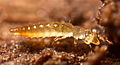 a proturan
 a springtail showing the furcula
 a dipluran showing the 2 cerci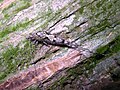
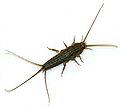
 a primitive winged insect (mayfly)


 Support cutting down the number of moons of Pluto and adding dwarf planets like Eris. The RFC banner in নেপচুন (Bengali term for Neptune) has led me to this discussion. Sbb1413 (he) (talk • contribs) 04:14, 28 March 2023 (UTC)

 Done, but could use another eye. The previous definition was completely made up, probably by someone who was just unhelpfully guessing at the meaning of the word. Andrew Sheedy (talk) 21:07, 19 July 2024 (UTC)


