sol
Asturian • Azerbaijani • Bislama • Catalan • Chavacano • Crimean Tatar • Czech • Danish • Dutch • Franco-Provençal • French • Galician • Guinea-Bissau Creole • Hausa • Indonesian • Interlingua • Italian • Kabuverdianu • Ladino • Latin • Lombard • Lower Sorbian • Middle English • Northern Kurdish • Norwegian Bokmål • Norwegian Nynorsk • Old English • Old French • Old Galician-Portuguese • Old Occitan • Old Swedish • Piedmontese • Portuguese • Romanian • Serbo-Croatian • Slovene • Spanish • Swedish • Talysh • Tok Pisin • Turkish • Veps • Volapük • Zazaki
Page categories
English
[edit]Etymology 1
[edit]From Glover's solmization, from Middle English sol (“fifth degree or note of Guido of Arezzo's hexachordal scales”),[1] Italian sol in the solmization of Guido of Arezzo, from the first syllable of Latin solve (“wash away”) in the lyrics of the scale-ascending hymn Ut queant laxis by Paulus Deacon.[2]
Pronunciation
[edit]- (Received Pronunciation) IPA(key): /sɒl/, /səʊl/
Audio (Southern England): (file) - (General American) enPR: sōl, IPA(key): /sɔl/, /sɑl/, /soʊl/
- Homophones: soul, sole (Canada, US)
- Rhymes: -ɒl, -əʊl
Noun
[edit]sol (uncountable)
- (music)
- In a movable-do or tonic sol-fa system: the fifth step in a scale, preceded by fa and followed by la.
- c. 1590–1592 (date written), William Shakespeare, “The Taming of the Shrew”, in Mr. William Shakespeares Comedies, Histories, & Tragedies […] (First Folio), London: […] Isaac Iaggard, and Ed[ward] Blount, published 1623, →OCLC, [Act III, scene i], page 218, column 2:
- D ſol re, one Cliffe, two notes haue I, / Ela mi, ſhow pitty or I die.
- [c. 1591–1595 (date written), [William Shakespeare], […] Romeo and Juliet. […] (First Quarto), London: […] Iohn Danter, published 1597, →OCLC, [Act IV, scene v]:
- Ser[vant, i.e., Peter]. Alack alack what ſhal I doe, come Fidlers play me ſome mery dumpe. / I. [First musician]. A ſir, this is no time to play. / […] / Ser. Then will I giue it you, and ſoundly to. / I. What will you giue vs? / Ser. The fidler, Ile re you, Ile fa you, Ile ſol you. / I. If you re vs and fa vs, we will note you.
- ]
- In a fixed-do system: the musical note G.
- In a movable-do or tonic sol-fa system: the fifth step in a scale, preceded by fa and followed by la.
Alternative forms
[edit]Translations
[edit]
|
Etymology 2
[edit]From Old French sol (“French coin”) (modern French sou), from Latin solidum, the accusative singular of solidus (“Roman gold coin; (adjective) solid”),[3] ultimately from Proto-Indo-European *solh₂- (“whole”). Doublet of sold, soldo, solid, solidus, sou, and xu.
Pronunciation
[edit]- (Received Pronunciation) IPA(key): /sɒl/
Audio (Southern England): (file) - (General American) IPA(key): /sɔl/, /sɑl/
- Rhymes: -ɒl
Noun
[edit]sol (plural sols)
- (historical) An old coin from France and some other countries worth 12 deniers.
- 1605 (first performance), Beniamin Ionson [i.e., Ben Jonson], “Volpone, or The Foxe. A Comœdie. […]”, in The Workes of Beniamin Ionson (First Folio), London: […] Will[iam] Stansby, published 1616, →OCLC, Act IV, scene v, pages 502–503:
- This fellow, For ſix ſols more, would pleade againſt his Maker.
- 1611, Thomas Coryate [i.e., Thomas Coryat], “My Obseruations of the Most Glorious, Peerelesse, and Mayden Citie of Venice: […]”, in Coryats Crudities Hastily Gobled Vp in Five Moneths Trauells […], London: […] W[illiam] S[tansby for the author], →OCLC, page 285, lines 18–24:
- Moſt of their owne coines that I ſaw were theſe. In gold but one, which is their chiquiney: This piece doth much vary in the value. For ſometimes it is high, ſometimes low. When I was there, a chiquiney was worth eleuen liuers, and twelue ſols. Which counteruaileth eight ſhillings and eight pence halfe penny of our money.
- 1748, [Tobias Smollett], chapter XLIV, in The Adventures of Roderick Random. […], volume II, London: […] [William Strahan] for J[ohn] Osborn […], →OCLC, page 69:
- It was the fate of the grenadier company, to which I now belonged, to lie at Rheims, where I found myſelf in the utmoſt want of every thing: My pay, which amounted to five ſols a day, far from ſupplying me with neceſſaries; being ſcarce ſufficient to procure a wretched ſubſiſtance, to keep ſoul and body together; […]
Related terms
[edit]Translations
[edit]Etymology 3
[edit]| PIE word |
|---|
| *sóh₂wl̥ |
From Spanish sol (“sun”),[4] from Latin sōl (“sun”), ultimately from Proto-Indo-European *sóh₂wl̥ (“sun”). Doublet of Sol and sol, directly from the Latin.
Pronunciation
[edit]- (Received Pronunciation) IPA(key): /sɒl/
Audio (Southern England): (file) - (General American) IPA(key): /sɔl/, /sɑl/
- Rhymes: -ɒl
Noun
[edit]- (historical) A former Spanish-American silver coin.
- 1763, [Antoine-Simon] Le Page du Pratz, “Of the Commerce that Is, and May Be, Carried Out in Louisiana. […]”, in [anonymous], transl., The History of Louisiana, or of the Western Parts of Virginia and Carolina: […], volume I, London: […] T. Becket and P. A. De Hondt […], →OCLC, page 336:
- The Tobacco of this colony is ſo excellent, that if the commerce thereof was free, it would ſell for one hundred ſols and ſix livres the pound, ſo fine and delicate is its juice and flavour.
- In full nuevo sol or new sol: the main currency unit of Peru which replaced the inti in 1991; also, a coin of this value.
Related terms
[edit]Translations
[edit]Etymology 4
[edit]From Latin sōl (“sun”);[5] see further at etymology 3. Doublet of sol from Spanish.
Pronunciation
[edit]- (Received Pronunciation) IPA(key): /sɒl/
Audio (Southern England): (file) - (General American) IPA(key): /sɔl/, /sɑl/
- Rhymes: -ɒl
Noun
[edit]sol (plural sols)
- (astronomy) A solar day on the planet Mars (equivalent to 24 hours, 39 minutes, 35 seconds).
- 2011, Andy Weir, chapter 3, in The Martian, New York, N.Y.: Broadway Books, published 2014, →ISBN, page 18:
- I need to create calories. And I need enough to last the 1387 sols until Ares 4 arrives. If I don't get rescued by Ares 4, I'm dead anyway. A sol is 39 minutes longer than a day, so it works out to be 1425 days. That's my target: 1425 days of food.
- 2014, Gerard ’t Hooft, Stefan Vandoren, “10⁵ Seconds = 100,000 Seconds = 1.16 days = 27.78 Hours”, in Saskia A. Eisberg-’t Hooft, transl., Time in Powers of Ten: Natural Phenomena and Their Timescales, Singapore: World Scientific Publishing Co., →ISBN, part I, page 25:
- 88,775 seconds = 24 hours, 39 minutes and 35 seconds / The duration of a synodic day on Mars, a ‘sol’
Derived terms
[edit]Related terms
[edit]Translations
[edit]
|
Etymology 5
[edit]Sense 1 (“type of colloid”) is derived from -sol (in words like alcosol and hydrosol), an abbreviation of solution.[6]
Sense 2 (“solution to an objection”) is derived directly from solution.[7]
Pronunciation
[edit]- (Received Pronunciation) IPA(key): /sɒl/
Audio (Southern England): (file) - (General American) IPA(key): /sɔl/, /sɑl/
- Rhymes: -ɒl
Noun
[edit]sol (plural sols)
- (physical chemistry) A type of colloid in which a solid is dispersed in a liquid.
- (obsolete) A solution to an objection (or "ob"), for example, in controversial divinity.
- 1624, Democritus Junior [pseudonym; Robert Burton], “Symptomes Generall, Loue to Their Owne Sect, Hate of All Other Religions, […]”, in The Anatomy of Melancholy: […], 2nd edition, Oxford, Oxfordshire: […] John Lichfield and James Short, for Henry Cripps, →OCLC, partition 3, section 4, member 1, subsection 3, page 524:
- [F]or that they had nothing elſe to doe, […] haue coyned a thouſand idle queſtions, nice diſtinctions, Obs and Sols, […]
- [1677 (indicated as 1678), [Samuel Butler], “[The Third Part of Hudibras]. Canto II.”, in Hudibras. The Third and Last Part. […], London: […] Robert Horne, […], published 1679, →OCLC; republished in A[lfred] R[ayney] Waller, editor, Hudibras: Written in the Time of the Late Wars, Cambridge, Cambridgeshire: University Press, 1905, →OCLC, page 165:
- Where Hinderſon, and th' other Maſſes / Were ſent to Cap Texts, and Put Caſes: / To paſs for deep, and Learned Scholars, / Although but Paltry, Ob-and-Sollers: […]]
Derived terms
[edit]Translations
[edit]
|
References
[edit]- ^ “sol, n.(2)”, in MED Online, Ann Arbor, Mich.: University of Michigan, 2007.
- ^ Compare “sol, n.2”, in OED Online
 , Oxford, Oxfordshire: Oxford University Press, December 2020; “sol1, n.”, in Lexico, Dictionary.com; Oxford University Press, 2019–2022.
- ^ “sol, n.3”, in OED Online , Oxford, Oxfordshire: Oxford University Press, December 2020.
- ^ “sol, n.5”, in OED Online , Oxford, Oxfordshire: Oxford University Press, June 2018; “sol3, n.”, in Lexico, Dictionary.com; Oxford University Press, 2019–2022.
- ^ “sol, n.7”, in OED Online , Oxford, Oxfordshire: Oxford University Press, March 2018.
- ^ “sol, n.6”, in OED Online , Oxford, Oxfordshire: Oxford University Press, September 2018; “sol2, n.”, in Lexico, Dictionary.com; Oxford University Press, 2019–2022.
- ^ “† sol, n.4”, in OED Online , Oxford, Oxfordshire: Oxford University Press, March 2021.

Anagrams
[edit]Asturian
[edit]Etymology
[edit]From a contraction of the preposition so (“under”) + masculine singular article el (“the”).
Contraction
[edit]sol m
Azerbaijani
[edit]| Cyrillic | сол | |
|---|---|---|
| Abjad | سوُل | |
Etymology
[edit]From Proto-Turkic *sōl.
Pronunciation
[edit]Noun
[edit]sol (definite accusative solu, plural sollar)
- left
- küçənin sol tərəfi ― left side of the street
Declension
[edit]| Declension of sol | ||||||||
|---|---|---|---|---|---|---|---|---|
| singular | plural | |||||||
| nominative | sol |
sollar | ||||||
| definite accusative | solu |
solları | ||||||
| dative | sola |
sollara | ||||||
| locative | solda |
sollarda | ||||||
| ablative | soldan |
sollardan | ||||||
| definite genitive | solun |
solların | ||||||
Antonyms
[edit]Derived terms
[edit]Bislama
[edit]Etymology
[edit]From English salt. Cognate with Tok Pisin sol.
Pronunciation
[edit]Noun
[edit]sol
Derived terms
[edit]References
[edit]- Terry Crowley (2004) Bislama Reference Grammar, Honolulu: University of Hawaiʻi press, →ISBN, page 17
Catalan
[edit]Pronunciation
[edit]Etymology 1
[edit]Inherited from Old Catalan sol, from Latin sōlem (“sun”), ultimately from Proto-Indo-European *sóh₂wl̥.
Proper noun
[edit]sol m
- (astronomy) the Sun (the center of our solar system)
Noun
[edit]sol m (plural sols)
- (astronomy) sun
- (numismatics) sol (a unit of currency used in Peru)
Derived terms
[edit]Related terms
[edit]Etymology 2
[edit]Noun
[edit]sol m (plural sols)
- (music) sol (the fifth note of the diatonic scale)
Etymology 3
[edit]Noun
[edit]sol m (plural sols)
Etymology 4
[edit]Inherited from Latin sōlus (“solitary”).
Adjective
[edit]sol (feminine sola, masculine plural sols, feminine plural soles)
- alone (by oneself, solitary)
- 2020 March 12, María José Gómez, Time Out Barcelona[1], volume 588, page 8, column Fight!:
- M'encanta viure en parella, sortir en grup, treballar en equip. Però també m'agrada estar sola.
- I love living as a couple, going out in a group, working on a team. But I also like being alone.
- unique
Derived terms
[edit]Related terms
[edit]Etymology 5
[edit]See the etymology of the corresponding lemma form.
Verb
[edit]sol
References
[edit]- “sol” in Diccionari de la llengua catalana, segona edició, Institut d’Estudis Catalans.
- “sol” in Diccionari català-valencià-balear, Antoni Maria Alcover and Francesc de Borja Moll, 1962.
Chavacano
[edit]Etymology
[edit]Inherited from Spanish sol (“sun”).
Pronunciation
[edit]Noun
[edit]sol
Crimean Tatar
[edit]Noun
[edit]sol (accusative [please provide], plural [please provide])
Declension
[edit]| nominative | sol |
|---|---|
| genitive | solnıñ |
| dative | solğa |
| accusative | solnı |
| locative | solda |
| ablative | soldan |
Adjective
[edit]sol
References
[edit]- Mirjejev, V. A., Usejinov, S. M. (2002) Ukrajinsʹko-krymsʹkotatarsʹkyj slovnyk [Ukrainian – Crimean Tatar Dictionary][2], Simferopol: Dolya, →ISBN
Czech
[edit]Pronunciation
[edit]Verb
[edit]sol
Danish
[edit]
Etymology 1
[edit]From Old Norse sól, from Proto-Germanic *sōl (“sun”).
Pronunciation
[edit]Noun
[edit]sol c (singular definite solen, plural indefinite sole)
Inflection
[edit]Verb
[edit]sol
- imperative of sole
Etymology 2
[edit]From Latin solūtiō (“solution”).
Pronunciation
[edit]Noun
[edit]sol c (singular definite solen, plural indefinite soler)
Inflection
[edit]Etymology 3
[edit]From Latin sol(ve) in the hymn for St. John the Baptist.
Pronunciation
[edit]Noun
[edit]sol n (singular definite sollet, plural indefinite soller)
Inflection
[edit]Further reading
[edit]- “sol” in Den Danske Ordbog
Dutch
[edit]Etymology
[edit]From Latin sol(ve) in the hymn for St. John the Baptist all note names were taken from.
Pronunciation
[edit]Noun
[edit]sol f (plural sollen, diminutive solletje n)
Derived terms
[edit]Anagrams
[edit]Franco-Provençal
[edit]Alternative forms
[edit]
|
Etymology
[edit]Adjective
[edit]sol (feminine sola, masculine plural sols, feminine plural soles) (ORB, broad)
Notes
[edit]In many areas replaced with its own derivative solèt.
Derived terms
[edit]References
[edit]- seul in DicoFranPro: Dictionnaire Français/Francoprovençal – on dicofranpro.llm.umontreal.ca
- sol in Lo trèsor Arpitan – on arpitan.eu
Further information
[edit]- ALF: Atlas Linguistique de la France[3] [Linguistic Atlas of France] – map 76: “toute seule” – on lig-tdcge.imag.fr
- Walther von Wartburg (1928–2002) “sōlus”, in Französisches Etymologisches Wörterbuch, volumes 12: Sk–š, page 78
French
[edit]Etymology 1
[edit]From Latin solum (“soil, ground, floor”).
Pronunciation
[edit]Noun
[edit]sol m (plural sols)
Derived terms
[edit]Etymology 2
[edit]From Latin sol(ve) in the hymn for St. John the Baptist where all note names were taken from.
Pronunciation
[edit]Noun
[edit]sol m (plural sol)
Derived terms
[edit]Etymology 3
[edit]From Spanish sol (“sun”), itself from Latin sol.
Pronunciation
[edit]Noun
[edit]sol m (plural sols)
- a Spanish-American gold or silver coin, now the main currency unit of Peru (also new sol), or a coin of this value
Etymology 4
[edit]From Latin solidus, a Roman coin. This form kept the historical spelling based on the Old French and Latin. See the main entry at sou.
Pronunciation
[edit]Noun
[edit]sol m (plural sols)
Further reading
[edit]- “sol”, in Trésor de la langue française informatisé [Digitized Treasury of the French Language], 2012.
Galician
[edit]Etymology 1
[edit]From Old Galician-Portuguese sol, from Latin sōl (“sun”), ultimately from Proto-Indo-European *sóh₂wl̥.
Pronunciation
[edit]Noun
[edit]sol m (plural soles)
- sun
- sunlight
- sunny side (of a place)
- quítate do sol ― go away from sunny side
- daylight (the time between sunrise and sunset)
Antonyms
[edit]- (antonym(s) of “sunlight”): sombra
- (antonym(s) of “sunny side”): sombra
- (antonym(s) of “daylight”): noite
Derived terms
[edit]Etymology 2
[edit]Pronunciation
[edit]Noun
[edit]sol m (plural soles)
See also
[edit]Etymology 3
[edit]Pronunciation
[edit]Noun
[edit]sol m (plural soles)
References
[edit]- Ernesto Xosé González Seoane, María Álvarez de la Granja, Ana Isabel Boullón Agrelo (2006–2022) “sol”, in Dicionario de Dicionarios do galego medieval (in Galician), Santiago de Compostela: Instituto da Lingua Galega
- Antón Luís Santamarina Fernández, editor (2006–2013), “sol”, in Dicionario de Dicionarios da lingua galega [Dictionary of Dictionaries of the Galician language] (in Galician), Santiago de Compostela: Instituto da Lingua Galega
- Rosario Álvarez Blanco, editor (2014–2024), “sol”, in Tesouro do léxico patrimonial galego e portugués (in Galician), Santiago de Compostela: Instituto da Lingua Galega, →ISSN
- “sol”, in Dicionario da Real Academia Galega (in Galician), A Coruña: Royal Galician Academy, 2012–2024
Guinea-Bissau Creole
[edit]Etymology
[edit]From Portuguese sol. Cognate with Kabuverdianu sol.
Noun
[edit]sol
Hausa
[edit]Pronunciation
[edit]Ideophone
[edit]sol
Indonesian
[edit]Pronunciation
[edit]Etymology 1
[edit]From Dutch zool, from Middle Dutch sole, from Vulgar Latin sola ("bottom of the shoe", also "flatfish"), from Latin solea (“sandal, bottom of the shoe”), from Proto-Indo-European *swol- (“sole”). Compare to Afrikaans sool.
Noun
[edit]sol (first-person possessive solku, second-person possessive solmu, third-person possessive solnya)
- sole (the bottom of a shoe or boot)
Derived terms
[edit]Etymology 2
[edit]From Dutch sol, the first syllable of Latin solve (“to remove, get rid of”), the first word of the fifth line, third verse (“Solve polluti, labii reatum”, that is, “Clean the guilt from our stained lips”) of the famed medieval hymn Ut queant laxis, which solfège was based on because its lines started on each note of the scale successively.
Noun
[edit]sol (first-person possessive solku, second-person possessive solmu, third-person possessive solnya)
- (music) sol:
- in a movable-do or tonic sol-fa system: the fifth step in a scale, preceded by fa and followed by la.
- in a fixed-do system: the musical note G.
Further reading
[edit]- “sol” in Kamus Besar Bahasa Indonesia, Jakarta: Agency for Language Development and Cultivation – Ministry of Education, Culture, Research, and Technology of the Republic of Indonesia, 2016.
Interlingua
[edit]Noun
[edit]sol (plural soles)
Adjective
[edit]sol (comparative plus sol, superlative le plus sol)
Determiner
[edit]sol
- (quantifying) only
Derived terms
[edit]Italian
[edit]Etymology 1
[edit]From the first syllable of Latin solve, from the medieval hymn Ut queant laxis, from which the names of the notes were derived.
Pronunciation
[edit]Noun
[edit]sol m (uncountable)
Etymology 2
[edit]Pronunciation
[edit]Noun
[edit]sol m (uncountable)
- sol (a type of colloid)
Etymology 3
[edit]Pronunciation
[edit]Noun
[edit]sol m (uncountable)
- sol (a currency of Peru)
- (historical) sol (a former Spanish-American silver coin)
Etymology 4
[edit]Pronunciation
[edit]Noun
[edit]sol m (apocopated)
Etymology 5
[edit]Pronunciation
[edit]Adjective
[edit]sol (apocopated)
Adverb
[edit]sol (apocopated)
Further reading
[edit]- sol1 in Treccani.it – Vocabolario Treccani on line, Istituto dell'Enciclopedia Italiana
- sol2 in Treccani.it – Vocabolario Treccani on line, Istituto dell'Enciclopedia Italiana
- sol in Luciano Canepari, Dizionario di Pronuncia Italiana (DiPI)
Kabuverdianu
[edit]Etymology
[edit]From Portuguese sol.
Verb
[edit]sol
Ladino
[edit]Noun
[edit]sol m (Latin spelling, Hebrew spelling סול)
Latin
[edit]
Alternative forms
[edit]Etymology
[edit]From Proto-Italic *s(u)wōl, from Proto-Indo-European *suh₂ṓl (*suh₂ól-s) ~ *suh₂l-és m (“the sun”), rebuilt s-stem from *súh₂el ~ *suh₂éns n (whence Sanskrit स्वर् (svar, “the sun”)), leveled from *sóh₂wl̥ ~ *suh₂éns (from *sh₂wéns via laryngeal metathesis).[1] Alternatively from Proto-Italic *saul through an irregular change conditioned by -l, from Proto-Indo-European *séh₂ul.[2]
Pronunciation
[edit]- (Classical Latin) IPA(key): /soːl/, [s̠oːɫ̪]
- (modern Italianate Ecclesiastical) IPA(key): /sol/, [sɔl]
Noun
[edit]sōl m (genitive sōlis); third declension
- (astronomy, often capitalized) the Sun
- (astronomy) a sun
- (alchemy, chemistry) gold
- (figurative, in the plural) days, period of one's life
- (mythology) See Sōl.
Declension
[edit]Third-declension noun.
| Case | Singular | Plural |
|---|---|---|
| Nominative | sōl | sōlēs |
| Genitive | sōlis | sōlum |
| Dative | sōlī | sōlibus |
| Accusative | sōlem | sōlēs |
| Ablative | sōle | sōlibus |
| Vocative | sōl | sōlēs |
Derived terms
[edit]Descendants
[edit]- Balkan Romance:
- Dalmatian: Dalmatian: saul
- Italo-Romance:
- Insular Romance:
- North Italian:
- Gallo-Romance:
- Ibero-Romance:
- Vulgar Latin: *sōliculum (see there for further descendants)
- Borrowings:
References
[edit]- AIS: Sprach- und Sachatlas Italiens und der Südschweiz [Linguistic and Ethnographic Atlas of Italy and Southern Switzerland] – map 360: “si leva il sole” – on navigais-web.pd.istc.cnr.it
- Walther von Wartburg (1928–2002) “sōl”, in Französisches Etymologisches Wörterbuch, volumes 12: Sk–š, page 23
- ^ Sihler, Andrew L. (1995) New Comparative Grammar of Greek and Latin, Oxford, New York: Oxford University Press, →ISBN, § 88.3c, page 84: “*suHel”
- ^ De Vaan, Michiel (2008) “sōl, sōlis”, in Etymological Dictionary of Latin and the other Italic Languages (Leiden Indo-European Etymological Dictionary Series; 7), Leiden, Boston: Brill, →ISBN, page 570
Further reading
[edit]- "sol", in Charlton T. Lewis and Charles Short (1879) A Latin Dictionary, Oxford: Clarendon Press
- "sol", in Charlton T. Lewis (1891) An Elementary Latin Dictionary, New York: Harper & Brothers
- sol in Charles du Fresne du Cange’s Glossarium Mediæ et Infimæ Latinitatis (augmented edition with additions by D. P. Carpenterius, Adelungius and others, edited by Léopold Favre, 1883–1887)
- sol in Gaffiot, Félix (1934) Dictionnaire illustré latin-français, Hachette.
Lombard
[edit]Etymology
[edit]Noun
[edit]sol
Lower Sorbian
[edit]
Etymology
[edit]From Proto-Slavic *solь, from Proto-Indo-European *séh₂ls.
Pronunciation
[edit]Noun
[edit]sol f inan
Declension
[edit]Derived terms
[edit]Middle English
[edit]Etymology
[edit]From Latin sōl (“sun”), or perhaps from Old English sōl (“sun”), both of which hail from Proto-Indo-European *sóh₂wl̥.
Noun
[edit]sol (uncountable)
- The brightest and warmest celestial body, considered to be a planet in the Ptolemic system; the Sun (the center of our solar system).
- (rare) A heavy, yellow metal; gold.
- c. 1395 Geoffrey Chaucer, The Canterbury Tales. Canon Yeoman's Prologue and Tale
- Mercurie..and brymstoon..out of Sol and Luna were ydrawe.
- (please add an English translation of this quotation)
- c. 1395 Geoffrey Chaucer, The Canterbury Tales. Canon Yeoman's Prologue and Tale
Synonyms
[edit]References
[edit]- “sol, n.”, in MED Online, Ann Arbor, Mich.: University of Michigan, 2007, retrieved 17 June 2018.
Northern Kurdish
[edit]Noun
[edit]sol f
Norwegian Bokmål
[edit]Pronunciation
[edit]Etymology 1
[edit]From Old Norse sól, from Proto-Germanic *sōl (“sun”).
Noun
[edit]sol f or m (definite singular sola or solen, indefinite plural soler, definite plural solene)
- sun
- Solen skinner.
- The sun is shining.
Derived terms
[edit]Related terms
[edit]- sole (verb)
Etymology 2
[edit]Shortened form of Latin solūtiō
Noun
[edit]sol m
Derived terms
[edit]Etymology 3
[edit]Verb
[edit]sol
- imperative of sole
References
[edit]- “sol” in The Bokmål Dictionary.
Norwegian Nynorsk
[edit]Etymology 1
[edit]
From Old Norse sól, from Proto-Germanic *sōl (“sun”).
Pronunciation
[edit]Noun
[edit]sol f (definite singular sola, indefinite plural soler, definite plural solene)
- sun
- Sola skin i dag.
- The sun shines today.
- sunshine
- Det er sol ute.
- There is sunshine outside.
- a shiningly merry girl
Derived terms
[edit]- bisol
- det finst ingenting nytt under sola
- gluggsol
- ikkje la sola gå ned over vreiden sin
- kveldssol
- medsols
- middelsol
- midnattsol
- morgonsol
- motsols
- plass i sola
- rangsøles
- rettsøles
- skifte sol og vind
- solauge
- solbad
- solbadar
- solbakke
- solbatteri
- solblank
- solblind
- solblom
- solbrend
- solbrille
- solbær
- solcelle
- soldis
- soldogg
- soldyrkar
- soldyrking
- soldøger
- soldøgn
- solefall
- soleglad
- soleie
- soleklar
- soleksem
- solenergi
- solfaktor
- solfangar
- solfaring
- solfest
- solfjerne
- solflekk
- solformørking
- solgang
- solgeisle
- solglim
- solglime
- solgløtt
- solhall
- solhatt
- solhjul
- solhov
- solhylle
- solhøgd
- solklar
- solkomme
- solkors
- solkrem
- solkross
- solkverv
- sollaus
- solliv
- sollys
- solmei
- solmerke
- solmogen
- solmørke
- solmørking
- solnedgang
- soloppgang
- solregn
- solrenning
- solrev
- solrik
- solsegl
- solsetting
- solside
- solskin
- solskive
- solskjerm
- solskugge
- solsky
- solslyng
- solsmak
- solsnu
- solsprett
- solspretting
- solsteik
- solstikk
- solsting
- solstorm
- solstreif
- solstråle
- solsvidd
- solsystem
- soltak
- soltid
- soltilbedar
- soltørk
- soltørke
- soltørking
- solur
- solvarm
- solvarme
- solveg
- solvende
- solvendel
- solvending
- solvind
- solår
- sommarsol
- vêrsol
- vintersol
Related terms
[edit]Etymology 2
[edit]From Latin solve, from the first word of the fifth line of Ut queant laxis, the medieval hymn on which solfège was based because its lines started on each note of the scale successively. Through Italian.
Alternative forms
[edit]- so (an open syllable variant)
Pronunciation
[edit]Noun
[edit]sol m (definite singular sol-en, indefinite plural sol-ar, definite plural sol-ane)
- (music) sol (a syllable used in solfège to represent the fifth note of a major scale)
Coordinate terms
[edit]Etymology 3
[edit]Shortened form of Latin solūtiō.
Noun
[edit]sol m
Derived terms
[edit]Etymology 4
[edit]From Spanish sol (“sun”), from Latin sōl (“sun”), but also from Latin solidus. This makes it a doublet of sold, sou, solid, and solidus, as well as Norwegian sol f (“sun”) (Etymology 1).
Noun
[edit]sol m (plural solen)
- sol; the main Peruvian currency since 1991
- 2009 September 4, Dag og Tid, page 11:
- Det representerer investeringar på 4600 millionar soles [om lag 9 milliardar NOK], presiserer viseministeren.
- It represents investments of 4600 million sols [about 9 billion Norwegian kroner], says the vice minister.
- (historical) the Peruvian currency between 1863 and 1985
- 1981, Gregorio Condori Mamani, translated by Svanaug Steinnes, Indianarliv i Peru, Oslo: Samlaget, page 48:
- Alt dette kosta åtte soles.
- It cost eight sols in total.
Etymology 5
[edit]Noun
[edit]sol n (definite singular solet, indefinite plural sol, definite plural sola)
- alternative spelling of sòl
References
[edit]- “sol” in The Nynorsk Dictionary.
- “sol”, in Norsk Ordbok: ordbok over det norske folkemålet og det nynorske skriftmålet, Oslo: Samlaget, 1950-2016
- “sol” in Ivar Aasen (1873) Norsk Ordbog med dansk Forklaring
Anagrams
[edit]Old English
[edit]Etymology 1
[edit]From Proto-West Germanic *sōl, from Proto-Germanic *sōl (“sun”).
Pronunciation
[edit]Noun
[edit]sōl ?
Usage notes
[edit]- The exact gender is unknown. Based on cognates in related languages, it is speculated to be either feminine or neuter.
Synonyms
[edit]Etymology 2
[edit]From Proto-West Germanic *sol, from Proto-Germanic *sulą (“mud, spot”), from Proto-Indo-European *sūl- (“thick liquid”). Cognate with Old High German sol, gisol (“pool of excrement”), Middle Dutch sol (“puddle, dirt, filth”). More at soil.
Pronunciation
[edit]Noun
[edit]sol n
Declension
[edit]Related terms
[edit]Descendants
[edit]Adjective
[edit]sol
Declension
[edit]Descendants
[edit]Old French
[edit]Etymology 1
[edit]Alternative forms
[edit]Pronunciation
[edit]Adjective
[edit]sol m (oblique and nominative feminine singular sole)
Derived terms
[edit]Descendants
[edit]Etymology 2
[edit]Pronunciation
[edit]Noun
[edit]sol oblique singular, m (oblique plural sous or sox or sols, nominative singular sous or sox or sols, nominative plural sol)
- sol (an Old French coin)
Descendants
[edit]Old Galician-Portuguese
[edit]Pronunciation
[edit]Etymology 1
[edit]Adverb
[edit]sol
Derived terms
[edit]Related terms
[edit]Etymology 2
[edit]From Latin sōl, sōlem (“sun”), from Proto-Indo-European *sóh₂wl̥ (“sun”).
Noun
[edit]sol m (plural sols)
- sun
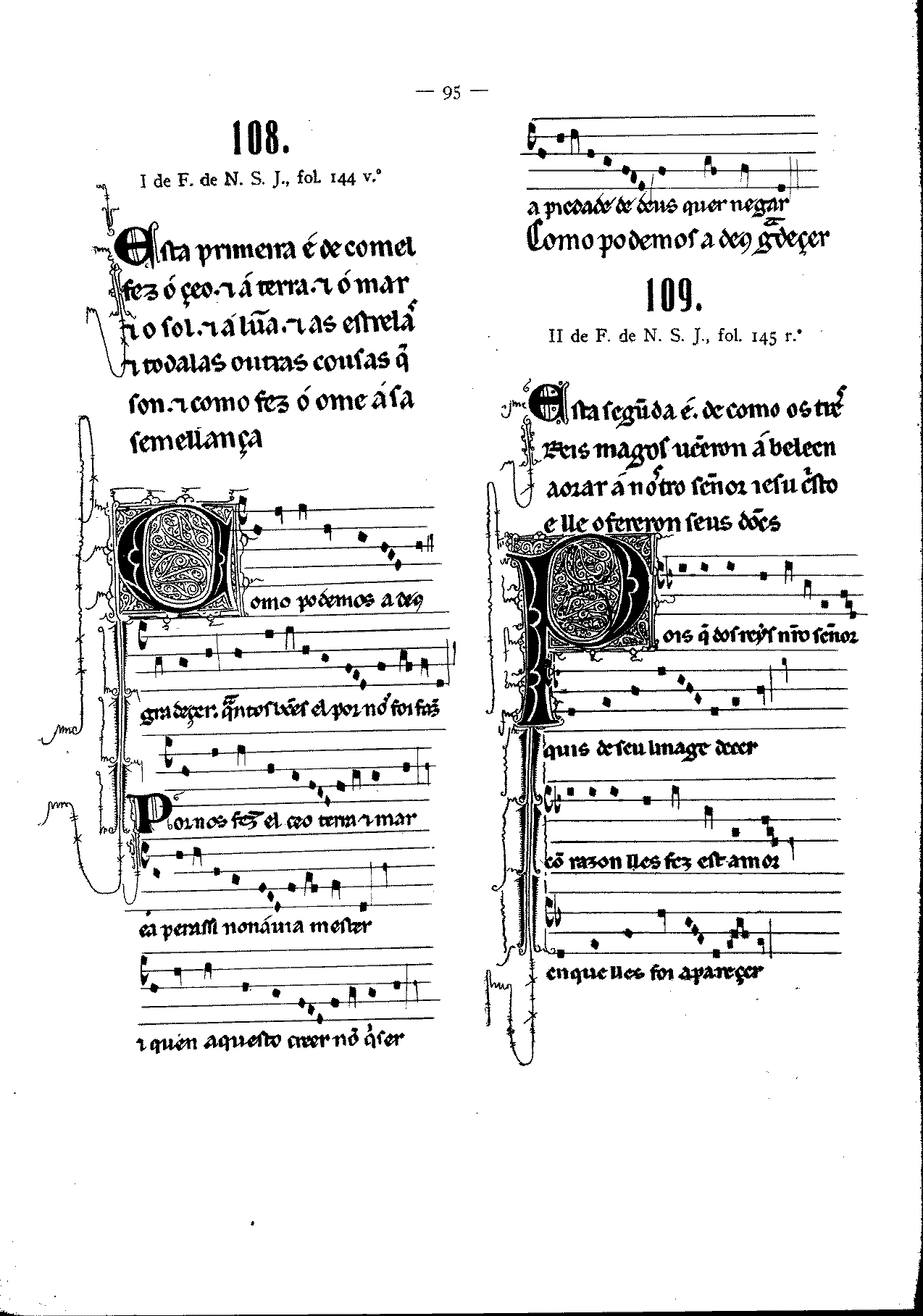
- 13th century CE, Alfonso X of Castile, Cantigas de Santa Maria, Códice de Toledo, cantiga 423 (facsimile):
- Eſta primeira é de comel fez ó çeo. ⁊ á terra. ⁊ ó mar ⁊ o ſol. ⁊ á lũa. ⁊ as eſtrelas ⁊ todalas outras couſas q̇ ſon. ⁊ como fez ó ome áſa ſemellança
- This first one is (about) how He made the heaven, and the earth, and the sea, and the sun, and the moon, and the stars, and everything else that exists. And how (He) made man in His own likeness.
- Eſta primeira é de comel fez ó çeo. ⁊ á terra. ⁊ ó mar ⁊ o ſol. ⁊ á lũa. ⁊ as eſtrelas ⁊ todalas outras couſas q̇ ſon. ⁊ como fez ó ome áſa ſemellança
Descendants
[edit]Etymology 3
[edit]Verb
[edit]sol
Old Occitan
[edit]Etymology
[edit]Proper noun
[edit]sol m
- Sun (celestial object)
Related terms
[edit]References
[edit]- Walther von Wartburg (1928–2002) “sōl”, in Französisches Etymologisches Wörterbuch, volumes 12: Sk–š, page 23
Old Swedish
[edit]Etymology
[edit]From Old Norse sól, from Proto-Germanic *sōl (“sun”).
Noun
[edit]sōl f
Declension
[edit]dat_sg=sōluPlease see Module:checkparams for help with this warning.
Descendants
[edit]- Swedish: sol
Piedmontese
[edit]Etymology
[edit]Pronunciation
[edit]Noun
[edit]sol m
Portuguese
[edit]Pronunciation
[edit]
Etymology 1
[edit]Inherited from Old Galician-Portuguese sol, from Latin sōl (“sun”), ultimately from Proto-Indo-European *sóh₂wl̥.
Noun
[edit]sol m (plural sóis)
- sun (a star, especially when seen as the centre of any single solar system)
- sunshine (a location on which the sun's rays fall)
- (uncountable) weather (the state of the atmosphere at a specific time and place)
- O sol frio de inverno.
- Winter's cold weather.
Derived terms
[edit]Descendants
[edit]Etymology 2
[edit]From Latin solve in the hymn for St. John the Baptist.
Noun
[edit]sol m (plural sóis)
- sol (a musical note)
Etymology 3
[edit]Noun
[edit]sol m (plural sóis)
Further reading
[edit]- “sol” in Dicionário Aberto based on Novo Diccionário da Língua Portuguesa de Cândido de Figueiredo, 1913
Romanian
[edit]Etymology 1
[edit]From Latin solum (“base, bottom; soil”), French sol.
Noun
[edit]sol n (plural soluri)
- the lowest part of something; bottom, ground, base, foundation, bed
- the floor or pavement of a room
- ground, earth, land, soil
- (gymnastics) an event performed on a floor-like carpeted surface
Declension
[edit]Etymology 2
[edit]From Proto-Slavic *sъlъ, compare Slovene sel.
Noun
[edit]sol m (plural soli)
Declension
[edit]Further reading
[edit]- sol in DEX online—Dicționare ale limbii române (Dictionaries of the Romanian language)
Serbo-Croatian
[edit]Alternative forms
[edit]- (Bosnian, Serbian): sȏ
Etymology
[edit]From Proto-Slavic *solь, from Proto-Indo-European *séh₂l-, *séh₂ls. Compare Solyanka.
Pronunciation
[edit]Noun
[edit]sȏl f (Cyrillic spelling со̑л)
Declension
[edit]Slovene
[edit]Etymology
[edit]From Proto-Slavic *solь, from Proto-Indo-European *séh₂l-, *séh₂ls.
Pronunciation
[edit]Noun
[edit]sọ̑ł f
- salt (a common substance)
Inflection
[edit]
| Feminine, i-stem, long mixed accent | |||
|---|---|---|---|
| nom. sing. | sól | ||
| gen. sing. | solí | ||
| singular | dual | plural | |
| nominative (imenovȃlnik) |
sól | solí | solí |
| genitive (rodȋlnik) |
solí | solí | solí |
| dative (dajȃlnik) |
sóli | soléma | solém |
| accusative (tožȋlnik) |
sól | solí | solí |
| locative (mẹ̑stnik) |
sóli | soléh | soléh |
| instrumental (orọ̑dnik) |
soljó | soléma | solmí |
Further reading
[edit]- “sol”, in Slovarji Inštituta za slovenski jezik Frana Ramovša ZRC SAZU, portal Fran
- “sol”, in Termania, Amebis
- See also the general references
Spanish
[edit]Pronunciation
[edit]- IPA(key): /ˈsol/ [ˈsol]
Audio (Spain): (file) Audio (Germany): (file) - Rhymes: -ol
- Syllabification: sol
Etymology 1
[edit]From Latin sōl (“sun”), ultimately from Proto-Indo-European *sóh₂wl̥. The Peruvian currency makes reference to the meaning "sun", but is a shortening from Latin solidus.
Noun
[edit]sol m (plural soles)
- sun
- sunlight
- sunny side (of a place)
- Antonym: sombra
- quítate del sol ― get out of the sun
- daylight (the time between sunrise and sunset)
- Antonym: noche
- sol (a unit of currency, currently used in Peru)
Derived terms
[edit]- a la caída del sol
- anteojos de sol
- asolar
- asolear
- clave de sol
- de sol a sol
- gafas de sol
- hacer brindis al sol
- mijo del sol
- parasol
- perca sol
- puesta de sol
- reloj de sol
- rocío del sol
- sacar los trapitos al sol
- salga el sol por Antequera
- salga el sol por donde quiera
- ser un sol
- sol de justicia
- sol y sombra
- solana
- soleado
- tendido de sol
- tomar el sol
Related terms
[edit]Etymology 2
[edit]From Latin solve in the hymn for St. John the Baptist.
Noun
[edit]sol m (uncountable)
- sol (a musical note)
Etymology 3
[edit]Noun
[edit]sol m (plural soles)
Further reading
[edit]- “sol”, in Diccionario de la lengua española, Vigésima tercera edición, Real Academia Española, 2014
Anagrams
[edit]Swedish
[edit]Etymology
[edit]From Old Swedish sōl, from Old Norse sól, from Proto-Germanic *sōl (“sun”).
Pronunciation
[edit]Noun
[edit]sol c
- (often in the definite singular) sun (star the Earth revolves around)
- jorden kretsar kring solen
- the Earth revolves around the sun
- a sun (star, especially when seen as the center of a solar system)
- Synonym: stjärna
- sun (sunshine)
- Synonym: solsken
- (figuratively) a sun ((person who is a) source of joy)
- solen i mitt liv
- the sun of my life
- (music) sol
Declension
[edit]| Declension of sol | ||||
|---|---|---|---|---|
| Singular | Plural | |||
| Indefinite | Definite | Indefinite | Definite | |
| Nominative | sol | solen | solar | solarna |
| Genitive | sols | solens | solars | solarnas |
Derived terms
[edit]- aftonsol
- bisol
- höstsol
- kvällssol
- middsagssol
- midnattssol (“midnight sun”)
- morgonsol
- sol och vår
- sol-och-vår-man
- sol-och-våra
- sol-och-vårare
- sola (“to sunbathe”)
- solarisk
- solarium (“solarium”)
- solarplexus
- solbad
- solbada
- solbadare (“sunbather”)
- solbadd
- solbana
- solbatteri
- solbelyst
- solbestrålning
- solblank
- solblekt
- solblind
- solbländad
- solblänk
- solbrillor
- solbrynt
- solbränd
- solbränna (“sunburn, suntan”)
- solcell (“solar cell”)
- solchans
- solcykel
- soldag
- soldis
- soldriven
- soldrucken
- soldräkt
- soldränkt
- soldyrkan
- soldyrkare
- soldäck
- soleksem
- solenergi
- solfattig
- solfjäder (“fan”)
- solflimmer
- solfläck
- solflöde
- solfångare (“solar thermal collector”)
- solförmörkelse (“solar eclipse”)
- solgass
- solgassig
- solgata
- solglasögon (“sunglasses”)
- solglimt
- solglitter
- solglänsande
- solgud
- solgul
- solgård
- solhatt
- solhet
- solhetta
- solhjul
- solhjälm
- solhöjd
- solig (“sunny”)
- solinstrålning
- solkanon
- solkatt
- solklar
- solklänning
- solkraft
- solkräm
- solkult
- solkurva
- solliv
- solljus (“sunlight; sun”)
- sollös
- solmogen
- solmättad
- solnedgång (“sunset”)
- solning
- solochvåra
- solochvårare
- solochvårman
- sololja
- solpanel
- solparasoll
- solreflex
- solregn
- solros (“sunflower”)
- solrök
- solsemester
- solsida
- solsken
- solskiva
- solskott
- solskydd
- solsnibb
- solstek
- solstekt
- solsting
- solstol
- solstrimma
- solstråle (“ray of sunlight”)
- solstrålning
- solstånd
- solsystem (“solar system”)
- solsäng
- soltak
- soltempel
- solterrass
- soltimma
- soltimme
- soltorka
- soltorkning
- soltält
- soltörstande
- soluppgång (“sunrise”)
- solur
- solvarg
- solvarm
- solvarv
- solventil
- solvind (“solar wind”)
- solvisare
- solvända
- solvärmd
- solvärme
- solår
- solöga
- sommarsolstånd
- vintersolstånd
- vädersol
References
[edit]- sol in Svensk ordbok (SO)
- sol in Svenska Akademiens ordlista (SAOL)
- sol in Svenska Akademiens ordbok (SAOB)
Anagrams
[edit]Talysh
[edit]Etymology
[edit]Cognate with Persian سال (sāl).
Noun
[edit]sol
Tok Pisin
[edit]Etymology 1
[edit]Noun
[edit]sol
Etymology 2
[edit]Noun
[edit]sol
Derived terms
[edit]- solwara (“sea, ocean; saltwater, brine”)
Turkish
[edit]Etymology 1
[edit]From Ottoman Turkish صول (sol, “left”), from Proto-Turkic *sōl.
Pronunciation
[edit]Noun
[edit]sol (definite accusative solu, plural sollar)
Antonyms
[edit]Etymology 2
[edit]Verb
[edit]sol
Etymology 3
[edit]Pronunciation
[edit]Noun
[edit]sol (definite accusative solü, plural soller)
Veps
[edit]Etymology
[edit]From Proto-Finnic *soola.
Noun
[edit]sol
Declension
[edit]| Inflection of sol (inflection type 6/kuva) | |||
|---|---|---|---|
| nominative sing. | sol | ||
| genitive sing. | solan | ||
| partitive sing. | solad | ||
| partitive plur. | — | ||
| singular | plural | ||
| nominative | sol | — | |
| accusative | solan | — | |
| genitive | solan | — | |
| partitive | solad | — | |
| essive-instructive | solan | — | |
| translative | solaks | — | |
| inessive | solas | — | |
| elative | solaspäi | — | |
| illative | solaha solha |
— | |
| adessive | solal | — | |
| ablative | solalpäi | — | |
| allative | solale | — | |
| abessive | solata | — | |
| comitative | solanke | — | |
| prolative | soladme | — | |
| approximative I | solanno | — | |
| approximative II | solannoks | — | |
| egressive | solannopäi | — | |
| terminative I | solahasai solhasai |
— | |
| terminative II | solalesai | — | |
| terminative III | solassai | — | |
| additive I | solahapäi solhapäi |
— | |
| additive II | solalepäi | — | |
Volapük
[edit]Noun
[edit]sol (nominative plural sols)
Declension
[edit]Zazaki
[edit]Etymology
[edit]Ultimately from Proto-Indo-European *séh₂ls (“salt”).
Noun
[edit]sol
- English terms inherited from Middle English
- English terms derived from Middle English
- English terms derived from Italian
- English terms derived from Latin
- English 1-syllable words
- English terms with IPA pronunciation
- English terms with audio pronunciation
- English terms with homophones
- Rhymes:English/ɒl
- Rhymes:English/ɒl/1 syllable
- Rhymes:English/əʊl
- Rhymes:English/əʊl/1 syllable
- English lemmas
- English nouns
- English uncountable nouns
- en:Music
- English terms with quotations
- English terms derived from Proto-Indo-European
- English terms derived from the Proto-Indo-European root *solh₂-
- English terms borrowed from Old French
- English terms derived from Old French
- English doublets
- English countable nouns
- English terms with historical senses
- English terms derived from the Proto-Indo-European word *sóh₂wl̥
- English terms borrowed from Spanish
- English terms derived from Spanish
- English terms borrowed from Latin
- en:Astronomy
- English abbreviations
- en:Physical chemistry
- English terms with obsolete senses
- English heteronyms
- en:Coins
- en:Currencies
- en:Historical currencies
- en:History of France
- en:Mars (planet)
- en:Peru
- Asturian non-lemma forms
- Asturian contractions
- Azerbaijani terms inherited from Proto-Turkic
- Azerbaijani terms derived from Proto-Turkic
- Azerbaijani terms with IPA pronunciation
- Azerbaijani terms with audio pronunciation
- Azerbaijani lemmas
- Azerbaijani nouns
- Azerbaijani terms with usage examples
- az:Directions
- Bislama terms inherited from English
- Bislama terms derived from English
- Bislama terms with IPA pronunciation
- Bislama lemmas
- Bislama nouns
- Catalan terms with IPA pronunciation
- Catalan terms with homophones
- Rhymes:Catalan/ɔl
- Rhymes:Catalan/ɔl/1 syllable
- Catalan terms inherited from Old Catalan
- Catalan terms derived from Old Catalan
- Catalan terms inherited from Latin
- Catalan terms derived from Latin
- Catalan terms inherited from Proto-Indo-European
- Catalan terms derived from Proto-Indo-European
- Catalan lemmas
- Catalan proper nouns
- Catalan masculine nouns
- ca:Astronomy
- Catalan nouns
- Catalan countable nouns
- ca:Currency
- ca:Music
- Catalan terms borrowed from English
- Catalan terms derived from English
- ca:Chemistry
- Catalan adjectives
- Catalan terms with quotations
- Catalan non-lemma forms
- Catalan verb forms
- ca:Celestial bodies
- Chavacano terms inherited from Spanish
- Chavacano terms derived from Spanish
- Chavacano terms with IPA pronunciation
- Chavacano lemmas
- Chavacano nouns
- Crimean Tatar lemmas
- Crimean Tatar nouns
- Crimean Tatar adjectives
- Czech terms with IPA pronunciation
- Czech non-lemma forms
- Czech verb forms
- Danish terms derived from Proto-Indo-European
- Danish terms inherited from Old Norse
- Danish terms derived from Old Norse
- Danish terms inherited from Proto-Germanic
- Danish terms derived from Proto-Germanic
- Danish terms with IPA pronunciation
- Rhymes:Danish/oːl
- Rhymes:Danish/oːl/1 syllable
- Danish lemmas
- Danish nouns
- Danish common-gender nouns
- Danish non-lemma forms
- Danish verb forms
- Danish terms derived from Latin
- da:Chemistry
- Danish neuter nouns
- da:Music
- da:Celestial bodies
- Dutch terms derived from Latin
- Dutch terms with IPA pronunciation
- Dutch terms with audio pronunciation
- Dutch lemmas
- Dutch nouns
- Dutch nouns with plural in -en
- Dutch feminine nouns
- nl:Music
- Belgian Dutch
- Franco-Provençal terms inherited from Latin
- Franco-Provençal terms derived from Latin
- Franco-Provençal lemmas
- Franco-Provençal adjectives
- ORB, broad
- French terms borrowed from Latin
- French terms derived from Latin
- French 1-syllable words
- French terms with IPA pronunciation
- French terms with audio pronunciation
- Rhymes:French/ɔl
- Rhymes:French/ɔl/1 syllable
- French lemmas
- French nouns
- French countable nouns
- French masculine nouns
- fr:Music
- French terms borrowed from Spanish
- French terms derived from Spanish
- French terms derived from Proto-Indo-European
- French terms derived from the Proto-Indo-European root *solh₂-
- French terms with archaic senses
- Galician terms inherited from Old Galician-Portuguese
- Galician terms derived from Old Galician-Portuguese
- Galician terms inherited from Latin
- Galician terms derived from Latin
- Galician terms inherited from Proto-Indo-European
- Galician terms derived from Proto-Indo-European
- Galician terms with IPA pronunciation
- Rhymes:Galician/ol
- Rhymes:Galician/ol/1 syllable
- Galician lemmas
- Galician nouns
- Galician countable nouns
- Galician masculine nouns
- Galician terms with usage examples
- gl:Music
- Galician terms borrowed from English
- Galician terms derived from English
- Rhymes:Galician/ɔl
- Rhymes:Galician/ɔl/1 syllable
- gl:Chemistry
- gl:Celestial bodies
- Guinea-Bissau Creole terms derived from Portuguese
- Guinea-Bissau Creole lemmas
- Guinea-Bissau Creole nouns
- Hausa terms with IPA pronunciation
- Hausa lemmas
- Hausa ideophones
- Indonesian 1-syllable words
- Indonesian terms with IPA pronunciation
- Indonesian terms borrowed from Dutch
- Indonesian terms derived from Dutch
- Indonesian terms derived from Middle Dutch
- Indonesian terms derived from Vulgar Latin
- Indonesian terms derived from Latin
- Indonesian terms derived from Proto-Indo-European
- Indonesian lemmas
- Indonesian nouns
- id:Music
- Interlingua lemmas
- Interlingua nouns
- Interlingua adjectives
- Interlingua determiners
- Italian terms derived from Latin
- Italian 1-syllable words
- Italian terms with IPA pronunciation
- Rhymes:Italian/ɔl
- Rhymes:Italian/ɔl/1 syllable
- Italian lemmas
- Italian nouns
- Italian uncountable nouns
- Italian masculine nouns
- Italian terms borrowed from English
- Italian terms derived from English
- Italian terms borrowed from Spanish
- Italian terms derived from Spanish
- Italian terms with historical senses
- Rhymes:Italian/ol
- Rhymes:Italian/ol/1 syllable
- Italian non-lemma forms
- Italian noun forms
- Italian apocopic forms
- Italian adjective forms
- Italian adverb forms
- Kabuverdianu terms derived from Portuguese
- Kabuverdianu lemmas
- Kabuverdianu verbs
- Ladino lemmas
- Ladino nouns
- Ladino nouns in Latin script
- Ladino masculine nouns
- lad:Celestial bodies
- Latin terms derived from Proto-Indo-European
- Latin terms inherited from Proto-Indo-European
- Latin terms inherited from Proto-Italic
- Latin terms derived from Proto-Italic
- Latin 1-syllable words
- Latin terms with IPA pronunciation
- Latin lemmas
- Latin nouns
- Latin third declension nouns
- Latin masculine nouns in the third declension
- Latin masculine nouns
- la:Astronomy
- la:Alchemy
- la:Chemistry
- Latin terms with quotations
- la:Celestial bodies
- la:Nature
- la:Stars
- la:Light sources
- Lombard terms inherited from Latin
- Lombard terms derived from Latin
- Lombard lemmas
- Lombard nouns
- Lower Sorbian terms inherited from Proto-Slavic
- Lower Sorbian terms derived from Proto-Slavic
- Lower Sorbian terms inherited from Proto-Indo-European
- Lower Sorbian terms derived from Proto-Indo-European
- Lower Sorbian terms with IPA pronunciation
- Lower Sorbian lemmas
- Lower Sorbian nouns
- Lower Sorbian feminine nouns
- Lower Sorbian inanimate nouns
- dsb:Chemistry
- Middle English terms borrowed from Latin
- Middle English terms derived from Latin
- Middle English terms inherited from Old English
- Middle English terms derived from Old English
- Middle English terms inherited from Proto-Indo-European
- Middle English terms derived from Proto-Indo-European
- Middle English lemmas
- Middle English nouns
- Middle English uncountable nouns
- Middle English terms with rare senses
- Middle English terms with quotations
- enm:Metals
- enm:Planets
- enm:Stars
- enm:Sun
- Northern Kurdish lemmas
- Northern Kurdish nouns
- Northern Kurdish feminine nouns
- Norwegian Bokmål terms with IPA pronunciation
- Norwegian Bokmål terms derived from Proto-Indo-European
- Norwegian Bokmål terms inherited from Old Norse
- Norwegian Bokmål terms derived from Old Norse
- Norwegian Bokmål terms inherited from Proto-Germanic
- Norwegian Bokmål terms derived from Proto-Germanic
- Norwegian Bokmål lemmas
- Norwegian Bokmål nouns
- Norwegian Bokmål feminine nouns
- Norwegian Bokmål masculine nouns
- Norwegian Bokmål nouns with multiple genders
- Norwegian Bokmål terms with usage examples
- Norwegian Bokmål terms derived from Latin
- Norwegian Bokmål non-lemma forms
- Norwegian Bokmål verb forms
- nb:Celestial bodies
- Norwegian Nynorsk terms derived from Proto-Indo-European
- Norwegian Nynorsk terms inherited from Old Norse
- Norwegian Nynorsk terms derived from Old Norse
- Norwegian Nynorsk terms inherited from Proto-Germanic
- Norwegian Nynorsk terms derived from Proto-Germanic
- Norwegian Nynorsk terms with IPA pronunciation
- Norwegian Nynorsk lemmas
- Norwegian Nynorsk nouns
- Norwegian Nynorsk feminine nouns
- Norwegian Nynorsk terms with usage examples
- Norwegian Nynorsk terms derived from Latin
- Norwegian Nynorsk terms borrowed from Italian
- Norwegian Nynorsk terms derived from Italian
- Norwegian Nynorsk terms with homophones
- Norwegian Nynorsk masculine nouns
- nn:Music
- Norwegian Nynorsk terms borrowed from Spanish
- Norwegian Nynorsk terms derived from Spanish
- Norwegian Nynorsk doublets
- Norwegian Nynorsk terms with quotations
- Norwegian Nynorsk terms with historical senses
- Norwegian Nynorsk neuter nouns
- nn:Celestial bodies
- nn:Sun
- nn:Currencies
- Old English terms derived from Proto-Indo-European
- Old English terms inherited from Proto-West Germanic
- Old English terms derived from Proto-West Germanic
- Old English terms inherited from Proto-Germanic
- Old English terms derived from Proto-Germanic
- Old English terms with IPA pronunciation
- Old English lemmas
- Old English nouns
- Old English neuter nouns
- Old English neuter a-stem nouns
- Old English adjectives
- ang:Celestial bodies
- Old French terms inherited from Latin
- Old French terms derived from Latin
- Old French terms with IPA pronunciation
- Old French lemmas
- Old French adjectives
- Old French terms derived from Proto-Indo-European
- Old French terms derived from the Proto-Indo-European root *solh₂-
- Old French nouns
- Old French masculine nouns
- Old Galician-Portuguese terms with IPA pronunciation
- Old Galician-Portuguese terms inherited from Latin
- Old Galician-Portuguese terms derived from Latin
- Old Galician-Portuguese lemmas
- Old Galician-Portuguese adverbs
- Old Galician-Portuguese terms inherited from Proto-Indo-European
- Old Galician-Portuguese terms derived from Proto-Indo-European
- Old Galician-Portuguese nouns
- Old Galician-Portuguese masculine nouns
- Old Galician-Portuguese non-lemma forms
- Old Galician-Portuguese verb forms
- roa-opt:Celestial bodies
- Old Occitan terms inherited from Latin
- Old Occitan terms derived from Latin
- Old Occitan lemmas
- Old Occitan proper nouns
- Old Occitan masculine nouns
- Old Swedish terms derived from Proto-Indo-European
- Old Swedish terms inherited from Old Norse
- Old Swedish terms derived from Old Norse
- Old Swedish terms inherited from Proto-Germanic
- Old Swedish terms derived from Proto-Germanic
- Old Swedish lemmas
- Old Swedish nouns
- Old Swedish feminine nouns
- Old Swedish ō-stem nouns
- Piedmontese terms inherited from Latin
- Piedmontese terms derived from Latin
- Piedmontese terms with IPA pronunciation
- Piedmontese lemmas
- Piedmontese nouns
- Piedmontese masculine nouns
- Portuguese 1-syllable words
- Portuguese terms with IPA pronunciation
- Portuguese 2-syllable words
- Rhymes:Portuguese/ɔl
- Rhymes:Portuguese/ɔl/1 syllable
- Rhymes:Portuguese/ɔw
- Rhymes:Portuguese/ɔw/1 syllable
- Portuguese terms with homophones
- Portuguese terms inherited from Old Galician-Portuguese
- Portuguese terms derived from Old Galician-Portuguese
- Portuguese terms inherited from Latin
- Portuguese terms derived from Latin
- Portuguese terms inherited from Proto-Indo-European
- Portuguese terms derived from Proto-Indo-European
- Portuguese lemmas
- Portuguese nouns
- Portuguese countable nouns
- Portuguese masculine nouns
- Portuguese uncountable nouns
- Portuguese terms with usage examples
- Portuguese terms borrowed from English
- Portuguese terms derived from English
- pt:Chemistry
- pt:Physics
- Romanian terms borrowed from Latin
- Romanian terms derived from Latin
- Romanian terms borrowed from French
- Romanian terms derived from French
- Romanian lemmas
- Romanian nouns
- Romanian countable nouns
- Romanian neuter nouns
- ro:Gymnastics
- Romanian terms derived from Proto-Slavic
- Romanian masculine nouns
- Serbo-Croatian terms inherited from Proto-Slavic
- Serbo-Croatian terms derived from Proto-Slavic
- Serbo-Croatian terms derived from Proto-Indo-European
- Serbo-Croatian terms with IPA pronunciation
- Serbo-Croatian lemmas
- Serbo-Croatian nouns
- Serbo-Croatian feminine nouns
- Croatian Serbo-Croatian
- Slovene terms inherited from Proto-Slavic
- Slovene terms derived from Proto-Slavic
- Slovene terms derived from Proto-Indo-European
- Slovene 1-syllable words
- Slovene terms with IPA pronunciation
- Slovene terms with audio pronunciation
- Slovene lemmas
- Slovene nouns
- Slovene feminine nouns
- Slovene feminine i-stem nouns
- Slovene feminine i-stem nouns with long mixed accent
- Spanish 1-syllable words
- Spanish terms with IPA pronunciation
- Spanish terms with audio pronunciation
- Rhymes:Spanish/ol
- Rhymes:Spanish/ol/1 syllable
- Spanish terms inherited from Latin
- Spanish terms derived from Latin
- Spanish terms inherited from Proto-Indo-European
- Spanish terms derived from Proto-Indo-European
- Spanish lemmas
- Spanish nouns
- Spanish countable nouns
- Spanish masculine nouns
- Spanish terms with usage examples
- Spanish uncountable nouns
- Spanish terms borrowed from English
- Spanish terms derived from English
- es:Chemistry
- es:Currency
- Spanish three-letter words
- Swedish terms derived from Proto-Indo-European
- Swedish terms inherited from Old Swedish
- Swedish terms derived from Old Swedish
- Swedish terms inherited from Old Norse
- Swedish terms derived from Old Norse
- Swedish terms inherited from Proto-Germanic
- Swedish terms derived from Proto-Germanic
- Swedish terms with IPA pronunciation
- Swedish terms with audio pronunciation
- Swedish lemmas
- Swedish nouns
- Swedish common-gender nouns
- Swedish terms with usage examples
- sv:Music
- Talysh lemmas
- Talysh nouns
- Tok Pisin terms derived from English
- Tok Pisin lemmas
- Tok Pisin nouns
- tpi:Anatomy
- tpi:Seasonings
- Turkish terms inherited from Ottoman Turkish
- Turkish terms derived from Ottoman Turkish
- Turkish terms inherited from Proto-Turkic
- Turkish terms derived from Proto-Turkic
- Turkish terms with IPA pronunciation
- Turkish terms with audio pronunciation
- Turkish lemmas
- Turkish nouns
- Turkish non-lemma forms
- Turkish verb forms
- Turkish terms borrowed from French
- Turkish terms derived from French
- tr:Music
- Turkish heteronyms
- Veps terms inherited from Proto-Finnic
- Veps terms derived from Proto-Finnic
- Veps lemmas
- Veps nouns
- Veps kuva-type nominals
- Volapük lemmas
- Volapük nouns
- vo:Celestial bodies
- Zazaki terms inherited from Proto-Indo-European
- Zazaki terms derived from Proto-Indo-European
- Zazaki lemmas
- Zazaki nouns