tu
English[edit]
Particle[edit]
tu
- Pronunciation spelling of to, representing African-American Vernacular English.
Afar[edit]
Pronunciation[edit]
Noun[edit]
tú f
Declension[edit]
| Declension of tú | ||||||||||||||||||
|---|---|---|---|---|---|---|---|---|---|---|---|---|---|---|---|---|---|---|
| absolutive | tú | |||||||||||||||||
| predicative | tú | |||||||||||||||||
| subjective | tú | |||||||||||||||||
| genitive | tú | |||||||||||||||||
| ||||||||||||||||||
Synonyms[edit]
References[edit]
- E. M. Parker, R. J. Hayward (1985) “tu”, in An Afar-English-French dictionary (with Grammatical Notes in English), University of London, →ISBN
- Mohamed Hassan Kamil (2015) L’afar: description grammaticale d’une langue couchitique (Djibouti, Erythrée et Ethiopie)[2], Paris: Université Sorbonne Paris Cité (doctoral thesis)
Ainu[edit]
| < 1 | 2 | 3 > |
|---|---|---|
| Cardinal : tu Ordinal : tu ikinne | ||
Pronunciation[edit]
Numeral[edit]
tu (Kana spelling トゥ)
Albanian[edit]
Etymology[edit]
Unknown.
Noun[edit]
tu
Aromanian[edit]
Etymology 1[edit]
From Latin tū, from Proto-Italic *tū, from Proto-Indo-European *túh₂.
Pronoun[edit]
tu
- you (singular)
Related terms[edit]
See also[edit]
Etymology 2[edit]
Compare tru.
Preposition[edit]
tu
Synonyms[edit]
Asturian[edit]
Etymology[edit]
Pronoun[edit]
tu
- you (singular)
Atong (India)[edit]
Etymology[edit]
Pronunciation[edit]
Numeral[edit]
tu (Bengali script তু)
Synonyms[edit]
References[edit]
- van Breugel, Seino. 2015. Atong-English dictionary, second edition. Available online: https://www.academia.edu/487044/Atong_English_Dictionary. Stated in Appendix 2.
Bambara[edit]
Noun[edit]
tu
Verb[edit]
tu
- to spit (out)
Batuley[edit]
Etymology[edit]
Borrowed from Indonesian tua.
Adjective[edit]
tu
References[edit]
- Daigle (2015). Cited in: "Batuley" in Greenhill, S.J., Blust, R., & Gray, R.D. (2008). The Austronesian Basic Vocabulary Database: From Bioinformatics to Lexomics. Evolutionary Bioinformatics, 4:271–283.
Big Nambas[edit]
Pronunciation[edit]
Verb[edit]
tu
- give
- Patu pai ani!
- Give him a yam!.
References[edit]
- Big Nambas Grammar Pacific Linguistics - G.J. Fox
Bislama[edit]
| < 1 | 2 | 3 > |
|---|---|---|
| Cardinal : tu | ||
Etymology 1[edit]
Numeral[edit]
tu
Etymology 2[edit]
Adverb[edit]
tu
Borôro[edit]
Verb[edit]
tu
- to go
Breton[edit]
Etymology[edit]
From Proto-Brythonic *tʉβ, from Proto-Celtic *toibos, whence also Old Irish tóeb and Irish taobh. Cognate with Welsh tu, Cornish tu.
Noun[edit]
tu m
Catalan[edit]
Etymology[edit]
From Old Catalan tu, from Latin tū.
Pronunciation[edit]
Pronoun[edit]
tu
Declension[edit]
See also[edit]
References[edit]
- “tu” in Diccionari català-valencià-balear, Antoni Maria Alcover and Francesc de Borja Moll, 1962.
Chilcotin[edit]
Etymology[edit]
From Proto-Athabaskan *tuˑ.
Noun[edit]
tu
References[edit]
- Eung-Do Cook (2013) A Tsilhqút'ín Grammar
Chipewyan[edit]
Etymology[edit]
From Proto-Athabaskan [Term?]; cognate with Hän chuu, Ahtna tuu, Deg Xinag te, Navajo tó, Gwich'in chųų, etc.
Noun[edit]
tu
References[edit]
- Eung-Do Cook (2004) A grammar of Dëne Sųłiné (Chipewyan), page 350
Coatecas Altas Zapotec[edit]
Numeral[edit]
tu
References[edit]
- SIL Zapotec Basic Vocabulary, page 52
Cornish[edit]
Adjective[edit]
tu
Czech[edit]
Pronunciation[edit]
Etymology 1[edit]
Inherited from Old Czech tu, from Proto-Slavic *tu.
Adverb[edit]
tu
Etymology 2[edit]
See the etymology of the corresponding lemma form.
Pronoun[edit]
tu
Further reading[edit]
- tu in Příruční slovník jazyka českého, 1935–1957
- tu in Slovník spisovného jazyka českého, 1960–1971, 1989
- tu in Internetová jazyková příručka
Drung[edit]
Etymology[edit]
From Proto-Sino-Tibetan *s-tawŋ.
Numeral[edit]
tu
References[edit]
- Ross Perlin (2019) A Grammar of Trung[3], Santa Barbara: University of California
Ewe[edit]
Noun[edit]
tu (plural tuwo)
Verb[edit]
tu
Fala[edit]
Determiner[edit]
tu f sg
- (Lagarteiru) Apocopic form of túa (“your”)
Usage notes[edit]
- Used in Lagarteiru before a feminine singular noun as part of a noun phrase.
See also[edit]
| Possessee | ||||||
|---|---|---|---|---|---|---|
| Singular | Plural | |||||
| Masculine | Feminine | Masculine | Feminine | |||
| Possessor | First person | Singular | mei | miña | meis | miñas |
| Plural | nosu | nosa | nosus | nosas | ||
| Second person | Singular | tei | túa, tu1 | teis | túas, tus1 | |
| Plural | vosu | vosa | vosus | vosas | ||
| Third person | sei | súa, su1 | seis | súas, sus1 | ||
- Determiner forms used in Lagarteiru before a noun.
References[edit]
- Valeš, Miroslav (2021) Diccionariu de A Fala: lagarteiru, mañegu, valverdeñu (web)[4], 2nd edition, Minde, Portugal: CIDLeS, published 2022, →ISBN
Fanagalo[edit]
Etymology[edit]
Numeral[edit]
tu
Fijian[edit]
Pronunciation[edit]
Verb[edit]
tu
French[edit]
Pronunciation[edit]
- IPA(key): /ty/
Audio (France) (file) - (Quebec) IPA(key): [t͡sy], [t͡sʏ]
- (Louisiana) IPA(key): [ti], [t͡ʃy]
- Homophones: tue, tues, tuent, tus, tut, tût
- Rhymes: -y
Etymology 1[edit]
From Old French tu, from Latin tū, from Proto-Italic *tū, from Proto-Indo-European *túh₂.
Cognates with the exact same usage are the Italian tu, as well as du in German or ты in Russian.
Pronoun[edit]
tu (second person informal singular, plural vous, object te, emphatic toi, possessive determiner ton)
Usage notes[edit]
- When more pronouns are included in the same sentence, it is considered somewhat impolite to say the pronoun moi first, etiquette says it must be the last one, and toi must be said after a third person:
- Rose, toi et moi irons là-bas., “Rose, you and I will go there.”
- "Tu" is used to address one person in an informal situation. Older people tend to exclusively use it with familiar people, and do not use it with unfamiliar adults unless invited to; but younger people use this pronoun much more, using it together in any informal situation, even if they don't know each other. Using "vous" in this context will be seen as old-fashioned and distant.
- "Tu" is not typically used in formal settings such as business meetings and never in court, regardless of the relationship between the speaker and the listener.
- Using "vous" when "tu" would be more appropriate will come across as rigid and awkward; however, using "tu" when "vous" would be more appropriate could come over as deliberate disrespect. For this reason, as a rule of thumb, it is advised to use "vous" if in doubt, as it is "all-encompassing".
- Children are always addressed using "tu" – vous would come over as comical. In elementary, middle, and high schools, teachers address students using "tu", but students address teachers using vous*. In higher education usage of vous becomes more common in both directions.
- In formal written communication to any adult, use vous. Not doing so may come over as unprofessional at best, deliberately disrespectful at worst.
*However, depending on the region or type of school, other norms may be more used in place. For example, in Quebec (not the rest of Canada), it is more common for students to use "tu" with their teachers.[1]
As a final note: These come as natural to a person who grew up in a French-speaking country, but not necessarily for outsiders. If you are obviously a foreigner, people will normally be forgiving of such mistakes.
Inflection[edit]
Derived terms[edit]
Related terms[edit]
- vous (plural form and polite singular form)
| Number | Person | Gender | Nominative (subject) |
Accusative (direct complement) |
Dative (indirect complement) |
Disjunctive (tonic) |
|---|---|---|---|---|---|---|
| Singular | First | — | je, j’ | me, m’ | moi | |
| Second | — | tu | te, t’ | toi | ||
| Third | Masculine | il | le, l’ | lui | lui | |
| Feminine | elle | la, l’ | elle | |||
| Gender neutral5 | iel | lea | ellui | |||
| Indeterminate | on1 | — | — | — | ||
| Reflexive | — | se, s’4 | soi4 | |||
| Plural | First | — | nous | nous | nous | |
| Second | — | vous2 | vous2,3 | vous2 | ||
| Third | Masculine | ils3 | les | leur | eux | |
| Feminine | elles | elles | ||||
| Gender neutral5 | iels | elleux | ||||
- 1 Also used as the first person plural.
- 2 Also used as the polite singular form.
- 3 Also used when a group has both men and women.
- 4 Also used as third person plural reflexive.
- 5 Colloquial, and not in popular use.
References[edit]
- ^ Brad (2015 May 16) “The use of “VOUS” versus “TU” — in CANADA – Post 2 of 2 (#269)”, in Quebec Culture Blog, retrieved 2023-06-25: “This student / teacher trend of “tutoiement” does not really apply in Canadian provinces outside of Québec.”
Etymology 2[edit]
Participle[edit]
tu (feminine tue, masculine plural tus, feminine plural tues)
- past participle of taire
Etymology 3[edit]
From t-il.
Particle[edit]
tu
Further reading[edit]
- “tu”, in Trésor de la langue française informatisé [Digitized Treasury of the French Language], 2012.
Anagrams[edit]
Friulian[edit]
Etymology[edit]
From Latin tū, from Proto-Indo-European *túh₂.
Pronoun[edit]
tu
See also[edit]
Gaulish[edit]
Etymology[edit]
From Proto-Celtic *tū, from Proto-Indo-European *túh₂.
Pronoun[edit]
tū (plural suīs)
Inflection[edit]
- Nominative: tū
- Accusative: ti/te
- Dative: toi
References[edit]
- Václav Blažek (2008) “Gaulish Language”, in Sborník prací filozofické fakulty brněnské univerzity / Studia minora facultatis philosophicae universitatis brunensis[5], page 59
German[edit]
Pronunciation[edit]
Verb[edit]
tu
Iban[edit]
Pronunciation[edit]
Determiner[edit]
tu
- this (what is being indicated)
Pronoun[edit]
tu
See also[edit]
Ido[edit]
Etymology[edit]
Borrowed from English thou, French tu, German du, Italian tu, Spanish tú, Russian ты (ty), all ultimately from Proto-Indo-European *túh₂ with + -u.
Pronunciation[edit]
Pronoun[edit]
tu (second person singular)
Derived terms[edit]
See also[edit]

|
Singular | Plural | |||||
|---|---|---|---|---|---|---|---|
| Nominative | Possessive | Nominative | Possessive | ||||
| Singular | Plural | Singular | Plural | ||||
| First person | me | mea | mei | ni | nia | nii | |
| Second person | Formal | vu | vua | vui | vi | via | vii |
| Familiar | tu | tua | tui | ||||
| Third person | Masculine | ilu, il | ilua | ilui | ili | ilia | ilii |
| Feminine | elu, el | elua | elui | eli | elia | elii | |
| Neuter | olu, ol | olua | olui | oli | olia | olii | |
| Common | lu | lua | lui | li | lia | lii | |
| Reflexive | su | sua | sui | su | sua | sui | |
| Indefinite | onu, on | onua | onui | onu, on | onua | onui | |
| Notes | |||||||
| The possessive plurals are seldom used. | |||||||
| The shortened forms are preferred. | |||||||
| The pangendered forms are preferred to the gendered or neuter forms in most scenarios. | |||||||
Interlingua[edit]
Etymology[edit]
From Latin and common Romance tu.
Pronunciation[edit]
Pronoun[edit]
tu (second person singular)
Inflection[edit]
| subject | tu |
|---|---|
| object | te |
| reflexive | te |
| possessive | tu, tue |
Determiner[edit]
tu
- (possessive) your
Italian[edit]
Etymology[edit]
From Latin tū, from Proto-Italic *tū, from Proto-Indo-European *túh₂.
Pronunciation[edit]
Pronoun[edit]
tu (second person singular)
Usage notes[edit]
- Italian being a pro-drop language, subject pronouns are mostly omitted, both in the written and spoken language, as the inflected verb is conjugated by person. An example would be: Mangi una mela, which is much more common than Tu mangi una mela, where the subject can be inferred from the inflected form mangi ; similarly È carina instead of Lei è carina. The explicit usage of personal pronouns may sound redundant to a native speaker, except when it is used in order to emphasize the subject. (Tu mangi una mela could be interpreted as You are eating an apple and I am not)..
- The second-person pronoun in particular can sound confidential and, in some cases, even impolite.
See also[edit]
| Number | Person | Gender | Nominative | Reflexive | Accusative | Dative | Conjunctive | Disjunctive | Locative | Partitive |
|---|---|---|---|---|---|---|---|---|---|---|
| Singular | first | — | io | mi, m', -mi | me | me | — | |||
| second | — | tu | ti, t', -ti | te | te | |||||
| third | m | lui | si2, s', -si | lo, l', -lo | gli, -gli | glie, se2 | lui, sé | ci, c', vi, v' (formal) |
ne, n' | |
| f | lei, Lei1 | la, La1, l', L'1, -la, -La1 | le3, Le1, -le3, -Le1 | lei, Lei1, sé | ||||||
| Plural | first | — | noi | ci, c', -ci | ce | noi | — | |||
| second | — | voi, Voi4 | vi, Vi4, v', V'4, -vi, -Vi4 | ve | voi, Voi4 | |||||
| third | m | loro, Loro1 | si, s', -si | li, Li1, -li, -Li1 | gli, -gli, loro (formal), Loro1 |
glie, se | loro, Loro1, sé | ci, c', vi, v' (formal) |
ne, n' | |
| f | le, Le1, -le, -Le1 | |||||||||
| 1 | Third person pronominal forms used as formal terms of address to refer to second person subjects (with the first letter frequently capitalised as a sign of respect, and to distinguish them from third person subjects). Unlike the singular forms, the plural forms are mostly antiquated terms of formal address in the modern language, and second person plural pronouns are almost always used instead. | |||||||||
| 2 | Also used as indefinite pronoun meaning “one”, and to form the passive. | |||||||||
| 3 | Often replaced by gli, -gli in informal language. | |||||||||
| 4 | Formal (capitalisation optional); in many regions, can refer to just one person (compare with French vous). | |||||||||
Further reading[edit]
- tu in Luciano Canepari, Dizionario di Pronuncia Italiana (DiPI)
Jamaican Creole[edit]
Etymology[edit]
Pronunciation[edit]
Preposition[edit]
tu
- to
- 2012, Di Jamiekan Nyuu Testiment, Edinburgh: DJB, published 2012, →ISBN, 3 Jan 1:1:
- Da leta ya a kom fram mi, di elda — tu mi speshal fren, Gaiyos. Mi fren, mi riili riili lov yu.
- This letter comes from the elder to Gaius, my dear friend, whom I love in the truth.
Further reading[edit]
- tu at majstro.com
Japanese[edit]
Romanization[edit]
tu
Kalasha[edit]
Pronoun[edit]
tu
- you (2nd-person personal pronoun)
See also[edit]
Kalo Finnish Romani[edit]
Etymology[edit]
From Romani tu, from Sanskrit त्वम् (tvam), from Proto-Indo-European *túh₂.
Pronoun[edit]
tu
- you (singular)
References[edit]
- “tu” in Finnish Romani-English Dictionary, ROMLEX – the Romani Lexicon Project, 2000.
Kashubian[edit]
Etymology[edit]
Inherited from Proto-Slavic *tu.
Pronunciation[edit]
Adverb[edit]
tu (not comparable)
Further reading[edit]
- Stefan Ramułt (1893) “tu”, in Słownik języka pomorskiego czyli kaszubskiego[6] (in Kashubian), page 216
- Eùgeniusz Gòłąbk (2011) “tu”, in Słownik Polsko-Kaszubski / Słowôrz Pòlskò-Kaszëbsczi[7], page 1164
- “tu”, in Internetowi Słowôrz Kaszëbsczégò Jãzëka [Internet Dictionary of the Kashubian Language], Fundacja Kaszuby, 2022
Khumi Chin[edit]
Etymology[edit]
From Proto-Kuki-Chin [Term?], from Proto-Sino-Tibetan *tu. Cognates include Burmese တူ (tu) and Chinese 錘/锤 (chuí).
Pronunciation[edit]
Noun[edit]
tu
References[edit]
- K. E. Herr (2011) The phonological interpretation of minor syllables, applied to Lemi Chin[8], Payap University, page 48
Ladino[edit]
Pronunciation[edit]
Pronoun[edit]
tu (Latin spelling)
See also[edit]
Adjective[edit]
tu (Latin spelling)
Latgalian[edit]
Etymology[edit]
From Proto-Balto-Slavic *tū, Proto-Indo-European *túh₂. Cognates include Latvian tu and Lithuanian tu.
Pronunciation[edit]
Pronoun[edit]
tu
Declension[edit]
See also[edit]
References[edit]
- A. Andronov, L. Leikuma (2008) Latgalīšu-Latvīšu-Krīvu sarunu vuordineica, Lvava, →ISBN, page 10
- Nicole Nau (2011) A short grammar of Latgalian, München: LINCOM GmbH, →ISBN, page 35
Latin[edit]
Etymology[edit]
From Proto-Italic *tū, from Proto-Indo-European *túh₂ or *tū.
Pronunciation[edit]
Pronoun[edit]
tū (second person singular, possessive adjective tuus)
Usage notes[edit]
When used in the plural genitive, vestrī is used when it is the object of an action, especially when used with a gerund or gerundive. When used in such a construction, the gerund or gerundive takes on the masculine genitive singular. Vestrum is used as a partitive genitive, used in constructions such as (one of you).
Declension[edit]
| Number | Singular | Plural | |||||||||||
|---|---|---|---|---|---|---|---|---|---|---|---|---|---|
| Person | First | Second | Reflexive third | Third | First | Second | Reflexive third | Third | |||||
| Case / Gender | Masc./ Fem./Neut. | Masc. | Fem. | Neut. | Masc./ Fem./Neut. | Masc. | Fem. | Neut. | |||||
| Nominative | egō̆ | tū | — | is | ea | id | nōs | vōs | — | eī iī |
eae | ea | |
| Genitive | meī | tuī | suī | eius | nostrī nostrum |
vestrī vestrum |
suī | eōrum | eārum | eōrum | |||
| Dative | mihi | tibi | sibi | eī | nōbīs | vōbīs | sibi | eīs | |||||
| Accusative | mē | tē | sē sēsē |
eum | eam | id | nōs | vōs | sē sēsē |
eōs | eās | ea | |
| Ablative | mē | tē | sē sēsē | eō | eā | eō | nōbīs | vōbīs | sē sēsē |
eīs | |||
| Vocative | egō | tū | — | nōs | vōs | — | |||||||
Quotations[edit]
- For quotations using this term, see Citations:tu.
Derived terms[edit]
Descendants[edit]
- Aromanian: tu
- Corsican: tù
- Dalmatian: te
- Friulian: tu
- Istro-Romanian: tú
- Italian: tu
- Ladin: tu
- Megleno-Romanian: tu
- Mozarabic: ت (tu)
- Navarro-Aragonese: tu
- Aragonese: tu
- Neapolitan: tu
- Old French: tu
- Old Leonese:
- Old Occitan: tu
- Old Galician-Portuguese: tu
- Old Spanish: tu
- Romanian: tu
- Romansch: tu, tü
- Shona: tue
- Sicilian: tu
- Venetian: ti
See also[edit]
| Number | Person | Gender | Nominative | Genitive | Dative | Accusative | Ablative | Possessive |
|---|---|---|---|---|---|---|---|---|
| Singular | First | — | ego | meī | mihi | mē | meus, -a, -um | |
| Second | — | tū | tuī | tibi | tē | tuus, -a, -um | ||
| Reflexive third | — | — | suī | sibi | sē, sēsē | suus, -a, -um | ||
| Third | Masculine | is | ēius | eī | eum | eō | ēius | |
| Feminine | ea | eam | eā | |||||
| Neuter | id | id | eō | |||||
| Plural | First | — | nōs | nostrī, nostrum | nōbīs | nōs | nōbīs | noster, -tra, -trum |
| Second | — | vōs | vestrī, vestrum | vōbīs | vōs | vōbīs | vester, -tra, -trum | |
| Reflexive third | — | — | suī | sibi | sē, sēsē | suus, -a, -um | ||
| Third | Masculine | eī, iī | eōrum | eīs | eōs | eīs | eōrum | |
| Feminine | eae | eārum | eās | eārum | ||||
| Neuter | ea | eōrum | ea | eōrum | ||||
References[edit]
- "tu", in Charlton T. Lewis and Charles Short (1879) A Latin Dictionary, Oxford: Clarendon Press
- "tu", in Charlton T. Lewis (1891) An Elementary Latin Dictionary, New York: Harper & Brothers
Latvian[edit]
Etymology[edit]
From Proto-Balto-Slavic *tū, Proto-Indo-European *túh₂. The Latvian tevis comes from *tevens, with an -en-increased form showing an additional s by analogy with other genitive plurals. The dative form was originally closer to Old Prussian tebbei; the current form tev has a v due to influence from other declension forms, and the ending was reduced. The accusative tevi comes from *teven, with n by analogy to the accusative form of other words. The locative tevī was formed by analogy with i-stem nouns.[1]
Pronunciation[edit]

Pronoun[edit]
tu (personal, 2nd person singular)
- (informal in the singular) you; (dated) thou; second person pronoun, referring to the addressee
- vai tu nāksi man līdzi? ― are you coming with me?
- pieder tautai, tad tauta piederēs tev! ― belong to the people, and then the people will belong to you!
- būt uz tu ar kādu ― to be on intimate terms (lit. to be on thou) with someone
- (in the expression “ak tu...”) used to strengthen the meaning of a word or expression
- "ak tu to skaļo gaiļa rīkli!" māte priecājas ― "oh you loud rooster throat!" mother said happily
- ak tu mūžs! cūka izlauzusies no aizgalda! ― ah (you) life! the pig escaped from the pen!
Usage notes[edit]
The dative form tevim is used only optionally, with prepositions.
Declension[edit]
Related terms[edit]
See also[edit]
References[edit]
- ^ Karulis, Konstantīns (1992) “tu”, in Latviešu Etimoloģijas Vārdnīca (in Latvian), Rīga: AVOTS, →ISBN
Lithuanian[edit]
Etymology[edit]
From Proto-Balto-Slavic *tuˀ (“you”), from Proto-Indo-European *tuH. The oblique stem tav- has been generalized from the Proto-Indo-European genitive *téwe. For a discussion of the case endings, see àš (“I”).
Pronunciation[edit]
Pronoun[edit]
tù
- you (singular)
Declension[edit]
Derived terms[edit]
See also[edit]
| singular (vienaskaita) | dual (dviskaita) | plural (daugiskaita) | reflexive (sangrąžiniai) | ||||||||||||||||
|---|---|---|---|---|---|---|---|---|---|---|---|---|---|---|---|---|---|---|---|
| 1st person (pirmasis asmuo) |
2nd person (antrasis asmuo) |
3rd person (trečiasis asmuo) |
1st person | 2nd person | 3rd person | 1st person | 2nd person | 3rd person | |||||||||||
| m | f | m | f | m | f | m | f | m | f | ||||||||||
| nominative (vardininkas) |
àš | tù | jìs, jisaĩ |
jì, jinaĩ |
mùdu | mùdvi | jùdu | jùdvi | juõdu, jiẽdu |
jiẽdvi | mẽs | jū̃s | jiẽ | jõs | - | ||||
| genitive (kilmininkas) |
manę̃s | tavę̃s | jõ | jõs | mùdviejų | jùdviejų | jų̃dviejų | mū́sų | jū́sų | jų̃ | savę̃s | ||||||||
| dative (naudininkas) |
mán | táu | jám | jái | mùdviem | jùdviem | jõdviem | mùms | jùms | jíems | jóms | sáu | |||||||
| accusative (galininkas) |
manè | tavè | jį̃ | ją̃ | mùdu | mùdvi | jùdu | jùdvi | juõdu | jiẽdvi | mùs | jùs | juõs | jàs | savè | ||||
| instrumental (įnagininkas) |
manimì, manim̃ | tavimì, tavim̃ | juõ | jà | mùdviem | jùdviem | jõdviem | mumìs | jumìs | jaĩs | jomìs | savimì, savim̃ | |||||||
| locative (vietininkas) |
manyjè, manỹ | tavyjè, tavỹ | jamè | jojè | mùdviese | jùdviese | jiẽdviese | mumysè | jumysè | juosè | josè | savyjè, savỹ | |||||||
| possessive (savybiniai) |
màno | tàvo | jõ | jõs | mùdviejų | jùdviejų | jų̃dviejų | mū́sų | jū́sų | jų̃ | sàvo | ||||||||
Lower Sorbian[edit]
Pronunciation[edit]
Determiner[edit]
tu
Lower Tanana[edit]
Etymology[edit]
From Proto-Athabaskan *tuˑ.
Noun[edit]
tu
References[edit]
- James Kari (1991) Lower Tanana Athabaskan Listening and Writing Exercises
Malay[edit]
Alternative forms[edit]
Etymology[edit]
Shortened form of itu, from Proto-Malayic *(i)tu(ʔ), from Proto-Malayo-Polynesian *(i-)tu, from Proto-Austronesian *(i-)Cu.
Pronunciation[edit]
Determiner[edit]
tu
- (colloquial) that (what is being indicated)
Pronoun[edit]
tu
- (colloquial) that (that thing)
Mandarin[edit]
Romanization[edit]
tu
- Nonstandard spelling of tū.
- Nonstandard spelling of tú.
- Nonstandard spelling of tǔ.
- Nonstandard spelling of tù.
Usage notes[edit]
- Transcriptions of Mandarin into the Latin script often do not distinguish between the critical tonal differences employed in the Mandarin language, using words such as this one without indication of tone.
Masurian[edit]
Etymology[edit]
Inherited from Old Polish tu.
Pronunciation[edit]
Adverb[edit]
tu
- here
- 2018, Antoine de Saint-Exupéry, translated by Paweł Pogorzelski and Psioter ôt Sziatków (Piotr Szatkowski), Małi Princ [The Little Prince], →ISBN, page 52:
- – Ale tu ni más nikogo do ôbsóndzéniá.
- (please add an English translation of this quotation)
Mezquital Otomi[edit]
Etymology 1[edit]
From Proto-Otomi *dų, from Proto-Otomian [Term?], from Proto-Oto-Pamean *tõ, from Proto-Oto-Manguean *ti(n).
Pronunciation[edit]
Verb[edit]
tu (intransitive)
Etymology 2[edit]
Pronunciation[edit]
Verb[edit]
tu
Etymology 3[edit]
Pronunciation[edit]
Verb[edit]
tu
Middle English[edit]
Pronoun[edit]
tu
- Alternative form of þou (“thou”)
Mirandese[edit]
Pronoun[edit]
tu
- you (the second-person singular pronoun)
Neapolitan[edit]
Etymology[edit]
Pronunciation[edit]
Pronoun[edit]
tu
- you (second-person singular nominative pronoun)
References[edit]
- AIS: Sprach- und Sachatlas Italiens und der Südschweiz [Linguistic and Ethnographic Atlas of Italy and Southern Switzerland] – map 1653: “voglio che tu finisca” – on navigais-web.pd.istc.cnr.it
Nigerian Pidgin[edit]
Etymology 1[edit]
Adverb[edit]
tu
Etymology 2[edit]
Numeral[edit]
tu
North Frisian[edit]
Preposition[edit]
tu
- (Mooring) to
- 1867, Kleine Mittheilungen. Zur Sammlung der Sagen, Märchen und Lieder, der Sitten und Gebräuche der Herzogthümer Schleswig, Holstein und Lauenburg. Nachträge, herausgegeben von Dr. Handelmann in Jahrbücher für die Landeskunde der Herzogthümer Schleswig, Holstein und Lauenburg herausgegeben von der S. H. L. Gesellschaft für vaterländische Geschichte. Band IX., p. 126 (Von der Insel Amrum. Mitgetheilt von Chr. Johansen)
- Gung am tu Sam
Am an Tram;- (please add an English translation of this quotation)
- 1867, Kleine Mittheilungen. Zur Sammlung der Sagen, Märchen und Lieder, der Sitten und Gebräuche der Herzogthümer Schleswig, Holstein und Lauenburg. Nachträge, herausgegeben von Dr. Handelmann in Jahrbücher für die Landeskunde der Herzogthümer Schleswig, Holstein und Lauenburg herausgegeben von der S. H. L. Gesellschaft für vaterländische Geschichte. Band IX., p. 126 (Von der Insel Amrum. Mitgetheilt von Chr. Johansen)
Northern Kurdish[edit]
Etymology[edit]
From Proto-Iranian *tuHám, from Proto-Indo-Iranian *túH, from Proto-Indo-European *túh₂.
Pronunciation[edit]
Pronoun[edit]
| Central Kurdish | تۆ (to) |
|---|---|
| Southern Kurdish | ت (ti) |
tu (second person singular)
Related terms[edit]
See also[edit]
See also[edit]
Norwegian Nynorsk[edit]
Alternative forms[edit]
Preposition[edit]
tu
Occitan[edit]
Etymology[edit]
From Old Occitan tu, from Latin tū.
Pronunciation[edit]
Pronoun[edit]
tu
- you (singular)
Old Czech[edit]
Etymology[edit]
Inherited from Proto-Slavic *tu.
Pronunciation[edit]
Adverb[edit]
tu
Descendants[edit]
- Czech: tu
Further reading[edit]
- Jan Gebauer (1903–1916) “tu”, in Slovník staročeský (in Czech), Prague: Česká grafická společnost "unie", Česká akademie císaře Františka Josefa pro vědy, slovesnost a umění
Old English[edit]
Etymology[edit]
From Proto-Germanic *twō, neuter of *twai.
Pronunciation[edit]
Numeral[edit]
tū
Old Galician-Portuguese[edit]
Etymology[edit]
From Latin tū, from Proto-Indo-European *túh₂.
Pronunciation[edit]
Pronoun[edit]
tu
- thou, you (singular second person pronoun)
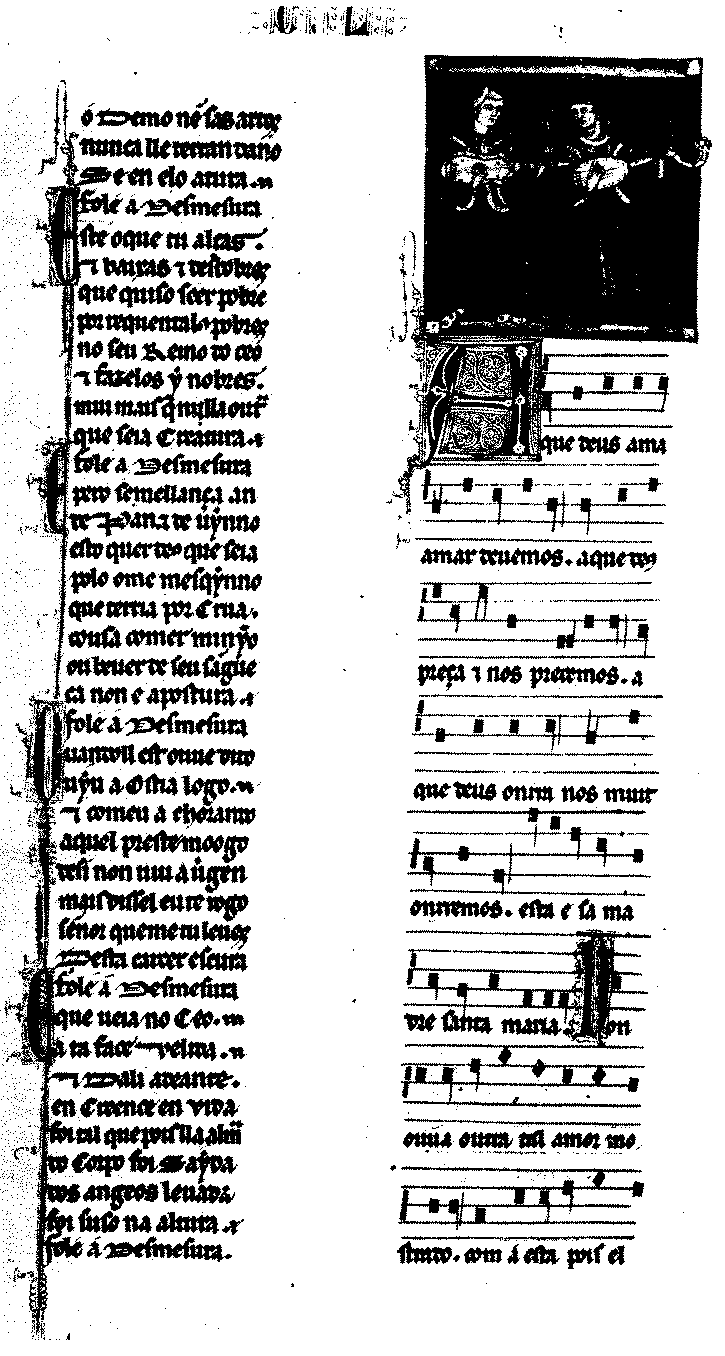
- 13th century CE, Alfonso X of Castile, Cantigas de Santa Maria, E codex, cantiga 149 (facsimile):
- eu te rogo / ſeñor que me tu leues Deſta carcer eſcura / E que ueia no Ceo a ta face velida.
- Lady, I beg you, please take me out of this dark prison and let me see your beautiful face in Heaven.
Descendants[edit]
Old Irish[edit]
Pronoun[edit]
tu
- Alternative spelling of tú
Mutation[edit]
| Old Irish mutation | ||
|---|---|---|
| Radical | Lenition | Nasalization |
| tu | thu | tu pronounced with /d(ʲ)-/ |
| Note: Some of these forms may be hypothetical. Not every possible mutated form of every word actually occurs. | ||
Old Polish[edit]
Etymology[edit]
Inherited from Proto-Slavic *tu. First attested in the 14th century.
Pronunciation[edit]
Pronoun[edit]
tu
- here (at this place)
- Synonym: tuta
- here, hither (to this place)
- then (at that time)
- here (in this situation)
Descendants[edit]
References[edit]
- B. Sieradzka-Baziur, editor (2011–2015), “tu”, in Słownik pojęciowy języka staropolskiego [Conceptual Dictionary of Old Polish] (in Polish), Kraków: IJP PAN, →ISBN
Old Swedish[edit]
Pronoun[edit]
tu
- Alternative form of þū
Phalura[edit]
Etymology[edit]
From Sanskrit तुवम् (tuvam, “thou”).
Pronunciation[edit]
Pronoun[edit]
tu (personal, Perso-Arabic spelling توۡ)
- you (2sg nom subject or direct object)
References[edit]
- Liljegren, Henrik, Haider, Naseem (2011) Palula Vocabulary (FLI Language and Culture Series; 7)[9], Islamabad, Pakistan: Forum for Language Initiatives, →ISBN
- Turner, Ralph Lilley (1969–1985) “tu”, in A Comparative Dictionary of the Indo-Aryan Languages, London: Oxford University Press
Polish[edit]
Etymology[edit]
Inherited from Old Polish tu.
Pronunciation[edit]
- IPA(key): /tu/
- (Middle Polish) IPA(key): /ˈtu/
Audio 1 (file) Audio 2 (file) Audio 3 (file) Audio 4 (file) - Rhymes: -u
- Syllabification: tu
Adverb[edit]
tu
Particle[edit]
tu
- (colloquial, telephony) used by the speaker to introduce themselves on the telephone; speaking
- Synonyms: tutaj, z tej strony
- Tu Janek! ― Janek speaking!
- used by the speaker to indicate they are thinking
- (colloquial) expressive particle, usually of anger
- (colloquial) particle of uncertainty of success on the speaker's part
Trivia[edit]
According to Słownik frekwencyjny polszczyzny współczesnej (1990), tu is one of the most used words in Polish, appearing 1-2 times in scientific texts, 42 times in news, 113 times in essays, 169 times in fiction, and 353 times in plays, each out of a corpus of 100,000 words, totaling 779 times, making it the 57th most common word in a corpus of 500,000 words.[1]
References[edit]
Further reading[edit]
- tu in Wielki słownik języka polskiego, Instytut Języka Polskiego PAN
- tu in Polish dictionaries at PWN
- “TU”, in Elektroniczny Słownik Języka Polskiego XVII i XVIII Wieku [Electronic Dictionary of the Polish Language of the XVII and XVIII Century], 30.03.2020
- “TU”, in Elektroniczny Słownik Języka Polskiego XVII i XVIII Wieku [Electronic Dictionary of the Polish Language of the XVII and XVIII Century], 06.09.2008
- Samuel Bogumił Linde (1807–1814) “tu”, in Słownik języka polskiego[10]
- Aleksander Zdanowicz (1861) “tu”, in Słownik języka polskiego, Wilno 1861[11]
- J. Karłowicz, A. Kryński, W. Niedźwiedzki, editors (1919), “tu”, in Słownik języka polskiego[12] (in Polish), volume 7, Warsaw, page 162
Portuguese[edit]
Pronunciation[edit]
- Rhymes: -u
- Hyphenation: tu
Etymology 1[edit]
From Old Galician-Portuguese tu, from Latin tū (“you”), from Proto-Italic *tū, from Proto-Indo-European *túh₂ (“you”).
Pronoun[edit]
tu
- (informal in Portugal, literary, archaic or regional in Brazil) you; thou (singular second person pronoun)
- Synonyms: (Brazil, formal) o senhor, (formal in Portugal, neutral in Brazil) você, (formal, archaic) vossa mercê, (formal, archaic) vosmecê, (formal, obsolete) vossemecê
- (Brazil, colloquial, proscribed) second-person singular prepositional pronoun
- Ela gosta de tu. ― She's into you.
Usage notes[edit]
- Tu has fallen out of use in some regions of Brazil, including most of the Southeast and the Centre-West, where "você" has taken its place. It is still very commonly used in various regions of the country though, such as most of Santa Catarina and Rio Grande do Sul, parts of Paraná, Rio de Janeiro city and most of the Northeast and North regions. It should be noted that in Rio de Janeiro the pronoun is frequently employed interchangeably with você. Despite the media's preference for "você", the usage of "tu" seems to have been gaining ground throughout the last few decades in Rio (see [13], a linguistic research on the topic in Portuguese), being most frequent among younger speakers.
- According to grammars, tu should always take second person singular verbs, as is the case in Portugal and some parts of Brazil. However, in most Brazilian dialects which employ tu, it now takes third person singular verbs, like você.
See also[edit]
| Portuguese personal pronouns (edit) | |||||||||||||
|---|---|---|---|---|---|---|---|---|---|---|---|---|---|
| Number | Person | Nominative (subject) |
Accusative (direct object) |
Dative (indirect object) |
Prepositional | Prepositional with com |
Non-declining | ||||||
| m | f | m | f | m and f | m | f | m | f | m | f | |||
| Singular | First | eu | me | mim | comigo | ||||||||
| Second | tu | te | ti | contigo | você | ||||||||
| o senhor | a senhora | ||||||||||||
| Third | ele | ela | o (lo, no) |
a (la, na) |
lhe | ele | ela | com ele | com ela | o mesmo | a mesma | ||
| se | si | consigo | |||||||||||
| Plural | First | nós | nos | nós | connosco (Portugal) conosco (Brazil) |
a gente | |||||||
| Second | vós | vos | vós | convosco, com vós | vocês | ||||||||
| os senhores | as senhoras | ||||||||||||
| Third | eles | elas | os (los, nos) |
as (las, nas) |
lhes | eles | elas | com eles | com elas | os mesmos | as mesmas | ||
| se | si | consigo | |||||||||||
| Indefinite | se | si | consigo | ||||||||||
Etymology 2[edit]
Interjection[edit]
tu
- (onomatopoeia) the sound produced by a telephone after one of the callers hangs up
Romani[edit]
Etymology[edit]
From Sanskrit त्वम् (tvam), from Proto-Indo-European *túh₂.
Pronoun[edit]
tu
- you (singular)
Descendants[edit]
See also[edit]
| Number | Person | Gender | Nominative | Accusative | Dative | Locative | Ablative | Instrumental | Possessive |
|---|---|---|---|---|---|---|---|---|---|
| Singular | First | — | me | man | manqe | manθe | manθar | mança | miro, -i, -e |
| Second | — | tu | tut | tuqe | tuθe | tuθar | tuça | tiro, -i, -e | |
| Reflexive third | — | — | pes | pesqe | pesθe | pesθar | peça | pesqero, -i, -e | |
| Third | Masculine | ov | les | lesqe | lesθe | lesθar | leça | lesqero, -i, -e | |
| Feminine | oj | la | laqe | laθe | laθar | laça | laqero, -i, -e | ||
| Plural | First | — | amen | amenqe | amenθe | amenθar | amença | amaro, -i, -e | |
| Second | — | tumen | tumenqe | tumenθe | tumenθar | tumença | tumaro, -i, -e | ||
| Reflexive third | — | — | pen | penqe | penθe | penθar | pença | penqero, -i, -e | |
| Third | — | on | len | lenqe | lenθe | lenθar | lença | lenqero, -i, -e | |
| Number | Person | Gender | Nominative | Accusative (long and short forms) | Dative | Locative | Ablative | Instrumental | Possessive |
|---|---|---|---|---|---|---|---|---|---|
| Singular | First | — | me | man, ma | mánge | mánde | mándar | mánsa | múrro m, múrri f, múrre pl |
| Second | — | tu | tut, tu | túke | túte | tútar | túsa | tíro m, tíri f, tíre pl | |
| Reflexive third | — | — | pês, pe | pêske | pêste | pêstar | pêsa | pêsko m, pêski f, pêske pl | |
| Third | Masculine | wo | lês, le | lêske | lêste | lêstar | lêsa | lêsko m, lêski f, lêske pl | |
| Feminine | woi | la, la | láke | láte | látar | lása | láko m, láki f, láke pl | ||
| Plural | First | — | ame | amên, ame | amênge | amênde | amêndar | amênsa | amáro m, amári f, amáre pl |
| Second | — | tume | tumên, tume | tumênge | tumênde | tumêndar | tumênsa | tumáro m, tumári f, tumáre pl | |
| Reflexive third | — | — | pên, pe | pênge | pênde | pêndar | pênsa | pêngo m, pêngi f, pênge pl | |
| Third | — | won | lên, le | lênge | lênde | lêndar | lênsa | lêngo m, lêngi f, lênge pl |
Romanian[edit]
Etymology[edit]
From Latin tū, from Proto-Italic *tū, from Proto-Indo-European *túh₂.
Pronunciation[edit]
Pronoun[edit]
tu
- you (singular), thou
- Synonyms: (semi-polite form) dumneata, (polite form) dumneavoastră
Declension[edit]
See also[edit]
Sassarese[edit]
Etymology[edit]
From Latin tū, from Proto-Italic *tū, from Proto-Indo-European *túh₂.
Pronunciation[edit]
Pronoun[edit]
tu
Related terms[edit]
See also[edit]
References[edit]
- Rubattu, Antoninu (2006) Dizionario universale della lingua di Sardegna, 2nd edition, Sassari: Edes
Savi[edit]
Etymology[edit]
Pronoun[edit]
tu
- you; second-person singular and plural personal pronoun
References[edit]
- Nina Knobloch (2020) A grammar sketch of Sauji: An Indo-Aryan language of Afghanistan[14], Stockholm University
Scottish Gaelic[edit]
Pronunciation[edit]
Pronoun[edit]
tu (emphatic tusa)
- Form of thu (“thou, you”) used after verb forms ending in -n, -s or -dh.
See also[edit]
| simple | emphatic | |||
|---|---|---|---|---|
| singular | plural | singular | plural | |
| First person | mi | sinn | mise | sinne |
| Second person | thu, tu1) | sibh | thusa, tusa1) | sibhse |
| Third person m | e | iad | esan | iadsan |
| Third person f | i | ise | ||
| *) sibh and sibhse also act as the polite singular pronouns. **) To mark a direct object of a verbal noun, the derivatives of gam are used. 1) used when following a verb ending in -n, -s or -dh. | ||||
Serbo-Croatian[edit]
Etymology[edit]
From Proto-Slavic *tu.
Adverb[edit]
tȗ (Cyrillic spelling ту̑)
- here (in this place)
- Tu nikad nismo bili. ― We have never been here.
- (proximal) here, over here (in the indicated place nearby)
- Eno ih tu! ― Here they are!
- over here (to, towards this place)
- Dođi tu! ― Come over here!
Synonyms[edit]
- (Croatia) tuj
See also[edit]
Sicilian[edit]
Alternative forms[edit]
Etymology[edit]
Pronunciation[edit]
Pronoun[edit]
tu (second person singular)
Inflection[edit]
| nominative | tu |
|---|---|
| prepositional | tia |
| object, reflexive | ti |
Silesian[edit]
Etymology[edit]
Inherited from Old Polish tu.
Pronunciation[edit]
Adverb[edit]
tu
- here (at this place)
Further reading[edit]
- tu in silling.org
Sinte Romani[edit]
Etymology[edit]
From Romani tu, from Sanskrit त्वम् (tvam), from Proto-Indo-European *túh₂.
Pronoun[edit]
tu
- you (singular)
References[edit]
- “tu” in Sinte Romani-English Dictionary, ROMLEX – the Romani Lexicon Project, 2000.
Slovene[edit]
Pronunciation[edit]
Adverb[edit]
tȕ
- here, in this place
Synonyms[edit]
Further reading[edit]
- “tu”, in Slovarji Inštituta za slovenski jezik Frana Ramovša ZRC SAZU, portal Fran
- “tu”, in Termania, Amebis
- See also the general references
South Slavey[edit]
Alternative forms[edit]
- (Jean Marie River) ti
Etymology[edit]
From Proto-Athabaskan *tuˑ. Cognates include Navajo tó and Chipewyan tuu.
Pronunciation[edit]
Noun[edit]
tu (stem -tu-)
Inflection[edit]
| singular | plural | ||
|---|---|---|---|
| 1st person | setué | naxetué | |
| 2nd person | netué | ||
| 3rd person | 1) | — | gitué |
| 2) | metué | gotué | |
| 4th person | yetué | ||
| reflexive | sp. | ɂedetué | kedetué |
| unsp. | detué | ||
| reciprocal | — | ɂełetué | |
| indefinite | ɂetué | ||
| areal | gotué | ||
| 1) Used when the subject is a group of human beings and the object is singular. 2) Used when the previous condition does not apply. | |||
Derived terms[edit]
References[edit]
- Keren Rice (1989) A Grammar of Slave, Berlin, West Germany: Mouton de Gruyter, →ISBN, page 90
Spanish[edit]
Etymology[edit]
From Latin tuus, from Proto-Indo-European *towos.
Pronunciation[edit]
Determiner[edit]
tu sg (second person singular possessive of singular, of plural tus)
Usage notes[edit]
- The forms tu and tus are only used before and within the noun phrase of the modified noun. In other positions, a form of tuyo is used instead:
- Son tus libros. ― They are your books.
- Son los libros tuyos. ― They are your books. (literally, “They are the books of yours.”)
Besides being a pronoun, because tu occurs in a noun phrase and expresses reference, it also grammatically classifies as a determiner (specifically a possessive/genitive determiner).
Related terms[edit]
| possessor | preposed | postposed or standalone | |||||
|---|---|---|---|---|---|---|---|
| possessee | possessee | ||||||
| singular | plural | singular | plural | ||||
| masculine | feminine | masculine | feminine | ||||
| First person: | singular: | mi | mis | mío | mía | míos | mías |
| plural: | (same as postposed/standalone) | nuestro | nuestra | nuestros | nuestras | ||
| Second person (informal): |
singular: | tu | tus | tuyo | tuya | tuyos | tuyas |
| plural: | (same as postposed/standalone) | vuestro | vuestra | vuestros | vuestras | ||
| Third person: | su | sus | suyo | suya | suyos | suyas | |
See also[edit]
Further reading[edit]
- “tu”, in Diccionario de la lengua española, Vigésima tercera edición, Real Academia Española, 2014
Sranan Tongo[edit]
Etymology 1[edit]
Number[edit]
tu
Etymology 2[edit]
Adverb[edit]
tu
Sudovian[edit]
Etymology[edit]
From Proto-Balto-Slavic *tūˀ, from Proto-Indo-European *túh₂. Compare Lithuanian tù, Latvian tu, Old Prussian tu, tou.[1][2]
Pronoun[edit]
tu
- (second-person singular) you, thou
- “Pagan dialects from Narew” line 2, (copied by V. Zinov, 1983):
References[edit]
- ^ Zigmas Zinkevičius (1985) “Lenkų-jotvingių žodynėlis? [A Polish-Yotvingian dictionary?]”, in Baltistica (in Lithuanian), volume 21, number 1, page 80: “tu ‘tu, l. ty’ 2.”
- ^ “tù” in Hock et al., Altlitauisches etymologisches Wörterbuch 2.0 (online, 2020–): “nar. prn. tu du”.
Swahili[edit]
Pronunciation[edit]
Audio (Kenya) (file)
Adverb[edit]
tu
Swedish[edit]
Etymology[edit]
From Old Norse tvau, neuter nominative/accusative of tveir.
Pronunciation[edit]
- Rhymes: -ʉː
Numeral[edit]
tu
Usage notes[edit]
- tu was the old neuter of två. Thus, one would say "ett hus" (one house), "tu hus" (two houses). The equivalent for the number three was try or tri, which is likewise archaic.
Related terms[edit]
Further reading[edit]
- tu in Svensk ordbok.
Anagrams[edit]
Tanacross[edit]
Etymology[edit]
From Proto-Athabaskan *tuˑ.
Noun[edit]
tu
References[edit]
- Jeff Leer, Proto-Athabaskan verb stem variation (1979), page 83
Tausug[edit]
Etymology 1[edit]
From Proto-Malayo-Polynesian *tuqu.
Adjective[edit]
tu
- right (not left)
Noun[edit]
tu
Etymology 2[edit]
From Proto-Malayo-Polynesian *təlu.
Numeral[edit]
tu
Etymology 3[edit]
From Proto-Austronesian *tuduq.
Noun[edit]
tu
- a drop
Verb[edit]
tu (used in the form magtu)
- to drip
Tày[edit]
Etymology[edit]
From Proto-Tai *tuːᴬ. Cognate with Thai ตู (dtuu), Northern Thai ᨲᩪ, Lao ຕູ (tū), Lü ᦎᦴ (ṫuu), Tai Dam ꪔꪴ, Shan တူ (tǔu), Tai Nüa ᥖᥧ (tu), Ahom 𑜄𑜥 (tū), Zhuang dou.
Pronunciation[edit]
- (Thạch An – Tràng Định) IPA(key): [tu˧˧]
- (Trùng Khánh) IPA(key): [tu˦˥]
Noun[edit]
References[edit]
- Lục Văn Pảo, Hoàng Tuấn Nam (2003) Hoàng Triều Ân, editor, Từ điển chữ Nôm Tày [A Dictionary of (chữ) Nôm Tày][15] (in Vietnamese), Hanoi: Nhà xuất bản Khoa học Xã hội
- Hoàng Văn Ma, Lục Văn Pảo, Hoàng Chí (2006) Từ điển Tày-Nùng-Việt [Tay-Nung-Vietnamese dictionary] (in Vietnamese), Hanoi: Nhà xuất bản Từ điển Bách khoa Hà Nội
- Lương Bèn (2011) Từ điển Tày-Việt [Tay-Vietnamese dictionary][16][17] (in Vietnamese), Thái Nguyên: Nhà Xuất bản Đại học Thái Nguyên
Tejalapan Zapotec[edit]
Numeral[edit]
tu
References[edit]
- SIL Zapotec Basic Vocabulary, page 53
Timbe[edit]
Noun[edit]
tu
References[edit]
- Michael Foster, Timbe grammar sketch - cohesion in Timbe texts (1981, online 2009), page 10
Tocharian A[edit]
Etymology[edit]
From Proto-Tocharian [Term?], from Proto-Indo-European *túh₂. Cognate with Tocharian B tuwe.
Pronoun[edit]
tu
Tok Pisin[edit]
| 20 | ||
| ← 1 | 2 | 3 → |
|---|---|---|
| Cardinal: tu | ||
Etymology 1[edit]
Numeral[edit]
tu
Usage notes[edit]
Used when counting; see also tupela.
Coordinate terms[edit]
Etymology 2[edit]
Adverb[edit]
tu
- too; also; as well
- 1995, John Verhaar, Toward a reference grammar of Tok Pisin: an experiment in corpus linguistics[18], →ISBN, page 433:
- Mekim olsem pinis, orait tupela i planim taro na banana, na kumu, painap, kon, tomato, na kaukau tu.
- (please add an English translation of this quotation)
Tsuut'ina[edit]
Etymology[edit]
From Proto-Athabaskan *tuˑ. Cognate with Navajo tó, Dogrib ti, Gwich'in chųų
Pronunciation[edit]
Noun[edit]
tú
References[edit]
- Gūnáhà. Tsuut'ina Gunaha Institute. https://gunaha.altlab.app/
Upper Kuskokwim[edit]
Etymology[edit]
From Proto-Athabaskan *tuˑ.
Noun[edit]
tu
References[edit]
- Raymond L. Collins, Betty Petruska, Dinak'i (our Words): Upper Kuskokwim Athabaskan Junior Dictionary (1979)
Vietnamese[edit]
Pronunciation[edit]
- (Hà Nội) IPA(key): [tu˧˧]
- (Huế) IPA(key): [tʊw˧˧]
- (Hồ Chí Minh City) IPA(key): [tʊw˧˧]
Audio (Hà Nội) (file)
Etymology 1[edit]
Sino-Vietnamese word from 修.
Verb[edit]
tu
- (intransitive) to isolate oneself from other people to follow rules in a philosophy or religion
Derived terms[edit]
Etymology 2[edit]
Verb[edit]
tu
- (transitive) to drink directly from a bottle by holding bottle mouth in one's mouth
Volapük[edit]
Etymology[edit]
Pronunciation[edit]
Adverb[edit]
tu
- (degree) too, excessively.
Derived terms[edit]
Welsh[edit]
Etymology[edit]
From Proto-Brythonic *tʉβ, from Proto-Celtic *toibos, whence also Old Irish tóeb and Irish taobh. Cognate with Breton tu, Cornish tu.
Pronunciation[edit]
- (North Wales) IPA(key): /tɨː/
- (South Wales) IPA(key): /tiː/
- Homophone: tŷ; (South Wales) ti
Noun[edit]
tu m (uncountable)
Derived terms[edit]
Preposition[edit]
tu
Mutation[edit]
| Welsh mutation | |||
|---|---|---|---|
| radical | soft | nasal | aspirate |
| tu | du | nhu | thu |
| Note: Some of these forms may be hypothetical. Not every possible mutated form of every word actually occurs. | |||
Further reading[edit]
- R. J. Thomas, G. A. Bevan, P. J. Donovan, A. Hawke et al., editors (1950–present), “tu”, in Geiriadur Prifysgol Cymru Online (in Welsh), University of Wales Centre for Advanced Welsh & Celtic Studies
Welsh Romani[edit]
Etymology[edit]
From Romani tu, from Sanskrit त्वम् (tvam), from Proto-Indo-European *túh₂.
Pronoun[edit]
tu
- you (singular)
References[edit]
- “tu” in Welsh Romani-English Dictionary, ROMLEX – the Romani Lexicon Project, 2000.
White Hmong[edit]
Pronunciation[edit]
Etymology 1[edit]
From Proto-Hmong-Mien *tɛŋH (“to snap”).[1]
Verb[edit]
tu
Derived terms[edit]
Etymology 2[edit]
Verb[edit]
tu
- to look after, care for, prepare
- to clean, clear
References[edit]
- Heimbach, Ernest E. (1979) White Hmong — English Dictionary[19], SEAP Publications, →ISBN, pages 324-5.
- ^ Ratliff, Martha (2010) Hmong-Mien language history (Studies in Language Change; 8), Camberra, Australia: Pacific Linguistics, →ISBN, page 283.
Yale[edit]
Noun[edit]
tu
References[edit]
- Carl Campbell, Jody Campbell, Yale Grammar Essentials (1987), page 4
- English terms with quotations
- Latvian etymologies from LEV
- Lithuanian terms with quotations
- English lemmas
- English particles
- English pronunciation spellings
- African-American Vernacular English
- Afar terms with IPA pronunciation
- Afar lemmas
- Afar nouns
- Afar feminine nouns
- Ainu terms with IPA pronunciation
- Ainu lemmas
- Ainu numerals
- Albanian terms with unknown etymologies
- Albanian lemmas
- Albanian nouns
- Aromanian terms inherited from Latin
- Aromanian terms derived from Latin
- Aromanian terms inherited from Proto-Italic
- Aromanian terms derived from Proto-Italic
- Aromanian terms inherited from Proto-Indo-European
- Aromanian terms derived from Proto-Indo-European
- Aromanian lemmas
- Aromanian pronouns
- Aromanian personal pronouns
- Aromanian prepositions
- Asturian terms inherited from Latin
- Asturian terms derived from Latin
- Asturian lemmas
- Asturian pronouns
- Asturian personal pronouns
- Atong (India) terms borrowed from English
- Atong (India) terms derived from English
- Atong (India) terms with IPA pronunciation
- Atong (India) lemmas
- Atong (India) numerals
- Atong (India) numerals in Latin script
- Bambara lemmas
- Bambara nouns
- Bambara verbs
- Batuley terms borrowed from Indonesian
- Batuley terms derived from Indonesian
- Batuley lemmas
- Batuley adjectives
- Big Nambas terms with IPA pronunciation
- Big Nambas lemmas
- Big Nambas verbs
- Big Nambas terms with usage examples
- Bislama terms inherited from English
- Bislama terms derived from English
- Bislama lemmas
- Bislama numerals
- Bislama adverbs
- Borôro lemmas
- Borôro verbs
- Breton terms inherited from Proto-Brythonic
- Breton terms derived from Proto-Brythonic
- Breton terms inherited from Proto-Celtic
- Breton terms derived from Proto-Celtic
- Breton lemmas
- Breton nouns
- Breton masculine nouns
- Catalan terms inherited from Old Catalan
- Catalan terms derived from Old Catalan
- Catalan terms inherited from Latin
- Catalan terms derived from Latin
- Catalan terms with IPA pronunciation
- Catalan terms with audio links
- Rhymes:Catalan/u
- Rhymes:Catalan/u/1 syllable
- Catalan lemmas
- Catalan pronouns
- Catalan personal pronouns
- Chilcotin terms inherited from Proto-Athabaskan
- Chilcotin terms derived from Proto-Athabaskan
- Chilcotin lemmas
- Chilcotin nouns
- Chipewyan terms inherited from Proto-Athabaskan
- Chipewyan terms derived from Proto-Athabaskan
- Chipewyan lemmas
- Chipewyan nouns
- Coatecas Altas Zapotec lemmas
- Coatecas Altas Zapotec numerals
- Cornish non-lemma forms
- Cornish mutated adjectives
- Cornish hard-mutation forms
- Cornish mixed-mutation forms
- Czech terms with IPA pronunciation
- Czech terms with audio links
- Czech terms inherited from Old Czech
- Czech terms derived from Old Czech
- Czech terms inherited from Proto-Slavic
- Czech terms derived from Proto-Slavic
- Czech lemmas
- Czech adverbs
- Czech informal terms
- Czech dialectal terms
- Czech non-lemma forms
- Czech pronoun forms
- Drung terms inherited from Proto-Sino-Tibetan
- Drung terms derived from Proto-Sino-Tibetan
- Drung lemmas
- Drung numerals
- Ewe lemmas
- Ewe nouns
- Ewe verbs
- Fala non-lemma forms
- Fala determiner forms
- Lagarteiru Fala
- Fala apocopic forms
- Fanagalo terms borrowed from English
- Fanagalo terms derived from English
- Fanagalo lemmas
- Fanagalo numerals
- Fanagalo cardinal numbers
- Fijian terms with IPA pronunciation
- Fijian lemmas
- Fijian verbs
- French 1-syllable words
- French terms with IPA pronunciation
- French terms with audio links
- French terms with homophones
- Rhymes:French/y
- Rhymes:French/y/1 syllable
- French terms inherited from Old French
- French terms derived from Old French
- French terms inherited from Latin
- French terms derived from Latin
- French terms inherited from Proto-Italic
- French terms derived from Proto-Italic
- French terms inherited from Proto-Indo-European
- French terms derived from Proto-Indo-European
- French lemmas
- French pronouns
- French personal pronouns
- French non-lemma forms
- French past participles
- French particles
- French interrogative particles
- Quebec French
- French informal terms
- French terms with usage examples
- Friulian terms inherited from Latin
- Friulian terms derived from Latin
- Friulian terms inherited from Proto-Indo-European
- Friulian terms derived from Proto-Indo-European
- Friulian lemmas
- Friulian pronouns
- Friulian personal pronouns
- Gaulish terms inherited from Proto-Celtic
- Gaulish terms derived from Proto-Celtic
- Gaulish terms inherited from Proto-Indo-European
- Gaulish terms derived from Proto-Indo-European
- Gaulish lemmas
- Gaulish pronouns
- Gaulish personal pronouns
- German 1-syllable words
- German terms with IPA pronunciation
- German terms with audio links
- Rhymes:German/uː
- Rhymes:German/uː/1 syllable
- German non-lemma forms
- German verb forms
- Iban terms with IPA pronunciation
- Rhymes:Iban/tu
- Iban lemmas
- Iban determiners
- Iban pronouns
- Ido terms borrowed from English
- Ido terms derived from English
- Ido terms borrowed from French
- Ido terms derived from French
- Ido terms borrowed from German
- Ido terms derived from German
- Ido terms borrowed from Italian
- Ido terms derived from Italian
- Ido terms borrowed from Spanish
- Ido terms derived from Spanish
- Ido terms borrowed from Russian
- Ido terms derived from Russian
- Ido terms derived from Proto-Indo-European
- Ido terms suffixed with -u
- Ido terms with IPA pronunciation
- Ido lemmas
- Ido pronouns
- Ido personal pronouns
- Ido informal terms
- Ido familiar terms
- Interlingua terms derived from Latin
- Interlingua terms with IPA pronunciation
- Interlingua lemmas
- Interlingua pronouns
- Interlingua personal pronouns
- Interlingua determiners
- Italian terms inherited from Latin
- Italian terms derived from Latin
- Italian terms inherited from Proto-Italic
- Italian terms derived from Proto-Italic
- Italian terms inherited from Proto-Indo-European
- Italian terms derived from Proto-Indo-European
- Italian 1-syllable words
- Italian terms with IPA pronunciation
- Italian terms with audio links
- Rhymes:Italian/u
- Rhymes:Italian/u/1 syllable
- Italian lemmas
- Italian pronouns
- Italian personal pronouns
- Jamaican Creole terms derived from English
- Jamaican Creole terms with IPA pronunciation
- Jamaican Creole lemmas
- Jamaican Creole prepositions
- Jamaican Creole terms with quotations
- Japanese non-lemma forms
- Japanese romanizations
- Kalasha lemmas
- Kalasha pronouns
- Kalasha personal pronouns
- Kalo Finnish Romani terms inherited from Romani
- Kalo Finnish Romani terms derived from Romani
- Kalo Finnish Romani terms inherited from Sanskrit
- Kalo Finnish Romani terms derived from Sanskrit
- Kalo Finnish Romani terms inherited from Proto-Indo-European
- Kalo Finnish Romani terms derived from Proto-Indo-European
- Kalo Finnish Romani lemmas
- Kalo Finnish Romani pronouns
- Kalo Finnish Romani personal pronouns
- Old Polish terms inherited from Proto-Slavic
- Old Polish terms derived from Proto-Slavic
- Kashubian terms with IPA pronunciation
- Kashubian lemmas
- Kashubian adverbs
- Kashubian uncomparable adverbs
- Khumi Chin terms inherited from Proto-Kuki-Chin
- Khumi Chin terms derived from Proto-Kuki-Chin
- Khumi Chin terms inherited from Proto-Sino-Tibetan
- Khumi Chin terms derived from Proto-Sino-Tibetan
- Khumi Chin terms with IPA pronunciation
- Khumi Chin lemmas
- Khumi Chin nouns
- cnk:Tools
- Ladino terms with IPA pronunciation
- Ladino lemmas
- Ladino pronouns
- Ladino pronouns in Latin script
- Ladino informal terms
- Ladino adjectives
- Ladino adjectives in Latin script
- Latgalian terms inherited from Proto-Balto-Slavic
- Latgalian terms derived from Proto-Balto-Slavic
- Latgalian terms inherited from Proto-Indo-European
- Latgalian terms derived from Proto-Indo-European
- Latgalian terms with IPA pronunciation
- Latgalian lemmas
- Latgalian pronouns
- Latgalian personal pronouns
- Latin terms inherited from Proto-Italic
- Latin terms derived from Proto-Italic
- Latin terms inherited from Proto-Indo-European
- Latin terms derived from Proto-Indo-European
- Latin 1-syllable words
- Latin terms with IPA pronunciation
- Latin lemmas
- Latin pronouns
- Latin personal pronouns
- Latin terms with usage examples
- Latvian terms inherited from Proto-Balto-Slavic
- Latvian terms derived from Proto-Balto-Slavic
- Latvian terms inherited from Proto-Indo-European
- Latvian terms derived from Proto-Indo-European
- Latvian terms with IPA pronunciation
- Latvian lemmas
- Latvian pronouns
- Latvian personal pronouns
- Latvian informal terms
- Latvian dated terms
- Latvian terms with usage examples
- Lithuanian terms inherited from Proto-Balto-Slavic
- Lithuanian terms derived from Proto-Balto-Slavic
- Lithuanian terms inherited from Proto-Indo-European
- Lithuanian terms derived from Proto-Indo-European
- Lithuanian terms with IPA pronunciation
- Lithuanian lemmas
- Lithuanian pronouns
- Lithuanian personal pronouns
- Lower Sorbian terms with IPA pronunciation
- Lower Sorbian non-lemma forms
- Lower Sorbian determiner forms
- Lower Tanana terms inherited from Proto-Athabaskan
- Lower Tanana terms derived from Proto-Athabaskan
- Lower Tanana lemmas
- Lower Tanana nouns
- taa:Water
- Malay terms inherited from Proto-Malayic
- Malay terms derived from Proto-Malayic
- Malay terms inherited from Proto-Malayo-Polynesian
- Malay terms derived from Proto-Malayo-Polynesian
- Malay terms inherited from Proto-Austronesian
- Malay terms derived from Proto-Austronesian
- Malay 1-syllable words
- Malay terms with IPA pronunciation
- Rhymes:Malay/tu
- Rhymes:Malay/u
- Rhymes:Malay/u/1 syllable
- Malay lemmas
- Malay determiners
- Malay colloquialisms
- Malay pronouns
- Hanyu Pinyin
- Mandarin non-lemma forms
- Mandarin nonstandard forms
- Masurian terms derived from Proto-Slavic
- Masurian terms inherited from Proto-Slavic
- Masurian terms inherited from Old Polish
- Masurian terms derived from Old Polish
- Masurian terms with IPA pronunciation
- Masurian lemmas
- Masurian adverbs
- Masurian terms with quotations
- Mezquital Otomi terms inherited from Proto-Otomi
- Mezquital Otomi terms derived from Proto-Otomi
- Mezquital Otomi terms inherited from Proto-Otomian
- Mezquital Otomi terms derived from Proto-Otomian
- Mezquital Otomi terms inherited from Proto-Oto-Pamean
- Mezquital Otomi terms derived from Proto-Oto-Pamean
- Mezquital Otomi terms inherited from Proto-Oto-Manguean
- Mezquital Otomi terms derived from Proto-Oto-Manguean
- Mezquital Otomi terms with IPA pronunciation
- Mezquital Otomi lemmas
- Mezquital Otomi verbs
- Middle English lemmas
- Middle English pronouns
- Middle English personal pronouns
- Mirandese lemmas
- Mirandese pronouns
- Mirandese personal pronouns
- Neapolitan terms inherited from Latin
- Neapolitan terms derived from Latin
- Neapolitan terms with IPA pronunciation
- Neapolitan lemmas
- Neapolitan pronouns
- Neapolitan personal pronouns
- Nigerian Pidgin terms derived from English
- Nigerian Pidgin lemmas
- Nigerian Pidgin adverbs
- Nigerian Pidgin numerals
- Nigerian Pidgin cardinal numbers
- North Frisian lemmas
- North Frisian prepositions
- Mooring North Frisian
- North Frisian terms with quotations
- Northern Kurdish terms inherited from Proto-Iranian
- Northern Kurdish terms derived from Proto-Iranian
- Northern Kurdish terms inherited from Proto-Indo-Iranian
- Northern Kurdish terms derived from Proto-Indo-Iranian
- Northern Kurdish terms inherited from Proto-Indo-European
- Northern Kurdish terms derived from Proto-Indo-European
- Northern Kurdish terms with IPA pronunciation
- Northern Kurdish lemmas
- Northern Kurdish pronouns
- Northern Kurdish personal pronouns
- Norwegian Nynorsk lemmas
- Norwegian Nynorsk prepositions
- Norwegian Nynorsk dialectal terms
- Trøndersk Norwegian
- Norwegian Nynorsk nonstandard forms
- Occitan terms inherited from Old Occitan
- Occitan terms derived from Old Occitan
- Occitan terms inherited from Latin
- Occitan terms derived from Latin
- Occitan terms with IPA pronunciation
- Occitan terms with audio links
- Occitan lemmas
- Occitan pronouns
- Occitan personal pronouns
- Old Czech terms inherited from Proto-Slavic
- Old Czech terms derived from Proto-Slavic
- Old Czech terms with IPA pronunciation
- Old Czech lemmas
- Old Czech adverbs
- Old English terms inherited from Proto-Germanic
- Old English terms derived from Proto-Germanic
- Old English terms with IPA pronunciation
- Old English lemmas
- Old English numerals
- Old Galician-Portuguese terms inherited from Latin
- Old Galician-Portuguese terms derived from Latin
- Old Galician-Portuguese terms inherited from Proto-Indo-European
- Old Galician-Portuguese terms derived from Proto-Indo-European
- Old Galician-Portuguese terms with IPA pronunciation
- Old Galician-Portuguese lemmas
- Old Galician-Portuguese pronouns
- Old Galician-Portuguese personal pronouns
- Old Galician-Portuguese terms with quotations
- Old Irish lemmas
- Old Irish pronouns
- Old Polish terms with IPA pronunciation
- Old Polish lemmas
- Old Polish pronouns
- Old Swedish lemmas
- Old Swedish pronouns
- Old Swedish personal pronouns
- Phalura terms inherited from Sanskrit
- Phalura terms derived from Sanskrit
- Phalura terms with IPA pronunciation
- Phalura lemmas
- Phalura pronouns
- Polish terms derived from Proto-Slavic
- Polish terms inherited from Proto-Slavic
- Polish terms inherited from Old Polish
- Polish terms derived from Old Polish
- Polish 1-syllable words
- Polish terms with IPA pronunciation
- Polish terms with audio links
- Rhymes:Polish/u
- Rhymes:Polish/u/1 syllable
- Polish lemmas
- Polish adverbs
- Polish particles
- Polish colloquialisms
- pl:Telephony
- Polish terms with usage examples
- Polish location adverbs
- Polish time adverbs
- Portuguese 1-syllable words
- Portuguese terms with IPA pronunciation
- Rhymes:Portuguese/u
- Rhymes:Portuguese/u/1 syllable
- Portuguese terms inherited from Old Galician-Portuguese
- Portuguese terms derived from Old Galician-Portuguese
- Portuguese terms inherited from Latin
- Portuguese terms derived from Latin
- Portuguese terms inherited from Proto-Italic
- Portuguese terms derived from Proto-Italic
- Portuguese terms inherited from Proto-Indo-European
- Portuguese terms derived from Proto-Indo-European
- Portuguese lemmas
- Portuguese pronouns
- Portuguese personal pronouns
- Portuguese informal terms
- European Portuguese
- Portuguese literary terms
- Portuguese terms with archaic senses
- Regional Portuguese
- Brazilian Portuguese
- Portuguese colloquialisms
- Portuguese proscribed terms
- Portuguese terms with usage examples
- Portuguese interjections
- Portuguese onomatopoeias
- Romani terms inherited from Sanskrit
- Romani terms derived from Sanskrit
- Romani terms inherited from Proto-Indo-European
- Romani terms derived from Proto-Indo-European
- Romani lemmas
- Romani pronouns
- Romani personal pronouns
- Romanian terms inherited from Latin
- Romanian terms derived from Latin
- Romanian terms inherited from Proto-Italic
- Romanian terms derived from Proto-Italic
- Romanian terms inherited from Proto-Indo-European
- Romanian terms derived from Proto-Indo-European
- Romanian terms with IPA pronunciation
- Romanian terms with audio links
- Romanian lemmas
- Romanian pronouns
- Romanian personal pronouns
- Sassarese terms inherited from Latin
- Sassarese terms derived from Latin
- Sassarese terms inherited from Proto-Italic
- Sassarese terms derived from Proto-Italic
- Sassarese terms inherited from Proto-Indo-European
- Sassarese terms derived from Proto-Indo-European
- Sassarese terms with IPA pronunciation
- Sassarese lemmas
- Sassarese pronouns
- Sassarese personal pronouns
- Savi terms inherited from Sanskrit
- Savi terms derived from Sanskrit
- Savi lemmas
- Savi pronouns
- Scottish Gaelic terms with IPA pronunciation
- Scottish Gaelic lemmas
- Scottish Gaelic pronouns
- Scottish Gaelic personal pronouns
- Serbo-Croatian terms inherited from Proto-Slavic
- Serbo-Croatian terms derived from Proto-Slavic
- Serbo-Croatian lemmas
- Serbo-Croatian adverbs
- Serbo-Croatian terms with usage examples
- Sicilian terms inherited from Latin
- Sicilian terms derived from Latin
- Sicilian terms with IPA pronunciation
- Sicilian lemmas
- Sicilian pronouns
- Sicilian personal pronouns
- Sicilian informal terms
- Silesian terms derived from Proto-Slavic
- Silesian terms inherited from Proto-Slavic
- Silesian terms inherited from Old Polish
- Silesian terms derived from Old Polish
- Silesian terms with IPA pronunciation
- Rhymes:Silesian/u
- Rhymes:Silesian/u/1 syllable
- Silesian lemmas
- Silesian adverbs
- Sinte Romani terms inherited from Romani
- Sinte Romani terms derived from Romani
- Sinte Romani terms inherited from Sanskrit
- Sinte Romani terms derived from Sanskrit
- Sinte Romani terms inherited from Proto-Indo-European
- Sinte Romani terms derived from Proto-Indo-European
- Sinte Romani lemmas
- Sinte Romani pronouns
- Sinte Romani personal pronouns
- Slovene 1-syllable words
- Slovene terms with IPA pronunciation
- Slovene lemmas
- Slovene adverbs
- South Slavey terms inherited from Proto-Athabaskan
- South Slavey terms derived from Proto-Athabaskan
- South Slavey terms with IPA pronunciation
- South Slavey lemmas
- South Slavey nouns
- xsl:Liquids
- Spanish terms inherited from Latin
- Spanish terms derived from Latin
- Spanish terms inherited from Proto-Indo-European
- Spanish terms derived from Proto-Indo-European
- Spanish 1-syllable words
- Spanish terms with IPA pronunciation
- Spanish terms with audio links
- Rhymes:Spanish/u
- Rhymes:Spanish/u/1 syllable
- Spanish terms with homophones
- Spanish lemmas
- Spanish determiners
- Spanish apocopic forms
- Spanish terms with usage examples
- Sranan Tongo terms derived from English
- Sranan Tongo lemmas
- Sranan Tongo numerals
- Sranan Tongo cardinal numbers
- Sranan Tongo adverbs
- Sudovian terms inherited from Proto-Balto-Slavic
- Sudovian terms derived from Proto-Balto-Slavic
- Sudovian terms derived from Proto-Indo-European
- Sudovian lemmas
- Sudovian pronouns
- Sudovian terms with quotations
- Swahili terms with audio links
- Swahili lemmas
- Swahili adverbs
- Swedish terms inherited from Old Norse
- Swedish terms derived from Old Norse
- Rhymes:Swedish/ʉː
- Rhymes:Swedish/ʉː/1 syllable
- Swedish lemmas
- Swedish numerals
- Swedish cardinal numbers
- Swedish terms with archaic senses
- Tanacross terms inherited from Proto-Athabaskan
- Tanacross terms derived from Proto-Athabaskan
- Tanacross lemmas
- Tanacross nouns
- Tausug terms inherited from Proto-Malayo-Polynesian
- Tausug terms derived from Proto-Malayo-Polynesian
- Tausug lemmas
- Tausug adjectives
- Tausug nouns
- Tausug numerals
- Tausug cardinal numbers
- Tausug terms inherited from Proto-Austronesian
- Tausug terms derived from Proto-Austronesian
- Tausug verbs
- Tày terms inherited from Proto-Tai
- Tày terms derived from Proto-Tai
- Tày terms with IPA pronunciation
- Tày lemmas
- Tày nouns
- Tejalapan Zapotec lemmas
- Tejalapan Zapotec numerals
- Timbe lemmas
- Timbe nouns
- Tocharian A terms inherited from Proto-Tocharian
- Tocharian A terms derived from Proto-Tocharian
- Tocharian A terms inherited from Proto-Indo-European
- Tocharian A terms derived from Proto-Indo-European
- Tocharian A lemmas
- Tocharian A pronouns
- Tocharian A personal pronouns
- Tok Pisin terms inherited from English
- Tok Pisin terms derived from English
- Tok Pisin lemmas
- Tok Pisin numerals
- Tok Pisin cardinal numbers
- Tok Pisin adverbs
- Tok Pisin terms with quotations
- tpi:Two
- Tsuut'ina terms inherited from Proto-Athabaskan
- Tsuut'ina terms derived from Proto-Athabaskan
- Tsuut'ina terms with IPA pronunciation
- Tsuut'ina lemmas
- Tsuut'ina nouns
- Upper Kuskokwim terms inherited from Proto-Athabaskan
- Upper Kuskokwim terms derived from Proto-Athabaskan
- Upper Kuskokwim lemmas
- Upper Kuskokwim nouns
- Vietnamese terms with IPA pronunciation
- Vietnamese terms with audio links
- Sino-Vietnamese words
- Vietnamese lemmas
- Vietnamese verbs
- Vietnamese intransitive verbs
- Vietnamese transitive verbs
- Volapük terms borrowed from English
- Volapük terms derived from English
- Volapük terms with IPA pronunciation
- Volapük lemmas
- Volapük adverbs
- Welsh terms inherited from Proto-Brythonic
- Welsh terms derived from Proto-Brythonic
- Welsh terms inherited from Proto-Celtic
- Welsh terms derived from Proto-Celtic
- Welsh terms with IPA pronunciation
- Welsh terms with homophones
- Welsh lemmas
- Welsh nouns
- Welsh uncountable nouns
- Welsh masculine nouns
- Welsh prepositions
- Welsh Romani terms inherited from Romani
- Welsh Romani terms derived from Romani
- Welsh Romani terms inherited from Sanskrit
- Welsh Romani terms derived from Sanskrit
- Welsh Romani terms inherited from Proto-Indo-European
- Welsh Romani terms derived from Proto-Indo-European
- Welsh Romani lemmas
- Welsh Romani pronouns
- Welsh Romani personal pronouns
- White Hmong terms with IPA pronunciation
- White Hmong terms inherited from Proto-Hmong-Mien
- White Hmong terms derived from Proto-Hmong-Mien
- White Hmong lemmas
- White Hmong verbs
- Yale lemmas
- Yale nouns
- nce:Water