Translingual [ edit ]
Stroke order
Stroke order
Han character [ edit ] 事 Kangxi radical 6, 亅 +7, 8 strokes, cangjie input 十中中弓 (JLLN ), four-corner 50007 , composition ⿻⿱𠮛 ⺕ 亅 )
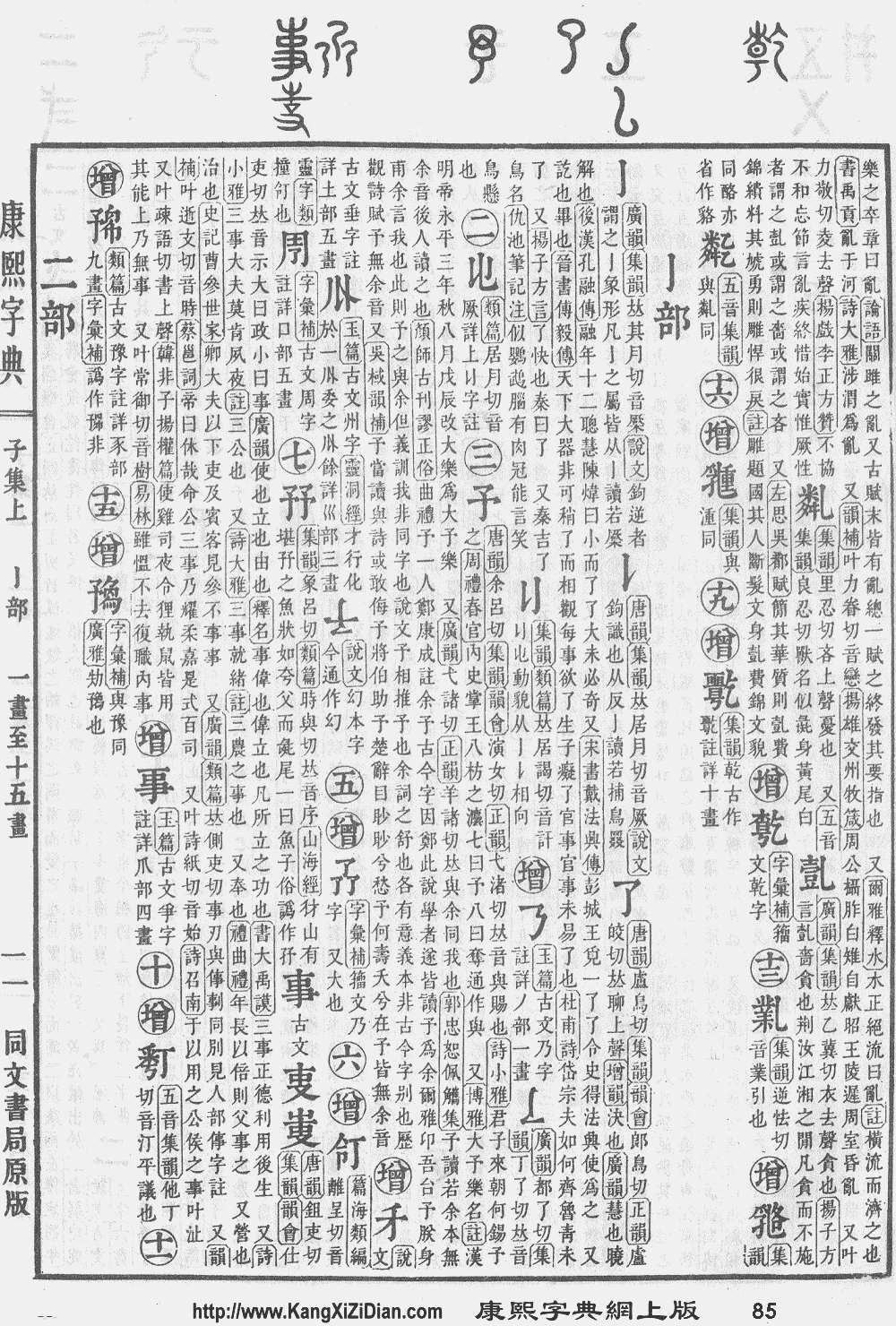
Derived characters [ edit ] 倳 , 𠶝 , 𢜝 , 𣓊 , 𧨴 , 𨧫 (𬭑 ), 𫻋 , 䭄 , 𫻐 , 剚 , 𠡯 , 𠄜 , 𡸪 , 𠡸 , 𱠉 References [ edit ] Kangxi Dictionary: page 85 , character 24
Dai Kanwa Jiten: character 241
Dae Jaweon: page 174, character 15
Hanyu Da Zidian (first edition): volume 1, page 23, character 3
Unihan data for U+4E8B Chinese [ edit ] Glyph origin [ edit ]
Old Chinese
吏 *rɯs
倳 *ʔsrɯs
剚 *ʔsrɯs
事 *ʔsrɯs, *zrɯs
史 *srɯʔ
使 *srɯʔ, *srɯs
駛 *srɯʔ, *srɯs
Ideogrammic compound (會意 / 会意 又 ( “ hand ” ) + 中 ( “ flag or hunting weapon ” ) – flag or hunting weapon in hand > to perform one's job. Compare 史 吏
Etymology [ edit ] Exopassive of 士 OC *zrɯʔSchuessler, 2007 ).
Alternatively, based on Gong (2000) , STEDT derives it from Proto-Sino-Tibetan *r-dzas ( “ thing ” ) , whence Burmese စာ ( ca , “ thing ” ) and Tibetan རྫས ( rdzas , “ thing, object, matter ” ) .
Pronunciation 1 [ edit ]
Mandarin
(Standard
(Pinyin : shì (shi4 )(Zhuyin : ㄕˋ (Chengdu , Sichuanese Pinyin : si4 (Dungan , Cyrillic and Wiktionary : сы (sɨ, III)Cantonese
(Guangzhou –Hong Kong , Jyutping : si6 (Taishan , Wiktionary : lhu5 Gan (Wiktionary : si5 Hakka
(Sixian , PFS : sṳ / se (Meixian , Guangdong : si4 / sê4 Jin (Wiktionary : si3 Northern Min (KCR : dī / si̿ / sū Eastern Min (BUC : sê̤ṳ / dâi Southern Min
(Hokkien , POJ : sū / sīr / sǐr / sī / tāi (Teochew , Peng'im : se7 / se6 / dai7 Wu (Wugniu
Xiang (Changsha , Wiktionary : sr5 / sr4
Note : se/sê4 - “work”.
Note :
dī, si̿ - vernacular;
sū - literary. Note :
sê̤ṳ - literary;
dâi - vernacular.
Southern Min
(Hokkien Xiamen Zhangzhou Zhangpu Taipei Kaohsiung Tainan Yilan Magong Taichung
(Hokkien Quanzhou Sanxia Kinmen Hsinchu
(Hokkien Lukang
(Hokkien Jinjiang Philippines
(Hokkien Xiamen Quanzhou Zhangzhou Jinjiang General Taiwanese )
Note :
sū/sīr/sǐr/sī - literary;
tāi - vernacular (usually written 代 ( dài ) ). Note :
se6 - “to serve”;
dai7 - vernacular. Note :
sr5 - vernacular;
sr4 - literary.
Baxter –Sagart system 1.1 (2014 )
Character
事
Reading #
1/1
Modern
shì
Middle
‹ dzriH ›
Old
/*[m-s-]rəʔ-s/
English
serve; service, affair
Notes for Old Chinese notations in the Baxter–Sagart system:
* Parentheses "()" indicate uncertain presence;
* Period "." indicates syllable boundary.
Zhengzhang system (2003)
Character
事
Reading #
2/2
No.
11486
Phonetic
史
Rime
之
Rime
0
Corresponding
事
Old
/*zrɯs/
Notes
史 吏 轉 註 字
Definitions [ edit ] 事
thing ; matter (Classifier : 件 m c 樁 / 桩 m 回 m 唔係 咩 大 件 事 [Cantonese , trad. 唔系 咩 大 件 事 [Cantonese , simp. m4 hai6 me1 daai6 gin6 si6 [Jyutping] is not anything terribly important (lit. "is not any sort of large matter ") 到底 係 咩 回 事 呀 ?[Cantonese , trad. 到底 系 咩 回 事 呀 ?[Cantonese , simp. dou3 dai2 hai6 me1 wui4 si6 aa3 ? [Jyutping] What happened? / Exactly what is happening? (lit. "Exactly what matter is it?") 耶和華 神 對 女人 說 ,你 作 的 是 什麼 事 呢 ?女人 說 ,那 蛇 引誘 我 ,我 就 吃 了 。[MSC , trad. 耶和华 神 对 女人 说 ,你 作 的 是 什么 事 呢 ?女人 说 ,那 蛇 引诱 我 ,我 就 吃 了 。[MSC , simp. From: 新標點和合本 Chinese Union Version with New Punctuation ), 創世記 (Genesis) 2:7Yēhéhuá shén duì nǚrén shuō, nǐ zuò de shì shénme shì ne? Nǚrén shuō, nà shé yǐnyòu wǒ, wǒ jiù chī le. [Pinyin] And the Lord God said unto the woman, What is this that thou hast done? And the woman said, The serpent beguiled me, and I did eat. 今日 我們 傳 你 來 ,有 遵旨 問 你 的 事 。[Written Vernacular Chinese , trad. 今日 我们 传 你 来 ,有 遵旨 问 你 的 事 。[Written Vernacular Chinese , simp. From: Cao Xueqin , Dream of the Red Chamber th century CE Jīnrì wǒmen chuán nǐ lái, yǒu zūnzhǐ wèn nǐ de shì . [Pinyin] We called you here today, because we'd like to follow the emperor's order and ask you some things. task ; work ; job ; career
茅 盾 的 一個 親戚 ,想 到 我 在 教書 的 教會 學校 裡 來 找 事 做 了 。[MSC , trad. 茅 盾 的 一个 亲戚 ,想 到 我 在 教书 的 教会 学校 里 来 找 事 做 了 。[MSC , simp. From: 1935 April, 魏金枝 , 《再說“賣文”》 , in 《文飯小品》 , issue 3Máo Dùn de yīge qīnqī, xiǎng dào wǒ zài jiāoshū de jiàohuì xuéxiào lǐ lái zhǎo shì zuò le. [Pinyin] A relative of Mao Dun would like to find work in the Catholic school that I teach at. misfortune ; mishap ; accident ; incident
惹事 rěshì 你 冇事 就 好 。[Cantonese , trad. simp. nei5 mou5 si6 zau6 hou2 . [Jyutping] I am glad to see that you are fine. responsibility ; involvement
這裡 沒 你 的 事 。/ 这里 没 你 的 事 。Zhèlǐ méi nǐ de shì . 唔 關 我 事 㗎 / 唔 关 我 事 㗎 [Cantonese ] ― m4 gwaan1 ngo5 si6 gaa3 [Jyutping] ― It has nothing to do with me!( dialectal Hakka , Northern Min , Central Min ) speech ; words ; language
建甌事 / 建瓯事 [Northern Min ] ― Gṳ̿ing-é-dī [Kienning Colloquial Romanized ] ― Jian'ou dialect ( literary ) serve ; to attend to someone
李嶠,字 巨山,趙州 贊皇 人 。早 孤 ,事 母 孝 。 [Literary Chinese , trad. 李峤,字 巨山,赵州 赞皇 人 。早 孤 ,事 母 孝 。 [Literary Chinese , simp. From: The New Book of Tang CE Lǐ Qiáo, zì Jùshān, Zhàozhōu Zànhuáng rén. Zǎo gū, shì mǔ xiào. [Pinyin] Li Qiao, courtesy name Jushan, was a native of Zanhuang, Zhaozhou. His father died when he was young, and he served his mother with filial piety. 讓 我 愛 而 不 受 感戴 ,讓 我 事 而 不 受 賞賜 。[MSC , trad. 让 我 爱 而 不 受 感戴 ,让 我 事 而 不 受 赏赐 。[MSC , simp. From: 1930 , 倪柝聲 Watchman Nee ], 《讓我愛 》 [“Let Me Love and Not Be Respected”]Ràng wǒ ài ér bù shòu gǎndài, ràng wǒ shì ér bù shòu shǎngcì. [Pinyin] Let me love and not be respected;serve and not be rewarded. 有時 走 天堂 窄路 或 會 有 困苦 ,忠心 事 主 一生 都 蒙福 。[MSC , trad. 有时 走 天堂 窄路 或 会 有 困苦 ,忠心 事 主 一生 都 蒙福 。[MSC , simp. From: 1984 [1986] , Frank C. Huston, translated by 劉福羣 [William C. Newbern] and 何統雄 [Richard Ho], revised by 滕近輝 [Philip Teng], 《事主蒙福》 [“It Pays to Serve Jesus”], in 《生命聖詩》 [Hymns of Life ], song #478Yǒushí zǒu tiāntáng zhǎilù huò huì yǒu kùnkǔ, zhōngxīn shì Zhǔ yīshēng dōu méngfú. [Pinyin] Though the pathway to glory may sometimes be drear, You’ll be happy each step of the way. [original English lyrics] serving the Lord faithfully. [literal English translation] to be engaged in
不 事 生產 / 不 事 生产 bù shì shēngchǎn
( Beijing Mandarin , erhua-ed) fussy ; pernickety ; troublesome
他 這 人 特 事 兒/ 他 这 人 特 事 儿Tā zhè rén tè shì r. fussy person.27th tetragram of the Taixuanjing ; "duties " (𝌠 Synonyms [ edit ] Dialectal synonyms of
事情 (“affair; matter”)
[map]
Variety
Location
Words
Classical Chinese
事
Formal (Written Standard Chinese )
事情 事
Mandarin
Beijing
事兒
Taiwan
事
Jinan
事兒
Xi'an
事情 事
Wuhan
事情 事
Chengdu
事情 事
Guilin
事情 事
Yangzhou
事情 事
Hefei
事
Malaysia
事
Singapore
事情 事
Cantonese
Guangzhou
事 事幹
Hong Kong
事 事幹
Yangjiang
事 事幹
Kuala Lumpur (Guangfu)
事
Penang (Guangfu)
事
Singapore (Guangfu)
事
Gan
Nanchang
事
Hakka
Meixian
事情 事
Miaoli (N. Sixian)
事情
Pingtung (Neipu; S. Sixian)
事情
Hsinchu County (Zhudong; Hailu)
事情
Taichung (Dongshi; Dabu)
事情
Hsinchu County (Qionglin; Raoping)
事情
Yunlin (Lunbei; Zhao'an)
事情
Jin
Taiyuan
事情 事
Northern Min
Jian'ou
事
Eastern Min
Fuzhou
事計 事
Minqing
事計
Singapore (Fuqing)
事計
Southern Min
Xiamen
代誌 物件
Xiamen (Tong'an)
代誌
Quanzhou
代誌
Jinjiang
代誌
Shishi
代誌
Zhangzhou
代誌 物件
Zhao'an
事
Dongshan
代誌
Taipei
代誌
Kaohsiung
代誌
Yilan
代誌
Changhua (Lukang)
代誌
Taichung
代誌
Taichung (Wuqi)
代誌
Tainan
代誌
Taitung
代誌
Hsinchu
代誌
Penghu (Magong)
代誌
Penang (Hokkien)
代誌
Singapore (Hokkien)
代誌
Manila (Hokkien)
代誌
Chaozhou
事
Shantou
事
Jieyang
事
Haifeng
事
Singapore (Teochew)
事
Wenchang
事
Qionghai
事
Singapore (Hainanese)
事
Puxian Min
Putian
事體 代誌 出數
Putian (Donghai)
事體 代誌
Putian (Jiangkou)
事體 代誌
Putian (Nanri)
事體 代誌
Xianyou
事體 代誌 出數
Xianyou (Fengting)
事體 代誌
Xianyou (Youyang)
事體 代誌
Zhongshan Min
Shaxi (Longdu)
事幹
Wu
Shanghai
事體
Suzhou
事體
Hangzhou
花頭
Hangzhou (Yuhang)
事體
Ningbo
事體 事幹 dated
Zhoushan
事體 事幹 dated
Wenzhou
事幹
Xiang
Changsha
路徑 路 路子徑 路子 事
Shuangfeng
道路 事
Compounds [ edit ] Descendants [ edit ] Pronunciation 2 [ edit ]
Zhengzhang system (2003)
Character
事
Reading #
1/2
No.
11485
Phonetic
史
Rime
之
Rime
0
Corresponding
胾
Old
/*ʔsrɯs/
Notes
見 漢 書 又 作 剚 倳
Definitions [ edit ] 事
Alternative form of 倳 ( zì , “ to establish ” ) Alternative form of 剚 ( zì , “ to stab ” ) References [ edit ] Japanese [ edit ] 事
(grade 3 “Kyōiku” kanji )
Readings [ edit ] Go-on じ ( ji Jōyō ) Kan-on し ( shi ) Kan’yō-on ず ( zu Jōyō † ) Kun こと ( koto 事 Jōyō ) つかう ( tsuka u事う ) ←つかふ ( tuka fu事ふ historical ) ; つかえる ( tsuka eru事える ) ←つかへる ( tuka feru事へる historical ) Nanori ろ ( ro ) As an alternative form of 倳 剚
Compounds [ edit ]
Compounds
事( じ ) 案( あん ) ( jian “ a concern ” ) 事( じ ) 宜( ぎ ) ( jigi “ a fitting thing ” ) 事( じ ) 業( ぎょう ) ( jigyō “ a project, an enterprise ” ) 事( じ ) 局( きょく ) ( jikyoku “ circumstances ” ) 事( じ ) 件( けん ) ( jiken “ an event, an affair ” ) 事( じ ) 故( こ ) ( jiko “ an accident, an incident ” ) 事( じ ) 後( ご ) ( jigo “ after-, post-, after the fact ” ) 事( じ ) 項( こう ) ( jikō “ matters, articles ” ) 事( じ ) 実( じつ ) ( jijitsu “ a fact, the truth, actuality ” ) 事々( じじ ) 物々( ぶつぶつ ) ( jijibutsubutsu ) , 事事( じじ ) 物物( ぶつぶつ ) ( jijibutsubutsu “ everything ” ) 事( じ ) 象( しょう ) ( jishō “ an event, a phenomenon ” ) 事( じ ) 情( じょう ) ( jijō “ circumstances, consideration ” ) 事( じ ) 績( せき ) ( jiseki “ an achievement, an exploit ” ) 事( じ ) 迹( せき ) ( jiseki ) , 事( じ ) 跡( せき ) ( jiseki ) , 事( じ ) 蹟( せき ) ( jiseki “ evidence, trace ” ) 事( じ ) 前( ぜん ) ( jizen “ prior, beforehand ” ) 事( じ ) 相( そう ) ( jisō “ an aspect, a phase ” ) 事( じ ) 態( たい ) ( jitai ) , 事( じ ) 体( たい ) ( jitai “ a situation, a state of affairs ” ) 事( じ ) 大( だい ) ( jidai “ subservient to the stronger ” ) 事( じ ) 典( てん ) ( jiten “ an encyclopedia ” ) 事( じ ) 犯( はん ) ( jihan “ a crime ” ) 事( じ ) 物( ぶつ ) ( jibutsu “ things, affairs ” ) 事( じ ) 変( へん ) ( jihen “ an accident, a disaster ” ) 事( じ ) 務( む ) ( jimu “ business, clerical work ” ) 事( じ ) 務( む ) 室( しつ ) ( jimushitsu “ an office ” ) 事( じ ) 由( ゆう ) ( jiyū “ a reason, a cause ” ) 事( じ ) 理( り ) ( jiri “ a reason, facts ” ) 事( じ ) 例( れい ) ( jirei “ an example, a precedent ” ) 火( か ) 事( じ ) ( kaji “ a fire, a conflagration ” ) 家( か ) 事( じ ) ( kaji “ household affairs ” ) 幹( かん ) 事( じ ) ( kanji “ a manager, an organizer ” ) 記( き ) 事( じ ) ( kiji “ a news article, a news story ” ) 軍( ぐん ) 事( じ ) ( gunji “ military affairs ” ) 刑( けい ) 事( じ ) ( keiji “ a police detective ” ) 工( こう ) 事( じ ) ( kōji “ construction ” ) 食( しょく ) 事( じ ) ( shokuji “ a meal ” ) 人( じん ) 事( じ ) ( jinji “ personnel, human resources ” ) 知( ち ) 事( じ ) ( chiji “ a prefectural governor ” ) 判( はん ) 事( じ ) ( hanji “ a judge ” ) 人( ひと ) 事( ごと ) ( hitogoto “ other people's affairs, other people's business ” ) 無( ぶ ) 事( じ ) ( buji “ safety, peace ” ) 返( へん ) 事( じ ) ( henji “ an answer, a reply ” ) 房( ぼう ) 事( じ ) ( bōji “ sex, lovemaking ” ) 物( もの ) 事( ごと ) ( monogoto “ things, everything ” ) 用( よう ) 事( じ ) ( yōji “ things to do ” ) 理( り ) 事( じ ) ( riji “ a director, a trustee ” ) 領( りょう ) 事( じ ) ( ryōji “ a consul ” ) 事( こと ) 新( あたら ) しい( koto atarashī “ new ” ) 事( こと ) 誤( あやま ) り( koto ayamari “ getting one's facts wrong ” ) 事( こと ) 改( あらた ) めて( koto aratamete “ anew ” ) 事( こと ) 欠( か ) く( kotokaku “ to lack something ” ) 事( こと ) 柄( がら ) ( kotogara “ a matter, a thing ” ) 事( こと ) 切( き ) れる( koto kireru “ to expire, to die ” ) 事( こと ) 々( ごと ) ( kotogoto ) , 事( こと ) 事( ごと ) ( kotogoto “ everything ” ) 事( こと ) 々( ごと ) しい( kotogotoshī ) , 事( こと ) 事( ごと ) しい( kotogotoshī “ bombastic ” ) 事( こと ) 細( こま ) か( koto komaka “ detailed ” ) 事( こと ) 立( だ ) てる( kotodateru “ to do something different ” ) 事( こと ) 足( た ) りる( koto tariru “ to suffice, to be sufficient ” ) 事( こと ) 足( た ) る( koto taru “ to suffice, to be enough ” ) 事( こと ) 共( ども ) ( kotodomo “ things, matters ” ) 事( こと ) 無( な ) し( koto nashi “ having nothing to do; light-hearted; having no faults ” ) 事( こと ) 勿( なか ) れ( koto nakare “ a desire for peacefulness and nothing out of the ordinary ” ) 事( こと ) 勿( なか ) れ主( しゅ ) 義( ぎ ) ( koto nakare shugi “ peace-at-any-price-ism, don't-rock-the-boat-ism, the principle of acceding to anything to avoid trouble ” ) 事( こと ) 無( な ) く( koto naku “ without accident, without incident, without a hitch ” ) 事( こと ) 珍( めずら ) しく( koto mezurashiku “ strangely, oddly ” ) 事( こと ) 寄( よ ) せる( koto yoseru ) , 言( こと ) 寄( よ ) せる( koto yoseru “ to use something as an excuse or pretext ” ) 事( こと ) 寄( よ ) る( koto yoru “ to have facts or events wind up pointing one way ” ) 仕( し ) 事( ごと ) ( shigoto “ work, employment ” ) 見( み ) 事( ごと ) ( migoto ) , 美( み ) 事( ごと ) ( migoto “ splendid, magnificent ” ) 好事家( こうずか ) ( kōzuka “ a dilettante ” ) 関( かん ) 心( しん ) 事( じ ) ( kanshinji “ a matter of concern and interest ” ) 勝( しょう ) 負( ぶ ) 事( ごと ) ( shōbugoto “ gambling, competition ” ) 出( で ) 来( き ) 事( ごと ) ( dekigoto “ an occurrence, an affair, an accident ” )
事 ( ji , “ matters; affairs ” ) occur in a few compounds that were originally about the matters or affairs themselves, or an action upon those matters or affairs, but evolved into referring to the person doing something to the matters or affairs.
主( しゅ ) 事( じ ) ( shuji “ superintendent ” , literally “ main matters ” ) 刑( けい ) 事( じ ) ( keiji “ criminal detective ” , literally “ law enforcement/penal matters ” ) 判( はん ) 事( じ ) ( hanji “ judge; justice ” , literally “ to judge matters ” ) 参( さん ) 事( じ ) ( sanji “ secretary; counsellor; councillor ” , literally “ to attend to matters ” ) 執( しつ ) 事( じ ) ( shitsuji “ steward; butler ” , literally “ to execute matters ” ) 幹( かん ) 事( じ ) ( kanji “ manager; secretary ” , literally “ to perform matters ” ) 検( けん ) 事( じ ) ( kenji “ prosecutor ” , literally “ to inspect matters ” ) 理( り ) 事( じ ) ( riji “ director ” , literally “ to arrange matters ” ) 知( ち ) 事( じ ) ( chiji “ prefectural governor ” , literally “ governing matters ” ) 通( つう ) 事( じ ) ( tsūji “ interpreter ” , literally “ to smooth out matters ” ) 領( りょう ) 事( じ ) ( ryōji “ consul ” , literally “ to take/accept matters ” ) Etymology 1 [ edit ]
For pronunciation and definitions of 事 – see the following entry.
【こと 】
[noun] broadly, any abstract thing , affair , matter , or fact
[noun] a thing , occasion , circumstances , detail , particular [noun] act of ( word used for the nominalization of verbs, adjectives, or phrases ) [noun] ( by extension ) experience , having been or done ( used with ある ( aru , “ have, possess ” ) ) [noun] event of special importance: affair , something , incident , case , occurrence , trouble [noun] business matters, affairs , business , work , duty [noun] Used as a nominalizer for precepts. [noun] It is said that; I've heard that ( used with とのこと ) [noun] Used to introduce aliases/stage names. Alternative spellings 亊 縡 ヿ
(This term, 事 , is an alternative spelling of the above term.)
Etymology 2 [ edit ] From Middle Chinese 事 MC dzriHthing , matter ; task , job ”).
Pronunciation [ edit ] 事( じ ) • (ji
thing work ; job ; business to serve ; to work for Etymology [ edit ] From Middle Chinese 事 MC dzriH
Pronunciation [ edit ] (SK Standard /Seoul IPA (key ) : [sʰa̠(ː)] Phonetic hangul: [사 (ː) ] Though still prescribed in Standard Korean, most speakers in both Koreas no longer distinguish vowel length. Wikisource
事 (eumhun 일 사 ( il sa ) )
Hanja form? 사 ( “ thing ; matter ” ) .Compounds [ edit ]
Compounds
사건 事件 sageon )사력 事力 saryeok )사례 事例 sarye )사무 事務 samu )사사 事事 sasa )사전 事典 sajeon )사전 事前 sajeon )사주 事主 saju )사판 事判 sapan )사필귀정 事必歸正 sapilgwijeong )사세 事勢 sase )사대 事大 sadae )사실 事實 sasil )
References [ edit ] 국제퇴계학회 대구경북지부 (國際退溪學會 大邱慶北支部) (2007). Digital Hanja Dictionary, 전자사전/電子字典 . [2] Vietnamese [ edit ] Han character [ edit ] 事 : Hán Việt sự [1] [2] [3] [4] [5] 事 : Nôm sự [1] [2] [4] [6] xì [3]
chữ Hán sự ( “ deed ; act ; occurrence ” ) .Nôm xì ( “ to leak out , to escape ” ) .Compounds [ edit ] References [ edit ]